
To avoid crooked shelves, start by measuring wall height and marking your desired shelf position. Use a bubble or laser level to guarantee proper alignment during installation. Be mindful of common errors, like uneven wall surfaces and improper bracket placement. If your walls are uneven, consider using adjustable brackets or shims for compensation. Regular maintenance, such as checking alignment and tightening brackets, will keep your shelves straight. There’s more to explore on guaranteeing perfect shelf installations!

Get the little things that make your day delivered free with Prime
- Fast, free delivery on millions of items
- Prime Video, Amazon Music and more included
- Member-only deals all year
Key Takeaways
- Measure the wall height at multiple points to identify any uneven surfaces before installation.
- Use a bubble level or laser level to ensure accurate alignment during shelf installation.
- Choose adjustable brackets to compensate for imperfections in wall surfaces and maintain shelf level.
- Regularly check the alignment of shelves and tighten brackets to prevent sagging or tilting over time.
- Ensure proper wall anchoring methods are used to securely install brackets and avoid instability.
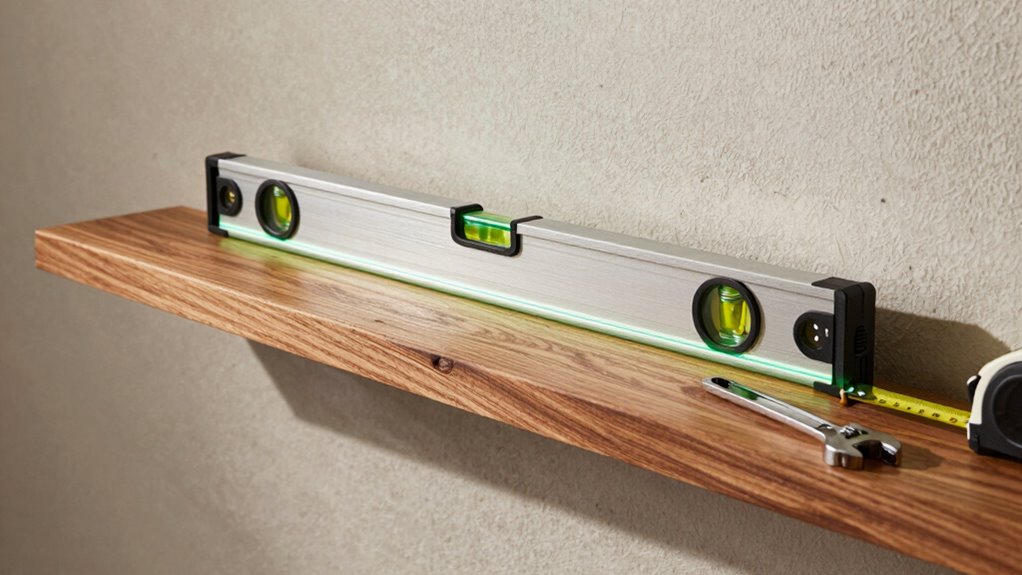
bubble level for shelf installation
As an affiliate, we earn on qualifying purchases.
As an affiliate, we earn on qualifying purchases.
Step-by-Step Guide to Leveling Your Shelves
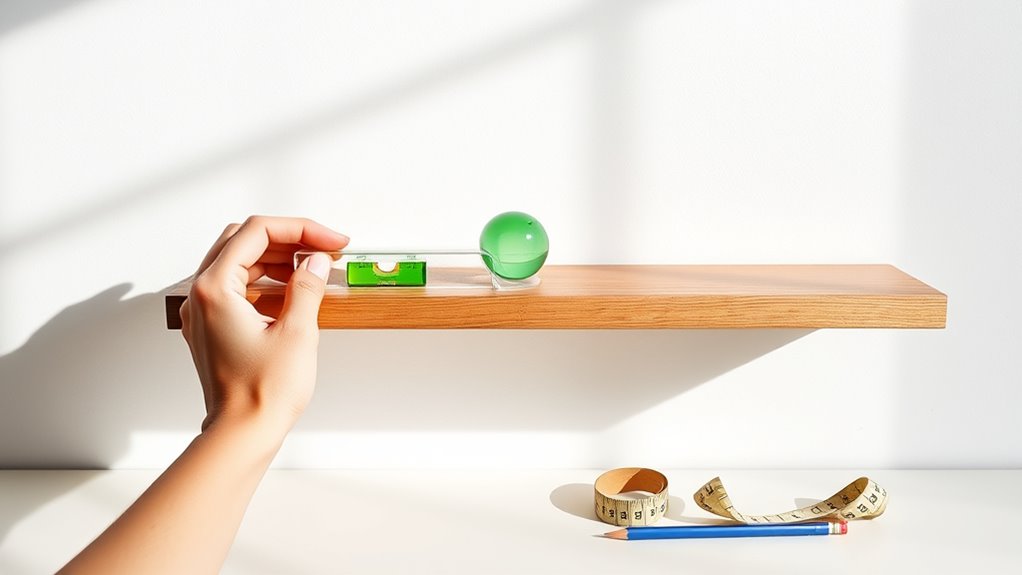
Have you ever wondered how to achieve perfectly level shelves? Start by measuring your wall’s height and marking your desired shelf position. Use a level to guarantee accurate shelf alignment. Next, choose appropriate installation techniques based on your shelf type—floating, brackets, or adjustable.
If you’re using brackets, measure and install them carefully to maintain evenness. For floating shelves, verify the cleat is perfectly horizontal. After installation, double-check with the level to confirm everything’s aligned. If adjustments are needed, loosen the screws slightly and shift the shelf until it’s straight.
Finally, step back and admire your work. With these straightforward steps, you’ll enjoy a perfectly level shelf that enhances your space.
As an affiliate, we earn on qualifying purchases.
Tools You Need for Proper Leveling
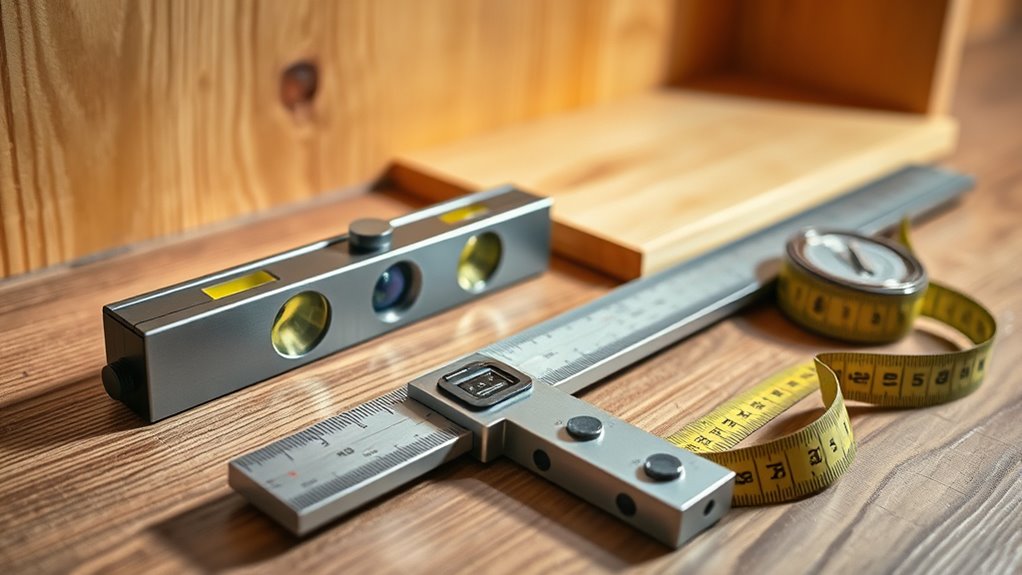
To level your shelves properly, you’ll need a few essential tools. Measuring devices like a level and a tape measure are vital, along with some supportive accessories to guarantee stability. Let’s explore what you’ll require to get the job done right. Incorporating smart planning techniques can also help ensure your shelving remains balanced over time.
Essential Leveling Tools
While leveling shelves might seem straightforward, having the right tools can make all the difference in achieving a perfect setup. To guarantee your shelf installation goes smoothly and employs effective leveling techniques, consider using the following essential leveling tools:
- Bubble Level: This classic tool helps you quickly see if your shelves are even.
- Laser Level: For precision, a laser level projects a straight line across surfaces.
- Measuring Tape: Accurate measurements are vital, so keep a tape handy.
- Adjustable Shelf Brackets: These allow for minor adjustments after installation, making sure your shelves remain level.
- Using a pressure washer or other cleaning tools can also help prepare the surface for a more accurate and secure installation. Additionally, understanding the leveling principles ensures your shelves stay straight over time and are not affected by surface irregularities. Knowing the surface irregularities and how they impact installation can help you take extra steps for a more durable setup.
With these tools, you’ll set yourself up for success and avoid crooked shelves!
Measuring Devices Overview
When it comes to achieving perfectly level shelves, understanding the right measuring devices is fundamental. Using the proper measuring techniques guarantees you get accurate readings, which is essential for your project’s success. Here’s a quick overview of some key measuring devices you might consider:
| Device | Purpose |
|---|---|
| Level | Checks horizontal alignment |
| Tape Measure | Measures shelf dimensions |
| Laser Level | Projects level lines |
| Digital Level | Provides precise measurements |
| Plumb Bob | Secures vertical alignment |
Each of these tools plays an important role in preventing crooked shelves. By selecting the right measuring devices, you’ll simplify your leveling process and achieve outstanding results. Additionally, using the proper safety tips ensures a safer DIY experience throughout your project. Being familiar with these tools also helps you avoid common measurement errors, leading to a more professional-looking finish. To improve your accuracy, practicing proper measurement techniques can make a significant difference.
Supportive Accessories Needed
Achieving perfectly level shelves often requires more than just measuring devices; you’ll need a few supportive accessories to guarantee the job’s done right. Here’s a list of essential tools you should have on hand:
- Shelf brackets – These provide the necessary support for your shelves, ensuring they remain stable and level.
- Wall anchors – If you’re mounting shelves on drywall or other weak surfaces, wall anchors will secure your brackets firmly.
- Leveling tool – Use a spirit level or laser level to check that everything is aligned correctly during installation. Having a reliable leveling device can make all the difference.
- Drill and bits – A power drill will make installing your wall anchors and brackets quick and efficient.
- Proper wall material knowledge – Understanding your wall type helps select the right anchors and installation method for a secure, level shelf wall material knowledge. To enhance your understanding, consider wall compatibility to ensure your chosen accessories are suitable for your wall type. Additionally, knowing the wall surface texture can influence the choice of support accessories and installation technique.
To further ensure your shelves stay level over time, consider additional support accessories such as shims or anti-slip pads that can help compensate for uneven surfaces and prevent tilting.
With these accessories, you’ll be well-equipped to prevent crooked shelves and create a tidy space.
As an affiliate, we earn on qualifying purchases.
Common Errors That Make Shelves Crooked
When you’re setting up shelves, even small mistakes can lead to crooked results. Uneven wall surfaces, improper bracket placement, and using the wrong leveling tools are common errors you might encounter. Let’s explore how to avoid these pitfalls and guarantee your shelves are perfectly aligned. Additionally, considering rug maintenance in high-traffic areas can help prevent damage that may affect wall surfaces over time.
Uneven Wall Surfaces
Even if you think your walls are straight, minor imperfections can lead to crooked shelves. Wall texture plays a significant role in your shelf installation. If you overlook uneven surfaces, you might end up with a frustratingly tilted display. Here are some common issues to evaluate:
- Dents or Bumps: Small imperfections can disrupt even the best installation techniques.
- Rough Texture: A heavily textured wall can affect how brackets sit against it.
- Paint Buildup: Layers of paint can create uneven surfaces that throw off your measurements.
- Structural Settling: Over time, homes settle, which can lead to wall misalignments.
Improper Bracket Placement
Minor imperfections in your walls can lead to significant issues if you don’t install your brackets properly. If your bracket alignment is off, it can cause your shelves to tilt and create instability. Make sure to measure carefully before you drill, ensuring that each bracket is at the same height. Check that the brackets are securely fastened to the wall and spaced evenly to support the shelf’s weight. If they’re too far apart, the shelf may sag in the middle. Remember, proper placement is essential for shelf stability, so take your time and double-check your work. Paying attention to proper installation techniques and using quality synthetic lubricants can help you avoid common mistakes and ensure your shelves stay level. Additionally, understanding indoor air quality can help you maintain a healthier environment in your space. When installing brackets, consider the weight capacity of the hardware to prevent overloading and potential damage. Proper wall anchoring methods are also crucial to ensure that your brackets hold securely over time. By avoiding improper bracket placement, you can achieve a level and functional shelving system that looks great in your space.
Incorrect Leveling Tools
Using the wrong leveling tools can quickly lead to crooked shelves, making your hard work feel wasted. To guarantee your shelves are perfectly aligned, avoid these common errors:
- Relying solely on a spirit level: While useful, it’s best to combine it with other tools. Proper calibration of your tools ensures accuracy and helps prevent mistakes. Additionally, understanding air purifier maintenance dos and don’ts can help prevent equipment errors that may lead to misalignments. Remember, measurement accuracy is crucial for professional-looking results.
- Neglecting laser levels: These provide a straight line across longer distances, which a spirit level can’t always achieve. Using properly functioning laser levels can significantly improve alignment accuracy.
- Choosing cheap tools: Low-quality levels can give inaccurate readings, leading to frustration.
- Forgetting to double-check: Always verify your work before securing shelves; a quick re-check can save you from future headaches.
- Ignoring calibration: Regularly calibrating your tools ensures consistent and accurate measurements across your projects.
As an affiliate, we earn on qualifying purchases.
How to Use a Leveling Tool Effectively
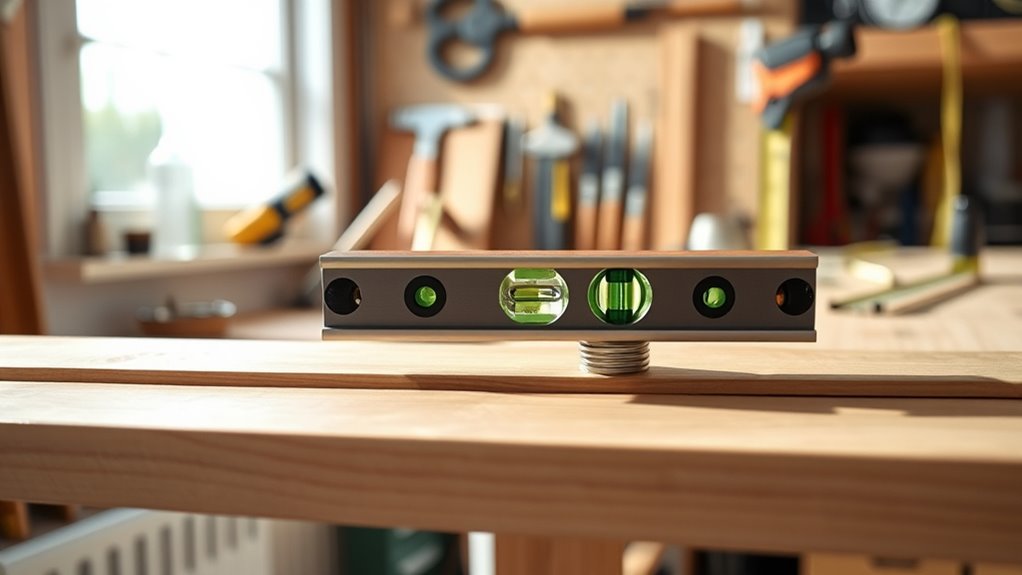
When you want to guarantee your shelves are perfectly level, mastering the use of a leveling tool is essential. Start by placing the level on the shelf, ensuring it touches both ends. Watch for the bubble to center between the lines; this indicates proper shelf alignment. If the bubble isn’t centered, adjust the shelf until it is. Employ these leveling techniques for best results:
| Step | Action |
|---|---|
| 1. Initial Setup | Place level on the shelf |
| 2. Check Bubble | Observe bubble position |
| 3. Adjust Shelf | Raise or lower as needed |
| 4. Recheck | Confirm bubble is centered |
| 5. Secure Shelf | Fasten once level is confirmed |
Properly understanding leveling techniques ensures your shelves stay straight and functional. Follow these steps, and you’ll avoid crooked shelves!
Adjusting for Uneven Walls

Even though most walls appear straight, many have subtle imperfections that can affect shelf placement. To guarantee proper shelf alignment, follow these steps to adjust for uneven walls:
- Measure the wall: Use a tape measure to get accurate wall measurements at various points.
- Identify low spots: Check for dips or bumps in the wall that could impact the shelf’s level.
- Adjust brackets: If your wall isn’t even, consider installing adjustable brackets to compensate for the discrepancies.
- Use shims: Fill gaps with shims under the shelf or brackets to achieve a level surface.
Innovative Ideas for Custom Shelf Installations
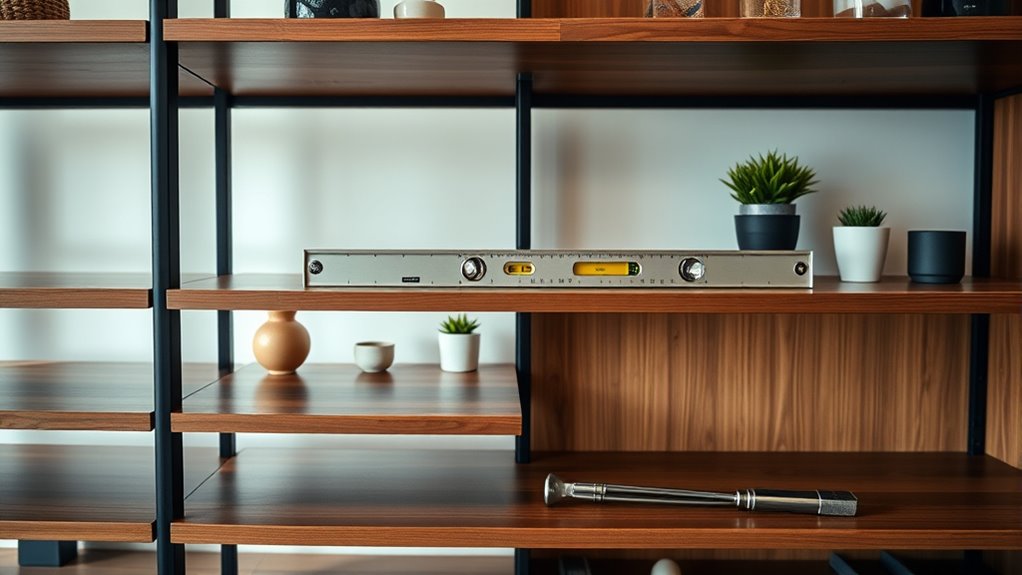
Once you’ve tackled the challenge of uneven walls, it’s time to get creative with your shelf installations. Custom shelf designs can elevate your space while showcasing your personality. Consider using floating shelves to create a modern look or repurposing old crates for a rustic vibe.
Here are some creative installation techniques to inspire you:
| Technique | Description |
|---|---|
| Corner Shelves | Utilize unused corners effectively. |
| Adjustable Brackets | Change shelf heights easily. |
| Wall-mounted Rods | Hang shelves at varying heights. |
Incorporating space planning principles can further optimize your shelving layout for both style and utility. These ideas not only enhance aesthetics but also maximize functionality. Embrace your style and let your imagination guide you in creating unique shelving solutions!
Maintenance Tips to Keep Shelves Straight

To keep your shelves straight and functional, regular maintenance is key. By staying proactive, you can prevent issues related to shelf materials and guarantee proper alignment. Here are some essential maintenance tips:
- Check Alignment Regularly: Use a level to assess alignment every few months.
- Inspect Shelf Materials: Look for warping or damage, especially in wood or laminate.
- Tighten Hardware: Confirm brackets and screws are secure to maintain stability.
- Adjust Weight Distribution: Avoid overloading shelves and distribute items evenly to prevent sagging.
Why Do Level Shelves Matter in Home Design?

When you design a home, level shelves play an essential role in both aesthetics and functionality. Uneven shelves can disrupt shelf aesthetics, making a space feel chaotic and uninviting. You want your rooms to flow seamlessly, and level shelves contribute considerably to that design harmony. They guarantee that your decor remains visually appealing, allowing items to sit neatly and not slide off. Additionally, level shelves provide practicality; they make it easier to organize and access your belongings without the frustration of things tipping over. So, when you’re setting up your shelves, remember that keeping them level isn’t just about looks—it’s a vital element in creating a well-designed, harmonious space that you’ll love to live in.
Frequently Asked Questions
How Do I Choose the Right Shelf Material for Leveling?
To choose the right shelf material for leveling, consider both shelf weight and material durability. If you’re storing heavy items, opt for sturdy materials like solid wood or metal, which can handle the load without sagging. For lighter items, materials like particleboard or MDF might suffice. Always check the weight capacity of your chosen material to confirm it can support your needs while remaining level and stable over time.
Can I Level Shelves Without a Leveling Tool?
Of course, you can level shelves without a fancy leveling tool—who needs precision when you’ve got sheer determination? Embrace your inner DIY enthusiast and use shelf alignment techniques like the eye test or a simple measuring tape. Stack some books on one side and hope for the best; it’s all about living on the edge! Alternatively, you could use a marble and see where it rolls. It’s all part of the adventure!
What Are the Signs of a Poorly Leveled Shelf?
You’ll notice signs of a poorly leveled shelf if you see shelf sagging or uneven spacing between items. Books or decor might slide to one side, creating a messy appearance. If you’re putting items on the shelf and they don’t sit flat, that’s another red flag. Additionally, if you hear creaking sounds when placing weight on the shelf, it’s likely not level. Keep an eye out for these indicators to guarantee stability.
How Often Should I Check My Shelves for Levelness?
You should check your shelves for levelness every six months to guarantee proper shelf maintenance. Research shows that about 30% of homeowners experience issues with shelf stability due to neglecting leveling frequency. If you notice any signs of imbalance—like items sliding off or uneven spacing—it’s time for an adjustment. Regular checks can prevent bigger problems down the road, keeping your shelves safe and functional for years to come.
Do I Need Help to Level Large Shelves?
You might need help to level large shelves, especially during shelf installation. Having an extra set of hands can make it easier to guarantee proper weight distribution while you adjust the shelves. It’s essential to check that the shelves are even before securing them. With assistance, you’ll find it simpler to manipulate heavy materials and get everything aligned correctly, preventing any future issues with crooked shelves.
Conclusion
In summary, leveling your shelves isn’t just about aesthetics; it’s essential for functionality. Did you know that 30% of homeowners experience issues with crooked shelves, leading to damage or loss of items? By following the steps outlined in this guide, you can easily avoid this common problem. Investing time in proper leveling guarantees your shelves look great and serve their purpose effectively, enhancing both your storage solutions and overall home design. Happy shelving!
Columbus Day / Indigenous Peoples' Day Picks
long weekend sales
As an affiliate, we earn on qualifying purchases.