TL;DR
Ideal Home Open House contributor Grace H has shared practical storage ideas for making upstairs rooms feel neater, including fitted wardrobes, closed bedside tables, and an ottoman bed. The suggestions come from her own home and are design advice, not a reported study or product test.
Home decorator and content creator Grace H, a new contributor to Ideal Home’s Open House series, has shared room-by-room storage ideas for making upstairs spaces look neater. Her suggestions range from using a landing cupboard for linens and a vacuum to choosing fitted wardrobes, closed bedside storage and an ottoman bed.

Get the little things that make your day delivered free with Prime
- Fast, free delivery on millions of items
- Prime Video, Amazon Music and more included
- Member-only deals all year
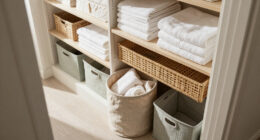
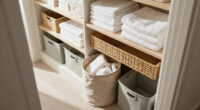
Grace presents the advice as a practical account of what works in her own home, rather than as a formal design study. For the landing, she recommends making use of otherwise overlooked space: a cupboard or small unit can store bedding and towels, while a cupboard can give a vacuum cleaner a designated place. The aim, she writes, is to reduce visible items in a space often treated only as a passageway.
In the main bedroom, she favours taller fitted wardrobes to use more of the available wall height, with room below for baskets. She also recommends bedside tables with doors or drawers to conceal small everyday items, and a lower shelf paired with a basket for things such as cables and personal-care products. For a dressing area, she prefers a chest of drawers with a mirror above it, plus a dish or lidded basket to gather smaller objects.
Grace says her spare room serves several purposes, with wardrobes used for coats and household equipment as well as guest items. She describes one as a compact laundry area and recommends an ottoman bed for storing extra duvets out of sight. For a home office, she suggests using a vintage cabinet or sideboard for cables and other supplies, and decorative box files for paperwork.
Make upstairs feel neater with storage that hides clutter
Ideal Home contributor Grace H shares practical ideas from her own home for keeping upstairs rooms calmer and useful.
Give each room a storage role
Use concealed, accessible places for belongings you need regularly.
Use overlooked space
A cupboard or small unit can keep linens and a vacuum out of sight.
Close away daily items
Fitted wardrobes, closed bedside storage and baskets help clear visible surfaces.
Make one room do more
Wardrobes can hold household equipment, while an ottoman bed stores extra duvets.
Contain work supplies
A cabinet or sideboard can hide cables; box files gather paperwork.
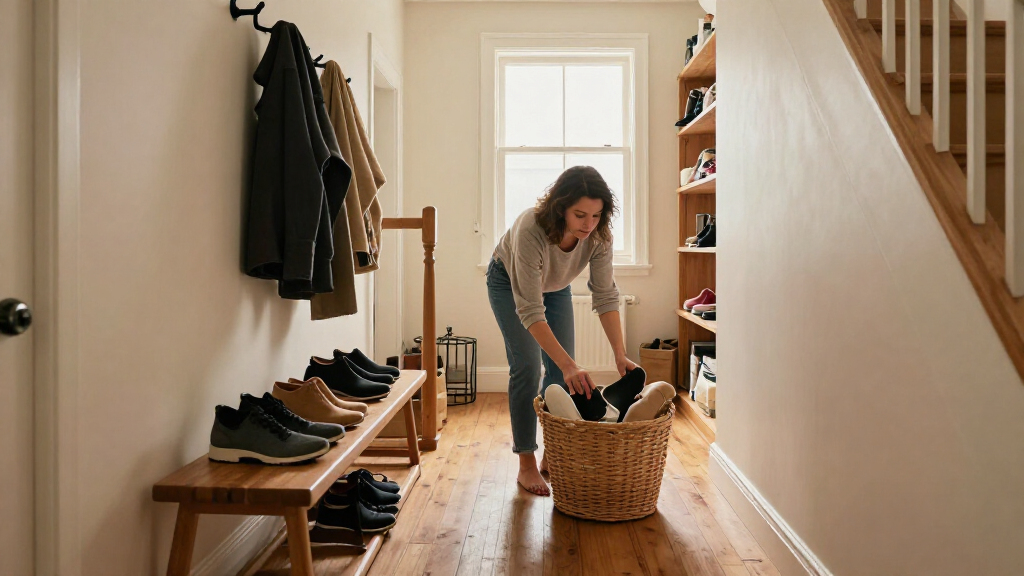
Start with what is already there
Identify items repeatedly left out, then give them a consistent place.
Notice which belongings regularly collect on open surfaces.
Consider an existing cupboard, drawer, basket or piece of furniture.
For larger changes, check room measurements and your budget.
Advice from one home
Grace presents these ideas as personal recommendations, not a tested comparison.
- Room-by-room storage ideas
- Examples from Grace’s home
- Ways to conceal everyday items
- No prices or product testing
- No measured clutter reduction
- Fit depends on space and budget
Storage That Frees Upstairs Space
The advice addresses a familiar household problem: rooms can feel cluttered even when the items are useful and regularly needed. Grace’s central approach is to assign those belongings concealed, accessible storage, rather than relying on open surfaces or visible containers. That can make bedrooms and shared rooms appear calmer without requiring people to discard everything they own.
The ideas also treat upstairs rooms as flexible spaces. A spare bedroom can double as a laundry or storage area, while a small bedroom can function as a home office. For readers with limited space, that is a practical distinction: storage choices may affect how many uses a room can support, not just how tidy it looks.
These are personal recommendations, however, and the source does not compare costs, measure how much storage each option adds, or establish that any particular product or layout works for every home. Built-in wardrobes and an ottoman bed may also require more planning or spending than baskets and furniture already on hand.
Products Worth Considering

Philips Hue Play Gradient Light Tube, Large, Black

Samsung 48-Inch S90F OLED 4K Smart TV (2025)

LG 55-Inch QNED73B Mini LED 4K Smart TV (2026)
As an affiliate, we earn on qualifying purchases.
Grace H’s Room-by-Room Approach
Grace H’s article continues a series of posts about the less decorative work involved in keeping a home organised. She says an earlier post covered downstairs storage; this instalment turns to the landing, main bedroom, spare bedroom and home office. Ideal Home describes her as a home decorator and content creator contributing to its Open House series on colourful interiors, vintage and new furnishings, and personal design.
Several recommendations draw on her own household. She says her family previously relied on two lightweight clothing rails before installing proper wardrobes, which they painted themselves. She also describes finding a second-hand cabinet for the office and adapting a spare-room wardrobe to house laundry equipment. Those examples explain the source of the advice but should not be read as independent product reviews.
Costs and Fit Will Vary
The source does not give a publication date, prices, dimensions or installation details for the storage options. It also does not say how much the suggested arrangements reduce clutter or whether readers will see similar results. Grace’s account is based on her home and preferences; the recommendations are not independently tested.
Whether fitted wardrobes, an ottoman bed or a laundry cupboard will suit a particular home depends on room size, layout, budget and access needs. The article offers no comparison of those trade-offs, and it does not establish that concealing belongings is a substitute for sorting or removing items when storage space is insufficient.
More Open House Advice
The source identifies this piece as part of Grace H’s continuing Ideal Home contribution and points readers to her other articles. It does not announce a date for another instalment or specify a forthcoming project. Readers interested in applying the ideas can start by identifying which belongings are repeatedly left out, then consider whether an existing cupboard, drawer, basket or piece of furniture can give them a consistent place.
Any larger changes, such as fitting wardrobes or buying a storage bed, would require checking the room’s measurements and the household’s budget. The article provides no product shortlist or buying guidance, so those details remain for readers to research separately.
Key Questions
Who is Grace H?
Grace H is a home decorator and content creator introduced as a new contributor to Ideal Home’s Open House series. The source describes her articles as covering colourful home design, vintage and new furniture, and personal interiors.
What storage does she recommend for a main bedroom?
Grace favours tall fitted wardrobes, bedside tables with closed storage, and baskets for smaller items. She also suggests a chest of drawers with a mirror above it as an alternative to a dressing table.
How does she use the spare bedroom?
In her home, Grace says wardrobes in the spare room hold items such as winter coats and laundry equipment. She also recommends an ottoman bed for keeping extra bedding out of sight.
What does she suggest for a home office?
Grace suggests storing cables and supplies in a vintage cabinet or sideboard, and using decorative box files to keep paperwork together. These are personal suggestions, not a tested comparison of office storage products.
Does the article provide prices or product testing?
No. The source gives personal examples and storage ideas but does not include prices, product specifications or independent testing results.
Source: idealhome.co.uk