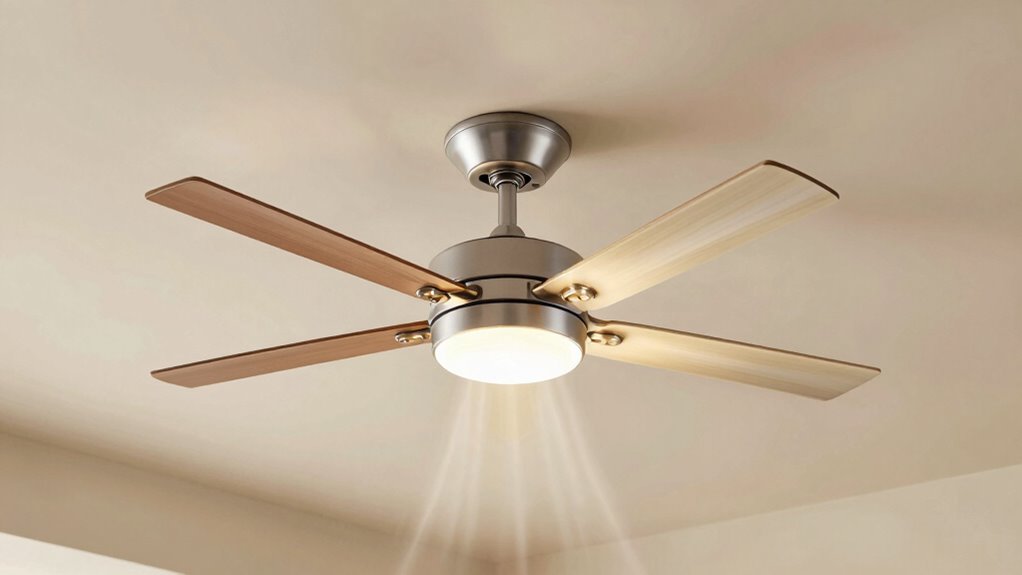

To choose the right ceiling fan, consider the size of your space. Small rooms need fans with 29-36 inch blades, while medium rooms require 36-42 inches, and larger spaces benefit from 50-54 inches or more. Hang your fan 8 to 9 feet above the floor for ideal performance. Adjust the fan direction seasonally; counterclockwise for summer breezes and clockwise for winter warmth. There’s more to learn about enhancing airflow and comfort in your home.

Get the little things that make your day delivered free with Prime
- Fast, free delivery on millions of items
- Prime Video, Amazon Music and more included
- Member-only deals all year
Key Takeaways
- Choose a ceiling fan size based on room size: 29-36 inches for small rooms, 36-42 inches for medium, and 50-54 inches or more for large spaces.
- Install fans 8 to 9 feet above the floor for optimal airflow and safety, adjusting downrod length for high ceilings.
- Set the fan to rotate counterclockwise in summer for cooling and clockwise in winter to circulate warm air.
- Regularly clean blades and check wiring to ensure safe and efficient fan operation; perform maintenance as needed.
- Select a fan style that complements your decor, considering finishes and integrated lighting options for aesthetic harmony.
Products Worth Considering

Levoit Core 600S-P Smart Air Purifier for Large Rooms

LG C2 Series 65-Inch OLED evo 4K Smart TV (OLED65C2PUA, 2022)

Samsung 42-Inch Class OLED S90F 4K Smart TV (2025)
As an affiliate, we earn on qualifying purchases.
How to Choose the Right Ceiling Fan Size for Your Space
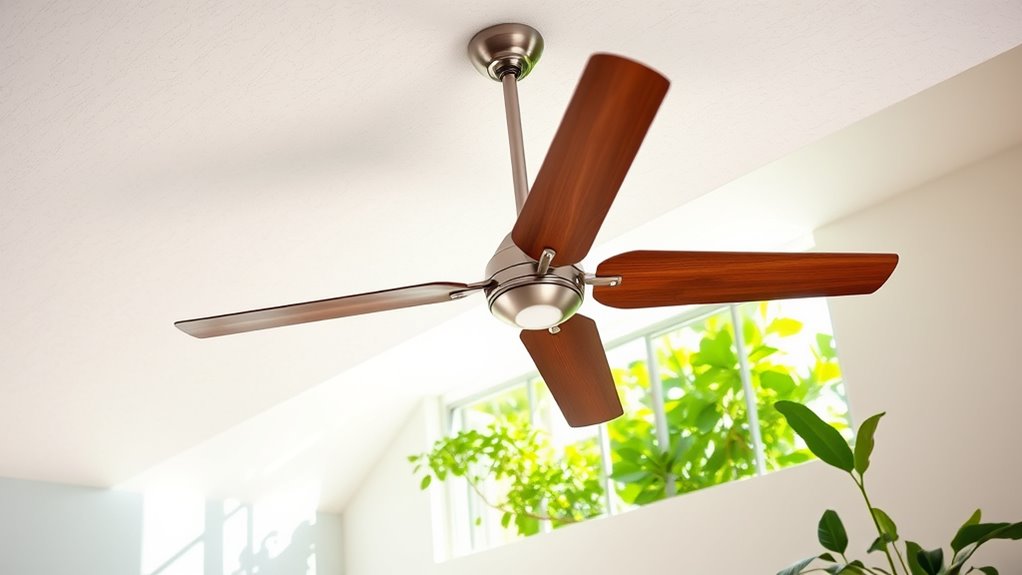
When it comes to choosing the right ceiling fan size for your space, it’s essential to take into account both the room’s dimensions and your personal comfort needs. Start by measuring your space dimensions. For small rooms under 75 square feet, a fan with a blade span of 29-36 inches works best. Medium rooms, ranging from 75 to 144 square feet, typically require fans with a 36-42 inch blade span. For larger areas, like those over 144 square feet, opt for fans with a blade span of 50-54 inches or more. Following these fan size guidelines guarantees efficient air circulation, helping you maintain a comfortable environment. Additionally, selecting the correct downrod length can improve airflow and overall fan performance. So, choose wisely to enhance your room’s atmosphere and comfort level!
Finding the Perfect Ceiling Fan Height for Installation
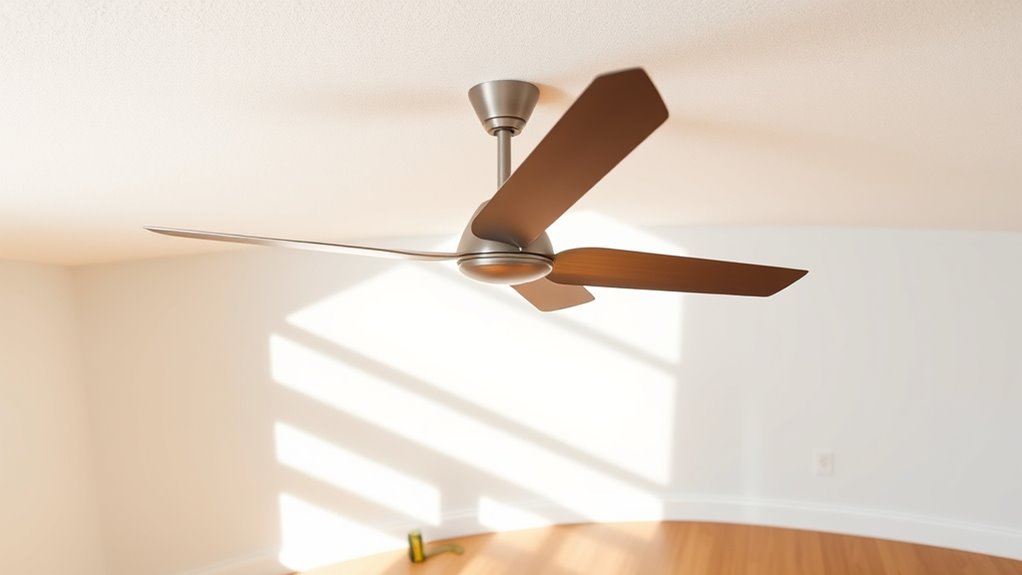
When it comes to installing your ceiling fan, the height is essential for both functionality and aesthetics. You’ll need to measure your ceiling height and consider the size of your room to determine the ideal fan height. Getting this right guarantees maximum airflow and comfort in your space.
Ideal Ceiling Fan Height
Finding the ideal ceiling fan height is essential for maximizing airflow and comfort in your space. Generally, you want your fan blades to be 7 to 9 feet above the floor for best performance. This height allows the fan to circulate air effectively without causing discomfort.
When considering ceiling fan placement, think about the room’s dimensions and furniture layout. If your fan has heavier blades made from solid materials, like wood, it may require a bit more height to guarantee safe clearance. Additionally, if you’re using a downrod, factor that into your overall measurement. By carefully choosing the right height and placement, you’ll enhance airflow and create a more enjoyable environment in your home.
Measuring Ceiling Height
Measuring your ceiling height is vital for installing a ceiling fan at the right height. Start by using measuring techniques like a tape measure to determine the distance from the floor to the ceiling. Be sure to check for any obstructions, such as beams or fixtures, that could affect your fan’s placement. Height considerations are important; ideally, your fan should hang 7 to 9 feet above the floor for best airflow and safety. If your ceiling is higher than 9 feet, you may need a downrod to achieve the correct height. Remember, a well-measured installation not only enhances the fan’s performance but also complements your room’s design, ensuring both style and function.
Room Size Considerations
Choosing the right ceiling fan height goes hand in hand with the size of your room. Consider these key factors to guarantee ideal airflow patterns and comfort:
- Room Shape: A rectangular room may require multiple fans for even circulation, while a square room might only need one centrally located fan.
- Ceiling Height: For standard 8-foot ceilings, install your fan 7 to 9 feet above the floor. Higher ceilings may require downrods to maintain proper height.
- Fan Size: Match the fan size to your room dimensions. Larger rooms benefit from fans with bigger blades for improved air movement.
- Proper airflow: Ensuring the fan is positioned correctly helps optimize air circulation and energy efficiency throughout your space.
How Ceiling Fan Direction Affects Airflow Efficiency?
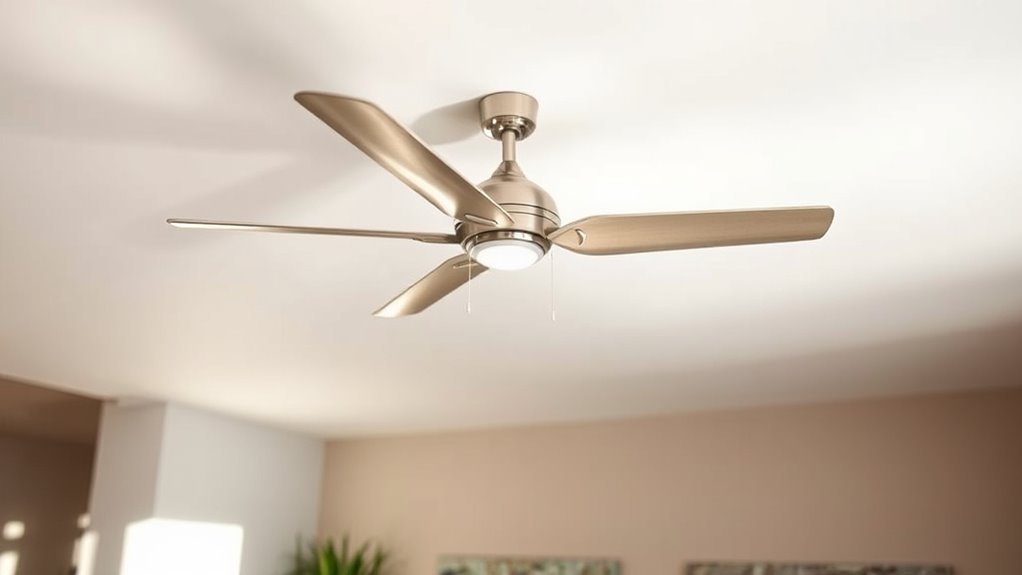
Understanding how ceiling fan direction impacts airflow efficiency is essential for maximizing comfort in your space. The direction of fan rotation greatly influences airflow patterns, helping to either cool or circulate warm air effectively. In summer, setting your fan to rotate counterclockwise pushes cool air down, creating a revitalizing breeze. Conversely, in winter, changing it to clockwise allows warm air to rise and circulate throughout the room, enhancing heating efficiency.
Here’s a quick reference table to guide you:
| Season | Fan Rotation Direction | Effect |
|---|---|---|
| Summer | Counterclockwise | Cool air down |
| Winter | Clockwise | Warm air circulation |
| Spring | Counterclockwise | Revitalizing airflow |
| Fall | Clockwise | Heat retention |
| Year-round | Depends on needs | Comfort optimization |
Choosing Ceiling Fan Styles to Match Your Home Decor
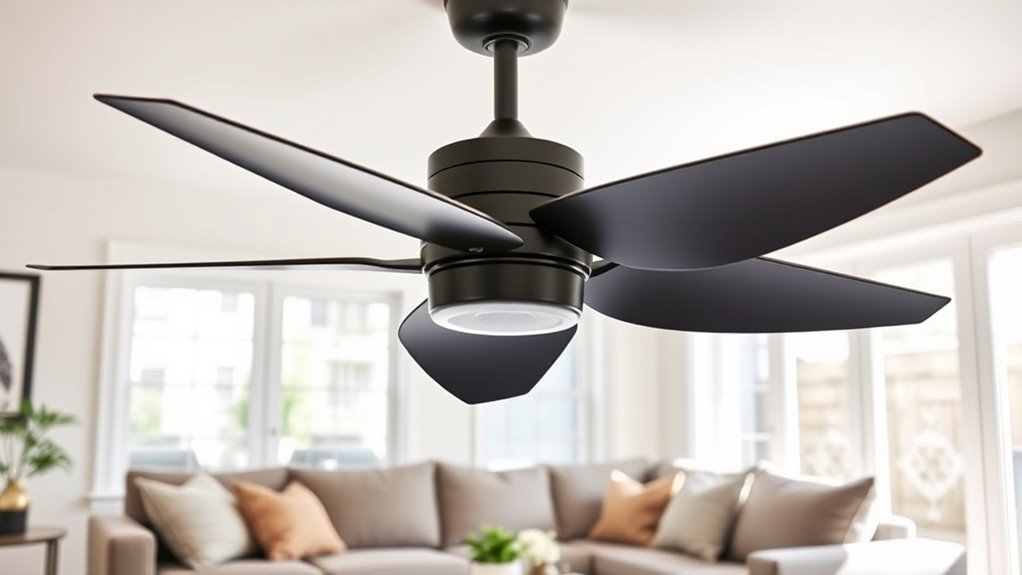
When choosing a ceiling fan, it’s essential to contemplate whether you prefer a modern aesthetic or a more traditional look. Color coordination can also play a significant role in how well the fan complements your space. Let’s explore how to select a ceiling fan style that enhances your home decor.
Modern vs. Traditional Styles
Whether you’re aiming for a sleek, contemporary vibe or a cozy, classic feel, the style of your ceiling fan can greatly enhance your home decor. Choosing between modern aesthetics and traditional craftsmanship can set the tone for your space. Here are three key elements to take into account:
- Design: Modern fans often feature clean lines and minimalistic designs, while traditional fans may showcase ornate detailing and rich materials. Design elements play a crucial role in ensuring your fan aligns with your interior style. Incorporating aesthetic consistency across your decor helps create a harmonious environment.
- Finish: Select finishes that complement your decor—brushed metals for a modern look or wood tones for a traditional feel.
- Lighting: Some modern fans come with integrated LED lights, whereas traditional styles might use classic lamp shades.
- Incorporating interior design basics principles, such as style harmony, ensures your ceiling fan complements the overall aesthetic.
Color Coordination Tips
To create a cohesive look in your home, it’s essential to take into account color coordination when choosing a ceiling fan. Start by considering your existing color schemes. If your room features neutral tones, opt for a fan that adds a pop of color with bold accent colors. Conversely, if you have a vibrant palette, a fan in a matching hue can tie everything together. Look for fans with finishes that complement your decor—think brushed nickel for modern spaces or wood tones for traditional styles. Don’t forget about the fan blades; they can also enhance the overall aesthetic. By thoughtfully selecting colors and styles, you’ll guarantee your ceiling fan contributes to a harmonious atmosphere in your home.
Calculating the Optimal Ceiling Fan Blade Span
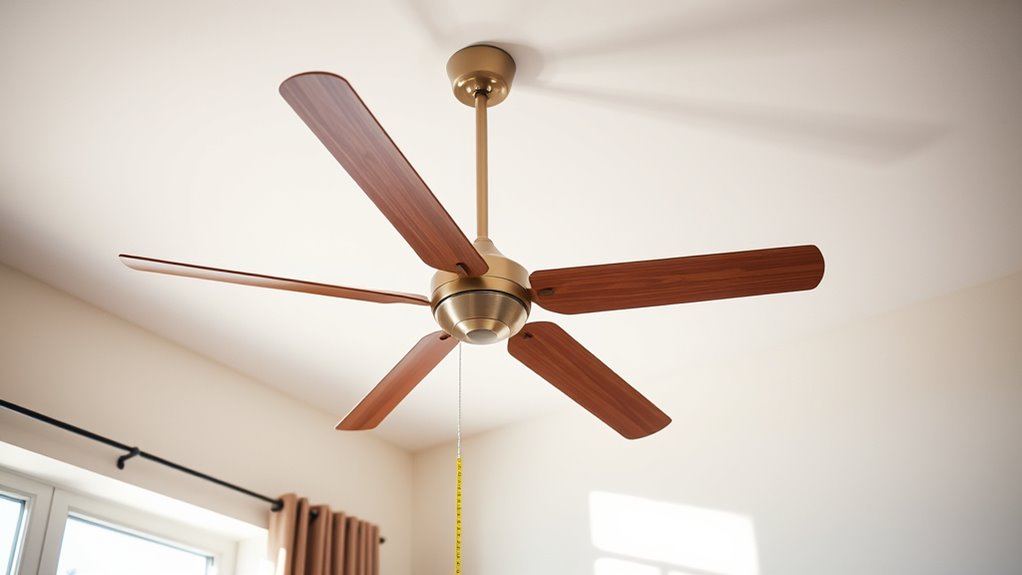
Choosing the right ceiling fan blade span is critical for maximizing airflow and comfort in your space. To perform an effective blade span calculation, you should consider a few key factors. Here are some fan size guidelines to help you choose the ideal size:
- Room Size: Measure the dimensions of your room. Smaller rooms (up to 75 sq. ft.) typically need a fan with a 36-inch blade span, while larger rooms (up to 400 sq. ft.) may require a fan with a 52-inch blade span or more.
- Ceiling Height: Higher ceilings may benefit from fans with longer blades for better air circulation.
- Fan Style: Different fan designs can affect airflow. Choose one that suits your style while also maximizing efficiency.
Following these guidelines guarantees you’ll find the perfect ceiling fan for your needs.
Tips for Installing Your Ceiling Fan at the Correct Height
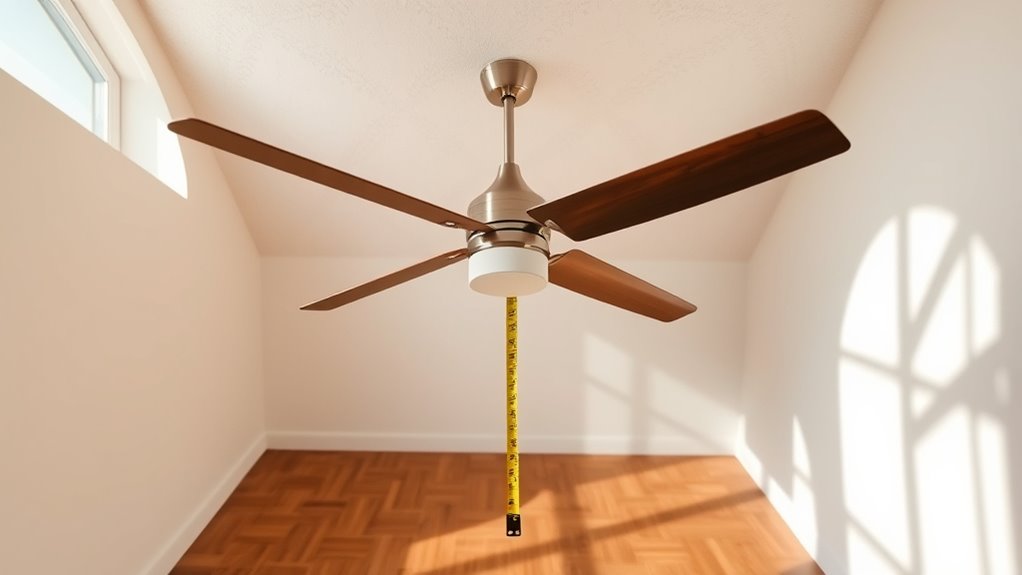
Installing your ceiling fan at the correct height is essential for both safety and efficiency. To guarantee peak performance, hang your fan about 8 to 9 feet above the floor. This height maximizes airflow while minimizing the risk of accidents. If your ceiling is low, consider using a flush-mount fan to maintain safety. For high ceilings, a downrod can bring the fan closer to your living space. Always check local building codes for any specific regulations regarding fan installation. Don’t forget to secure the fan properly to prevent wobbling, which can lead to wear over time. Following these fan installation tips not only enhances comfort but also prioritizes ceiling fan safety in your home.
Seasonal Adjustments for Your Ceiling Fan
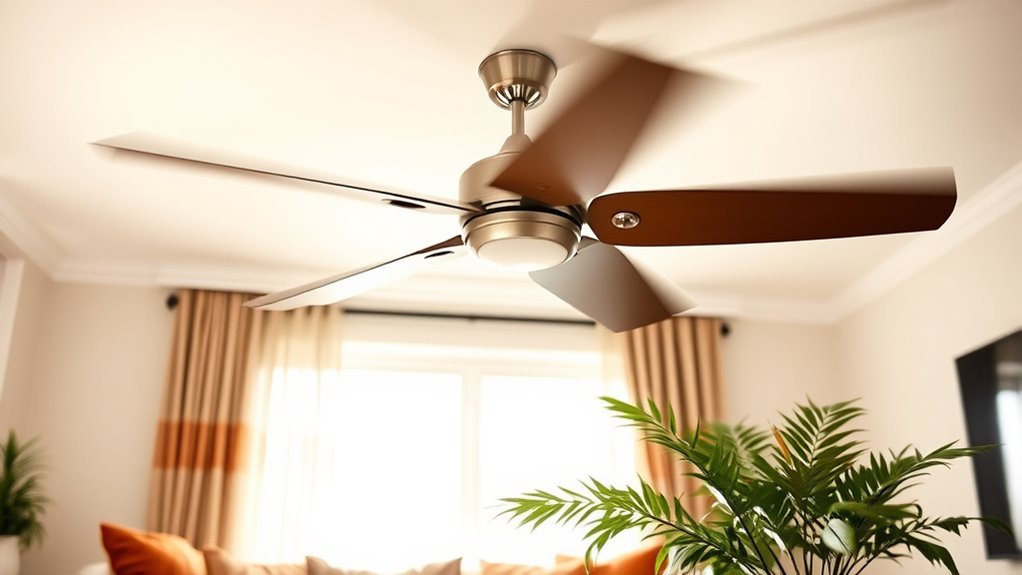
Once your ceiling fan is securely installed at the right height, it’s time to contemplate how to maximize its effectiveness throughout the year. Adjusting your fan’s settings according to the season can make a significant difference in comfort and energy savings. Proper fan maintenance ensures consistent performance and longevity. 1. Summer Settings: Rotate your fan blades counterclockwise to create a cool breeze, helping you feel cooler without lowering the thermostat. 2. Winter Settings: Switch the blade direction to clockwise to circulate warm air trapped near the ceiling, keeping your space cozy. 3. Regular Adjustments: Don’t forget to change these settings as the seasons change to guarantee ideal performance and comfort year-round.
Essential Ceiling Fan Maintenance Tips
Maintaining your ceiling fan is essential for ideal performance and longevity. Start by regularly cleaning blades to remove dust and debris, which can hinder airflow and efficiency. Use a damp cloth or a gentle cleaner—avoid harsh chemicals that might damage the finish. Next, don’t forget to check wiring periodically. Verify there are no loose connections or frayed wires, as this can pose safety hazards. Also, inspect the fan for any unusual noises or wobbling, which might indicate an alignment issue. Finally, consider lubricating the motor if your fan model requires it. By following these maintenance tips, you’ll help your ceiling fan run smoothly and effectively for years to come.
Benefits of Ceiling Fans for Energy Efficiency and Comfort
Ceiling fans can greatly enhance both energy efficiency and comfort in your home. By using a ceiling fan, you can enjoy significant benefits that contribute to a more pleasant living environment while saving on energy costs. Here are three key advantages:
- Energy Savings: Running a ceiling fan can help reduce your reliance on air conditioning, leading to lower utility bills.
- Airflow Improvement: Ceiling fans create a cooling breeze that enhances airflow, making your space feel cooler without adjusting the thermostat.
- Year-Round Comfort: With reversible motors, ceiling fans can circulate warm air in winter, ensuring consistent comfort throughout the year.
Incorporating ceiling fans into your home can lead to enhanced comfort and notable energy savings.
Frequently Asked Questions
Can Ceiling Fans Be Used Outdoors?
Yes, ceiling fans can be used outdoors! When choosing one, look for models made from outdoor materials like weather-resistant wood or metal. These fans are designed to withstand moisture and humidity. You’ll also find various fan styles that can complement your outdoor decor, from sleek modern designs to rustic options. Just make sure to install it in a covered area for maximum durability, ensuring you enjoy cool breezes while relaxing outside.
What Is the Ideal Number of Blades for a Ceiling Fan?
The ideal number of blades for a ceiling fan usually ranges from three to five. While blade design can affect aesthetics, it’s the fan efficiency that truly matters. Fans with fewer blades tend to move air more efficiently, but they can be noisier. On the other hand, more blades can create a quieter operation, though they may not be as energy-efficient. Ultimately, it’s about balancing style and performance to suit your needs.
Do Ceiling Fans Require Specific Electrical Wiring?
Yes, ceiling fans do require specific electrical wiring. You need to verify your electrical system meets the wiring requirements for the fan’s motor and any additional features like lights. For electrical safety, it’s best to consult a licensed electrician if you’re unsure about your setup. They can help you install the fan correctly, verifying everything is up to code and operates safely, giving you peace of mind while enjoying your fan.
How Do I Clean My Ceiling Fan Safely?
Cleaning your ceiling fan safely is like tending to a delicate garden. Start by turning off the fan and using a soft cloth or microfiber duster to gently wipe the blades. For tougher grime, mix a little soap with water, dampen the cloth, and wipe again. Remember to avoid harsh chemicals. Follow these fan cleaning tips, and you’ll keep your fan looking fresh while ensuring a safe cleaning process.
Can Ceiling Fans Reduce Heating Costs in Winter?
Yes, ceiling fans can reduce your winter heating costs. By running your fan in reverse, you push warm air down from the ceiling, which helps distribute the heat more evenly throughout the room. This method creates energy savings since you won’t need to crank up the thermostat as much. Just remember to set your fan to a low speed, and you’ll enjoy a cozy space while keeping those heating bills in check!
Conclusion
In the dance of air and comfort, the right ceiling fan transforms your space into a revitalizing oasis. Picture a gentle breeze swirling around you, whispering cool relief on a hot day or inviting warmth during chilly evenings. By choosing the right size, height, and direction, you not only enhance your home’s style but also boost energy efficiency. So, embrace the rhythm of your ceiling fan, and let it create a perfect atmosphere year-round.