
If your food bakes weird, your oven’s temperature accuracy might be the culprit. You’ll notice unevenly cooked baked goods, burned edges, or undercooked centers. Inconsistent heating can throw off cooking times and lead to disappointing results. Regularly calibrating your oven with a thermometer helps guarantee it runs at the right temperature. Understanding these quirks can improve your baking. Want to find out how to test your oven and adjust recipes accordingly? Keep reading for more insights!

Get the little things that make your day delivered free with Prime
- Fast, free delivery on millions of items
- Prime Video, Amazon Music and more included
- Member-only deals all year
Key Takeaways
- Inaccurate oven temperatures can lead to uneven cooking, causing baked goods to burn on the edges while remaining raw in the center.
- Oven calibration with an accurate thermometer ensures consistent results and helps identify temperature discrepancies.
- Gas and electric ovens may function differently, leading to hot spots or uneven heating, affecting cooking times and outcomes.
- Adjusting recipes and temperatures by 25°F can compensate for your oven’s quirks and improve baking success.
- Professional inspections help diagnose issues like malfunctioning thermostats, preventing safety hazards and ensuring efficient oven performance.
oven thermometer for calibration
As an affiliate, we earn on qualifying purchases.
As an affiliate, we earn on qualifying purchases.
Common Signs Your Oven Is Off
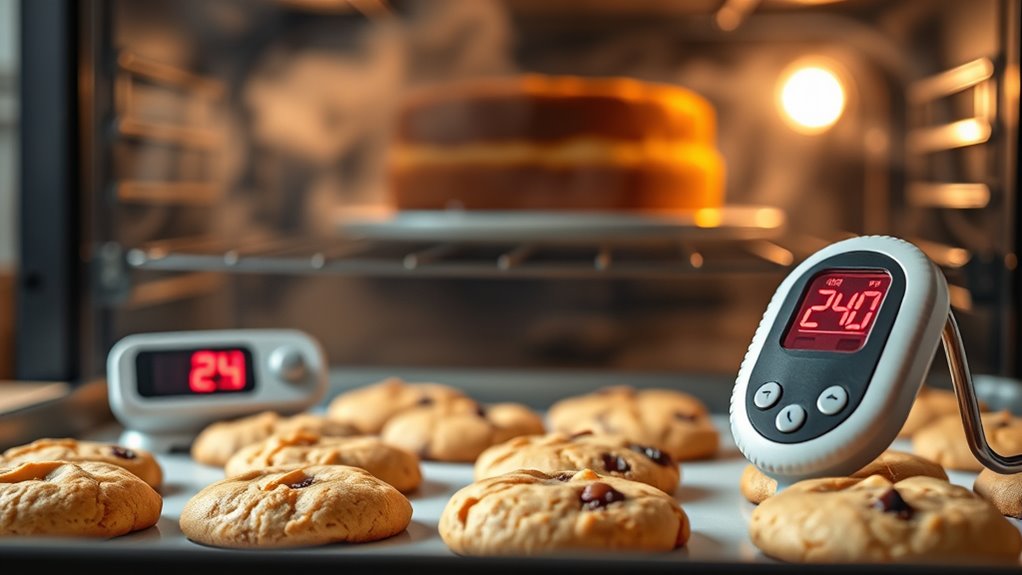
Have you ever wondered why your baked goods come out unevenly cooked? Poor oven performance could be the culprit. If your cakes rise in the center but remain gooey, or if cookies burn on the edges while staying raw in the middle, it’s a sign your oven isn’t maintaining the right temperature. Another indicator is if your food takes considerably longer or shorter to cook than the recipe suggests. These inconsistencies can ruin your baking experience. You might also notice that the food doesn’t brown evenly. All these signs point to a need for evaluating your oven’s accuracy. Consistent baking relies on a well-functioning oven, so take note of these clues to improve your delicious creations!
As an affiliate, we earn on qualifying purchases.
Understanding Your Oven Temperature Calibration
Understanding your oven’s temperature calibration is essential for perfecting your cooking. You might not realize it, but even small inaccuracies can lead to unsatisfactory results. Let’s explore how to test your oven’s accuracy and why regular calibration is so important.
Importance Of Calibration
While most people rely on their ovens for perfectly cooked meals, the importance of calibration often goes overlooked. Accurate oven temperatures are essential for achieving consistent results in your baking and roasting. Using calibration tools like an oven thermometer can help you determine if your oven is actually heating to the temperature you set. If you notice issues with your dishes, it might be time to check your calibration frequency. Regularly calibrating your oven guarantees it operates effectively, preventing surprises like burnt edges or undercooked centers. By taking the time to calibrate, you’ll enhance your cooking experience and achieve better results, making every meal a delight rather than a guessing game.
Common Temperature Inaccuracies
When you bake or roast, it is crucial to recognize that your oven may not always reach the temperature you set. Different oven types, whether gas or electric, can have varying levels of accuracy, leading to unexpected results. You might find that your oven runs hotter or cooler than indicated, causing temperature fluctuations that affect cooking times and the finished product. For instance, a gas oven may heat up quickly but can also create hot spots, while an electric oven may take longer to preheat but provide more even heat. Understanding these discrepancies helps you adjust your cooking techniques for better outcomes. Familiarizing yourself with your oven’s quirks can make a significant difference in your baking success. Regularly calibrating your oven ensures more consistent results and helps you avoid surprises during critical cooking moments.
Testing Oven Accuracy
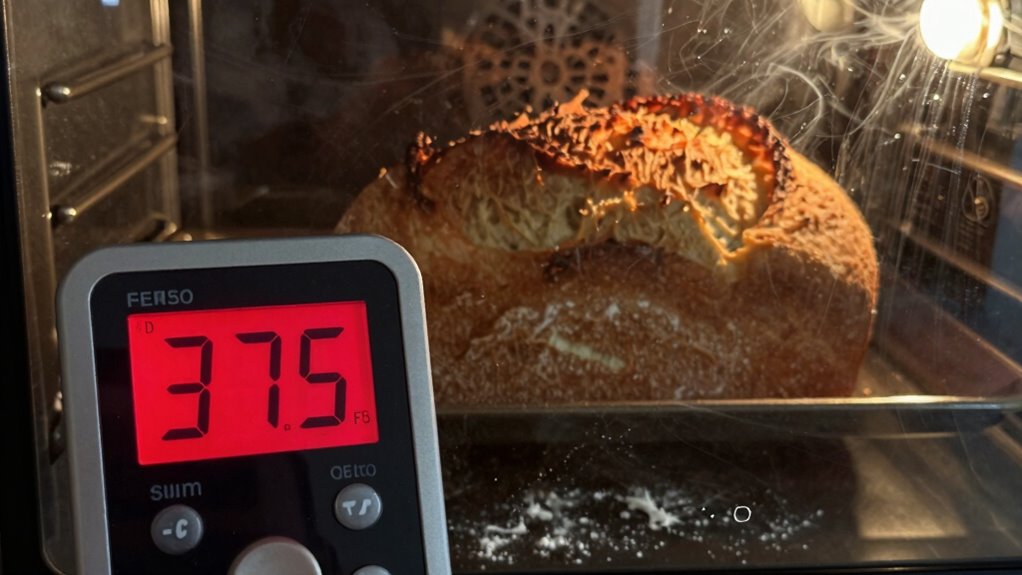
To guarantee your baking turns out as expected, testing your oven’s accuracy is a smart move. Start by getting an oven thermometer, which provides a reliable reading of your oven’s internal temperature. Preheat your oven to a set temperature, then place the thermometer inside. After about 15 minutes, check the thermometer’s reading against your oven’s display. If there’s a significant difference, you’re dealing with temperature fluctuations that can affect your baked goods. Using a calibrated oven ensures more precise temperature control, leading to better baking results. Regularly testing your oven allows you to maintain consistent cooking temperatures, helping you achieve the perfect bake every time. To improve accuracy, consider adjusting your oven’s calibration settings if possible. Remember, even slight discrepancies can lead to uneven baking.
oven temperature calibration tool
As an affiliate, we earn on qualifying purchases.
As an affiliate, we earn on qualifying purchases.
The Science of Baking: Why Temperature Matters
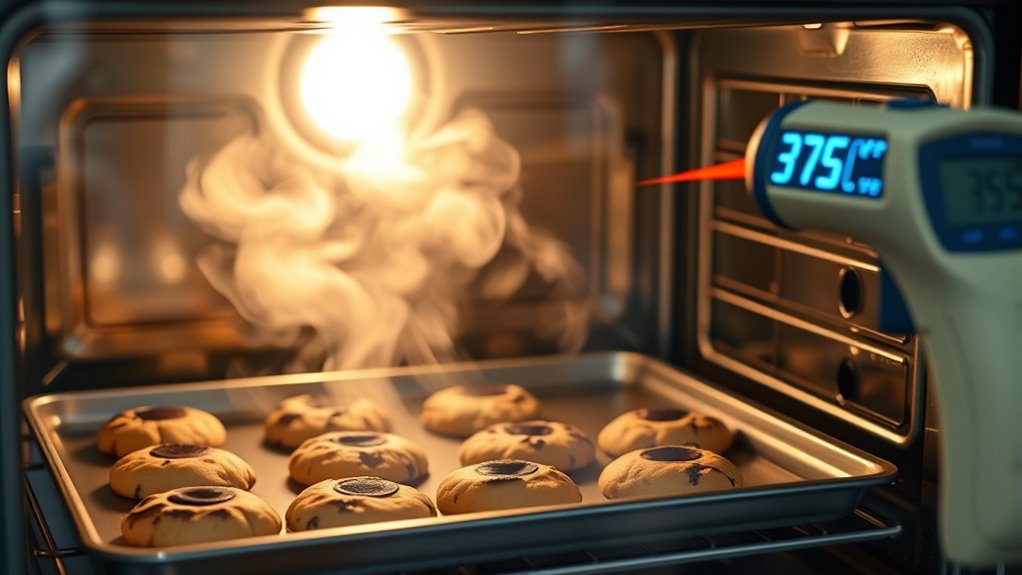
Understanding the importance of temperature in baking can mean the difference between a perfectly risen cake and a dense, unappetizing disaster. Temperature plays a vital role in baking chemistry, affecting how ingredients interact. For instance, precise heat distribution guarantees that your batter rises evenly, creating that desired fluffy texture. If your oven runs too hot or too cold, the chemical reactions that should occur may not happen correctly. Baking soda and baking powder need the right environment to produce carbon dioxide, which helps your baked goods rise. Furthermore, proteins in flour and eggs coagulate at specific temperatures, impacting the final structure. Accurate oven temperature is essential to ensure these chemical processes happen correctly and consistently. Proper calibration of your oven ensures consistent baking results, making it easier to achieve your desired outcomes every time. So, maintaining accurate oven temperature isn’t just a detail; it’s essential for baking success.
As an affiliate, we earn on qualifying purchases.
How to Test Your Oven’s Temperature
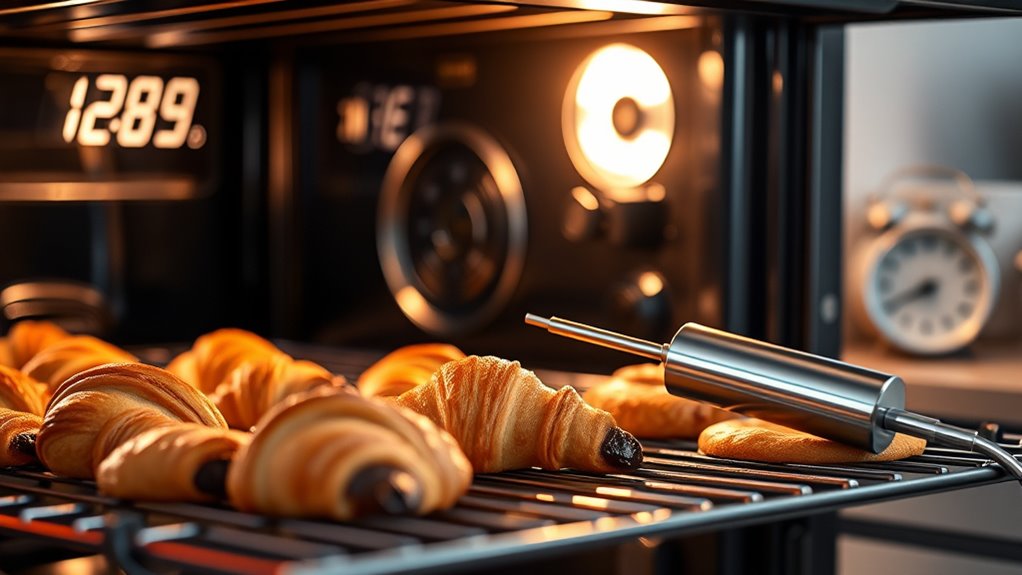
How can you be confident your oven is at the right temperature? Start by investing in an oven thermometer. There are various oven thermometer types available, like dial, digital, or infrared, each providing reliable readings. Place the thermometer in the center of your oven and preheat it to a specific temperature, like 350°F. After about 15-20 minutes, check the reading. If it’s off, you can use DIY calibration methods to adjust your oven settings. For example, if your oven runs hot, lower the temperature accordingly. Conversely, if it’s cool, increase the heat. Regularly testing your oven’s temperature guarantees consistent baking results, helping you achieve perfectly baked goods every time. proper calibration ensures your oven maintains accurate temperatures for reliable cooking outcomes. To maintain accuracy over time, consider seasonal oven checks and adjustments, especially after power outages or seasonal changes that may affect oven performance. Additionally, understanding how your oven’s temperature accuracy impacts your cooking can help you make necessary adjustments for optimal results. Being aware of your oven’s calibration status is also essential to prevent uneven baking, which can occur due to temperature inconsistencies.
Adjusting Recipes for Your Oven
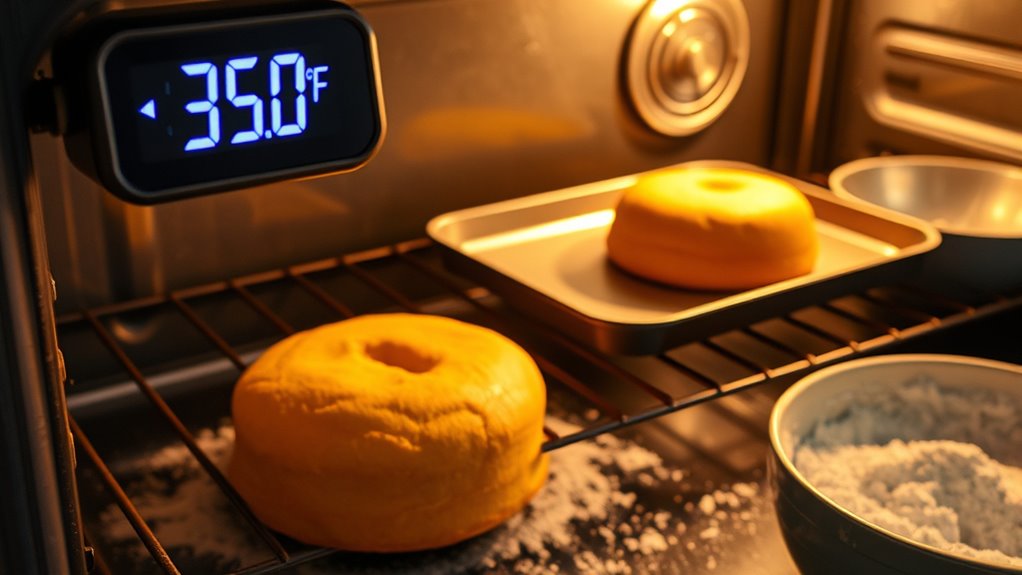
Ever wondered why your baked goods sometimes don’t turn out as expected? One reason could be your oven’s temperature accuracy. To get better results, you might need to make some ingredient adjustments. For instance, if your oven runs hot, reduce the temperature by 25°F and monitor the baking time. On the other hand, if it’s cooler, you may need to increase the temperature slightly. Additionally, consider recipe substitutions; swapping ingredients can help compensate for your oven’s quirks. Using a different flour or adjusting the sugar can enhance texture and flavor. Always take notes on your modifications, so you can replicate successes or troubleshoot future issues. Proper kitchen ventilation can also influence baking outcomes by maintaining consistent oven temperatures and reducing humidity. Being aware of oven calibration can help you better understand how your oven’s actual temperature compares to the dial setting. Regularly monitoring oven temperature with an oven thermometer can provide more accurate readings, allowing for more precise adjustments. Checking oven door seals for leaks can help maintain consistent heat and improve baking results. With a few tweaks, you’ll find your baked goods rising to the occasion!
When to Seek Professional Help for Oven Issues
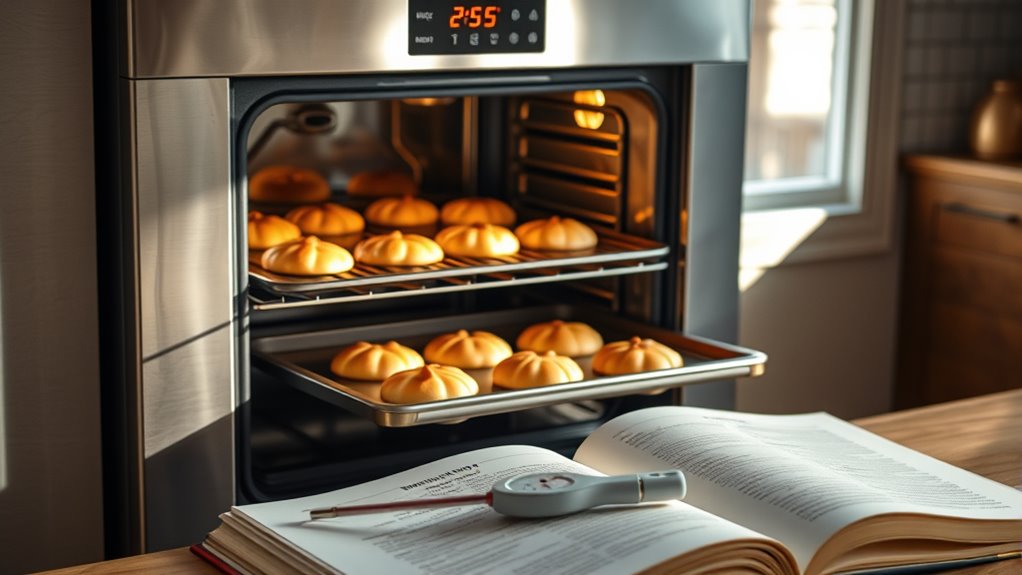
When should you consider calling in a professional for your oven problems? If your oven’s temperature fluctuates wildly, it’s time for a professional inspection. You shouldn’t ignore signs like burnt edges on baked goods or inconsistent cooking times. These issues often indicate a malfunctioning thermostat or heating element, which requires expert oven repair. Additionally, if you notice strange noises, smells, or if your oven fails to heat up at all, don’t hesitate to seek help. Proper maintenance and diagnosis can prevent further damage and ensure your oven operates safely and efficiently. Attempting repairs yourself can lead to further damage or safety hazards. Trusting a professional guarantees the job is done right, restoring your oven’s performance and your peace of mind. Remember, it’s better to consult an expert than to risk costly mistakes.
Frequently Asked Questions
How Can I Tell if My Oven Is Too Hot or Too Cold?
To tell if your oven’s too hot or too cold, use an oven thermometer. There are various thermometer types, like dial or digital, that can give you an accurate reading. Place it in the center of your oven and preheat. After it’s heated, check the temperature. If it’s off, try temperature calibration methods, like adjusting the oven’s thermostat or consulting the manual. This’ll help get your baking back on track!
Can Oven Temperature Fluctuations Affect Baking Times Significantly?
Absolutely, those temperature fluctuations can throw your baking off like a gust of wind toppling a carefully stacked tower of cookies. In baking science, temperature consistency is essential. If your oven swings from hot to cold, your cakes might end up sunken or cookies could spread too much. You’ll find that adjusting your baking times becomes necessary to compensate for those unpredictable shifts, leading to a less-than-perfect batch. Stay vigilant for the best results!
What Tools Are Best for Measuring Oven Temperature Accurately?
To measure oven temperature accurately, you should use an oven thermometer or an infrared thermometer. An oven thermometer hangs inside your oven, providing a precise reading of the temperature. Infrared thermometers let you measure surface temperatures without opening the oven door, which helps maintain consistent heat. Both tools can help you guarantee your baked goods turn out just right, reducing the chances of underbaking or overbaking. Invest in one for reliable results!
Is It Safe to Use an Oven With Inaccurate Temperature Settings?
Using an oven with inaccurate temperature settings isn’t safe. In fact, around 20% of home ovens run hotter or cooler than their settings. This can lead to baking risks, like undercooked food or even foodborne illnesses. When your oven’s temperature is off, it can compromise oven safety, especially with meats and baked goods. Always double-check your oven’s accuracy to guarantee everything you bake is both delicious and safe to eat.
How Often Should I Calibrate My Oven for Best Results?
You should calibrate your oven at least once a year for the best results. Regular calibration guarantees temperature consistency, helping your dishes bake evenly. If you notice drastic changes in baking times or results, it’s a good idea to check more frequently. Pay attention to how your oven performs with different recipes, and don’t hesitate to recalibrate if something seems off. Maintaining accuracy will improve your cooking experience considerably.
Conclusion
To sum up, ensuring your oven’s temperature is accurate can make all the difference in your baking results. So, have you ever wondered why your cakes rise unevenly or your cookies burn on one side? By regularly testing and calibrating your oven, you can avoid frustrating mishaps and enjoy perfectly baked treats. Remember, a little attention to detail can turn your kitchen into a baking haven, so don’t hesitate to make those adjustments when needed!
NFL season / tailgating Picks
team gear
As an affiliate, we earn on qualifying purchases.