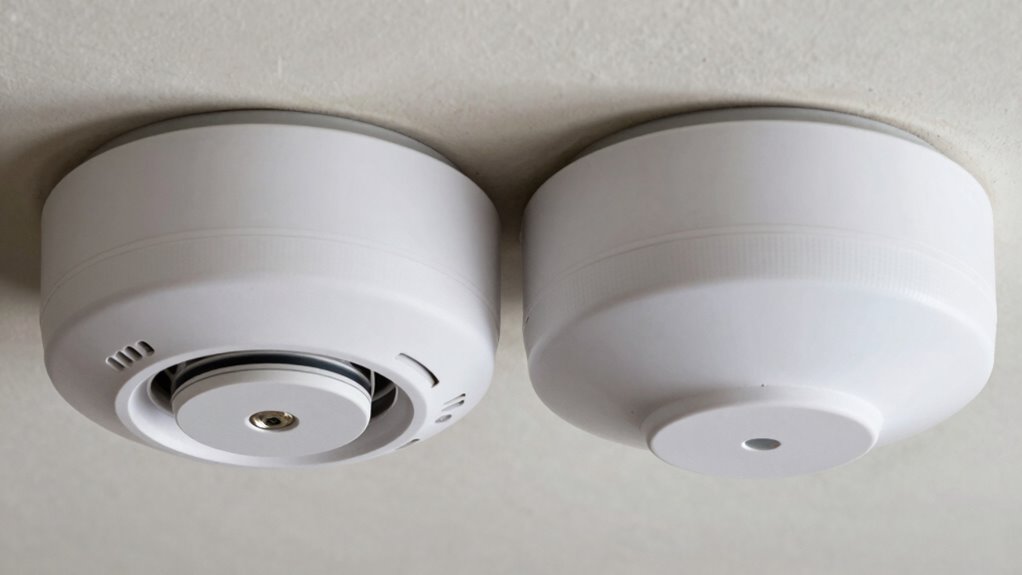

Ionization smoke detectors respond quickly to flaming fires using radioactive chambers that detect changes in ion flow, but they can be prone to false alarms from cooking. Photoelectric detectors use light scattering to detect smoke from smoldering fires, offering longer battery life and fewer false alarms. Choosing between them depends on your fire risk, but understanding their differences helps you make the best safety decision—keep going to learn more about which type suits your home best.
Key Takeaways
- Ionization detectors respond faster to flaming fires, while photoelectric detectors excel at detecting smoldering fires.
- Ionization sensors use radioactive chambers; photoelectric sensors rely on light scattering to detect smoke.
- Photoelectric detectors tend to have longer battery life and fewer false alarms from cooking activities.
- Installing both types can provide comprehensive fire detection coverage for different fire scenarios.
- Proper placement and regular maintenance are crucial for optimal performance of both detector types.

First Alert Battery Smoke Alarm
- Advanced Smoke Detection: Reduces false alarms, early fire warning
- Battery-Operated Design: Easy to install and maintain
- Front Access Battery: Simple battery replacement
As an affiliate, we earn on qualifying purchases.
As an affiliate, we earn on qualifying purchases.
How Do Ionization and Photoelectric Smoke Detectors Detect Fires?
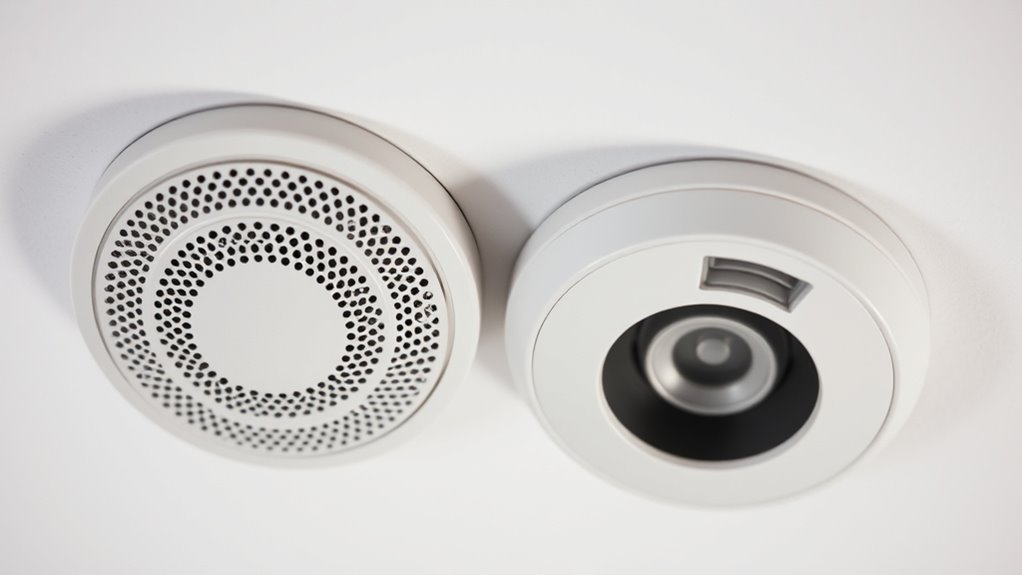
Ever wonder how smoke detectors actually sense a fire? It all starts with sensor placement. Ionization detectors have small radioactive chambers that detect smoke particles by how they disrupt the ion flow inside. In contrast, photoelectric detectors use a light source and a sensor; when smoke enters, it scatters the light and triggers the alarm. Alarm sensitivity varies between these types—ionization detectors respond quickly to flaming fires, while photoelectric units are better at detecting smoldering fires. Proper sensor placement guarantees maximum coverage, reducing false alarms and missed detections. Knowing how each detector works helps you position them correctly in your home. Understanding the detection methods used by each type can help you choose the best alarms for different fire scenarios. Some detectors combine both detection technologies to improve overall safety. Additionally, understanding the sensor placement can significantly enhance fire detection effectiveness. For example, placing detectors near potential fire sources or in high-risk areas can improve early detection by utilizing proper placement strategies. Recognizing the different fire types that each detector is best suited for can further optimize your fire safety measures. Ultimately, understanding their detection methods improves safety, ensuring you’re alerted promptly no matter the fire’s nature.

Kidde Compact Smoke Detector, AA Battery-Powered, 10SDR
- Fast Smoke Detection: Detects smoke 25% faster
- Loud Alarm & Visual Indicator: 85dB alarm with red LED light
- Compact Design: Suitable for home use
As an affiliate, we earn on qualifying purchases.
As an affiliate, we earn on qualifying purchases.
Pros and Cons of Ionization vs. Photoelectric Smoke Detectors
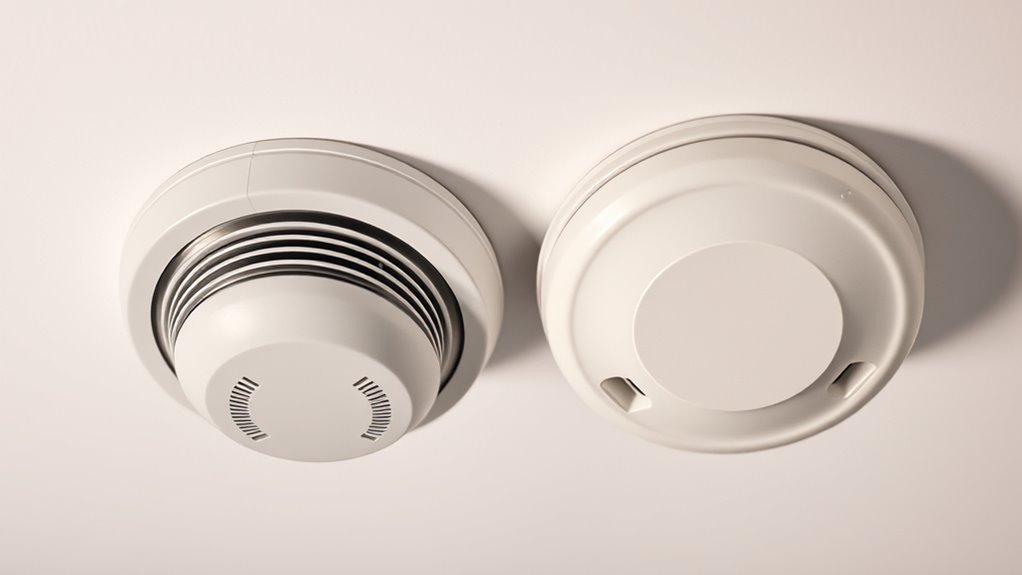
When choosing between ionization and photoelectric smoke detectors, it’s important to understand their respective advantages and disadvantages. Ionization detectors respond quickly to flaming fires, but they tend to have shorter battery life and may be more prone to false alarms from cooking. Photoelectric detectors excel at detecting smoldering fires and usually last longer on batteries, reducing maintenance. Additionally, understanding the installation considerations can help optimize their effectiveness in your space. Proper placement and sensor positioning are crucial for maximizing their detection capabilities and minimizing false alarms. Considering sensor sensitivity is also vital to ensure the detectors perform effectively without causing unnecessary disturbances. Moreover, selecting a detector with the appropriate technology type can significantly impact overall safety and reliability.

First Alert Battery Combination Smoke & Carbon Monoxide Alarm
- Detection Technology: Advanced sensing reduces false alarms
- Protection Type: Combines smoke and carbon monoxide detection
- End-of-Life Warning: Alerts when replacement is needed
As an affiliate, we earn on qualifying purchases.
As an affiliate, we earn on qualifying purchases.
Which Smoke Detectors Are Best for Different Types of Fires?
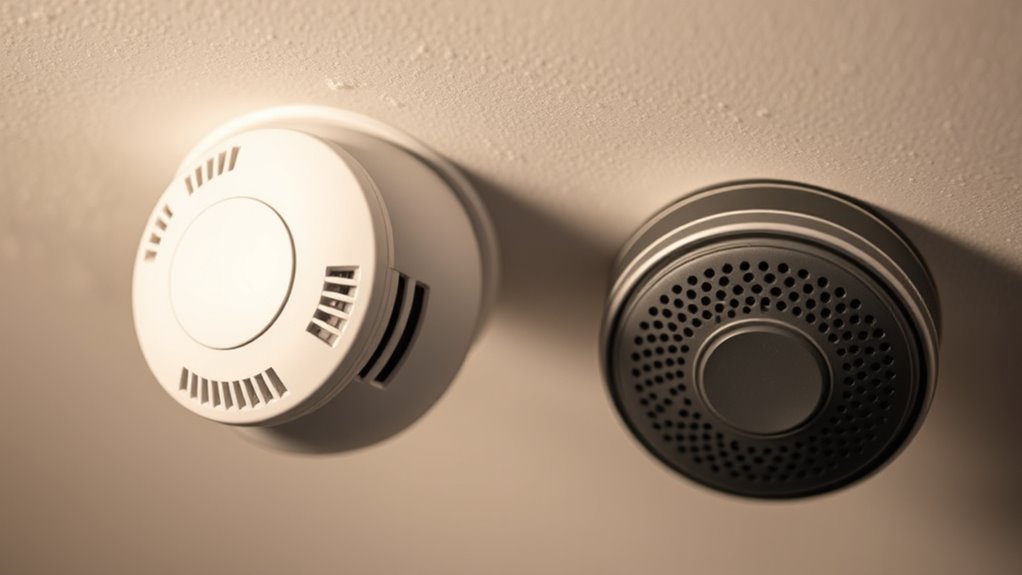
Different types of fires require different smoke detectors for ideal safety. Fast flaming fires produce lots of visible smoke, making ionization detectors highly effective. Conversely, smoldering fires release more smoke slowly, so photoelectric detectors are better suited. When choosing a detector, consider the fire type and detector placement to ensure early warning. For example:
Choose ionization or photoelectric detectors based on fire type for optimal safety.
- Use ionization detectors in kitchens or garages prone to flaming fires.
- Install photoelectric detectors in bedrooms and living areas where smoldering fires may start.
- Combine both types in large or multi-purpose spaces for thorough coverage.
- Place detectors at different heights, depending on heat and smoke rise.
- Regularly test and maintain your detectors to keep them responsive to the specific fire type.
- Understanding fire behavior helps in selecting the most effective smoke detector for your safety needs.
- Additionally, knowing the environmental impact of tissue paper can encourage safer placement and disposal of household papers to prevent fire hazards.
- Proper installation and maintenance of smoke detectors are crucial to ensure their optimal performance over time.
- Being aware of the smoke detector technology options available can help in choosing the best device for your home’s unique conditions.

Kidde Smoke Detector, 10-Year Battery-Powered, 20SD10, 3 Pack
- Fast Smoke Detection: Detects smoke 25% faster
- Loud Alarm & Visual Alerts: 85 dB alarm with LED light
- Long-Lasting Battery: 10-year built-in battery
As an affiliate, we earn on qualifying purchases.
As an affiliate, we earn on qualifying purchases.
Where Should You Install Different Types of Smoke Detectors in Your Home?

Selecting the right locations for your smoke detectors is crucial to guarantee early fire detection and safety. Place smoke detectors in all bedrooms to ensure you’re alerted even if a fire starts while you’re asleep. Install detectors outside sleeping areas, such as hallways, for thorough coverage. For kitchen considerations, avoid installing detectors directly above stoves or in high-moisture areas to prevent false alarms. Instead, position them at least 10 feet away from cooking appliances. Remember, ionization detectors are better for detecting fast-flaming fires, while photoelectric models excel at catching slow, smoky fires. Proper placement ensures each detector performs effectively, giving you reliable alerts and increased safety throughout your home. Additionally, be mindful of indoor air quality factors, such as dust and microplastics, which can affect detector sensitivity and overall health. Regularly testing and maintaining your detectors helps ensure optimal operation, fire safety, and detection reliability, preventing potential malfunctions caused by environmental contaminants. Incorporating regular maintenance routines can further enhance the longevity and performance of your smoke detectors.
How to Choose and Maintain the Right Smoke Detector for Your Safety
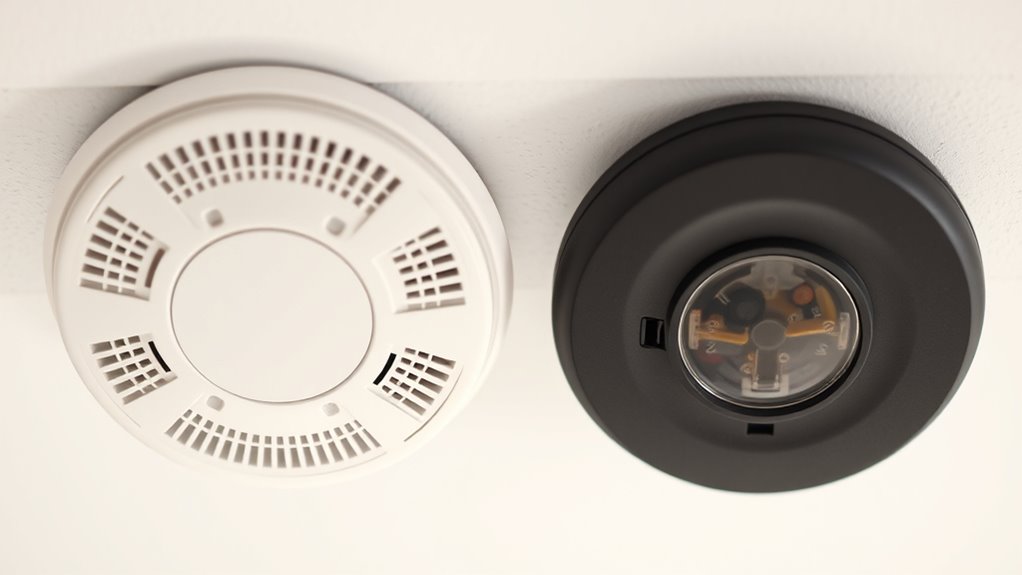
Choosing the right smoke detector is essential for your safety, and maintaining it properly guarantees it functions when you need it most. Regularly check the battery life to ensure your detector operates reliably. When installing, follow specific tips to maximize effectiveness, such as placing detectors on every level and away from vents or windows. Consider the type—ionization or photoelectric—that best suits your home’s risks. Replace batteries at least once a year or when the low-battery alert sounds. Clean the detector regularly to prevent dust buildup. Test the unit monthly to confirm it’s working properly. Remember, a well-maintained smoke detector can save lives by providing early warning during emergencies. Vetted – wave and wind Proper placement can also help improve detector performance and reliability. Additionally, understanding the battery capacity of your smoke detectors can ensure they have sufficient power during emergencies. Regularly reviewing your maintenance schedule helps keep your detectors in optimal condition for safety. Maintaining your smoke detector’s air filtration can also prevent false alarms caused by dust or insects. Ensuring your detector’s power source is dependable is critical for consistent operation.
Frequently Asked Questions
Can Dual-Sensor Smoke Detectors Provide Better Fire Detection?
Yes, dual-sensor smoke detectors offer better fire detection by combining ionization and photoelectric technologies. This provides you with dual sensor benefits, increasing detection accuracy for both fast flaming fires and slow smoldering ones. With a single device, you get all-encompassing coverage, reducing false alarms and ensuring you’re alerted early in different fire scenarios. If safety matters most, choosing dual-sensor detectors is a smart move for better protection.
Are There Specific Brands Known for Higher Reliability?
When it comes to reliability, you’re better off sticking with trusted brands like Kidde, First Alert, and Nest, which have solid reputations for quality. Don’t just take their word for it—check consumer reviews to see real user experiences. While no brand is perfect, these companies tend to deliver dependable detectors that keep you safe. In the long run, it’s worth investing in brands with a proven track record—after all, safety isn’t something to gamble on.
How Do Environmental Factors Affect Smoke Detector Performance?
Environmental interference can considerably impact your smoke detector’s performance by causing false alarms or reducing sensor sensitivity. Dust, humidity, steam, or aerosols may trigger the alarm unnecessarily or hinder its ability to detect smoke effectively. To guarantee ideal performance, keep the detector clean, avoid placing it near vents or kitchens, and choose models designed to minimize environmental interference. Regular maintenance helps maintain sensor sensitivity and reliable operation.
What Are the Latest Technological Advancements in Smoke Detection?
You’ll find that the latest advancements in smoke detection include smart integration and wireless connectivity. These features let you connect your detectors to your home network, enabling remote alerts and seamless control via smartphone apps. Some models even integrate with smart home systems, providing real-time updates and automating responses. This technology enhances safety, making it easier to monitor your home’s smoke levels, guarantee timely alerts, and coordinate with other smart devices for exhaustive protection.
Are There Any Health Concerns Related to Smoke Detector Emissions?
You might worry about emission safety and health risks from smoke detectors, but they’re generally safe. For example, ionization detectors contain a small amount of americium-241, which emits low-level radiation. However, this radiation isn’t harmful unless you tamper with the device. Smoke detectors are designed to protect you without exposing you to significant health risks, so regular maintenance keeps emissions within safe limits.
Conclusion
Choosing between ionization and photoelectric smoke detectors is like picking the right tool for a job—you want to be prepared. By understanding their strengths and where each excels, you can create a safety net that catches fires early and keeps your home safe. Regular maintenance and proper placement turn your detectors into vigilant guardians, transforming your home into a fortress where safety shines brighter than a lighthouse guiding ships through the night.