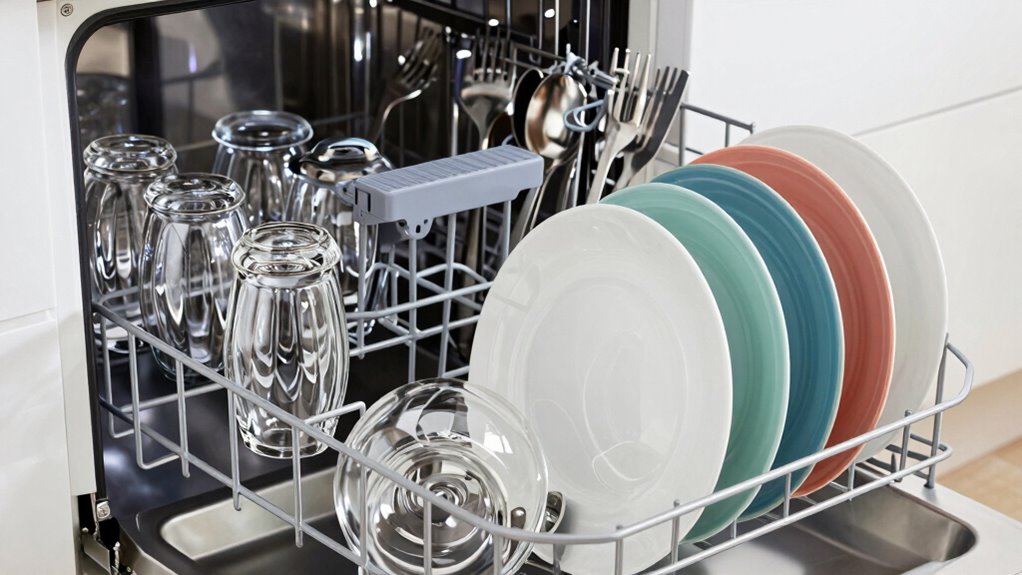

To optimize your dishwasher’s performance, load dishes properly based on simple physics principles. Guarantee water and detergent reach all surfaces by spacing items and avoiding blockages—place cups downward, plates at proper angles, and large items on the bottom rack. Keep spray arms and filters clean to maintain water flow, and avoid overcrowding. Proper placement enhances heat transfer and drying. If you want to learn more tips for perfect cleaning, keep exploring these essential loading strategies.

Get the little things that make your day delivered free — and shop member deals
- Fast, free delivery on millions of items
- Access to Prime Big Deal Days deals on October 6–7
- Prime Video, Amazon Music and more included
Key Takeaways
- Proper dish placement ensures water and detergent reach all surfaces, optimizing cleaning efficiency.
- Correct spacing prevents spray arm blockage and promotes even water circulation.
- Arranging items to face downward and avoid overcrowding enhances water flow and drying.
- Regular maintenance of spray arms and filters maintains consistent water pressure and cleaning performance.
- Adjusting loading techniques based on rack design and item size maximizes effectiveness and prolongs dishwasher lifespan.
dishwasher spray arm cleaning tool
As an affiliate, we earn on qualifying purchases.
As an affiliate, we earn on qualifying purchases.
Why Proper Dishwasher Loading Matters for Clean Dishes
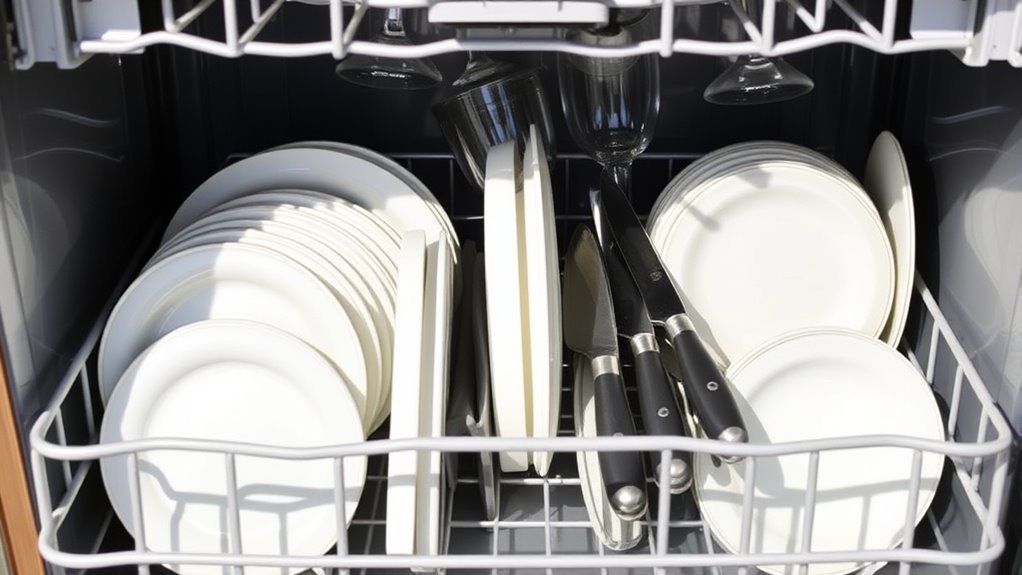
Proper dishwasher loading is essential because it directly affects how well your dishes come out clean. When you load your dishwasher correctly, you ensure that water and detergent can reach all surfaces, boosting detergent effectiveness. Overloading or improper placement can block spray arms or prevent water from circulating properly, leaving dishes dirty. Additionally, correct loading can help reduce noise during operation, making your dishwashing experience more pleasant. Avoid stacking items too tightly or blocking the spray nozzles, as this hampers cleaning and can increase operational noise. Making sure the dishwasher is loaded with space between items allows for better water flow and detergent contact. Proper loading techniques also help prevent damage to delicate items and extend the lifespan of your appliance. Ensuring proper water circulation is crucial for achieving spotless dishes and maintaining efficient machine performance. Proper dishwasher maintenance can also prevent buildup and ensure consistent cleaning results. Additionally, a well-maintained dishwasher is less likely to develop clogged spray arms, which can impair cleaning efficiency. Regularly checking and cleaning these components is essential for maintaining optimal water flow and overall performance. Ultimately, proper loading not only results in cleaner dishes but also promotes quieter, more efficient machine performance.
As an affiliate, we earn on qualifying purchases.
How Water Flow and Spray Arms Keep Your Dishes Spotless
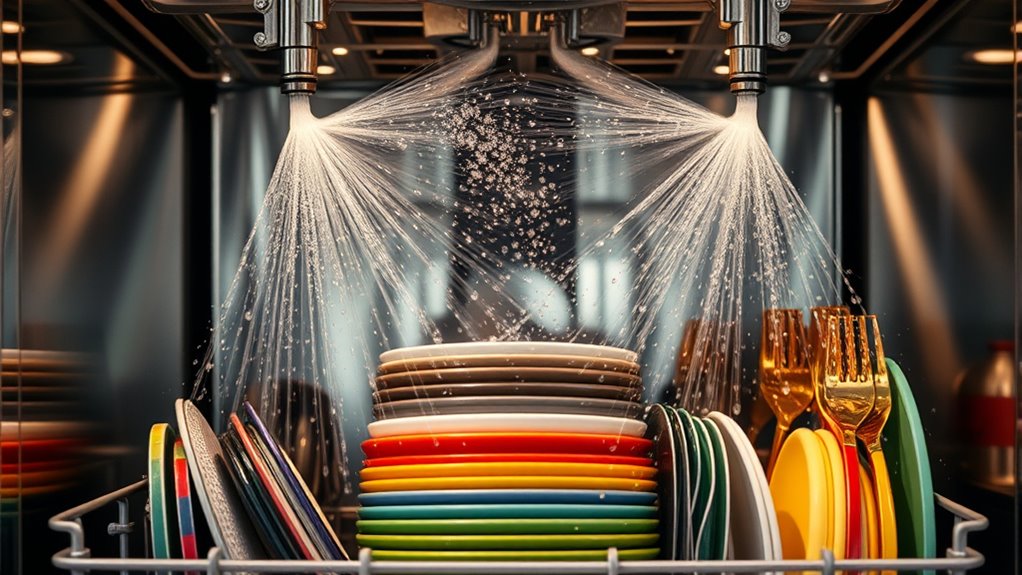
Water flow and spray arms are the key to getting your dishes thoroughly cleaned. Proper water pressure ensures that water reaches every corner of the dishwasher, maintaining ideal spray efficiency. When water pressure is too low, the spray arms won’t spin effectively, and dishes may remain dirty. Conversely, if pressure is too high, it can cause unnecessary splashing or damage. The spray arms distribute water evenly across your dishes, breaking down food particles and removing grease. They spin rapidly, propelled by the water pressure, creating powerful jets that reach all surfaces. Ensuring the spray arms are free of clogs and that water pressure is adequate helps maintain spray efficiency. water pressure is a crucial factor in achieving optimal cleaning performance. This balance keeps your dishes spotless without wasting water or energy.
As an affiliate, we earn on qualifying purchases.
Loading Tips: Arranging Dishes for Better Water and Soap Access
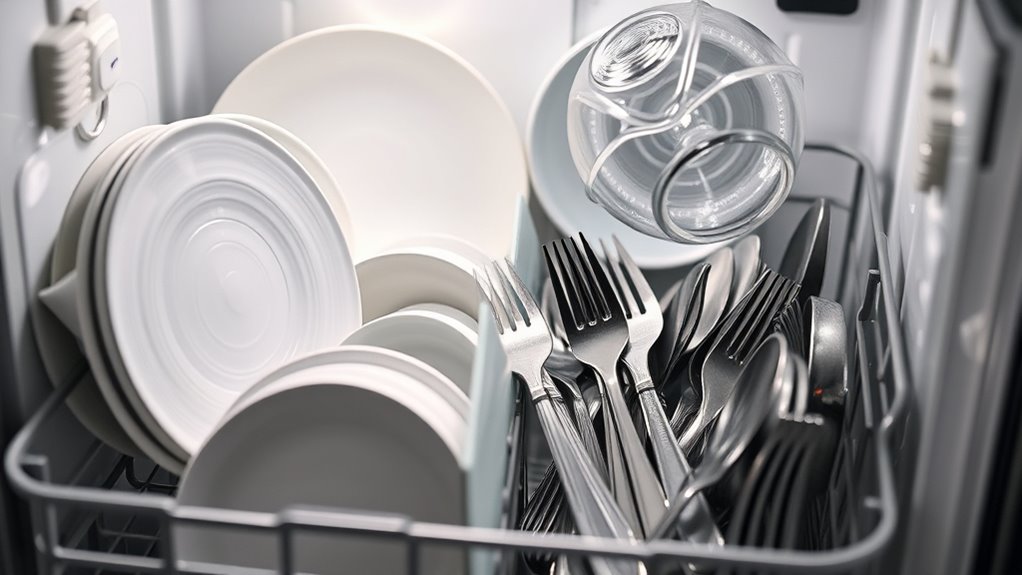
To guarantee your dishwasher cleans effectively, you should carefully arrange your dishes so that water and soap can reach all surfaces. Proper placement ensures even detergent distribution, preventing spots or residue. Place cups and bowls face-down on the top rack to allow water to flow inside and maximize soap contact. Keep larger items like pots and pans on the bottom, angling them to avoid blocking spray arms. Avoid overcrowding, which can hinder water flow and extend cycle duration. Ensure utensils are separated and not nested to improve detergent distribution. Proper arrangement reduces the need for longer cycles and minimizes the chance of leftover soap or grime. By optimizing dish placement, you enhance cleaning efficiency and protect your dishes from damage.
As an affiliate, we earn on qualifying purchases.
How Proper Placement Helps With Heat Transfer and Drying
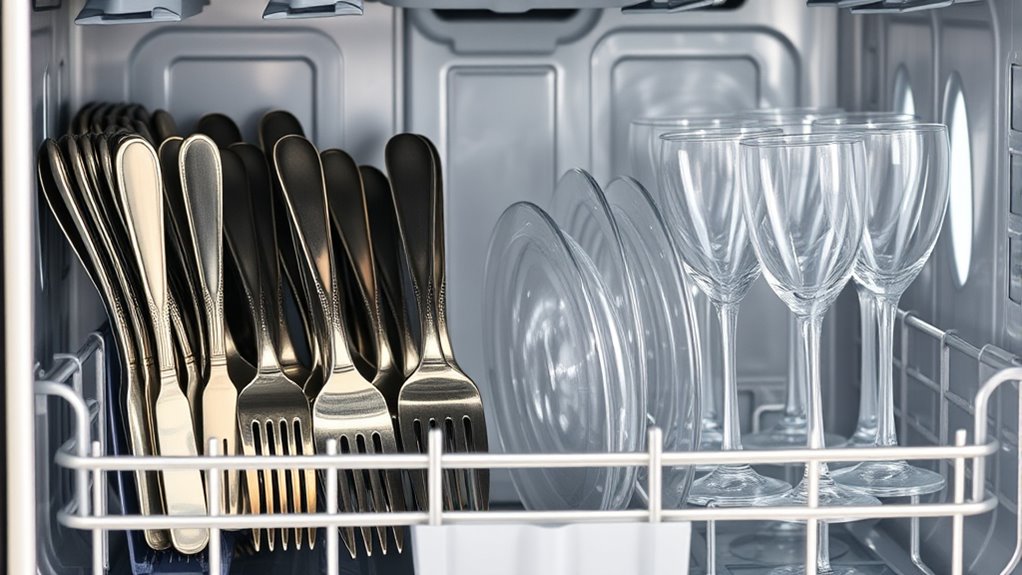
Properly spacing your dishes allows hot air to circulate more effectively, improving heat transfer during drying. Where you place items also impacts how well they dry; overcrowded spots can trap moisture. By paying attention to placement, you can boost both heat efficiency and drying performance. Additionally, understanding the importance of support and boundaries in caregiving helps create a balanced environment that promotes healthy development. Recognizing the role of airflow patterns in dishwashers can further optimize drying efficiency and prevent lingering moisture. Effective air circulation is essential for consistent drying results, which can be influenced by the arrangement of dishes inside the dishwasher. Ensuring optimal placement can also minimize energy consumption, making your dishwashing process more eco-friendly. Incorporating insights from measurement tools can help you monitor and improve your dishwasher’s drying performance over time.
Proper Spacing Enhances Heat Circulation
When you leave enough space between dishes, hot air can circulate freely around each item, guaranteeing efficient heat transfer. This proper spacing improves drying, as heat reaches all surfaces evenly. It also enhances detergent effectiveness by preventing water and soap buildup on crowded dishes. Additionally, good spacing helps reduce noise, as dishes don’t clank against each other during operation. Proper airflow is essential for optimal drying performance and maintaining your dishwasher’s efficiency. Gaps allow air to flow unobstructed, speeding up drying and preventing water traps, which further boosts detergent efficiency. It also reduces clattering sounds during the wash cycle and ensures even heat distribution for better drying and cleaning. Moreover, ensuring adequate spacing can prevent clogged spray arms, which is vital for consistent water circulation and overall dishwasher performance. Proper spacing also contributes to preventing blockages, ensuring all components function correctly and extend the lifespan of your appliance. Additionally, adequate spacing helps avoid water pooling that can occur when dishes are too crowded, further aiding in thorough cleaning and drying.
Placement Affects Drying Efficiency
Placing dishes correctly in your dishwasher guarantees heat transfers efficiently, leading to better drying results. Proper placement ensures hot air circulates around each item, which is vital regardless of the detergent types you use. For example, plastic items should be placed on the top rack to avoid blocking airflow, while larger dishes need space for heat to reach their surfaces. This ideal arrangement reduces cycle duration by promoting even heat distribution. When dishes are correctly loaded, heat transfer occurs more effectively, speeding up drying and preventing spots or moisture retention. Proper placement also minimizes the need for extended drying cycles, saving energy and time. Additionally, understanding airflow optimization can help you arrange your dishes even more effectively for maximum drying performance. Ensuring that dishes are positioned to avoid blocking vents or air pathways is crucial for optimal drying efficiency, which can significantly improve your dishwasher’s performance. To conclude, smart dish placement directly influences drying efficiency, especially when working with different detergent types and cycle durations. Properly optimized airflow can further enhance heat transfer, leading to faster and more thorough drying. A well-organized load also facilitates cleaning performance, as water and heat can reach all surfaces evenly. Incorporating proper loading techniques can make a noticeable difference in your dishwasher’s overall effectiveness.
Avoid Common Loading Mistakes That Reduce Cleaning Power
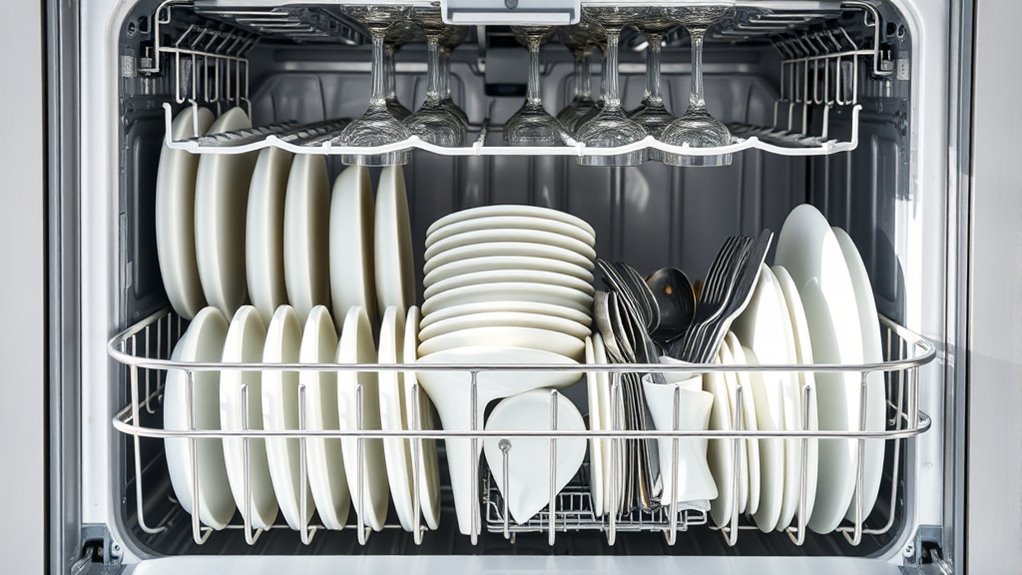
Loading your dishwasher incorrectly can seriously compromise its cleaning power. Common mistakes can block water flow and reduce detergent effectiveness, leaving dishes dirty. For example:
- Overloading dishes tightly, preventing water and detergent from reaching all surfaces
- Placing large items in the middle or blocking spray arms, reducing water circulation
- Using too much or too little detergent, impairing cleaning and causing residue
- Loading fragile items too close together, increasing noise and risking damage
- Failing to arrange items according to manufacturer guidelines can also hinder optimal operation home cleaning techniques.
- Additionally, neglecting to regularly clean the dishwasher’s filter and spray arms can decrease overall efficiency and cleaning performance maintenance routines.
- Ensuring proper loading techniques helps maximize water flow and cleaning efficiency, preventing common issues that reduce performance.
- Regularly inspecting and adjusting the placement of items according to manufacturer instructions ensures consistent cleaning results and maintains appliance longevity.
Tips for Loading Different Dishwasher Models Effectively
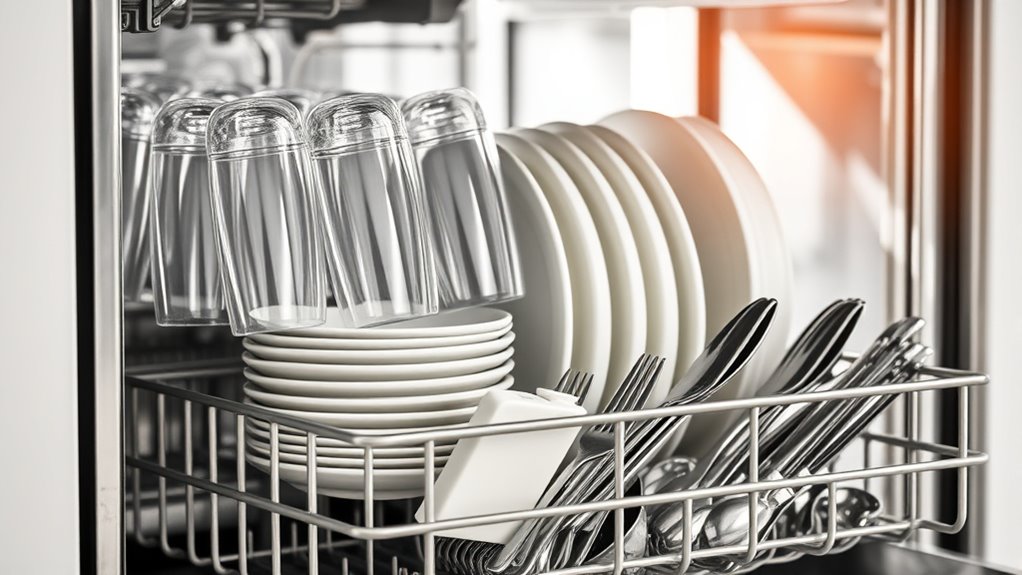
Every dishwasher model has unique loading requirements, so it’s important to follow specific techniques for each one. You should adjust your loading approach based on rack designs and available space to make certain items get cleaned properly. Paying attention to these details helps you optimize your dishwasher’s performance regardless of the model.
Model-Specific Loading Techniques
Since different dishwasher models have unique configurations and features, adapting your loading techniques can substantially improve cleaning efficiency and prevent damage. Pay attention to your dishwasher racks and follow their specific loading patterns to maximize performance. For example:
- Use the top rack for cups, glasses, and small bowls, ensuring they don’t block the spray arm.
- Load the bottom rack with larger items like plates and pots, placing them at proper angles.
- Avoid overcrowding, which can hinder water flow and cause spots or residue.
- Check for fold-down tines or adjustable shelves to customize space and secure items properly.
Understanding your dishwasher’s rack design and adhering to its loading patterns helps ensure thorough cleaning and extends the appliance’s lifespan.
Adjusting for Rack Variations
Different dishwasher models feature unique rack designs, adjustable shelves, and specialized features that influence how you should load them. Recognizing these differences helps optimize cleaning and prevent damage. For example, some racks have multiple height settings, so you can modify the position of the top shelf to fit taller items. Pay attention to the rack design to ensure items are spaced properly, avoiding overcrowding. When placing utensils, consider their designated areas—some models have a utensil basket, while others have slots designed for specific types. Proper utensil placement prevents nesting and ensures water flow reaches every piece. Adjusting your loading habits based on these variations helps maximize efficiency and extends the life of your dishwasher and dishes.
Maintaining Your Dishwasher’s Physics for Peak Performance
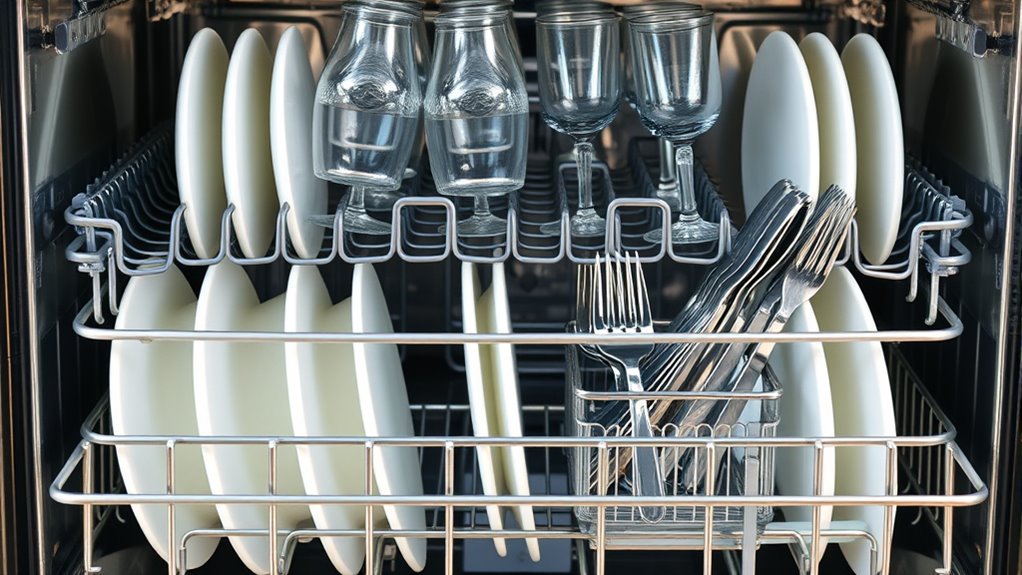
Have you ever wondered why some dishes come out spotless while others rinse off with streaks? Maintaining your dishwasher’s physics is key to peak performance. To do this, guarantee proper detergent compatibility so the detergent dissolves effectively without residue. Use noise reduction techniques like insulating panels or installing the unit on a vibration-absorbing pad to keep operation quiet. Regularly check and clean spray arms to prevent clogs, allowing water to flow freely. Position dishes correctly: avoid overcrowding, angle items for optimal water reach, and keep the float switch and filters clean. These steps help maintain balanced water pressure and temperature, ensuring dishes come out clean every time. Proper maintenance preserves your dishwasher’s physics, prolongs lifespan, and guarantees spotless results.
Troubleshooting: Why Your Dishes Still Don’t Come Out Perfect
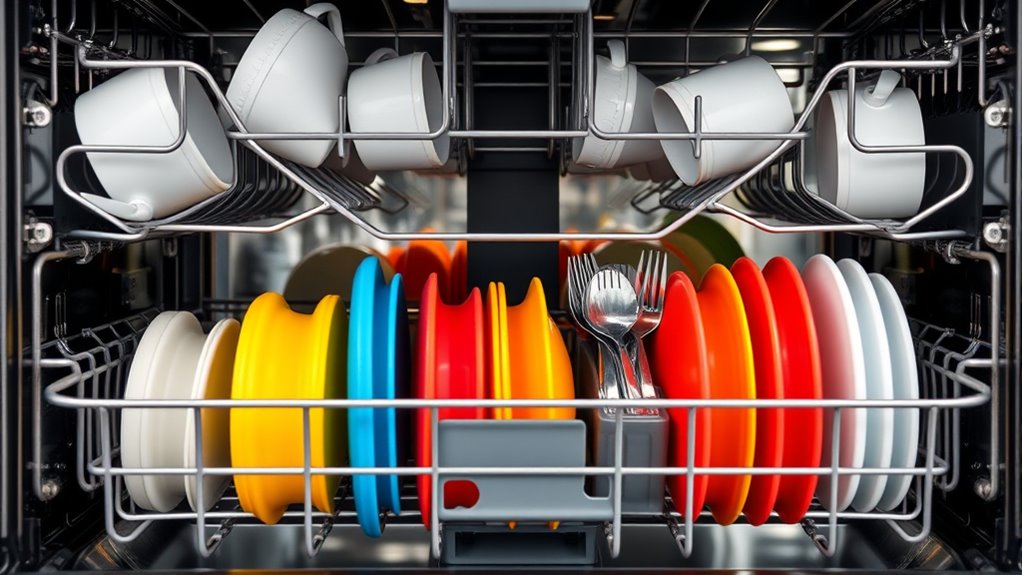
Even when you’ve maintained your dishwasher’s physics and followed proper loading techniques, dishes may still come out streaky or dirty. One common issue is detergent effectiveness; if your detergent isn’t fresh or the right type, cleaning suffers. Check that you’re using the correct amount—too much can leave residue, too little won’t clean thoroughly. Additionally, noise reduction features can sometimes interfere with water flow, reducing cleaning power. Make certain nothing blocks the spray arms and that dishes aren’t packed too tightly, which restricts water circulation. Regularly clean your filters and spray arms to prevent buildup that compromises wash performance. By addressing these factors, you’ll improve cleaning results, making sure your dishes come out spotless and free of streaks.
Frequently Asked Questions
How Does Dishwasher Design Influence Loading Efficiency?
Your dishwasher’s design substantially influences loading efficiency through its rack configurations and loading patterns. If racks are adjustable, you can optimize space and position items for better water flow. Properly utilizing the designated zones ensures dishes don’t block spray arms, improving cleaning. When you understand your dishwasher’s design, you can adopt effective loading patterns, making the process quicker and more efficient, and ensuring your dishes come out spotless every time.
What Materials Are Best for Dishwasher-Safe Dishes?
Did you know that ceramic and tempered glass are among the top dishwasher-safe materials? You should select durable materials like stainless steel and high-quality plastics for your dishes, as they withstand high temperatures and strong water jets without warping or cracking. These dishwasher-safe options ensure your dishes stay in good shape, making your cleaning routine easier and more efficient while protecting your investment in quality dinnerware.
Can Improper Loading Cause Long-Term Appliance Damage?
Improper loading can definitely harm your dishwasher over time, affecting appliance longevity. If you overload or block spray arms, water and detergent won’t reach dishes properly, causing wear on components. Poor loading habits can lead to leaks, motor strain, or damage to seals. To keep your dishwasher running smoothly, always follow proper loading guidelines. Consistently correct loading habits help prevent long-term damage, ensuring your appliance works efficiently for years.
How Often Should Dishwasher Spray Arms Be Cleaned?
You should clean your dishwasher spray arms at least once every three to six months. Regular spray arm maintenance guarantees they don’t get clogged with debris or mineral deposits, which can reduce cleaning efficiency. During cleaning, remove the spray arms and rinse them thoroughly, checking for blockages in the nozzles. Maintaining a consistent cleaning frequency keeps your dishwasher running smoothly and prolongs its lifespan.
Do Different Water Temperatures Affect Cleaning Outcomes?
Yes, water temperature substantially affects cleaning performance. Hotter water, typically between 120°F and 150°F, helps dissolve grease, food particles, and detergent more effectively, ensuring your dishes come out cleaner. If the water is too cold, cleaning may be less effective, leaving residue and streaks. Adjust your dishwasher’s temperature settings to optimize cleaning results, and always use the right cycle to match the load’s needs for the best outcomes.
Conclusion
By following proper loading rules, you can boost your dishwasher’s efficiency and achieve spotless results. Did you know that incorrect loading can reduce cleaning effectiveness by up to 50%? Proper placement ensures water reaches every dish, saving you time and effort. Keep these simple physics principles in mind, and your dishes will come out cleaner and drier every time. So, load smartly, and enjoy sparkling dishes with less hassle!
Fall Picks
fall essentials
As an affiliate, we earn on qualifying purchases.