
Choosing the right boiler type is key to making great espresso and ensuring smooth workflow. Single boilers are simple and affordable but can’t brew and steam at the same time, while heat exchange boilers allow quick multitasking with better temp stability. Dual boilers offer the best performance for consistent results but come at a higher price and maintenance. Understanding these differences helps you pick the best machine for your needs; explore further to discover which option suits you best.

Get the little things that make your day delivered free with Prime
- Fast, free delivery on millions of items
- Prime Video, Amazon Music and more included
- Member-only deals all year
Key Takeaways
- Single boilers are simple, affordable, and suitable for basic use but cannot brew and steam simultaneously.
- Heat exchange boilers allow simultaneous brewing and steaming with better temperature stability.
- Dual boilers offer the highest consistency, enabling concurrent brewing and steaming for professional results.
- Regular maintenance, like descaling, is essential regardless of boiler type to ensure longevity and performance.
- Choosing the right boiler depends on your brewing habits, budget, and desire for convenience and precision.
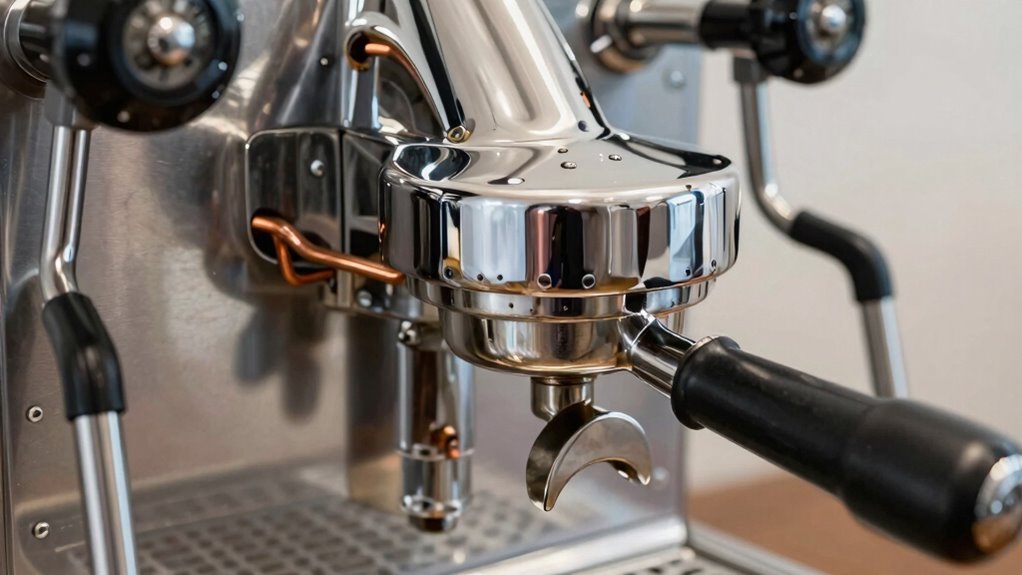
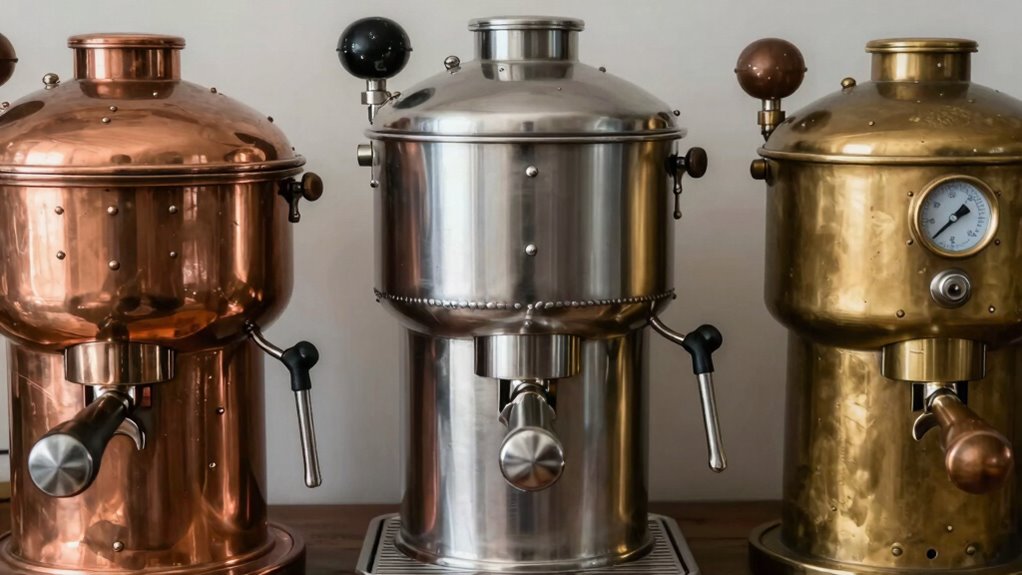
Choosing the right espresso machine boiler is essential for achieving the perfect brew, as it directly impacts temperature stability and brewing consistency. The boiler is the core component that heats water and steam, so understanding the different types helps you select one that matches your brewing style. There are primarily three types: single boilers, heat exchange boilers, and dual boilers. Each has its advantages and considerations for milk frothing and maintenance.
Choosing the right boiler type ensures optimal temperature stability, brewing consistency, and better milk frothing for your coffee experience.
A single boiler is straightforward and often found in entry-level machines. It heats water and steam using the same chamber, which means you can’t brew espresso and froth milk simultaneously. This setup requires you to pause brewing while you steam milk, which can slow down your workflow. However, single boilers are easier to maintain and generally more affordable. When it comes to milk frothing, this type can produce good results, but you need to be mindful of temperature adjustments to prevent overheating or underheating milk. Regular maintenance tips include descaling the boiler periodically and ensuring the boiler’s temperature is consistent to avoid flavor inconsistencies. Being aware of the boiler types can help you make informed decisions about maintenance and optimal brewing practices.
Heat exchange boilers are a step up in complexity and performance. They feature a single boiler with a copper tube running through it, allowing you to brew espresso and steam milk at the same time. This makes them ideal if you’re making multiple drinks quickly, especially for milk-based beverages like lattes and cappuccinos. The design provides better temperature stability, which helps with milk frothing, giving you creamier and better-textured milk. Additionally, understanding the brew temperature control can further enhance your ability to fine-tune your espresso extraction. Maintenance tips for heat exchange boilers involve cleaning the copper tube regularly to prevent mineral buildup, checking the pressure and temperature settings to maintain excellent performance, and being aware of the temperature stability to ensure consistent results.
Dual boilers are the gold standard for serious espresso enthusiasts. They have separate boilers for brewing and steaming, allowing you to produce perfect espresso shots and froth milk simultaneously without temperature fluctuations. This setup enhances both brewing consistency and milk frothing quality, making it easier to achieve professional results at home. Maintenance for dual boilers includes more frequent descaling and careful inspection of the separate components, but the investment pays off in long-term reliability and top-tier espresso quality. With dual boiler systems, you can fine-tune your milk frothing process, resulting in velvety microfoam and a smoother overall experience. Proper maintenance practices are essential to keep your machine operating at peak performance and ensuring the longevity of all its components.
Understanding the differences in boiler types helps you choose a machine that aligns with your brewing habits. Whether it’s the simplicity of a single boiler or the precision of dual boilers, each offers unique benefits. Proper maintenance, especially regarding milk frothing and cleaning, ensures your machine consistently delivers excellent results, making your coffee routine more enjoyable and hassle-free.
Products Worth Considering
Google Nest Cam Indoor Security Camera, 3-Pack

Philips Hue Large Smart Light Tube, Black – White and Color Ambiance LED Color-Changing Light – 1 Pack

Dyson Ball Animal 3 Corded Upright Vacuum
As an affiliate, we earn on qualifying purchases.
Frequently Asked Questions
How Long Does a Typical Espresso Machine Boiler Last?
A typical espresso machine boiler lasts around 5 to 10 years, depending on your maintenance schedules and usage. Regular descaling and cleaning can extend its lifespan, ensuring consistent performance. Energy efficiency also plays a role; newer models with better insulation and technology tend to last longer and consume less power. Keep up with routine maintenance and choose energy-efficient options to maximize your boiler’s durability and save on running costs.
Can Boiler Types Affect the Flavor of My Espresso?
You might find that boiler types substantially influence your espresso’s flavor, with some studies showing material influence on taste profiles. For example, copper boilers are known for better heat transfer, enhancing flavor consistency, while stainless steel boilers offer durability but may slightly dull flavor sharpness. This flavor enhancement depends on boiler material, temperature stability, and heat retention, so choosing the right type can elevate your espresso experience.
Are There Any Safety Concerns With Different Boiler Materials?
Yes, different boiler materials can pose safety concerns. Some materials, like aluminum, may corrode over time, leading to potential contamination, especially if corrosion products enter your espresso. Additionally, materials with poor thermal conductivity can cause uneven heating, increasing safety risks. Always choose boilers made from food-grade, corrosion-resistant materials like stainless steel, which guarantee durability and safety, reducing the risk of material corrosion and thermal issues.
How Do Boiler Sizes Impact Brewing Capacity?
Big boilers boost brewing capacity, allowing you to make multiple shots quickly and efficiently. Larger boiler sizes store more water, providing continuous steam and hot water without waiting. Smaller boilers may limit brewing capacity, leading to longer wait times and fewer servings. So, if you’re serious about brewing, opt for a bigger boiler to enhance your espresso experience, ensuring you get more cups and consistent quality every time.
Can I Upgrade My Boiler Type Later?
Yes, you can upgrade your boiler later, but it depends on the machine’s boiler upgradeability and material compatibility. Many machines are designed for easy upgrades, allowing you to switch to different boiler types if needed. However, verify that the new boiler’s materials are compatible with your machine’s design, and consult a professional to avoid damage or warranty issues. This way, you can customize your espresso experience over time.
Conclusion
So, now you’re practically a boiler expert—ready to pick the perfect espresso machine. Ironically, with all this knowledge, you might just find yourself obsessing over the tiniest boiler details instead of actually brewing that perfect shot. But hey, isn’t that what coffee lovers do? Just remember, whether you choose a single, double, or heat exchange boiler, the real secret’s in your passion—because even the best boiler can’t brew a great espresso without it.