
There are three main resistance types for home exercise bikes: magnetic, friction, and electric. Magnetic resistance uses magnets for smooth, quiet adjustments, ideal for serious training and durability. Friction resistance relies on a brake pad pressing against the flywheel, which is affordable but noisier and more maintenance-heavy. Electric resistance offers precise, programmable control to simulate terrains, perfect for varied workouts. To find out which suits you best, keep exploring for more details.

Get the little things that make your day delivered free — and shop member deals
- Fast, free delivery on millions of items
- Access to Prime Big Deal Days deals on October 6–7
- Prime Video, Amazon Music and more included
Key Takeaways
- Magnetic resistance offers smooth, quiet, and precisely adjustable workout intensity ideal for home use.
- Friction resistance is simpler and more affordable but may generate noise and require maintenance.
- Electric resistance provides digital control and terrain simulation for varied, engaging home workouts.
- Resistance type influences bike durability, noise level, maintenance needs, and overall training effectiveness.
- Choosing the right resistance depends on budget, desired workout quality, noise tolerance, and long-term use.
When choosing an exercise bike, understanding the different resistance types can help you find a model that matches your fitness goals and preferences. Resistance is a key factor in how effectively you can challenge yourself and progress in your workouts. Different resistance mechanisms offer varying levels of intensity, control, and realism, which directly impact your indoor cycling benefits. Whether you’re aiming for low-impact cardio, endurance building, or high-intensity interval training, knowing how resistance works helps you select the right bike.
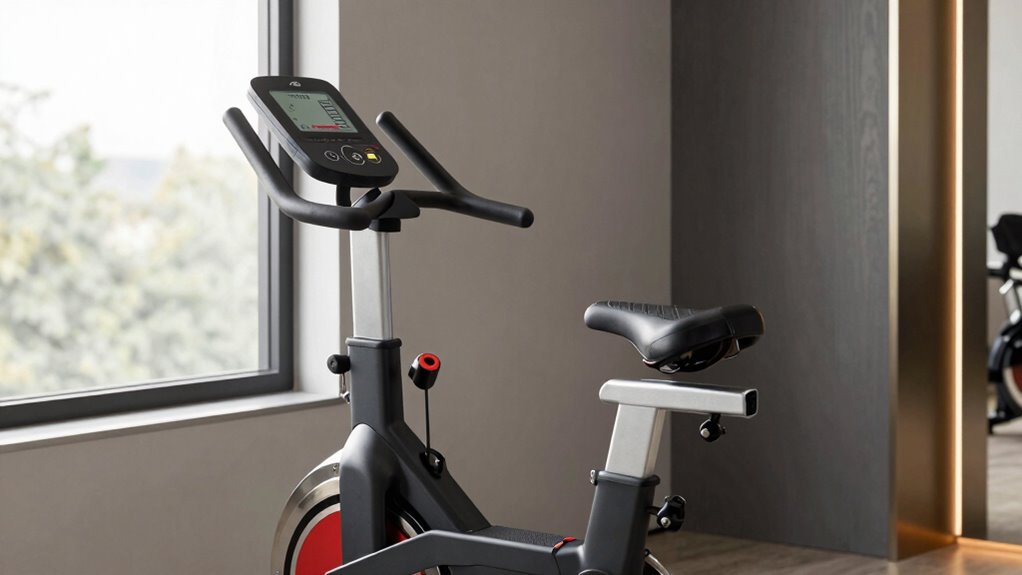
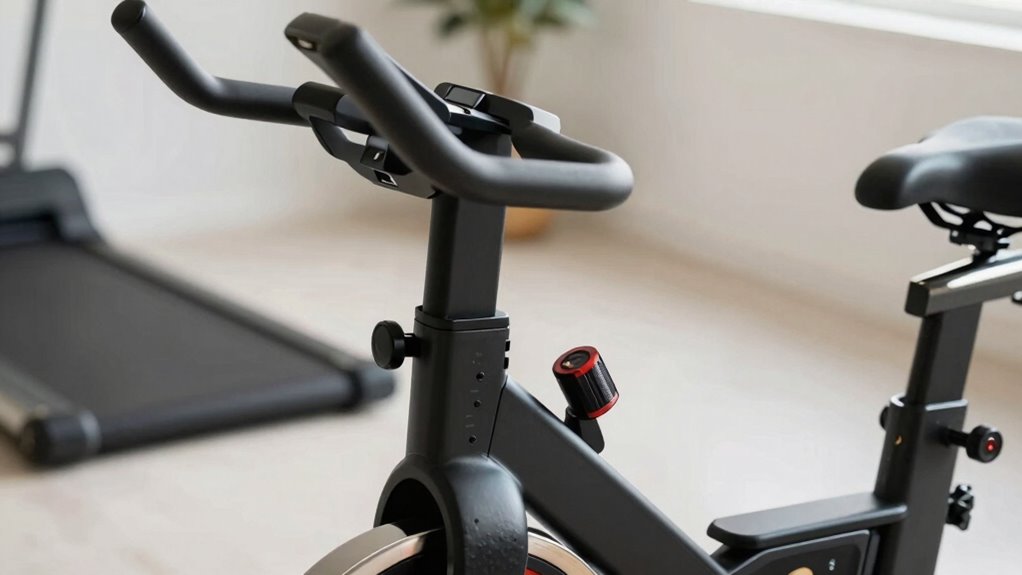
There are primarily two types of resistance mechanisms: magnetic and friction. Magnetic resistance uses magnets positioned near a metal flywheel to create drag. When you turn the resistance knob or engage a digital control, the magnets move closer or farther from the flywheel, adjusting the resistance smoothly and quietly. This type offers precise resistance adjustment mechanisms, letting you dial in your workout intensity with ease. It’s ideal if you prefer a quiet ride or want consistent resistance levels for interval training. The smooth operation of magnetic resistance also reduces wear and tear, making it a durable choice for long-term home use.
Friction resistance, on the other hand, involves a brake pad pressing directly against the flywheel. When you increase resistance, the pad presses harder, creating more friction and resistance. This mechanism is usually simpler and more affordable but can be noisier and require more maintenance as the brake pad wears down over time. Friction resistance bikes often have manual adjustment mechanisms, which can be less precise than magnetic systems. Despite this, they still provide effective indoor cycling benefits, especially for casual riders or those on a budget. Additionally, the maintenance requirements for friction-based models may influence your long-term satisfaction with the bike. Incorporating proper adjustments and understanding the wear and tear process can help prolong the life of friction resistance bikes. To enhance the user experience, some models incorporate additional resistance features for more versatile workout options. Choosing a resistance type also involves considering the cost factor, as magnetic bikes tend to be more expensive but offer better durability and quieter operation.
Some modern bikes combine these resistance types or incorporate electric resistance, which uses an electromagnetic system controlled digitally. Electric resistance offers the most precise adjustments and can simulate different terrains, making your indoor cycling experience more realistic and engaging. These bikes often come with pre-programmed workouts and adjustable resistance levels at the push of a button, helping you stay motivated and challenge yourself more effectively. The integration of electric resistance technology has expanded the possibilities for customized workouts and terrain simulation.
Ultimately, your choice depends on your fitness goals, budget, and preference for noise and maintenance. Magnetic resistance bikes tend to be quieter, more durable, and offer smoother adjustments, making them suitable for serious training. Friction-based models are typically more affordable but might require more maintenance and produce more noise. Whichever type you choose, understanding resistance adjustment mechanisms guarantees you can optimize your indoor cycling workouts, enjoy the benefits, and stay committed to your fitness journey.
magnetic resistance exercise bike
As an affiliate, we earn on qualifying purchases.
As an affiliate, we earn on qualifying purchases.
Frequently Asked Questions
Which Resistance Type Is Best for Beginners?
For beginners, magnetic resistance bikes are your best choice because they offer beginner-friendly features like smooth, quiet operation and adjustable intensity levels, making it easier to start your fitness journey comfortably. Plus, they tend to be more cost-effective over time, as they require less maintenance. You’ll find magnetic resistance bikes provide a gentle, controlled workout, perfect for building confidence and endurance without feeling overwhelmed.
How Does Resistance Affect Workout Intensity?
Resistance levels directly influence your workout intensity, pushing your muscles to engage more deeply and boosting calorie burn. As resistance increases, you’ll feel your muscles working harder, making every pedal stroke count. This heightened muscle engagement amps up the challenge, leading to greater stamina gains and fat burning. But beware—pushing too hard too soon can tire you out quickly. Finding the right resistance keeps your workout effective and exciting, revealing your full potential.
Can Resistance Types Be Combined?
Yes, you can combine resistance types on your exercise bike. Using variable resistance alongside adjustable resistance allows you to customize your workout more precisely. For example, you can set a baseline with adjustable resistance and then increase challenge with variable resistance features during high-intensity intervals. This combination keeps your workout dynamic, targets different muscle groups, and prevents boredom, helping you stay motivated and improve your overall fitness effectively.
Do Certain Resistance Types Cause Less Maintenance?
Think of magnetic resistance as the smooth operator in your workout routine—quiet and low-maintenance. It causes less wear and tear, so maintenance requirements stay minimal. Unlike friction-based systems that can get gritty and need frequent attention, magnetic resistance keeps your bike running seamlessly, like a well-oiled machine. With less upkeep, you can focus more on pedaling toward your fitness goals instead of tinkering with your equipment.
How Loud Are Different Resistance Mechanisms?
You’ll find that magnetic resistance bikes are the quietest, producing minimal noise levels, making them perfect for shared spaces. Resistance mechanisms like fan-based systems generate more noise, which can be distracting but are often more durable. Eddy current resistance bikes strike a balance, offering quieter operation and solid durability. Your choice depends on your noise tolerance and how much maintenance you’re willing to handle, but overall, magnetic resistance bikes are the quietest and most durable.
friction resistance indoor cycling bike
As an affiliate, we earn on qualifying purchases.
As an affiliate, we earn on qualifying purchases.
Conclusion
So, next time you hop on your exercise bike, remember: the resistance type you choose can truly shape your workout. While some swear by magnetic resistance for smoothness, others believe belt or fan resistance offers a more authentic ride. It’s a common theory that certain resistance types boost motivation and results more effectively. The truth? Experiment to discover what pushes you best—because your ideal workout depends on your goals, not just the resistance system itself.
electric resistance stationary bike
As an affiliate, we earn on qualifying purchases.
As an affiliate, we earn on qualifying purchases.
As an affiliate, we earn on qualifying purchases.
NFL season / tailgating Picks
team gear
As an affiliate, we earn on qualifying purchases.