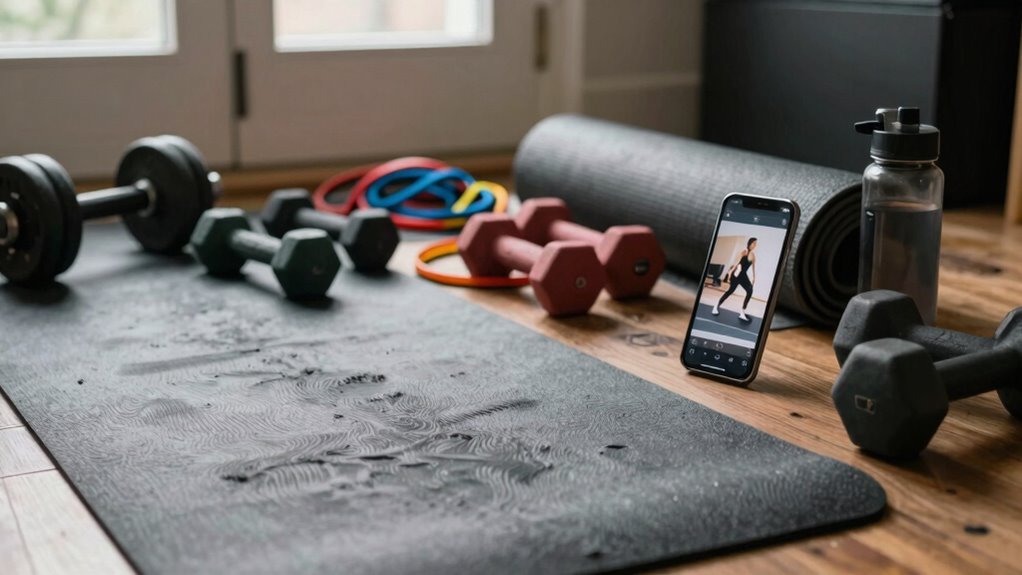

One common mistake in home workout progression is trying to increase weights, reps, or complexity too quickly without mastering proper technique. Rushing can lead to poor form, which increases the risk of injury and setbacks. It’s important to focus on consistency, proper rest, and gradual increases to avoid burnout and guarantee safe, sustainable progress. If you stick with disciplined steps and prioritize fundamentals, you’ll keep progressing safely and effectively—there’s more to learn about avoiding pitfalls along the way.
Open a free Amazon Business account
Business pricing, bulk buying and tax-exempt orders.
As an affiliate, we earn on qualifying purchases.
Key Takeaways
- Advancing weights or reps too quickly without mastering proper form increases injury risk.
- Skipping foundational exercises or neglecting proper technique hampers long-term progress.
- Reducing rest periods prematurely can lead to fatigue and compromised form.
- Focusing solely on intensity or volume without gradual progression may cause setbacks.
- Neglecting recovery time and overtraining impairs performance and increases injury likelihood.

Many people making progress with home workouts often fall into the trap of advancing too quickly, thinking that more intense exercises will yield faster results. They jump into heavier weights, faster reps, or more complex movements without paying attention to the fundamentals. This approach often backfires, leading to injury or burnout, which stalls progress altogether. The key to steady improvement is focusing on proper form and understanding the importance of rest periods. When you prioritize proper form, you guarantee that each movement targets the right muscles and reduces the risk of injury. Rushing through exercises or sacrificing form for more reps can cause strain on joints and muscles, undermining your goals. Instead, take the time to learn the correct technique for each exercise, even if it means doing fewer reps or using lighter weights initially. This investment in proper form creates a strong foundation that allows you to safely increase intensity over time. Additionally, incorporating progressive overload gradually helps your muscles adapt without risking injury. Rest periods are equally crucial in your workout progression. Many beginners overlook how essential it is to allow your body time to recover between sets. Shortening rest periods to keep your heart rate elevated can be beneficial in some contexts, but consistently neglecting adequate rest can lead to fatigue and compromised form. When you skip rest, your muscles don’t have enough time to repair and strengthen, which hampers your ability to perform at your best in subsequent sets. Longer rest periods, typically 30 seconds to a minute, give your muscles a chance to recover, ensuring you can maintain proper form and perform each movement with precision. Over time, as you become more experienced, you can gradually reduce rest intervals to increase workout intensity, but never at the expense of good form. Listening to your body and respecting rest periods helps you avoid overtraining and injury, keeping your progress sustainable. Remember, training intensity should be increased gradually to prevent setbacks. An understanding of training principles, such as consistency and patience, can significantly enhance your results. Incorporating muscle adaptation strategies further supports safe progression. In essence, rushing your workouts by neglecting correct form and proper rest is a common mistake that stalls progress. Instead, focus on mastering each movement with precision and giving your muscles the time they need to recover. This disciplined approach ensures you build strength safely and effectively, setting a solid foundation for continuous improvement. Remember, consistent progress doesn’t come from pushing harder or faster but from performing exercises correctly and respecting your body’s recovery needs. By keeping these principles in mind, you’ll avoid setbacks and enjoy a more rewarding journey toward your fitness goals.
As an affiliate, we earn on qualifying purchases.
Frequently Asked Questions
How Do I Know When to Increase Workout Intensity?
You should increase workout intensity when you notice your current exercises feel too easy or no longer challenge you. Use intensity monitoring by tracking your reps, sets, or how hard you feel your muscles work. Incorporate exercise variety to prevent plateaus. Once your body adapts and your progress stalls, it’s time to add more challenge with increased resistance, faster pace, or advanced movements to continue building strength and endurance effectively.
What Are Signs of Overtraining at Home?
Imagine feeling drained even after a good night’s sleep—that’s a sign of overtraining. You might also notice persistent soreness, irritability, or difficulty sleeping. To prevent injuries, prioritize proper nutrition, hydrate well, and incorporate rest days. Listening to your body is key; if symptoms worsen, cut back on intensity and seek injury prevention tips. Your body needs recovery to build strength and avoid burnout.
Can I Progress Without Changing Exercises?
You can progress without changing exercises by focusing on exercise variation within your routine. Increase reps, sets, or reduce rest time to challenge your muscles. Maintaining workout consistency is essential, but small tweaks to intensity help your body adapt and grow stronger. Instead of swapping exercises, refine your current movements to guarantee continuous progress. This approach keeps your training effective while avoiding the common mistake of stagnation, helping you reach your fitness goals faster.
How Do I Track My Workout Progress Effectively?
You can track your workout progress effectively by keeping a detailed journal or using fitness apps. Record your exercises, reps, sets, and weights, and note any changes over time. Pay attention to your nutrition habits, as they influence results. Also, incorporate exercise variety to challenge different muscles and prevent plateaus. Regularly reviewing your progress helps you adjust your routine for continuous improvement and motivation.
Is It Okay to Skip Rest Days During Progression?
Skipping rest days isn’t advisable because rest day importance helps prevent injury and promotes recovery. While progression involves increasing workout intensity and variety, your body needs time to adapt. Incorporate workout variety to challenge muscles differently, but guarantee you schedule rest days to avoid burnout. Rest days allow muscles to recover, so you stay consistent and avoid setbacks, ultimately helping you progress safely and effectively.
adjustable dumbbells for beginners
As an affiliate, we earn on qualifying purchases.
As an affiliate, we earn on qualifying purchases.
Conclusion
If you want to see real progress, don’t fall into the trap of rushing or skipping steps. Progression is a marathon, not a sprint, and patience pays off. By gradually increasing intensity and listening to your body, you build strength safely and sustainably. Remember, slow and steady wins the race. Keep your focus, stay consistent, and don’t bite off more than you can chew. Your future self will thank you for playing it smart today.
exercise technique training guide
As an affiliate, we earn on qualifying purchases.
As an affiliate, we earn on qualifying purchases.
As an affiliate, we earn on qualifying purchases.
Flea & tick season Picks
flea and tick prevention
As an affiliate, we earn on qualifying purchases.