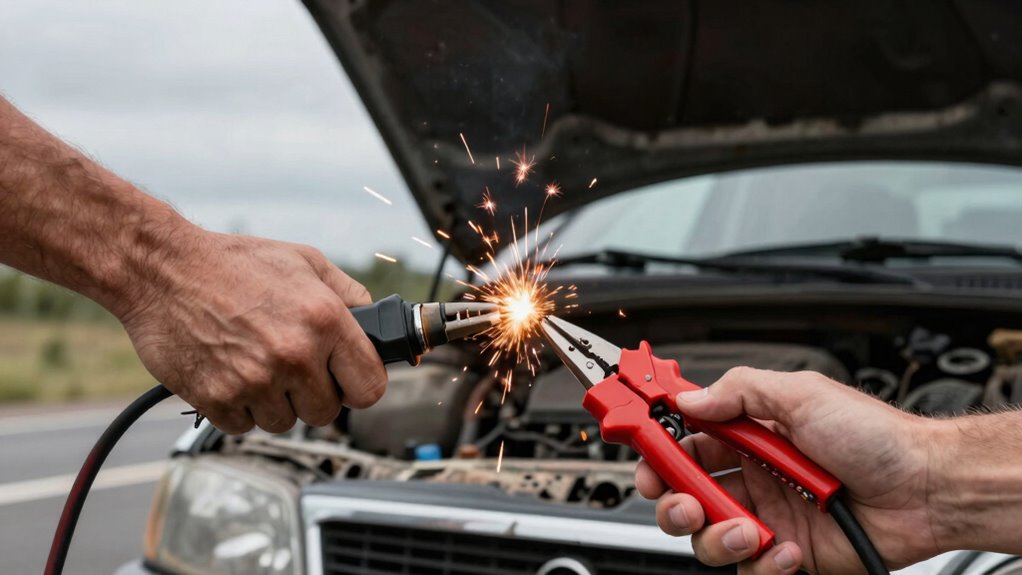
Many people go wrong when jump-starting because they skip important safety steps and use poor-quality cables. They might mishandle connections, ignore the correct order, or neglect safety gear, increasing the risk of sparks, acid spills, or explosions. Using cheap or damaged cables can cause insufficient power transfer or overheating. If you want to avoid these common mistakes and stay safe, understanding the proper procedures and equipment is essential—continue to find out more.

Get the little things that make your day delivered free with Prime
- Fast, free delivery on millions of items
- Prime Video, Amazon Music and more included
- Member-only deals all year
Key Takeaways
- Improper connection order can cause sparks, electrical shorts, or damage to the vehicle’s electrical system.
- Using low-quality or damaged jumper cables increases risk of overheating, sparking, or failure during jump-starting.
- Not wearing safety gear or neglecting safety procedures leads to burns, acid exposure, or injuries.
- Ignoring vehicle safety protocols, like turning off engines, can result in explosions or electrical shocks.
- Lack of proper knowledge or experience causes incorrect handling, increasing the likelihood of accidents or equipment failure.
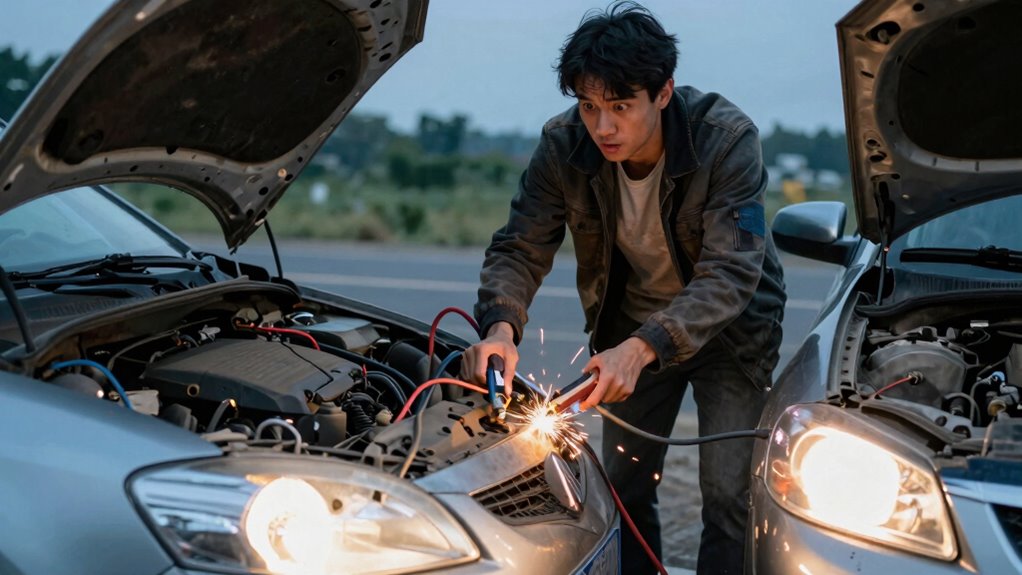
Jump starting a car might seem straightforward, but if not done properly, it can quickly go wrong and cause serious damage or injury. One of the main reasons people run into problems is neglecting proper battery safety. Car batteries contain sulfuric acid and produce explosive gases, especially during charging. If you’re not careful, sparks from connecting jumper cables or mishandling the battery can lead to dangerous explosions or acid spills. Always wear eye protection and gloves, and make sure the vehicle is turned off before you start. Avoid leaning over the battery while making connections, and double-check that the cables are connected correctly. Ignoring these safety steps can result in burns, acid exposure, or even fires. Additionally, understanding battery safety precautions can help prevent accidents during jump-starting procedures.
Another common mistake is using poor-quality jumper cables. Not all cables are created equal, and cheap or damaged cables can fail when you need them most. Low-quality cables might have thin wires or inferior insulation, which increases resistance and reduces the flow of current. This can lead to insufficient power transfer, making it impossible to start the dead vehicle. Worse, poor cables can overheat or spark when connected, risking damage to your vehicles or personal injury. Investing in high-quality jumper cables with thick, insulated wires and sturdy clamps isn’t just about convenience; it’s about safety and reliability. When you’re dealing with a dead battery, you want cables that can handle the current without risking failure. Remember, correct connection order is crucial to prevent sparks and electrical shorts during the process. Using proper safety gear can further protect you from potential hazards during jump-starting.
Products Worth Considering

Dyson Car+Boat Cordless Handheld Vacuum

Bose SoundLink Flex (2nd Gen) Portable Bluetooth Speaker

Shark PowerDetect Corded Stick Vacuum, Self-Cleaning (Eggplant, HZ4002)
As an affiliate, we earn on qualifying purchases.
Frequently Asked Questions
What Are the Common Signs Your Battery Needs a Jump Start?
You’ll notice your battery needs a jump start if your car struggles to start, especially in cold weather. Dim headlights, slow engine turnover, or a clicking sound are common signs. Proper battery maintenance and correct charging techniques can prevent this. If you see these signs, don’t ignore them—addressing the issue early keeps your battery healthy and avoids the risks associated with improper jump-starting.
How Long Should You Leave the Jumper Cables Connected?
You should leave the jumper cables connected for about 5 minutes to allow proper battery maintenance and guarantee the dead battery gets enough charge. During this time, make sure you maintain proper connection, avoiding any loose or crossed cables. This helps prevent mishaps and ensures the vehicle starts smoothly. After the time, start your engine and carefully disconnect the cables in the reverse order, maintaining proper connection throughout.
Can Jump Starting Damage Your Vehicle’s Electrical System?
Jump starting can damage your vehicle’s electrical system if you’re not careful. If the battery chemistry is incompatible or if you connect the cables improperly, it can cause electrical surges. Additionally, there’s a fire hazard if sparks occur near the battery or if the cables aren’t secured correctly. Always follow proper procedures and make certain your jumper cables are in good condition to prevent electrical damage and fire risks.
Is It Safe to Jump Start a Hybrid or Electric Vehicle?
Jump starting a hybrid or electric vehicle isn’t generally safe—hybrid safety and electric vehicle precautions are essential. You might risk damaging sensitive systems or causing dangerous sparks. Hybrid batteries and electric components require specialized handling, so it’s best to avoid traditional jump starts. Instead, consult your vehicle’s manual or call roadside assistance. Prioritize safety, prevent problems, and protect your vehicle by trusting professional help rather than risky DIY jumps.
What Are Alternative Methods to Jump Starting a Dead Battery?
You can explore charging alternatives like using a portable battery jump starter or a battery charger, which are safer options than traditional jump starting. Regular battery maintenance, such as cleaning terminals and checking voltage, helps prevent dead batteries. If your battery is dead, avoid risky jump-start methods, and instead, opt for professional assistance or these safer charging alternatives to restore power efficiently and safely.
Conclusion
Jump starting your car might seem simple, but over 30% of attempts fail due to common mistakes like incorrect cable connections or ignoring safety steps. Knowing what to avoid can save you time, money, and frustration. Next time, double-check your connections and follow safety guidelines carefully. Remember, staying informed reduces mishaps—so don’t rush, and you’ll get back on the road safely and smoothly. A little preparation goes a long way!