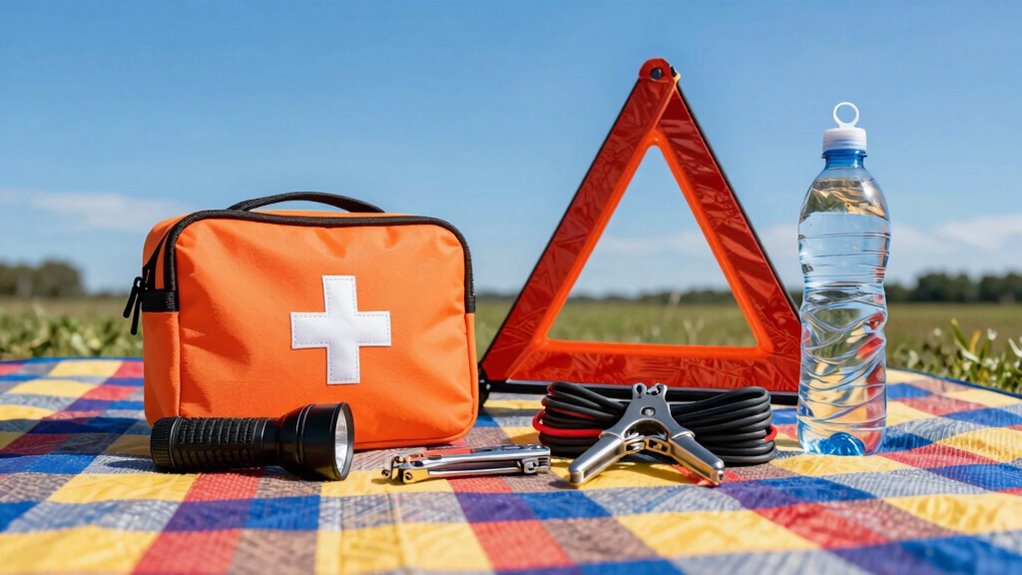
To build a smart road trip emergency kit, start by including essential tools like jumper cables, a tire pressure gauge, and a flashlight with extra batteries. Pack safety items such as warning triangles and a first aid kit, along with comfort gear like water and snacks. Make certain regular maintenance checks on tires and fluids, and add a vehicle charger and maps for emergencies. If you want to know more tips on making your kit complete and effective, keep exploring the details below.

Get the little things that make your day delivered free with Prime
- Fast, free delivery on millions of items
- Prime Video, Amazon Music and more included
- Member-only deals all year
Key Takeaways
- Include essential tools like jumper cables, flashlight, tire pressure gauge, and basic repair items for quick fixes.
- Pack safety items such as warning triangles, reflective flares, and a first aid kit for emergencies.
- Carry sufficient water, snacks, blankets, and clothing to handle remote or cold-weather situations.
- Regularly check and update your emergency kit to ensure all supplies are functional and current.
- Stay informed about your route, environmental conditions, and vehicle maintenance to prevent issues proactively.
Planning ahead for unexpected situations on the road can make all the difference when you’re miles from help. When you’re on a long road trip, having a well-prepared emergency kit isn’t just about peace of mind — it’s a smart move for your safety and your vehicle’s reliability. Before hitting the highway, take a moment to review your car maintenance. Verify your tires are properly inflated, your fluids are topped off, and your brakes are in good shape. Doing so reduces the chance of breakdowns, but being prepared for the inevitable mishap is equally vital. A thorough emergency kit can be a lifesaver if your car unexpectedly stalls or you face other issues along the way.
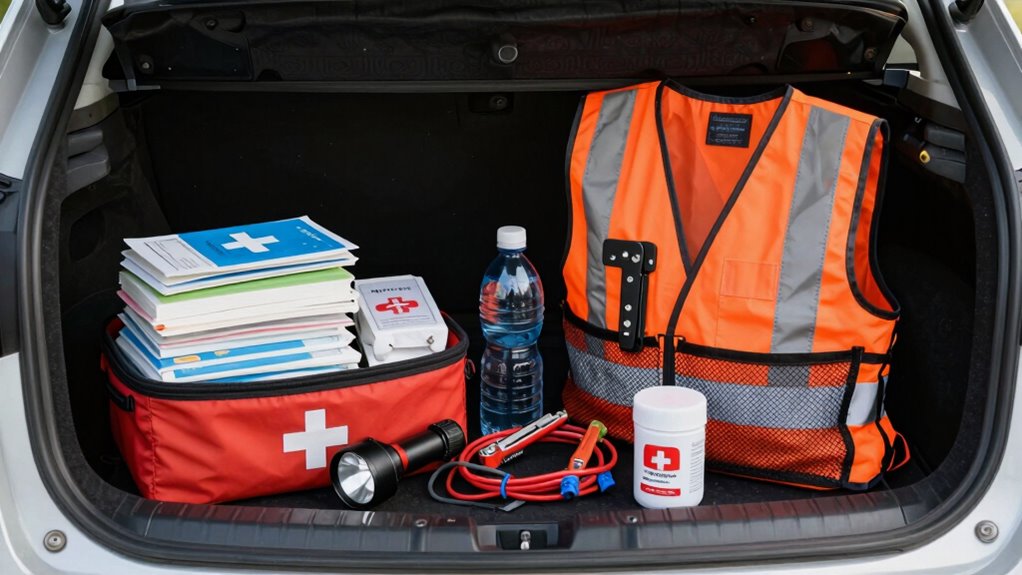
Start by packing basic tools and supplies. A set of screwdrivers, pliers, a wrench, and a flashlight with extra batteries are essentials that often come in handy. Don’t forget jumper cables — dead batteries are common, especially if your vehicle’s battery is aging. Including a tire pressure gauge and a portable air compressor can help you address minor tire issues on the spot. Adding a reflective warning triangle or flares enhances your travel safety, alerting other drivers if you need to pull over. Keep a sturdy pair of gloves and a first aid kit nearby, because accidents happen, and quick access can make a difference in handling injuries or minor scrapes.
It’s vital to bring enough water and non-perishable snacks, especially if you’re traveling through remote areas where services might be scarce. A blanket or extra clothing can keep you warm if you get stranded in cold weather. Also, consider adding a phone charger compatible with your vehicle, so your phone stays powered for emergencies or navigation. Maps or a GPS device can be invaluable if your electronic devices fail, and they help you find the nearest help or service station. Ensuring your vehicle is equipped with basic safety essentials can significantly improve your chances of a smooth recovery in case of an emergency. Additionally, understanding basic vehicle maintenance can help you troubleshoot minor problems yourself, saving time and stress during stressful situations. Incorporating knowledge of vehicle safety tips can help you stay ahead of potential issues before they become emergencies. Staying informed about environmental considerations can also be beneficial, especially when traveling through sensitive natural areas, ensuring your actions do not harm local ecosystems.
A well-stocked emergency kit isn’t just about fixing your car; it’s about guaranteeing your overall travel safety. Having these supplies on hand means you’re prepared for breakdowns, minor injuries, or getting lost. Regularly check and update your kit, replacing expired items and adding new essentials as needed. When you combine good car maintenance with a smart, ready-to-go emergency kit, you’re taking significant steps to make your road trip safer and more enjoyable. Your preparedness can turn a potential disaster into a manageable situation, keeping you confident and secure no matter where the road takes you.
Products Worth Considering

Ring Battery Doorbell 2K Plus (2nd Gen) and Spotlight Cam Plus Battery Bundle

Ring Battery Doorbell (2nd Gen) and Indoor Cam Plus Bundle, Matte Mocha and Black

Sonos Era 100 SL Compact, Microphone-Free Speaker – Black
As an affiliate, we earn on qualifying purchases.
Frequently Asked Questions
What Items Are Essential for Different Climates?
You should pack climate-specific gear for seasonal preparedness, like insulated blankets and warm clothing for cold climates, and sun protection such as hats and sunscreen for hot weather. In rainy or humid conditions, include waterproof gear and extra towels. For desert or dry regions, carry plenty of water and hydration supplies. Tailoring your emergency kit to the climate guarantees you’re prepared for unexpected weather changes, keeping you safe on your trip.
How Often Should I Update My Emergency Kit?
Did you know that almost 60% of emergency kit items expire within a year? You should check your emergency kit at least every six months to guarantee everything remains functional. Regular emergency kit maintenance helps you replace expired items and update supplies based on your current needs. Keep an eye on kit expiration dates, and make it a routine to refresh your kit so you’re always prepared for unexpected situations.
Are There Legal Requirements for Emergency Kits in Vehicles?
Legal regulations vary by state, so you should check local laws to guarantee kit compliance. Some areas require specific items like warning triangles, reflective vests, or first aid kits in your vehicle. Failing to meet these requirements could lead to fines or penalties. To stay compliant, keep your emergency kit updated with all necessary items and regularly review local regulations to ensure you’re following the law.
How Can I Customize My Kit for Family Members?
You can customize your emergency kit for family safety by including personalized gear tailored to each member’s needs. Consider adding items like specific medications, comfort toys, or special dietary snacks. Think about their age, health conditions, and preferences to guarantee everyone feels secure. Personalizing gear not only keeps your family safe but also makes the kit more practical and comforting during emergencies, giving everyone peace of mind on your road trip.
What Are the Best Storage Options for Limited Space?
Think of your car as a treasure chest; compact containers and multi-purpose storage solutions keep essentials organized without clutter. Use stackable bins or vacuum-sealed bags to maximize space, and choose versatile containers that serve multiple functions. These smart options help you stay prepared while making the most of limited space, ensuring your emergency kit remains accessible and tidy, no matter how tight the quarters.
Conclusion
Just like Odysseus relied on his trusty gear to navigate treacherous waters, your road trip emergency kit is your lifeline on the open road. Prepare thoughtfully, and you’ll face unexpected challenges with confidence, turning potential chaos into an adventure rather than a crisis. Remember, it’s not just about the items you pack, but the peace of mind they bring. With the right kit, you’re ready to write your own journey—calm, prepared, and in control.