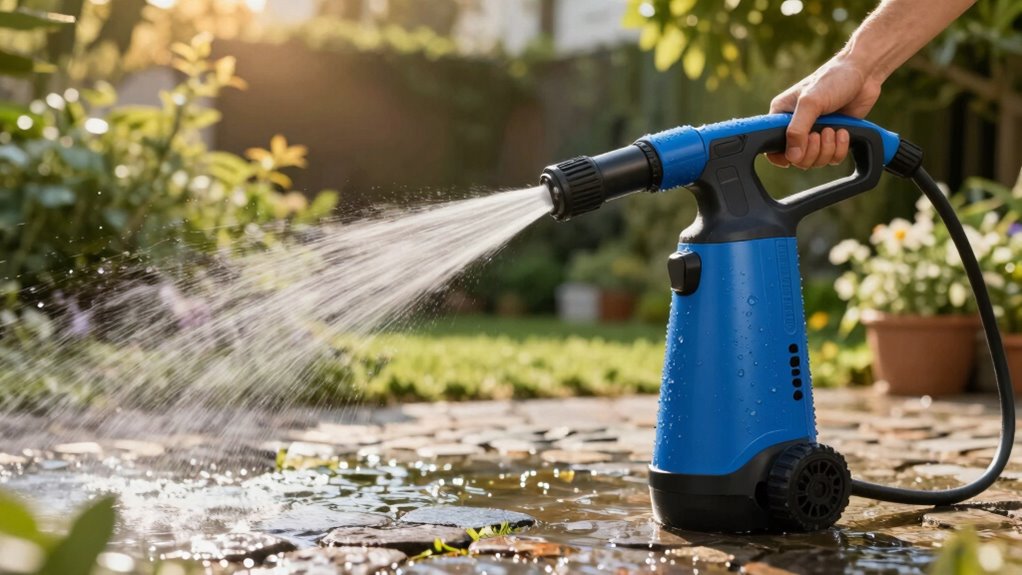

When choosing a car pressure washer, it’s essential to take into account features like PSI, nozzle types, and compatibility with car care products. You don’t want to damage your vehicle’s finish with too much pressure or the wrong detergent. Electric models are typically quieter and easier to handle, while gas ones pack more power. Portability matters too; a lighter design makes washing simpler. There’s more to discover about selecting the perfect model and ensuring it meets your needs.
Key Takeaways
- Many pressure washers have a PSI range; using a model over 1900 PSI can damage your car’s paint and seals.
- Not all pressure washers are compatible with every car care product; always check manufacturer recommendations to avoid damaging finishes.
- Electric pressure washers are quieter and easier to maneuver, making them ideal for light jobs, while gas models are better for heavy-duty tasks.
- Essential accessories like a soap dispenser and surface cleaner significantly enhance cleaning efficiency and effectiveness.
- Regular maintenance, including checking hoses and nozzles, is crucial for long-term performance and to prevent costly repairs.

Westinghouse ePX3500 Electric Pressure Washer, 2500 Max PSI 1.76 Max GPM with Anti-Tipping Technology, Onboard Soap Tank, Pro-Style Steel Wand, 5-Nozzle Set, for Cars/Fences/Driveways/Home/Patios
Delivers 2500 max PSI and 1.76 max GPM (at lowest pressure), and 2000 rated PSI and 1.2 rated…
As an affiliate, we earn on qualifying purchases.
As an affiliate, we earn on qualifying purchases.
Choosing the Right Pressure Washer: Key Considerations
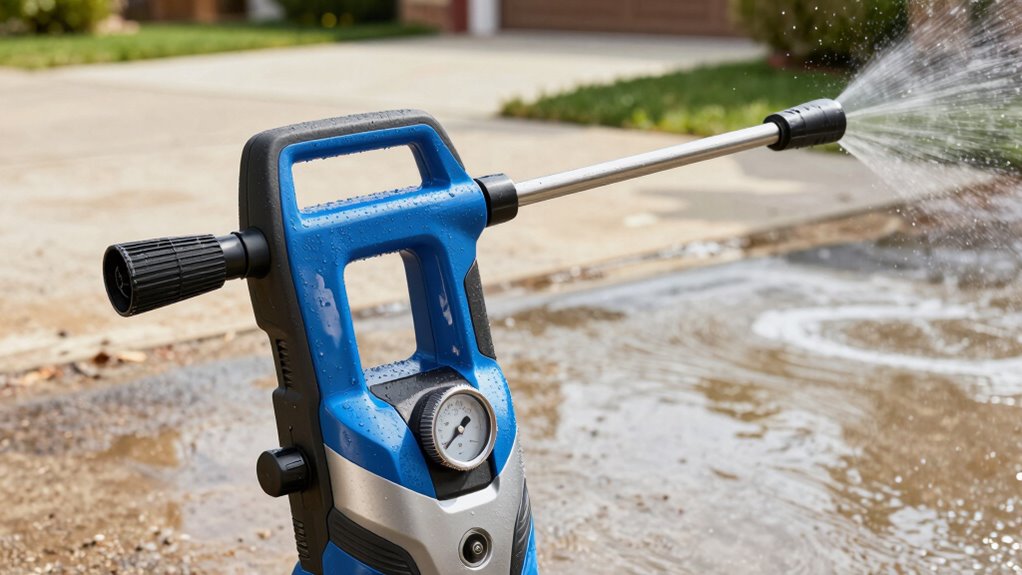
When you’re ready to choose the right pressure washer, it’s essential to take into account several key factors to guarantee you get the best fit for your needs. Start by evaluating pressure washer features like adjustable nozzles, portability, and motor power, as these directly impact your cleaning efficiency. Think about the type of surface you’ll be washing; different features cater to various tasks. User reviews are invaluable as they provide real-world insights into performance and reliability. Check what others say about durability and ease of use. Finally, consider the warranty and customer support options, ensuring you’re covered in case of any issues. By focusing on these elements, you’ll make a well-informed decision that suits your car washing needs perfectly.

Westinghouse WPX3400 Gas Pressure Washer, 3400 PSI and 2.6 GPM, Onboard Soap Tank, Spray Gun and Wand, 5 Nozzle Set, for Cars/Fences/Driveways/Homes/Patios/Furniture
3400 PSI and 2.6 GPM of Powerful, Deep-Cleaning Water Pressure Perfect for Decks, Sidewalks, Siding, Fences, Railings, Garage…
As an affiliate, we earn on qualifying purchases.
As an affiliate, we earn on qualifying purchases.
Understanding PSI: What You Need for Your Car
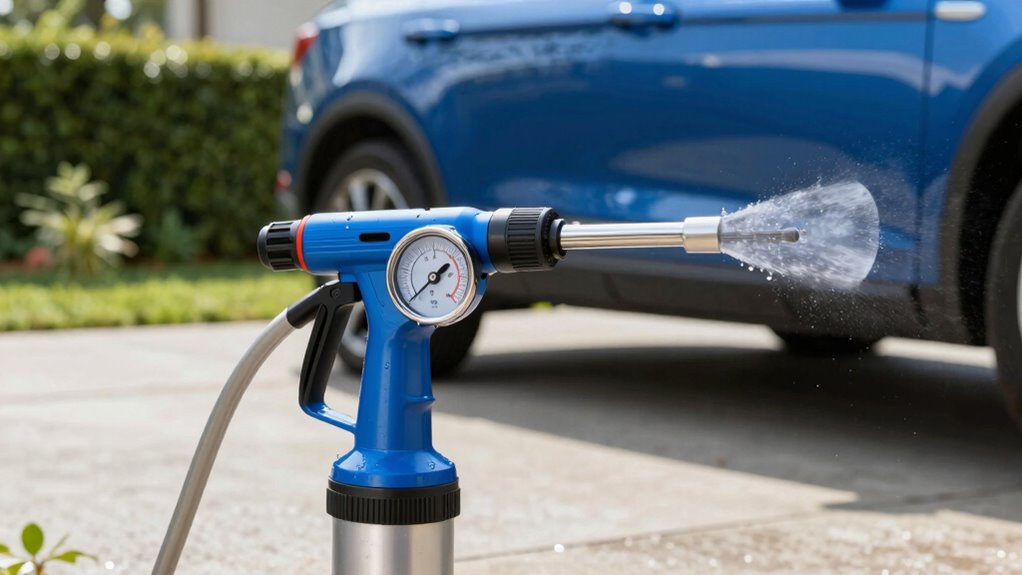
When choosing a pressure washer for your car, understanding PSI is essential. You’ll want to find the ideal PSI range that effectively cleans without damaging different surface types. Keep in mind that using too much pressure can lead to overpressure risks, so it’s important to choose wisely.
Ideal PSI Range
Finding the right PSI (pounds per square inch) for your car pressure washer is essential for effective cleaning without damaging your vehicle’s paint. The ideal pressure for car washing typically ranges between 1200 to 1900 PSI. Staying within this range guarantees maximum cleaning while preserving your car’s finish. It’s also important to consider pressure washer settings to ensure optimal performance. Proper nozzle selection can further help control the spray pattern and pressure, reducing the risk of damage.
Impact on Surface Types
Different surface types on your car can greatly influence the PSI you should use for cleaning. For example, painted surfaces are generally more sensitive than metal or plastic parts. Using a higher PSI on delicate areas can damage paint or clear coat, leading to expensive repairs. Always consider surface compatibility when selecting your pressure washer settings. If you’re cleaning glass or chrome, you can typically go higher without worry, but be cautious with softer materials like vinyl or rubber trims. Lower PSI settings, around 1200-1500, are usually safest for sensitive surfaces, ensuring you maintain their integrity. Additionally, understanding the material sensitivity of different car surfaces will help you choose the right PSI, keeping your car looking its best without risking damage. Being aware of pressure settings tailored for specific surfaces can further prevent unintended harm during cleaning.
Overpressure Risks Explained
While it might be tempting to crank up the PSI for a deeper clean, overpressure can lead to significant risks for your car’s surfaces. Using excessive pressure can cause overpressure damage, stripping paint, damaging seals, or even denting metal. Instead of achieving a spotless vehicle, you could end up with costly repairs.
To maintain your car’s integrity, it’s crucial to understand the appropriate PSI for your specific vehicle. Always follow safety precautions, such as testing the pressure on a small, inconspicuous area first. Generally, a PSI between 1200 and 1900 is safe for most cars. By choosing the right pressure, you’ll guarantee a clean car without compromising its finish or structure. Keep your car looking great while avoiding unnecessary damage!

Tool Daily Foam Cannon with 1/4 Inch Quick Connector, 1 Liter, 5 Pressure Washer Nozzle Tips
Adjustable Snow Foam Lance with 1/4" quick connection fitting. 𝐍𝐨𝐭 𝐅𝐢𝐭 𝐆𝐚𝐫𝐝𝐞𝐧 𝐇𝐨𝐬𝐞, 𝐖𝐚𝐭𝐞𝐫 𝐇𝐨𝐬𝐞 𝐨𝐫 𝐘𝐨𝐮𝐫 𝐅𝐚𝐮𝐜𝐞𝐭…
As an affiliate, we earn on qualifying purchases.
As an affiliate, we earn on qualifying purchases.
Electric vs. Gas: Which Type of Pressure Washer Works Best?
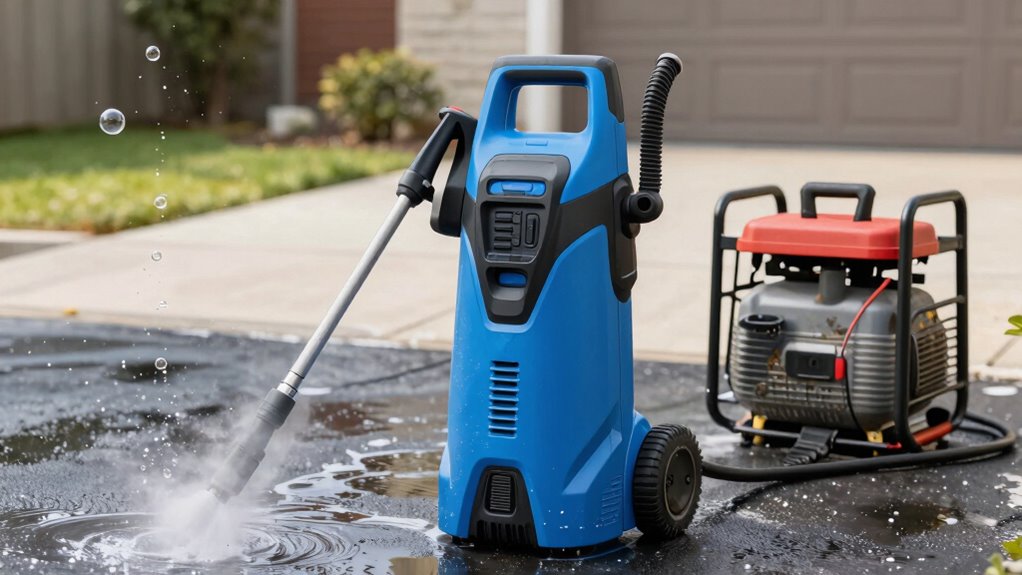
When choosing between electric and gas pressure washers, you’ll want to evaluate their power output, portability, and maintenance needs. Electric models are generally more convenient and easier to maintain, while gas options often deliver higher power for tougher jobs. Understanding these differences will help you find the best fit for your car cleaning tasks. Additionally, considering proper technique & form can ensure safe and effective cleaning with your pressure washer.
Power Output Comparison
Choosing between electric and gas pressure washers often hinges on their power output, as each type offers distinct advantages suited to different cleaning tasks. Electric models typically deliver lower pressure settings, making them ideal for lighter jobs like washing cars or patios. In contrast, gas models provide higher power types for heavy-duty tasks, perfect for tackling stubborn grime on driveways or decks. Additionally, understanding the investment involved in each type can help determine which is more cost-effective for your needs.
Portability and Convenience
After weighing the power output of electric and gas pressure washers, it’s important to contemplate how portability and convenience impact your cleaning experience. When it comes to lightweight models, electric pressure washers usually take the lead. They’re easy to maneuver, making them perfect for quick clean-ups and tight spaces. Plus, their compact designs allow for simple storage in small garages or closets. Additionally, electric models often feature ease of maintenance, which can save time and effort over their gas counterparts. Considering storage space constraints can help determine which type suits your setup better. Also, power source flexibility plays a role in how adaptable your cleaning routines can be, especially in areas with limited electrical outlets. On the other hand, gas pressure washers, while often more powerful, can be cumbersome and require more effort to transport. If you’re tackling larger jobs far from a power source, you might prefer gas. Ultimately, consider how often you’ll move your washer and the types of jobs you’ll tackle, as this will guide you toward the most convenient option for your needs.
Maintenance and Longevity
While both electric and gas pressure washers have their strengths, maintenance and longevity are essential factors to evaluate before making a decision. Electric models typically require less upkeep, with fewer moving parts and no need for oil changes. This simplicity can translate into a longer pressure washer lifespan, especially if you consistently perform regular maintenance like checking hoses and filters. Additionally, rendering lard knowledge of proper care and maintenance can extend the lifespan of your equipment. On the other hand, gas pressure washers often deliver more power but need more attention to keep them running smoothly. You’ll need to monitor fuel levels, oil changes, and winterization. Ultimately, if you’re willing to dedicate time to maintenance, a gas model might serve you well. If you prefer a low-maintenance option, an electric pressure washer is likely your best bet.

Westinghouse Universal 16.5” Pressure Washer Surface Cleaner Attachment – Stainless Steel – 4400 Max PSI, 1/4” Connector – for Gas and Electric Pressure Washers
Achieve Professional-Level Cleaning Results with This 16.5” Surface Cleaner, with Up To 4400 PSI of Pressure for Easy…
As an affiliate, we earn on qualifying purchases.
As an affiliate, we earn on qualifying purchases.
How to Choose the Right Nozzle for Every Job?
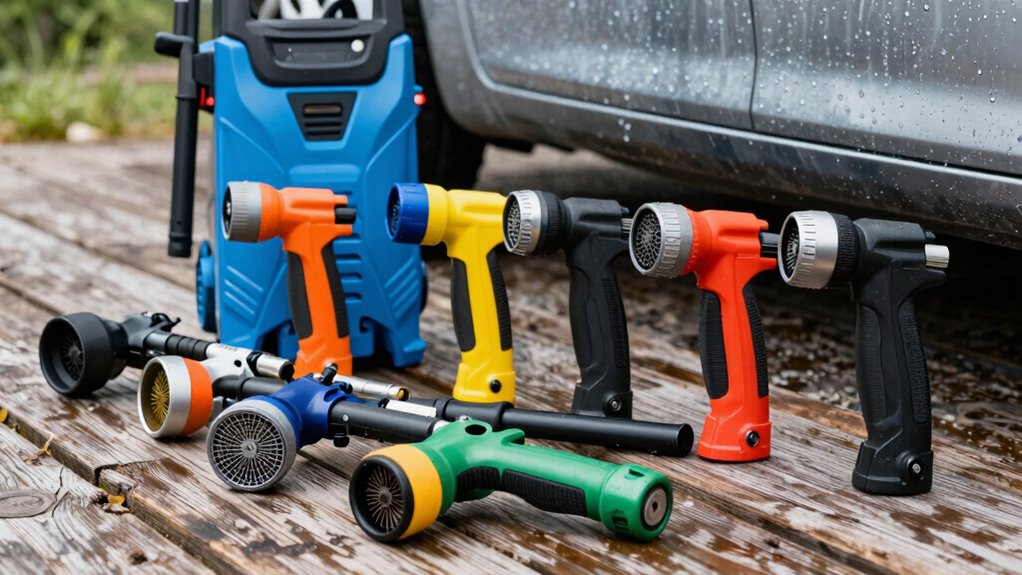
How can you guarantee you’re using the right nozzle for every job? Understanding nozzle types and their spray patterns is essential. Each nozzle serves a specific purpose, ensuring you achieve the best results without damaging surfaces. Here’s a quick reference table to help you choose the right nozzle:
| Nozzle Type | Spray Pattern |
|---|---|
| 0° | Concentrated jet |
| 15° | Narrow fan |
| 25° | Medium fan |
| 40° | Wide fan |
| Soap | Foaming, low pressure |
For tough stains, use a 0° or 15° nozzle, while a 25° or 40° nozzle works well for general cleaning. For applying soap, stick with the soap nozzle. Choose wisely to maximize efficiency!
Portability: Why Size and Weight Matter in Your Choice
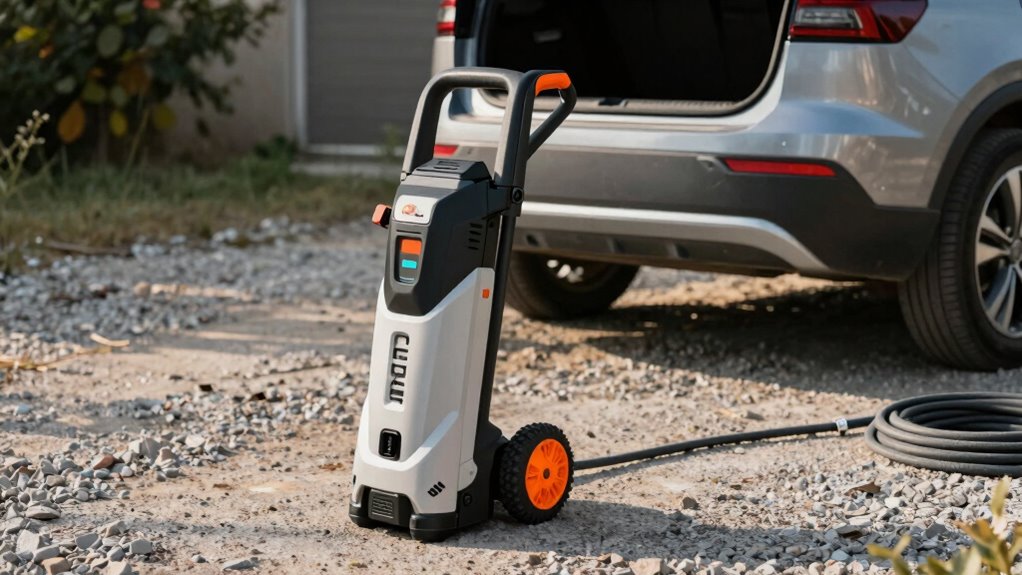
When choosing a car pressure washer, considering portability is essential, especially if you plan to move it around often. A model with a compact design makes it easier to store and transport. You’ll appreciate a pressure washer that fits snugly in your trunk or garage without taking up too much space.
Moreover, pay attention to the weight distribution. A well-balanced washer can prevent strain on your arms and back, making it easier to maneuver while you work. Lightweight options are great, but guarantee they don’t compromise on power. In the end, a combination of compact design and smart weight distribution will enhance your car washing experience, allowing you to clean efficiently without hassle.
Must-Have Accessories for Your Pressure Washer
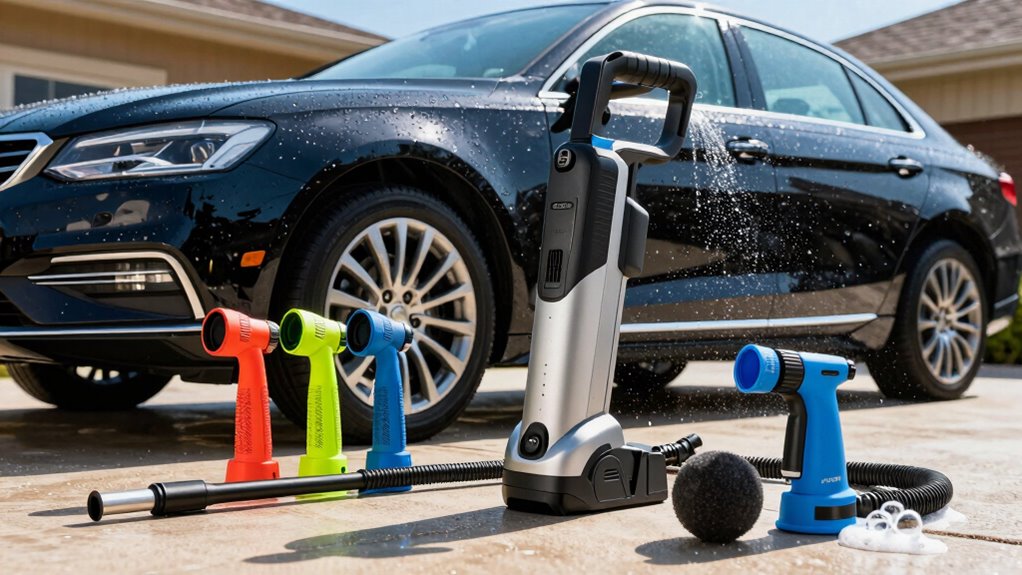
To get the most out of your pressure washer, it is essential to have the right accessories that enhance its functionality. First on your list of accessory essentials should be a soap dispenser. This attachment allows you to apply cleaning solutions effectively, ensuring your car shines. A rotating brush is another must-have attachment, perfect for tackling stubborn dirt and grime without scratching the surface. Don’t forget a long wand or extension, which helps you reach tight spots easily. Additionally, consider a surface cleaner for larger areas like driveways—it saves time and effort. Finally, a quality hose reel keeps everything organized, preventing tangles. Using appropriate DIY tools and following safety tips can further improve your cleaning projects. Incorporating pressure washer accessories can significantly boost your cleaning efficiency and results. With these must-have accessories, you’ll maximize your pressure washer’s potential and make cleaning a breeze.
Compatibility With Car Care Products: Why It Matters
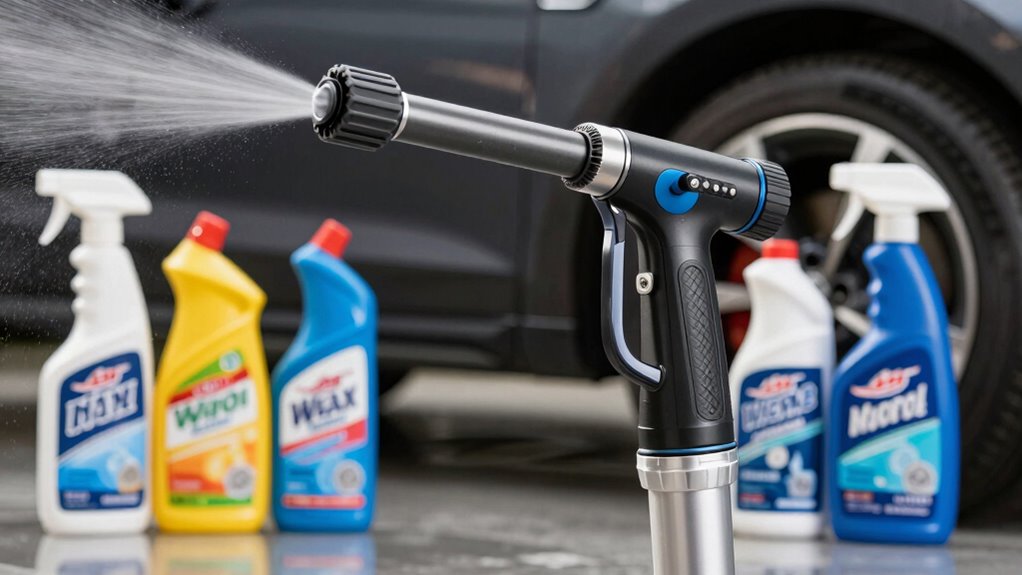
Selecting the right car pressure washer means considering its compatibility with various car care products, as using the wrong solutions can damage your vehicle’s finish. Product compatibility is essential; not all pressure washers work well with every detergent or wax. Some chemicals can cause harmful chemical reactions that may strip your car’s paint or degrade protective coatings. Before purchasing, check the manufacturer’s recommendations for compatible products. This guarantees you’re using safe cleaners that effectively remove dirt without risking damage. It’s also a good idea to test a small area first. By prioritizing compatibility, you’ll maintain your car’s appearance and extend its lifespan, making your investment in a pressure washer worthwhile.
How to Pick a Quieter Pressure Washer?
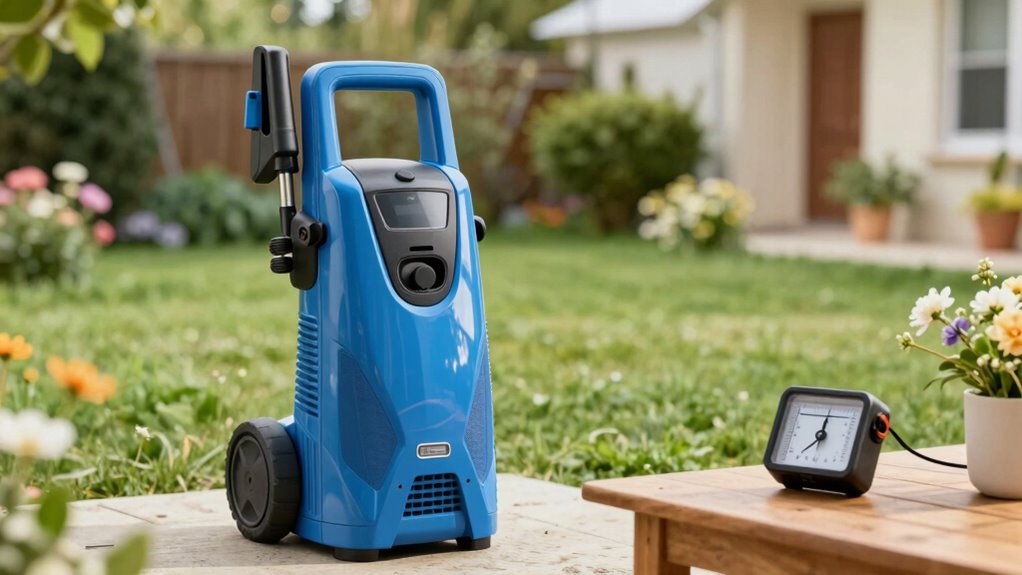
If you want a quieter pressure washer, it’s crucial to take into account noise levels before making a purchase. Look for models specifically designed for quiet operation; these often feature noise reduction technology, such as brushless motors or insulated casings. Check the decibel rating, as lower numbers indicate less sound. Many brands provide this information on their product specifications. Also, consider electric pressure washers, which tend to be quieter than gas-powered ones. Finally, read customer reviews to see how others perceive the noise levels during operation. By focusing on these factors, you can guarantee you choose a pressure washer that meets your cleaning needs without disturbing the peace.
Maintenance Tips for Your Car Pressure Washer
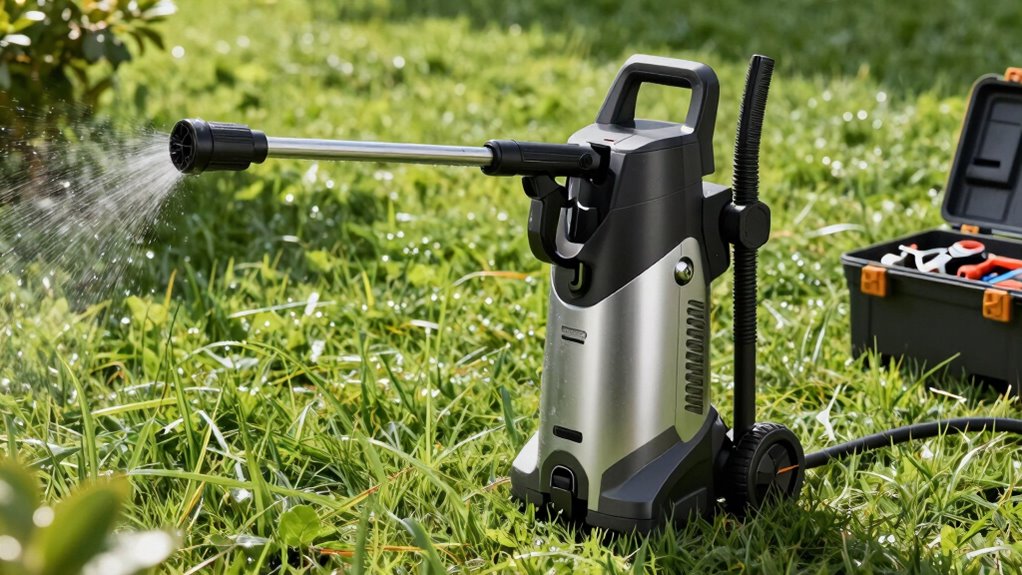
Proper maintenance is essential for keeping your car pressure washer running efficiently and extending its lifespan. Regularly check the pump, hoses, and nozzles for wear and tear. Use proper cleaning techniques to avoid clogs and guarantee peak performance. Don’t forget to perform seasonal maintenance—drain the water before winter, and check the oil levels before you start using it in spring. Additionally, inspecting water damage prevention measures can help you avoid costly repairs caused by water infiltration. Here’s a quick reference table to help you:
| Task | Frequency | Tips |
|---|---|---|
| Inspect hoses | Monthly | Look for cracks or leaks |
| Clean filters | Every use | Prevent clogs |
| Change oil | Every 50 hours | Use manufacturer’s oil |
| Winterize | Annually | Drain water completely |
With these tips, you’ll keep your pressure washer in top shape!
Frequently Asked Questions
Can I Use a Pressure Washer on Delicate Car Finishes?
You can use a pressure washer on delicate car finishes, but you need to be cautious. It’s vital to adjust the pressure setting and use a wide spray nozzle to avoid damaging the paint. Always keep the nozzle at a safe distance and consider using a foam cannon with a gentle detergent. This way, you’ll protect the paint while effectively cleaning your car, maintaining that essential paint protection without risking scratches or swirls.
How Often Should I Pressure Wash My Car?
You should pressure wash your car every week if you want it to shine like a diamond! However, that frequency depends on factors like weather, driving conditions, and how often you park under trees. If you’re sticking to a maintenance schedule, aim for every two to four weeks. Just remember, too much pressure washing can harm delicate finishes, so find that sweet spot to keep your car looking fabulous!
Is It Safe to Use a Pressure Washer on Wheels?
Yes, it’s safe to use a pressure washer on your wheels, but you need to be cautious. Start with lower pressure settings to avoid damaging the brake components or wheel finish. Wheel cleaning can effectively remove grime and brake dust, making your wheels shine. Just keep the nozzle at a safe distance and use a suitable detergent for tougher stains. Always rinse thoroughly to guarantee no soap residue remains.
Can Pressure Washers Damage Car Windows or Mirrors?
Pressure washers can indeed damage car windows and mirrors if you’re not careful. Imagine a fierce storm hitting your car; that’s the kind of force a pressure washer can release. If you aim it directly at windows or mirrors, you risk shattering or cracking them. Always prioritize window protection and mirror safety by using a lower pressure setting and keeping a safe distance. Your vehicle deserves the best care, so handle it wisely!
What Safety Gear Should I Wear While Pressure Washing?
When you pressure wash, you should always wear protective clothing and safety goggles. The protective clothing will shield your skin from water spray and any chemicals you might use. Safety goggles keep debris and water out of your eyes, ensuring you can see clearly while working. Don’t forget sturdy footwear, too, to prevent slips. Taking these precautions helps you stay safe and focused on the task at hand.
Conclusion
To summarize, choosing the right car pressure washer can make all the difference in your cleaning routine. Did you know that using the right PSI can reduce water consumption by up to 50% compared to traditional washing methods? By considering factors like portability, nozzle selection, and compatibility with car care products, you’ll guarantee a more efficient wash. So, invest some time in your choice, and you’ll enjoy a cleaner car and a more eco-friendly wash experience!