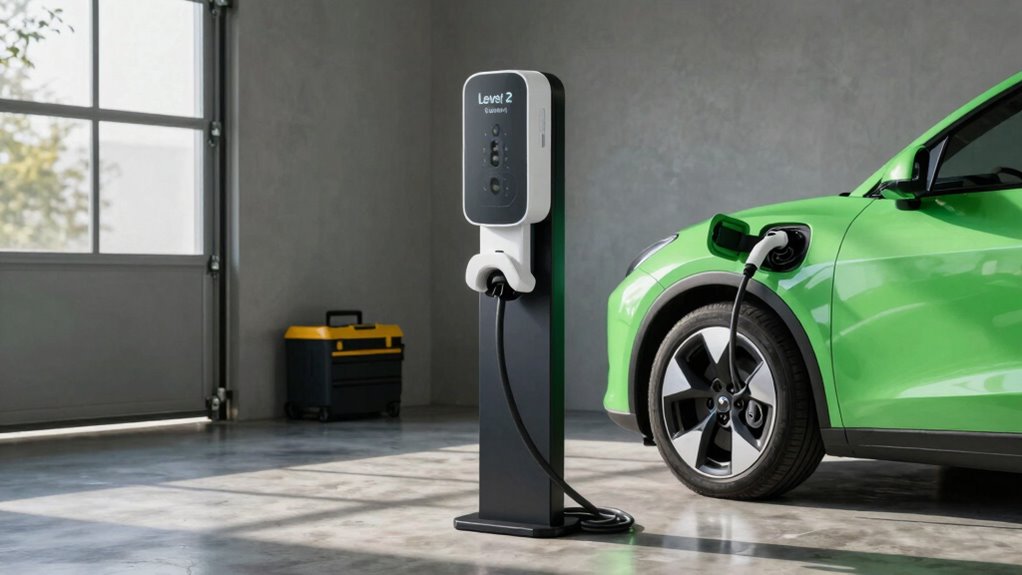

Choosing a Level 2 EV charger is essential for enhancing your electric vehicle experience. You’ll want a model with advanced safety features, adjustable charging speeds, and compatibility with your car. Consider the installation process and whether your home’s electrical system can support it. Don’t forget to factor in costs, including the charger price and installation fees. Avoid common pitfalls by doing your research. Keep going to uncover more insights on making the right choice.

Get the little things that make your day delivered free with Prime
- Fast, free delivery on millions of items
- Prime Video, Amazon Music and more included
- Member-only deals all year
Key Takeaways
- Assess your daily charging needs to select a charger with appropriate speed and compatibility for your EV model.
- Ensure the installation location is accessible and complies with local regulations to avoid future complications.
- Consult a licensed electrician to confirm your electrical system can support the charger’s load and avoid costly upgrades.
- Look for advanced safety features and smart technology to optimize energy efficiency and enhance charging convenience.
- Factor in total costs, including charger price, installation fees, and ongoing electricity expenses for comprehensive budgeting.
Level 2 EV charger with safety features
As an affiliate, we earn on qualifying purchases.
As an affiliate, we earn on qualifying purchases.
Why Level 2 Chargers Are Essential for Your EV
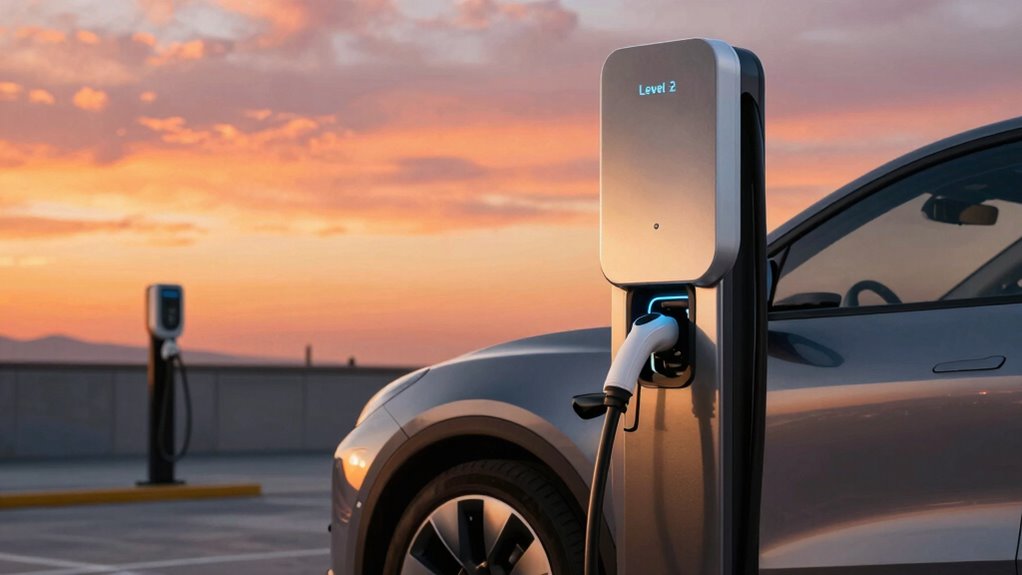
While you can charge your electric vehicle (EV) using a standard outlet, relying on a Level 2 charger is essential for maximizing convenience and efficiency. With a Level 2 charger, you’ll experience faster charging times, allowing you to get back on the road quickly. This makes it easier to plan your day without worrying about extended downtime. Plus, home installation of a Level 2 charger means you can charge your EV overnight, ensuring it’s ready for the next day’s adventures. You won’t have to search for public charging stations, giving you peace of mind. Investing in a Level 2 charger enhances your driving experience, providing the charging convenience you need for a hassle-free, electric lifestyle.
As an affiliate, we earn on qualifying purchases.
Must-Have Features in Level 2 Chargers
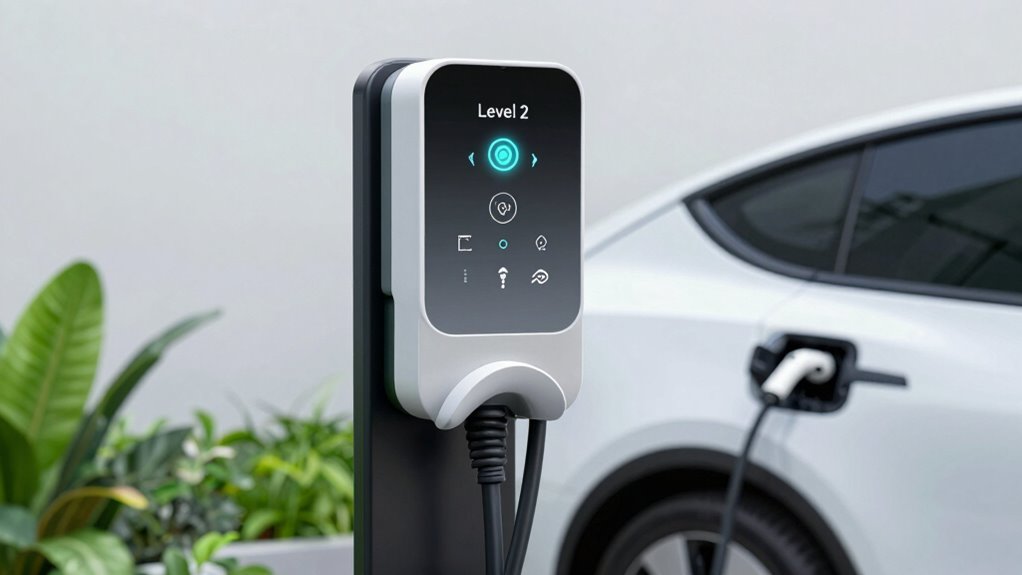
When selecting a Level 2 charger for your electric vehicle, you’ll want to guarantee it has the essential features that enhance your charging experience. First, look for advanced charging safety features like overcurrent protection and ground fault detection. These make certain your vehicle and home are protected during charging sessions. Next, consider energy efficiency. Chargers with smart technology can optimize energy use, reducing your electricity bill and environmental impact. Additionally, adjustable charging speeds are vital, allowing you to customize how quickly your vehicle charges based on your needs. Finally, confirm the charger is compatible with your EV model and has a reliable warranty. With these must-have features, you’ll enjoy a safer, more efficient charging experience.
adjustable speed Level 2 EV charger
As an affiliate, we earn on qualifying purchases.
As an affiliate, we earn on qualifying purchases.
What You Need to Know About Charger Installation
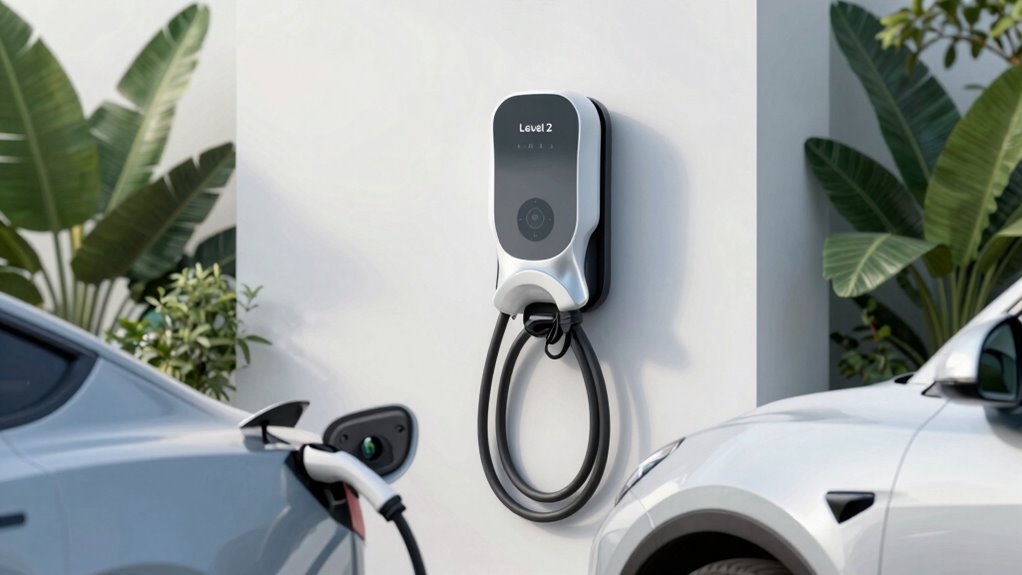
Installing a Level 2 EV charger is a crucial step in enhancing your electric vehicle experience, so understanding the installation process is important. First, consider the charger location; it should be easily accessible and near your vehicle’s parking spot. You’ll want to confirm it’s positioned where it won’t obstruct walkways or driveways. Next, check if you need any installation permits. Local regulations often require permits for electrical work, especially for higher voltage chargers. Consulting a licensed electrician can help you navigate these requirements and guarantee a safe installation. Remember, proper installation not only maximizes charging efficiency but also assures your home’s electrical system can handle the load without issues. Take these steps seriously for a smooth experience. Smart home technology can also be integrated to monitor your charger’s usage and optimize energy management.
home installation Level 2 EV charger
As an affiliate, we earn on qualifying purchases.
As an affiliate, we earn on qualifying purchases.
Level 2 Charger Costs and Budgeting
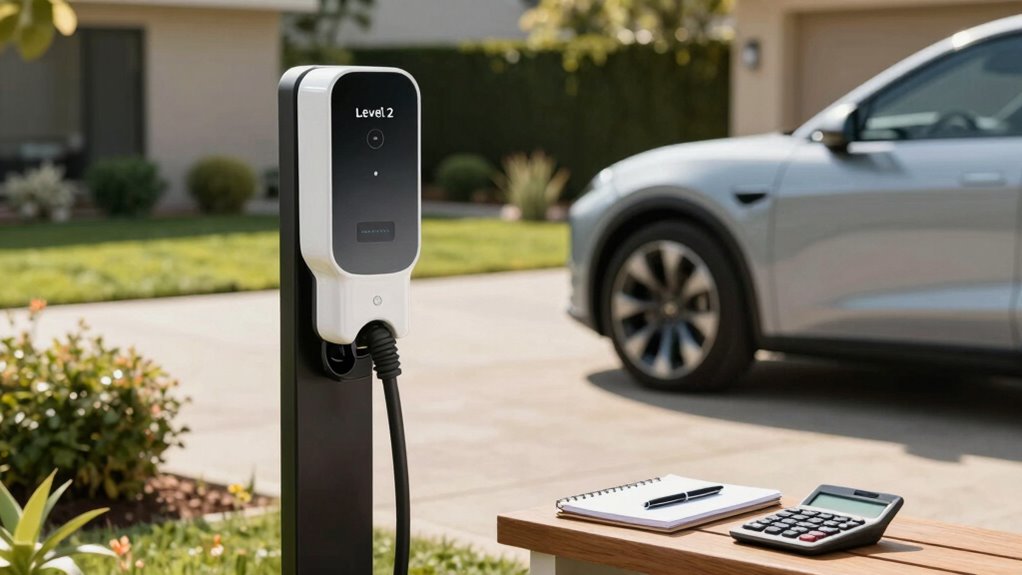
After ensuring your Level 2 charger is installed correctly, it’s time to evaluate the costs involved. Understanding level 2 pricing can help you make informed budget considerations. Here are three key factors to keep in mind:
- Charger Cost: Prices typically range from $300 to $1,500, depending on features and brand.
- Installation Fees: Expect to pay between $200 and $800 for professional installation, depending on your electrical setup.
- Operating Expenses: Factor in your electricity costs, which will vary by location and usage.
Top Level 2 Chargers: Brand Comparisons
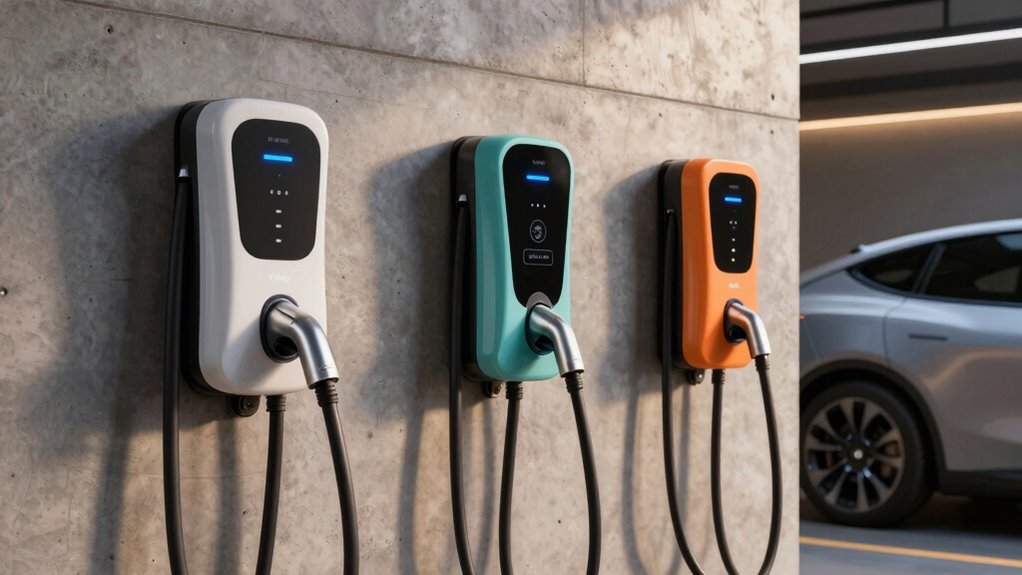
Several top brands dominate the Level 2 EV charger market, each offering unique features that cater to different needs. When comparing options, consider brands like ChargePoint, ClipperCreek, and Blink. ChargePoint is known for its excellent charger performance and user-friendly app, while ClipperCreek emphasizes robust build quality and brand reliability. Blink offers versatile installation options, making it suitable for various environments. Each brand has its strengths, so think about what matters most to you—whether it’s speed, ease of use, or durability. Don’t overlook customer reviews, as they provide insights into real-world experiences. By weighing these factors, you can find the right Level 2 charger that meets your specific requirements and guarantees a reliable charging solution for your EV.
How to Choose the Right Charging Speed for Your EV?
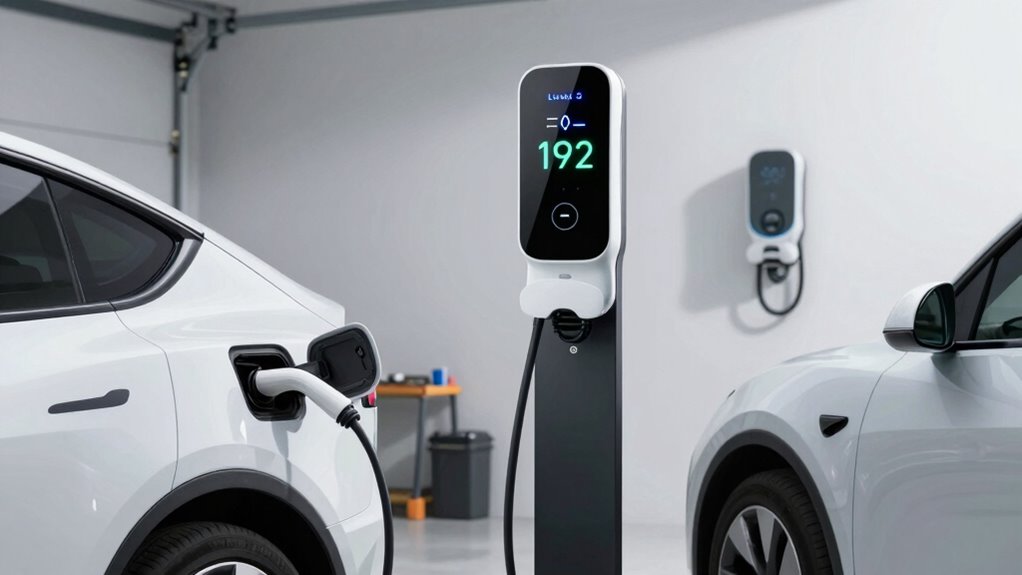
When choosing the right charging speed for your EV, consider how often you drive daily and your typical mileage. Understanding charging speed basics will help you determine the best option for your needs. This way, you can guarantee your EV is ready when you are, without any surprises.
Charging Speed Basics
How do you determine the right charging speed for your electric vehicle (EV)? It boils down to understanding your needs and the EV’s specifications. Here are three key factors to take into account:
- Charging Time: Assess how long you can leave your EV charging. Faster charging speeds reduce downtime.
- Power Output: Check your EV’s maximum power intake. A charger with a higher output won’t matter if your vehicle can’t handle it.
- Home Electrical Capacity: Verify your home’s electrical system can support the charger’s power requirements without overloading.
- Smart Controls: Integrating smart HVAC controls can help optimize your home’s overall energy use, including EV charging, making your setup more eco-friendly.
Daily Driving Needs
Understanding your daily driving needs is key to selecting the right charging speed for your EV. Start by evaluating your daily driving habits—how far do you typically drive each day? If your trips average around 30 miles, a Level 2 charger, which offers about 25 miles of range per hour, is likely sufficient. Consider your charging frequency as well; if you charge overnight, you can easily replenish your battery without needing a super-fast charger. However, if you’re on the road frequently or take longer trips, you might want a charger with a higher output to minimize downtime. Ultimately, aligning your charging speed with your driving patterns guarantees you’ve always got the range you need without excessive wait times. Additionally, understanding your power backup options can ensure your EV charging setup remains reliable during outages. Being aware of your home electrical capacity can help prevent overloads and optimize your charging setup for efficiency.
Common Mistakes to Avoid When Buying a Level 2 Charger
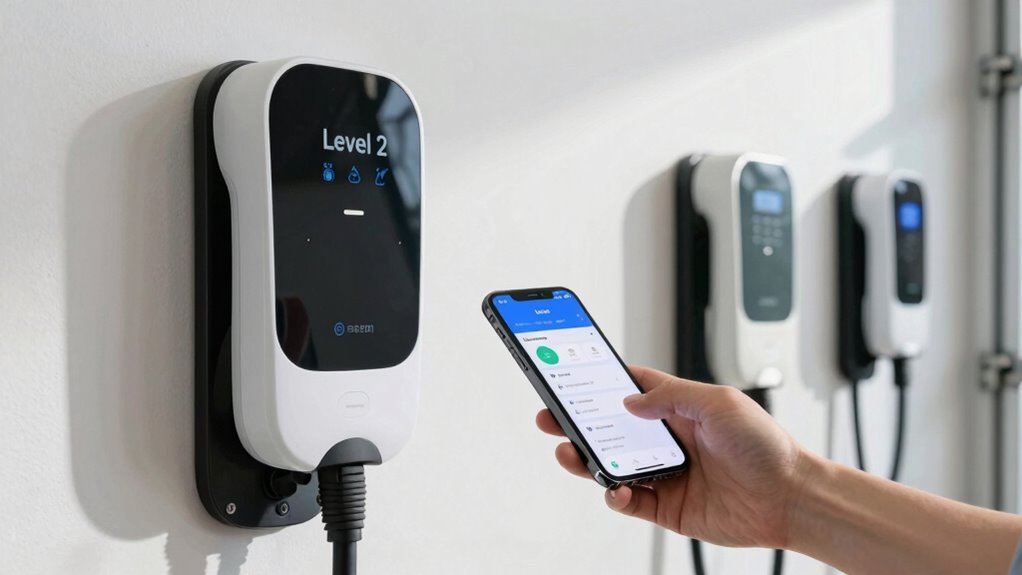
While many buyers focus on features and pricing, overlooking a few key factors can lead to costly mistakes when purchasing a Level 2 EV charger. Here are some common misconceptions and buyer pitfalls to avoid:
Many buyers overlook crucial factors, leading to costly mistakes when purchasing a Level 2 EV charger.
- Ignoring Installation Requirements: Don’t assume any charger will fit your home’s electrical system. Check for necessary upgrades. Electrical compatibility is crucial to ensure your home can support the charger safely.
- Underestimating Charging Speed: Not all chargers deliver the same power. Verify the charger meets your daily driving needs for efficiency.
- Neglecting Warranty and Support: Research the manufacturer’s warranty and customer service. A good support system is essential for long-term satisfaction.
- Overlooking home electrical capacity can result in needing costly electrical panel upgrades, so ensure your home can support the charger’s requirements.
Frequently Asked Questions
Can I Use a Level 2 Charger for Non-Evs?
You can’t typically use a Level 2 charger for non-EV applications. Level 2 compatibility is specifically designed for electric vehicles, providing the right voltage and amperage to charge them efficiently. Non-EV applications might not have the necessary connections or requirements to handle that power safely. If you’re considering using a Level 2 charger for something else, double-check the specifications to verify it meets the needs of the device you want to charge.
How Long Do Level 2 Chargers Typically Last?
Think of a Level 2 charger like a sturdy bridge; with proper care, it can last for many years. Typically, a well-maintained charger lifespan ranges from 10 to 15 years. To extend its life, keep it clean, check for wear and tear, and guarantee it’s installed correctly. Following these maintenance tips not only enhances performance but also guarantees your charger is ready to power your electric vehicle whenever you need it.
Are There Any Government Incentives for Installing Level 2 Chargers?
Yes, there are government incentives for installing Level 2 chargers. You can take advantage of federal rebates that help reduce your upfront costs, making it more affordable to go electric. Many states also offer incentives, which can include tax credits or grants. It’s worth researching your local programs, as they can greatly lower your installation expenses and encourage you to make the switch to a more sustainable charging solution.
Do Level 2 Chargers Work in Extreme Weather Conditions?
Absolutely, level 2 chargers can handle extreme temperatures, much like a trusty winter coat braving the chill. Many models come with weather-resistant features, ensuring they function reliably in harsh conditions, whether sweltering heat or freezing cold. Just like any tech, it’s wise to check the manufacturer’s specifications for details on their weather resistance. So, as you charge your EV, you can do so confidently, knowing your charger’s built to withstand the elements.
Can I Install a Level 2 Charger Myself?
Yes, you can install a Level 2 charger yourself, but you need to meet certain installation requirements. Make sure you have the right electrical knowledge and tools before starting. It’s essential to follow local codes and regulations for safety. If you’re unsure about any part of the installation process, consider hiring a professional. DIY safety should always be your priority to avoid potential hazards or damage to your home’s electrical system.
Conclusion
Choosing the right Level 2 EV charger doesn’t have to be overwhelming. While you might be tempted to settle for the cheapest option, remember that investing in quality features and reliable installation can save you headaches down the road. Think about the speed you need versus your budget constraints—finding the perfect balance is key. Don’t rush the decision; your EV deserves the best. With the right charger, you’ll enjoy worry-free driving and efficient charging for years to come.
Columbus Day / Indigenous Peoples' Day Picks
long weekend sales
As an affiliate, we earn on qualifying purchases.