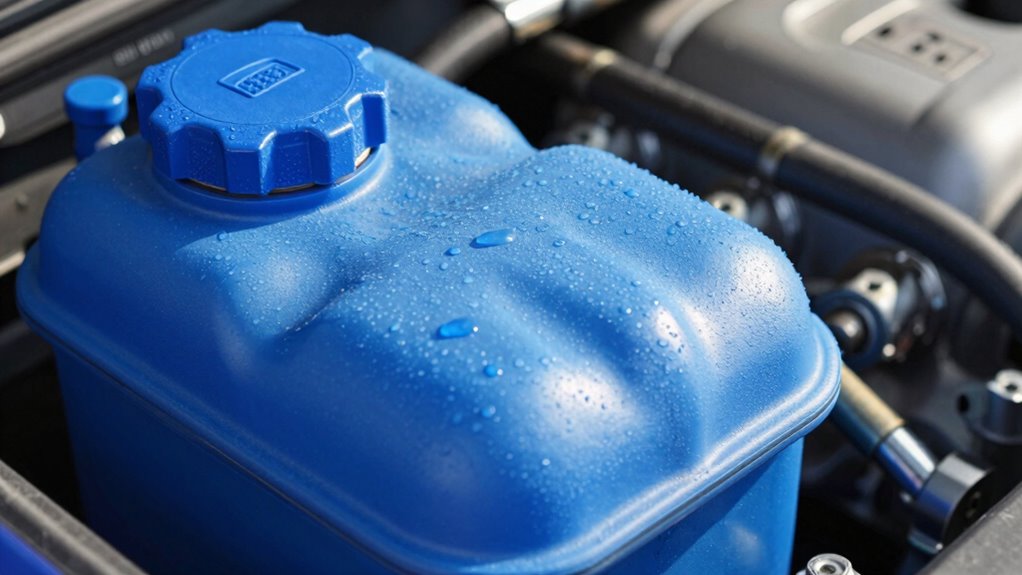

Coolant’s essential for keeping your engine running smoothly by absorbing heat and preventing overheating. To guarantee peak performance, you should replace it every two to five years, or sooner if you notice signs like discoloration or temperature fluctuations. Always check your coolant levels regularly and choose the right type for your vehicle, like ethylene glycol or propylene glycol. To keep your engine in top shape, you might want to explore more about coolant maintenance tips.
Key Takeaways
- Coolant absorbs heat from the engine, preventing overheating and ensuring optimal performance.
- Signs of needing replacement include discoloration, temperature fluctuations, and sweet smells indicating leaks.
- Check coolant levels in the reservoir, ensuring the engine is cool before inspection.
- Coolant should typically be changed every two to five years, following manufacturer recommendations.
- Choose the right coolant type based on needs, considering ethylene glycol, propylene glycol, or water-based options.
What Is Coolant and Its Role in Your Engine?
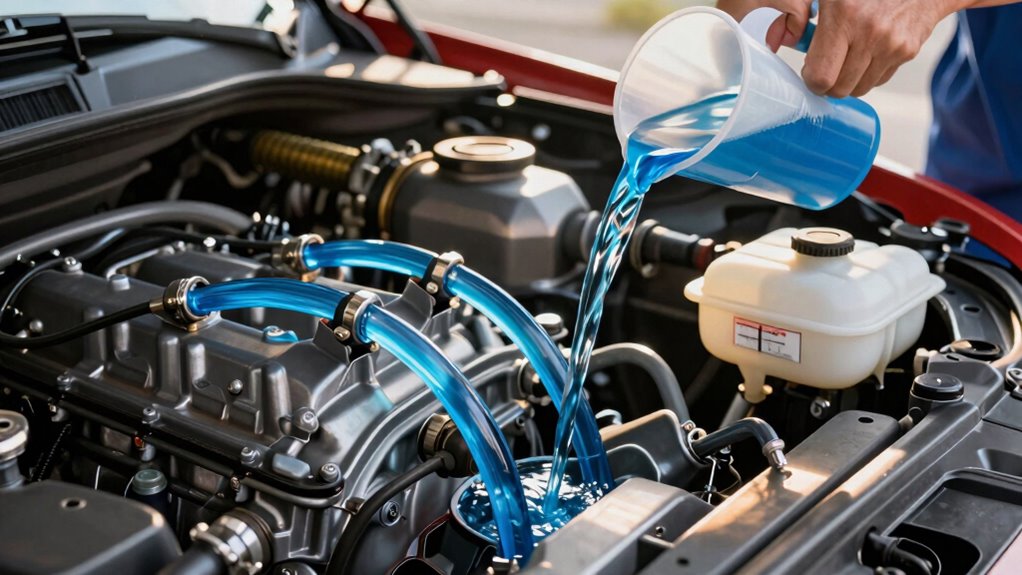
Coolant is an essential fluid that keeps your engine running smoothly and efficiently. It absorbs heat from the engine and prevents overheating, guaranteeing optimal performance. There are various coolant types, including ethylene glycol and propylene glycol, each designed to meet specific engine requirements. Choosing the right coolant is critical; using the wrong type can lead to engine overheating or damage. The coolant circulates through the engine, radiator, and heater core, transferring heat away from crucial components. Additionally, it protects against corrosion and helps maintain the engine’s temperature. Regularly checking and maintaining your coolant levels can prevent costly repairs and prolong your engine’s lifespan. Understanding the role of coolant guarantees your vehicle operates safely and effectively.
Signs That Indicate Your Coolant Needs Replacement
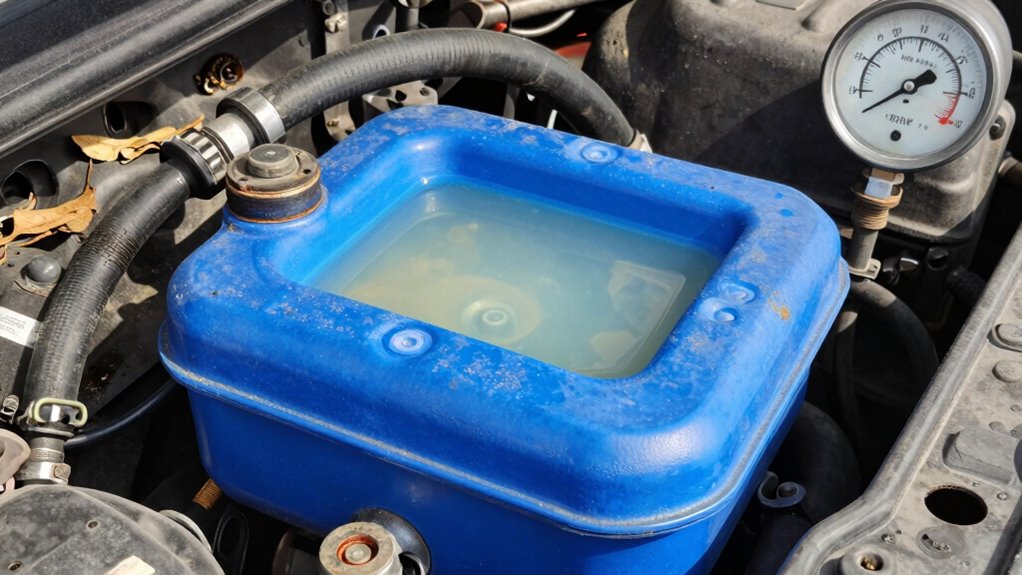
How can you tell if it’s time to replace your coolant? You should be on the lookout for a few key signs that indicate your coolant needs attention. Ignoring these can lead to overheating or engine damage.
Watch for key signs indicating it’s time to replace your coolant to prevent overheating and engine damage.
- Coolant discoloration: If your coolant looks rusty, brown, or has debris floating in it, it’s time to change it.
- Temperature fluctuations: If your engine’s temperature gauge isn’t stable and keeps rising and falling, your coolant could be failing to do its job.
- Sweet smell: A sweet odor around your engine might suggest a coolant leak or degradation, prompting a check.
Keep these signs in mind to guarantee your engine stays cool and runs efficiently!
How to Check Your Coolant Levels?
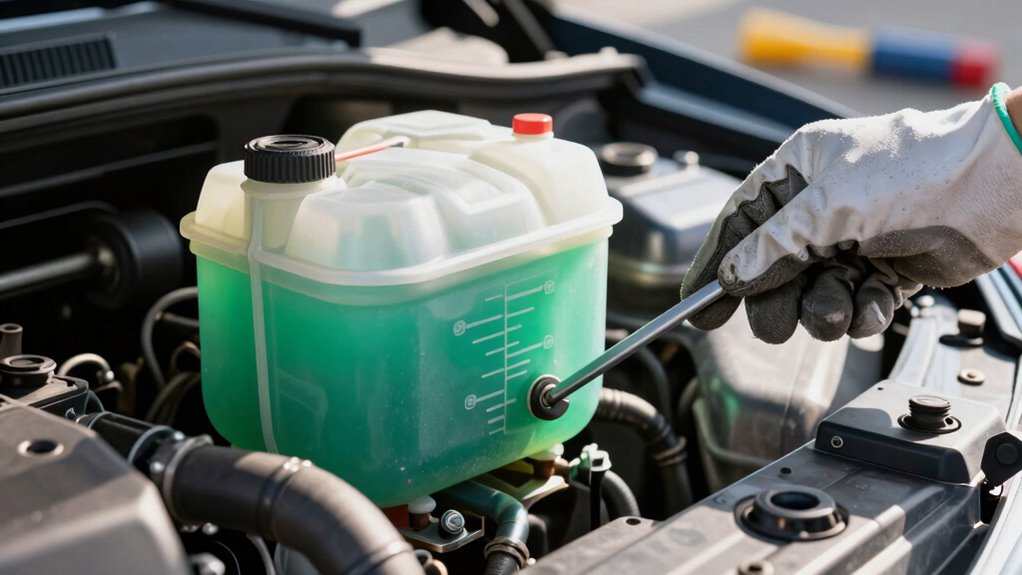
Wondering if your coolant levels are where they should be? Checking is simple. First, verify your engine is cool, then locate the coolant reservoir under the hood. Most reservoirs have markings indicating the minimum and maximum levels. If the coolant is below the minimum mark, it’s time to add more.
For proper coolant testing, look for any discoloration or debris in the fluid. If it’s rusty or has particles, consider replacing it. You might also want to use coolant additives to enhance performance and protect against corrosion. Just remember to mix them according to the manufacturer’s recommendations. Regular checks will keep your engine running smoothly and help prevent overheating issues in the long run.
When Should You Change Your Coolant?
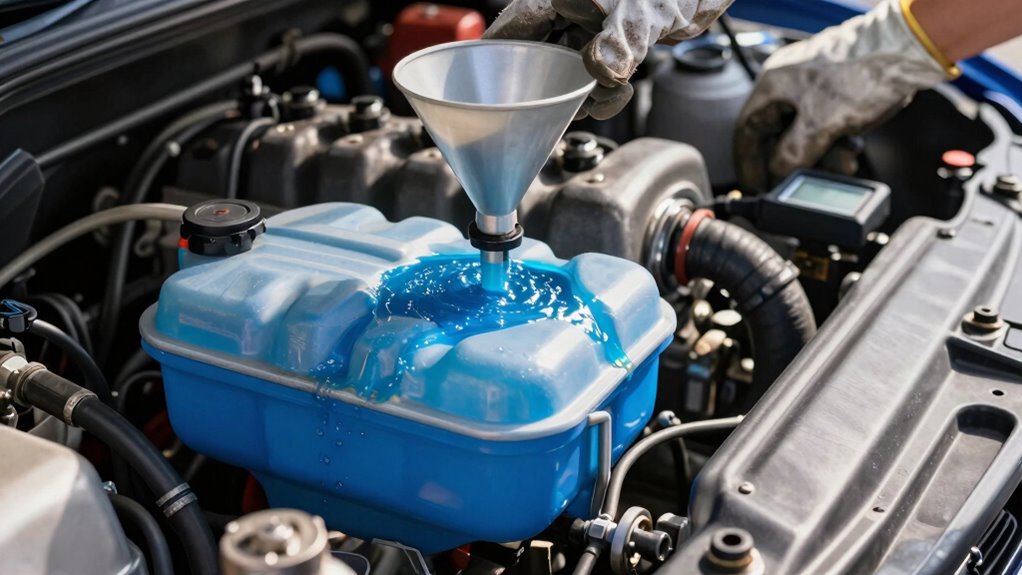
When’s the right time to change your coolant? Knowing when to replace it is vital for your vehicle’s health. Typically, coolant has a lifespan of about two to five years, but this can vary based on your driving conditions and maintenance practices. Here are some signs it’s time to change your coolant:
- You notice overheating or temperature fluctuations.
- The coolant looks rusty or contaminated.
- Your vehicle’s manual recommends a coolant replacement.
Ignoring these signs can lead to serious engine problems. Regularly checking the coolant condition can help you avoid costly repairs and guarantee your engine runs smoothly. So, keep an eye on your coolant, and don’t wait too long to make that change!
Types of Coolants You Should Know
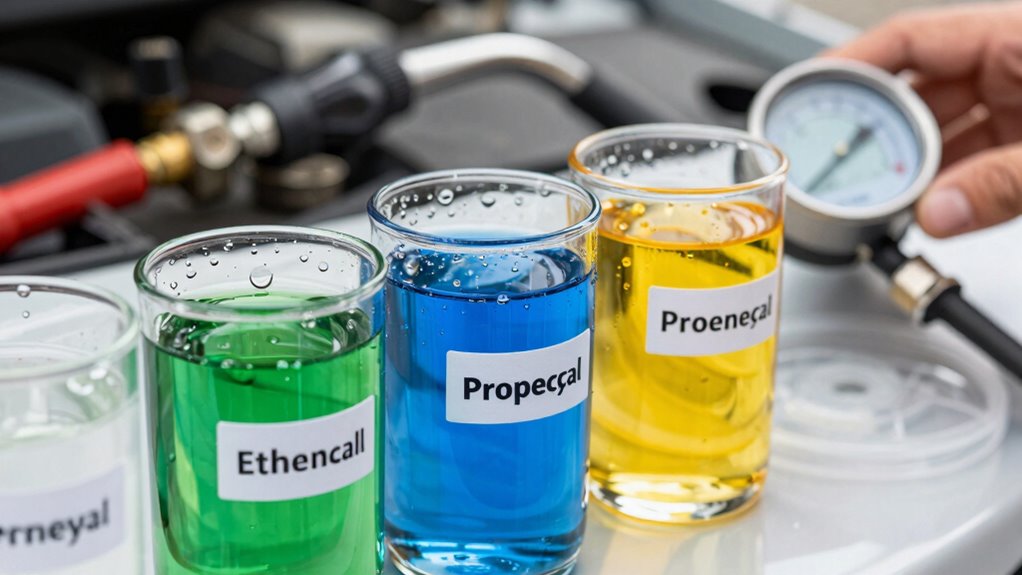
When it comes to coolant options, you’ve got a few key types to evaluate. Ethylene glycol and propylene glycol-based coolants are popular choices, each with its own benefits. Don’t forget about water-based coolants, which can also be effective in certain situations.
Ethylene Glycol Based Coolants
Ethylene glycol based coolants are vital for maintaining ideal engine performance, as they effectively lower the freezing point and raise the boiling point of the coolant mixture. Understanding the key coolant properties of ethylene glycol helps you make informed decisions for your vehicle. Here are some important aspects to reflect on:
- Excellent heat transfer: It guarantees efficient cooling and prevents overheating.
- Corrosion resistance: Protects engine components from rust and wear.
- Environmental impact: While effective, ethylene glycol can be toxic, so proper disposal is essential.
Propylene Glycol Based Coolants
If you’re exploring coolant options, propylene glycol based coolants are another effective choice worth considering. These coolants offer several propylene glycol benefits, including excellent heat transfer properties and a lower freezing point, making them suitable for various climates. They’re also less toxic than traditional ethylene glycol coolants, which enhances propylene glycol safety for both users and the environment.
Additionally, propylene glycol based coolants are biodegradable, reducing their ecological footprint. You can confidently use them in systems where spills may occur, as they pose less risk to pets and wildlife. When selecting a coolant, evaluating your specific needs and considering propylene glycol as a safer, effective alternative could be a smart choice for your vehicle or machinery.
Water-Based Coolants Options
While exploring coolant options, you might find that water-based coolants offer a range of effective solutions for your cooling needs. These coolants leverage water’s unique properties, making them a popular choice in various applications. Here are some water-based benefits you should consider:
- Effective Heat Transfer: Water efficiently absorbs and dissipates heat, ensuring peak engine performance.
- Environmental Friendliness: Being non-toxic and biodegradable, they’re safer for the environment compared to many alternatives.
- Cost-Effective: Water-based coolants typically come at a lower price point, making them budget-friendly for regular maintenance.
Essential Tips for Effective Coolant System Maintenance

Maintaining your coolant system is essential for keeping your engine running smoothly and efficiently. Start by regularly checking for coolant leaks, as even a small leak can lead to overheating and serious engine damage. Establish a maintenance schedule that includes inspecting hoses, clamps, and the radiator for wear and tear. Don’t forget to flush and replace your coolant according to your vehicle’s recommendations. This helps remove contaminants that can cause corrosion. Additionally, monitor the coolant level frequently to guarantee it’s within the appropriate range. If you notice any changes in coolant color or consistency, have it checked promptly. Staying proactive with these tips will extend the life of your coolant system and improve your vehicle’s overall performance.
Frequently Asked Questions
Can I Mix Different Types of Coolant?
You shouldn’t mix different types of coolant. Coolant compatibility is essential for your engine’s health, and mixing can lead to chemical reactions that reduce effectiveness. When you combine coolants, you risk creating sludge or other harmful deposits. It’s best to stick with the same type that your vehicle manufacturer recommends. If you need to top off, always check the label or consult a professional to avoid any potential issues.
What Happens if I Run My Engine Without Coolant?
Running your engine without coolant? That’s a risky move! Without coolant, your engine can overheat quickly, leading to severe damage like warped cylinder heads or a blown gasket. You might also encounter coolant leaks when the engine overheats, further complicating the problem. Ignoring this can result in costly repairs or even engine failure. So, keep an eye on your coolant levels and guarantee your engine runs smoothly and efficiently.
How Does Coolant Affect Engine Performance?
Coolant directly impacts your engine’s performance by regulating engine temperature. If the coolant composition is off, your engine could overheat or run inefficiently. Proper coolant guarantees peak heat transfer, preventing damage and maintaining power. When temperatures rise, it can lead to knocking or a decrease in fuel efficiency. So, keeping an eye on your coolant not only protects your engine but also helps it run smoothly and efficiently, maximizing its overall performance.
Can Old Coolant Damage My Engine?
Yes, old coolant can damage your engine. As coolant degrades over time, it loses its ability to prevent engine corrosion, leading to rust and buildup. This can cause overheating and potentially severe engine damage. You might not notice the effects immediately, but neglecting coolant maintenance can result in costly repairs down the road. Regularly check and replace your coolant to guarantee your engine stays protected and runs smoothly.
Is It Safe to Change Coolant Myself?
Absolutely, you can change your coolant yourself! With a little know-how and some basic tools, DIY coolant maintenance isn’t just for the pros. Just make sure you’ve got the right coolant for your vehicle, and keep safety gear handy. It’s like changing a tire—once you get the hang of it, you’ll feel empowered. Just remember to properly dispose of the old coolant, and you’ll be good to go!
Conclusion
So, you thought coolant was just a fancy liquid sitting in your engine, huh? Ironically, it’s actually the unsung hero that keeps everything running smoothly. If you ignore it, you might just end up with a steaming pile of trouble. Remember, checking your coolant levels and replacing it at the right time isn’t just maintenance; it’s your engine’s lifeline. Keep it happy, and it’ll keep you cruising. After all, who doesn’t want a drama-free ride?