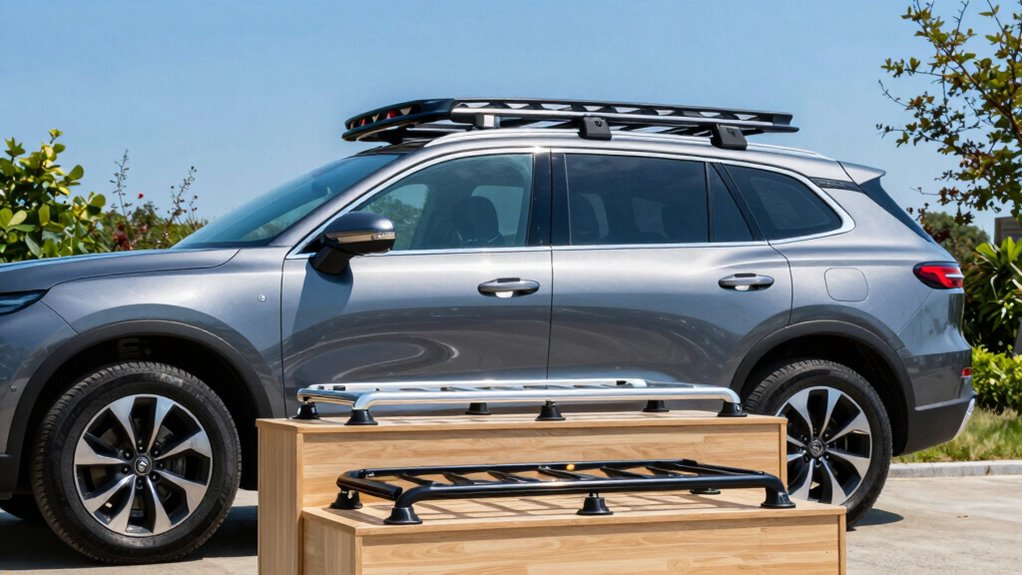

Choosing a roof rack system starts with checking your vehicle’s compatibility, including model and load limits. Next, evaluate the types of racks available, like cargo boxes or bike racks, based on your gear needs. After that, familiarize yourself with the installation and removal process to avoid hassle. Finally, consider your budget, factoring in additional equipment costs. Want to explore more options and tips for selecting the perfect roof rack? Keep going!

Get the little things that make your day delivered free with Prime
- Fast, free delivery on millions of items
- Prime Video, Amazon Music and more included
- Member-only deals all year
Key Takeaways
- Check your vehicle’s specifications and compatibility charts to ensure the roof rack fits properly.
- Assess your gear’s weight and dimensions to select a sturdy and secure rack type.
- Determine the best roof rack type based on your lifestyle and the items you need to transport.
- Familiarize yourself with the installation guidelines to ensure a safe and efficient setup.
- Consider your budget, including potential additional costs for equipment and installation.
vehicle roof rack compatibility chart
As an affiliate, we earn on qualifying purchases.
As an affiliate, we earn on qualifying purchases.
Determine Your Vehicle Compatibility
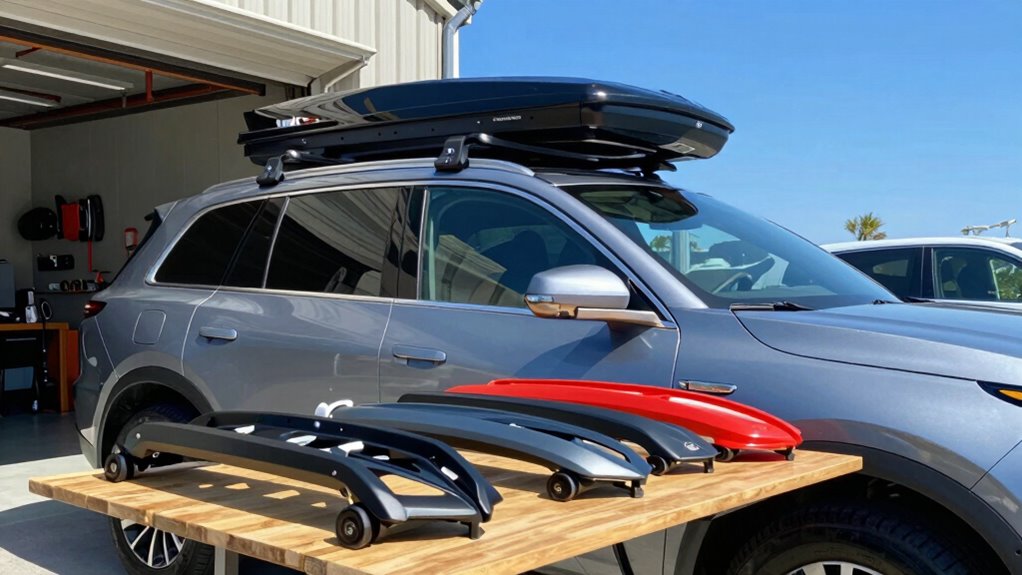
Before you invest in a roof rack system, it’s essential to guarantee it’s compatible with your vehicle. Start by checking your vehicle specifications, as these details determine roof compatibility. Look for information regarding the model, year, and existing mounting points. Many manufacturers provide compatibility charts or online tools to help you identify which racks fit your car. Don’t overlook the weight limits and load distribution; these factors are vital for safety. If you’re unsure, consult your vehicle’s manual or talk to a knowledgeable retailer. By ensuring your roof rack aligns with your vehicle specifications, you’ll enhance safety and performance, making your outdoor adventures more enjoyable and hassle-free.
As an affiliate, we earn on qualifying purchases.
Types of Roof Racks: Which One Is Right for You?
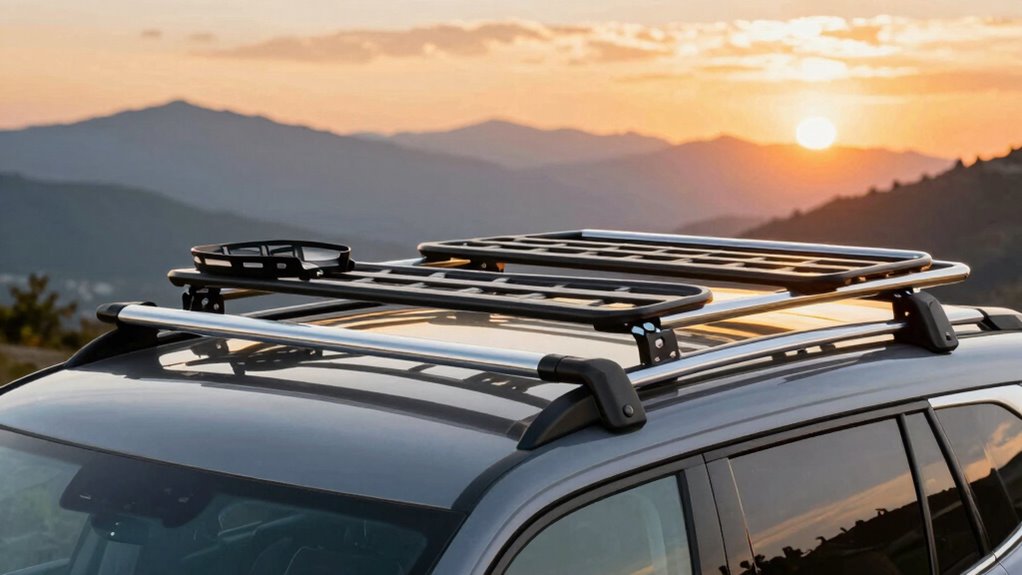
What type of roof rack suits your needs best? Choosing the right rack can make all the difference in your outdoor adventures. Consider your gear and how you plan to use it. Here are some options:
Choosing the right roof rack is essential for your outdoor adventures; consider your gear and usage to find the ideal fit.
- Basket racks: Great for carrying bulky items like camping gear and sports equipment.
- Cargo boxes: Ideal for protecting your belongings from weather elements while providing extra storage space.
- Ski and snowboard racks: Perfect for winter sports enthusiasts, keeping your gear secure and accessible.
- Bike racks: Designed specifically for transporting bicycles safely and easily.
Evaluate your lifestyle and the type of gear you’ll haul to find the perfect roof rack solution for your vehicle.
As an affiliate, we earn on qualifying purchases.
Assess Your Gear Needs for Your Roof Rack
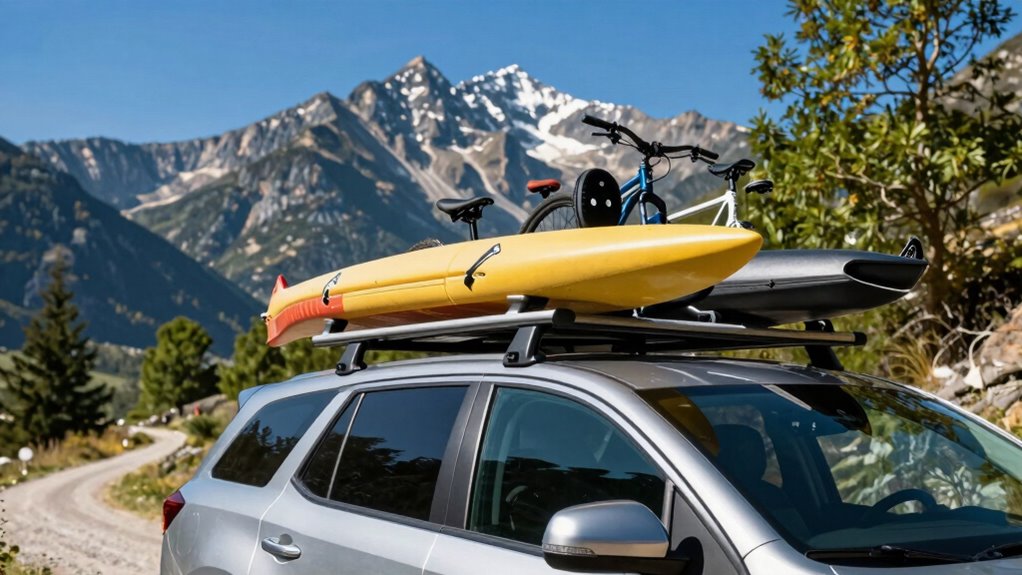
Understanding your gear needs is essential for selecting the right roof rack, especially since different activities require different setups. Start by evaluating the gear weight you’ll be carrying. Heavy items demand a sturdier rack, while lighter gear allows for more flexibility. Next, consider the equipment dimensions. Measure your gear to confirm it fits securely on the roof without overhang. Think about how many items you’ll transport and their shapes, as this influences the type of rack you’ll need—whether it’s a tray, basket, or specific attachment. By clearly identifying your gear weight and dimensions, you’ll narrow down your options, making it easier to select a roof rack that meets your needs and supports your adventures effectively. Also, understanding metal detecting etiquette can ensure your gear is compatible with outdoor activities. Additionally, considering fuel efficiency can help you choose a rack that minimizes wind resistance and improves your vehicle’s performance. Being aware of aerodynamic design principles can further optimize your setup for better fuel economy and reduced noise during travel.
As an affiliate, we earn on qualifying purchases.
Installing and Removing Your Roof Rack
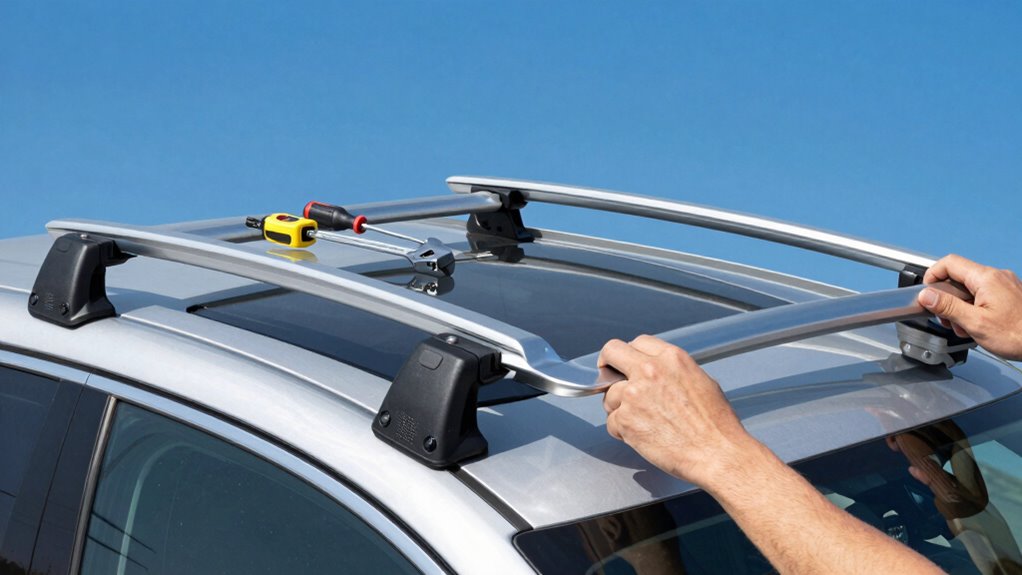
Installing and removing your roof rack can be a straightforward process if you follow the right steps. Start by familiarizing yourself with the installation techniques specific to your roof rack model. Make certain you have all the necessary tools handy to avoid interruptions. Here are some handy tips:
- Read the manual: Follow the manufacturer’s guidelines for installation and removal.
- Check the fit: Verify your rack is compatible with your vehicle to prevent damage.
- Use a buddy: Having someone assist you can make the process smoother and safer.
- Practice removal: Before taking it off, practice the removal tips to avoid any surprises.
Budgeting for Your Roof Rack: What to Consider
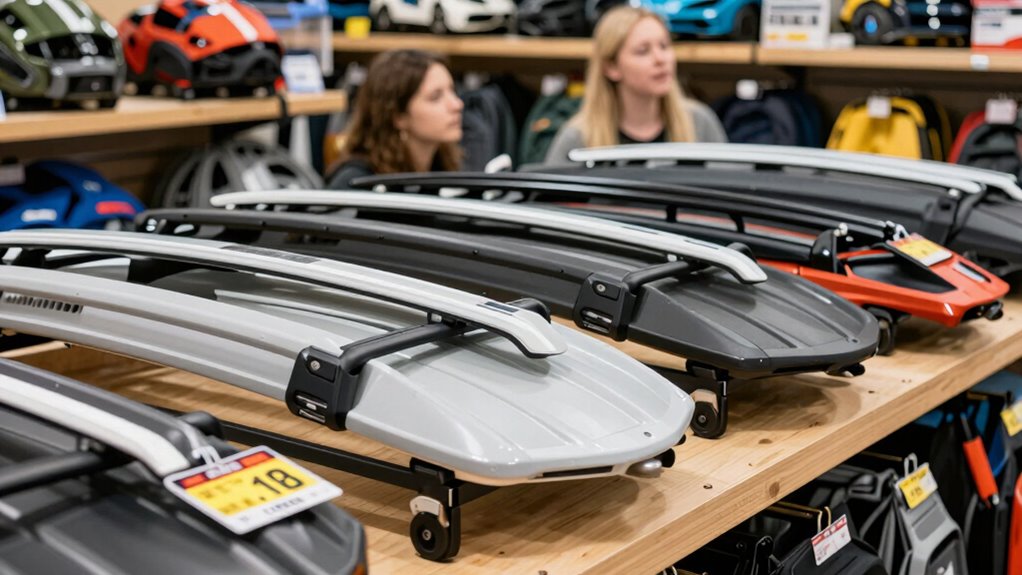
Once you’ve got your roof rack installed or removed, it’s time to think about budgeting for this accessory. First, consider the initial cost of the rack itself, as prices can vary considerably based on the brand, material, and features. Don’t forget to factor in any additional equipment like crossbars or bike mounts. Next, explore financing options if the upfront cost seems steep. Many retailers offer payment plans that can ease the financial burden. Finally, keep potential installation and maintenance costs in mind. By carefully weighing these cost considerations, you can guarantee your roof rack fits within your budget while meeting your needs. Remember, it’s about getting the best value without sacrificing quality. Additionally, understanding the total‑cost comparisons of different systems can help you make a more informed decision.
Frequently Asked Questions
Can I Use a Roof Rack With a Sunroof?
Yes, you can use a roof rack with a sunroof, but you need to check for sunroof compatibility. Some roof racks are designed to accommodate vehicles with a sunroof, while others may obstruct its operation. Look for roof rack options that specifically mention compatibility or adjustable features. Always make certain that the rack won’t interfere with the sunroof’s opening, so you can enjoy that fresh air without worry.
How Much Weight Can a Roof Rack Support?
Most roof racks can support between 100 to 800 pounds, depending on the model and vehicle. You’ll want to check the load capacity specified by the manufacturer. Proper weight distribution is vital; unevenly distributed weight can lead to handling issues or damage. It’s important to balance your load across the rack evenly. Always adhere to your vehicle’s guidelines to guarantee safety and performance when transporting gear on your roof rack.
Will a Roof Rack Damage My Vehicle’s Paint?
A roof rack can damage your vehicle’s paint if it’s not installed properly or if you don’t take precautions. To protect your paint, consider using paint protection products or pads between the rack and your car. When installing, make certain it’s secure and avoid over-tightening, which can scratch the surface. Regularly check for any wear or movement to maintain your vehicle’s appearance. Following these installation tips will keep your paint looking great.
Can I Drive Through a Car Wash With a Roof Rack?
You can drive through a car wash with a roof rack, but it’s like maneuvering a minefield—caution is key! To guarantee roof rack safety, double-check that your rack and any accessories are securely attached. It’s wise to take car wash precautions, too; avoid automatic washes with tall machinery that could snag on your rack. If in doubt, a touchless wash is a safer bet. Keep your vehicle looking sharp and damage-free!
Are Roof Racks Universal or Vehicle-Specific?
Roof racks aren’t universal; they’re often vehicle-specific. While some models offer universal compatibility, they may not fit securely on all cars. It’s essential to check your vehicle’s specifications and the manufacturer’s guidelines to guarantee a proper fit. Different vehicle models have unique dimensions and mounting points, so investing in a roof rack designed for your specific car will provide better stability and safety. Always prioritize compatibility when selecting your roof rack.
Conclusion
Now that you know how to select the right roof rack system, you’re ready to hit the road with your gear securely in tow. Did you know that nearly 60% of outdoor enthusiasts use a roof rack for their adventures? Choosing the perfect setup not only enhances your vehicle’s versatility but also makes traveling with your equipment much easier. So, get out there and explore—your ideal roof rack is just the beginning of the journey!
Halloween Picks
halloween
As an affiliate, we earn on qualifying purchases.