
TL;DR
Good Thanksgiving table decor balances seasonal color and personal touches with clear space for plates, serving dishes, and conversation. Measure the table, choose a small palette, keep the centerpiece low and easy to move, and use safe, reusable details that welcome the people gathered around it.
The turkey may get the golden crust, but your table sets the mood before anyone takes a bite. A few leaves, warm linens, and a low bowl of pears can make an ordinary Tuesday table feel ready for a gathering.

Get the little things that make your day delivered free with Prime
- Fast, free delivery on millions of items
- Prime Video, Amazon Music and more included
- Member-only deals all year
This guide shows you how to plan Thanksgiving table decor around the meal itself: how much room guests need, which colors work well together, and how to create a centerpiece that does not block conversation. You will also find ideas for welcoming guests with different needs and making the table look pulled together without buying a matching set.
Think of your table as the frame around the food. When the frame feels warm and gives everyone room to reach a dish, the whole meal feels easier.
Set out the serving dishes before choosing a centerpiece so you can see the space the meal needs.
Use two or three repeated colors to make mixed plates, glassware, and linens feel connected.
Choose low, compact decor that leaves sightlines clear and can move to a sideboard.
Reuse dishes and linens, then add an affordable seasonal accent such as pears or grocery-store flowers.
Keep flames stable and away from fabric, label dishes when needed, and leave space for guest accommodations.
Measure first so the decor leaves room for dinner
Thanksgiving table decor works best when you plan around plates, drinks, serving dishes, and comfortable reach. Measure the table and count your guests before you choose a centerpiece; then set out the platters you expect to serve. The space left in the middle tells you how much decoration can fit.
For example, a family of eight might need a turkey platter, a bowl of potatoes, vegetables, rolls, gravy, and water glasses on the table. A wide floral arrangement could look beautiful at noon and become an obstacle at dinner. Try a shallow dish of small gourds instead, or keep the larger display on a sideboard and bring it to the table after the food is served.
Clear sightlines matter just as much as elbow room. A low arrangement lets your cousin at one end catch your eye across the table; tall branches can make the meal feel divided into separate corners. Think of the centerpiece as a friendly guest: it should add to the conversation without taking over.
Before you finish, check that guests can reach their drinks and pass dishes without stretching across candles or decorations. If someone uses a mobility aid or needs extra space, keep their place setting and route to the table clear. A comfortable layout does more for the welcome than another decorative object.
Products Worth Considering

Levoit Vital 100S-P Air Purifier with Washable Pre-Filter

Dyson Airstrait Styling Brush

TCL 55-Inch R7D Series QLED 4K UHD HDR Roku Smart TV (55R7D, 2026)
As an affiliate, we earn on qualifying purchases.
Choose autumn colors that feel warm, not crowded
A simple palette makes Thanksgiving table decor look considered without requiring every piece to match. Start with two or three colors, such as cream, rust, and olive, and repeat them in a runner, napkins, fruit, or small branches. Familiar autumn shades feel seasonal; a calm base keeps them from competing with the food.
Imagine cream plates on a natural linen runner, with rust napkins and a few green pears down the center. The table has color, but each piece still has room to breathe. If your dishes already have a strong pattern, use plain linens and let the plates provide the detail.
Texture can do some of the work that extra color might otherwise do. A woven placemat, smooth ceramic plate, soft cotton napkin, and a small polished pear bring different surfaces together. Like a favorite sweater layered over a crisp shirt, the combination feels cozy because the pieces differ in just the right ways.
Try this quick palette check before you set everything out: place the linens, plates, and napkins together in daylight, then remove one accent if the colors start to compete. For instance, if patterned plates already feature orange, skip bright orange flowers. A quiet accent lets the roast and the cranberry sauce keep their place in the spotlight.
Build a centerpiece guests can see over
A conversation-friendly Thanksgiving centerpiece is low, compact, and easy to move when dinner arrives. Small pumpkins, pears, leaves, pinecones, and short flowers can add seasonal shape while leaving faces visible across the table. Keep the pieces grouped rather than scattered through every open space.
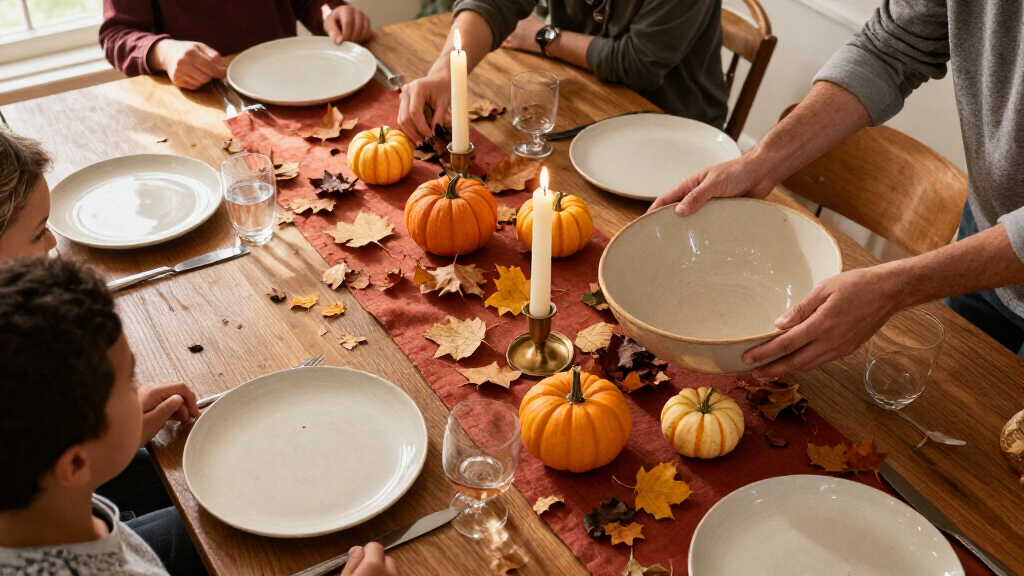
One easy arrangement uses a shallow bowl, three small gourds, and a few washed pears. Add a handful of leaves or short greenery around the bowl, leaving the place settings clear. For a long table, repeat the same small arrangement two or three times instead of placing one tall vase in the middle.
According to the planning guidance for this article, setting out your serving dishes before arranging decor helps you see how much room a centerpiece can occupy. That one practical test can save a last-minute scramble when the stuffing arrives. If the arrangement is in the way, move it to a buffet or sideboard for the meal.
Natural pieces need a little care. Wash produce before it goes on the table, and keep anything dusty, damp, or likely to shed away from the food. If you use fresh flowers, trim the stems and place them in clean water; choose a small vase that can move easily when someone needs more room.
Layer place settings with pieces you already own
Layered place settings give the table structure, and you can create that effect with everyday plates and linens. Use a runner or tablecloth as a base, add placemats if you have them, then set out dinner plates, napkins, and glasses. Repeating one color or material helps mixed pieces look intentional.
Suppose you have four white dinner plates, a few inherited blue-rimmed plates, and glasses from different sets. Put them together with matching cloth napkins or a shared neutral runner. The repeated linen gives your eye one steady thread, while the varied plates add a little family history.
Place a folded napkin beside each plate or rest it across the center, then add a handwritten name card if you want to help guests find a seat. A small card with a guest’s name can also sit beside a menu or a tiny sprig of rosemary. These touches feel personal because they show someone thought about who would arrive.
Make sure each person has room for a plate, a glass, and utensils without bumping elbows. Leave enough space between settings for passing dishes, and avoid piling on layers guests will need to move before they can eat. If you have cloth napkins and reusable dishes, use them; if you do not, clean everyday pieces still look welcoming with a thoughtful arrangement.
Use this simple three-step setup to make decorating easier
A three-step setup helps you finish Thanksgiving table decor before guests arrive: plan the space, lay the base, then add a few seasonal details. Doing it in that order reduces guesswork and keeps decorations from crowding the meal. You can complete most of the work the day before.
- Set out the serving dishes. Place empty platters and bowls where they will go, count the guests, and decide whether a buffet will handle some of the food.
- Build the table’s base. Add a tablecloth or runner, then set the plates, napkins, utensils, and glasses. Check that everyone can reach what they need.
- Add one or two accents. Arrange a low bowl of pears, small gourds, or a few leaves in the available space. Add name cards if they help guests find their seats.
For example, if dinner is at one o’clock, you could set out the runner and place settings the night before, then add fresh fruit and water glasses on Thanksgiving morning. That gives you a finished-looking table without trapping you in a long craft session while the oven is full.
Keep one clear area nearby for serving dishes that do not fit. A sideboard, kitchen counter, or small rolling cart can hold extra food and decorations. You can move the centerpiece there once dinner begins, so the table shifts easily from welcome to meal.
Decorate on a budget with finds from home
You can create a cohesive Thanksgiving table without buying a new dinnerware set. Reuse linens and dishes, then bring in one or two inexpensive seasonal details, such as grocery-store flowers, pears, or small pumpkins. A repeated color ties thrifted, inherited, and everyday pieces together.
Try a cream tablecloth with mismatched plates and folded cloth napkins in one color. Set a bowl of apples or pears down the center, then add a few clean leaves gathered from your yard if collection is allowed there. The table feels finished because the colors repeat, not because everything came from one store.
If you want fresh flowers, choose a small bunch and divide it among short jars or glasses you already own. Keep the stems low and the water away from food. When the meal ends, you can move the jars to a windowsill or kitchen counter, so the flowers keep working after the table is cleared.
Consider reusing decorations from year to year, and compost suitable leaves or plant material when you are done. Skip anything that could stain a cherished runner or shed over food. A useful article about decor should leave you with ideas that fit your cupboard and budget, not a shopping list that makes a holiday feel like another expense.
Make the table safer and more welcoming for every guest
A welcoming Thanksgiving table makes practical needs part of the plan, including safe candles, clear labels, and space for guests who need accommodations. Choose stable candleholders and keep open flames away from foliage, napkins, and sleeves. Battery-operated candles offer a gentle glow when children or busy serving hands make flames a poor fit.
Strong scents can compete with the warm smell of dinner. Unscented candles and flowers with little fragrance let the aroma of roasted vegetables and herbs reach the table. If a guest has allergies or avoids certain foods, label dishes clearly and keep serving utensils with the right dish.
For instance, a small card that says “contains walnuts” gives a guest useful information before they take a bite. Ask ahead about access or seating needs when you can, then leave a clear route to the table and enough room around the relevant seat. The arrangement should support the guest rather than asking them to work around it.
These details do not make a table less beautiful. A clear label can sit beside a handwritten menu, and a flameless candle can glow in a small glass holder. Care becomes part of the setting, as visible as the linen and just as welcome.
Frequently Asked Questions
How do I decorate a Thanksgiving table on a budget?
Start with linens and dishes you already own, then repeat one accent color to make mixed pieces feel connected. Add a small bowl of pears, apples, or grocery-store flowers; the table does not need a matching set to look thoughtful.
What colors work well for a Thanksgiving table?
Rust, amber, olive, cream, and brown are familiar autumn choices. Pick two or three and repeat them in linens, napkins, or fruit so the table feels warm without looking crowded.
What can I use as a centerpiece that will not block conversation?
Use a low bowl of small pumpkins and pears, a few short jars of flowers, or compact greenery. If guests still cannot see across the table, move the arrangement to a sideboard once dinner begins.
How much space should I leave for plates and serving dishes?
Set out your place settings and empty serving dishes before decorating to see how much usable space remains. Keep drinks within easy reach, and move extra platters or the centerpiece to a nearby buffet if the table feels crowded.
How can I make the table welcoming for guests with dietary or accessibility needs?
Label dishes when guests need to know about allergens or ingredients, and keep the right serving utensil with each dish. Ask about seating or access needs ahead of time when possible, then leave a clear route and enough room around the guest’s place.
Conclusion
Let the meal set the limits, then add color and texture where the table has room. A low bowl of fruit, cloth napkins, and a clear place for every guest can feel more welcoming than a centerpiece that reaches the chandelier.
Measure first, keep the decor easy to move, and leave space for people to pass the potatoes. When everyone can see, reach, and settle in, the table is ready.