Maintaining the right tire pressure is essential to avoid costly mistakes. Ignoring regular checks can lead to uneven tire wear and decreased fuel efficiency, causing you to spend more at the pump. Under-inflated tires work harder, while over-inflated ones risk blowouts. Both situations can lead to expensive repairs and replacement. So, if you want to keep your wallet and vehicle in top shape, there’s more you should know about tire maintenance practices.
Key Takeaways
- Ignoring regular tire pressure checks leads to increased fuel costs due to poor efficiency and reduced MPG.
- Under-inflated tires cause premature wear, resulting in more frequent replacements and higher expenses.
- Over-inflation can reduce grip and handling, increasing stopping distances and safety risks.
- Seasonal temperature changes affect tire pressure; neglecting adjustments can lead to performance issues.
- Seeking professional help for unusual tire symptoms can prevent costly repairs and enhance safety.

ETENWOLF T300 Digital Tire Pressure Gauge 3-200 PSI, Industrial Tire Gauge Calibrated to ANSI B40.7 Grade 2A(Plus-Minus 0.5%), Replaceable AAA Batteries (Vivid Orange)
PROCESS LEVEL ACCURACY: Each ETENWOLF’s digital tire pressure gauge is calibrated manually to ANSI B40.7 Grade 2A(plus-minus 1…
As an affiliate, we earn on qualifying purchases.
As an affiliate, we earn on qualifying purchases.
How to Maintain the Right Tire Pressure for Your Vehicle

Maintaining the right tire pressure for your vehicle is essential for safety and efficiency. You should regularly check your tire pressure, ideally when the tires are cold, to get an accurate reading. Use a reliable tire pressure monitoring system or a manual gauge to guarantee you achieve peak inflation. Keeping your tires properly inflated not only enhances fuel efficiency but also improves handling and extends tire life. Remember, under-inflated tires can lead to increased wear and reduced traction, while over-inflated tires may cause a harsher ride and risk a blowout. Make it a habit to monitor your tire pressure monthly and before long trips to keep your vehicle performing at its best. Your safety and wallet will thank you!

Tymate TM7 Tire Pressure Monitoring System, Wireless TPMS with 4 External Sensors & 6 Alarm Modes, Colorful Display, Real-time Tire Pressure Monitor System, Ideal for RV SUV MPV Truck Sedan(0-144 PSI)
[Accurate Real-time Monitoring & Multi-Alert System]: Tymate TM7 tpms sensor can be used to monitor your tires’ pressure…
As an affiliate, we earn on qualifying purchases.
As an affiliate, we earn on qualifying purchases.
How to Check Your Tire Pressure Accurately

How can you guarantee your tire pressure is spot on? Start by using a reliable tire pressure gauge. You can choose between digital and analog options, but digital gauges often provide quicker and more accurate readings. To check your tire pressure, remove the valve cap from the tire and firmly press the gauge onto the valve stem. Make sure to do this when the tires are cold for the most accurate measurement. After you get the reading, compare it to your vehicle’s recommended tire pressure, usually found on a sticker inside the driver’s door. If the pressure is too low, add air until it’s just right. Regular checks can save you money on fuel and extend your tire life.

AstroAI Pencil Tire Pressure Gauge 2 Pack 10-75PSI, Calibrated to ANSI B40.1 Grade B (2%), Stainless Steel Body, Metal Made Nozzle 3 Measurements for Cars, Bikes, Vehicles
RUGGED DESIGN: The stainless steel components prevent rust and corrosion while the precision-crafted nozzle seamlessly seals onto the…
As an affiliate, we earn on qualifying purchases.
As an affiliate, we earn on qualifying purchases.
Top 5 Mistakes Drivers Make With Tire Pressure
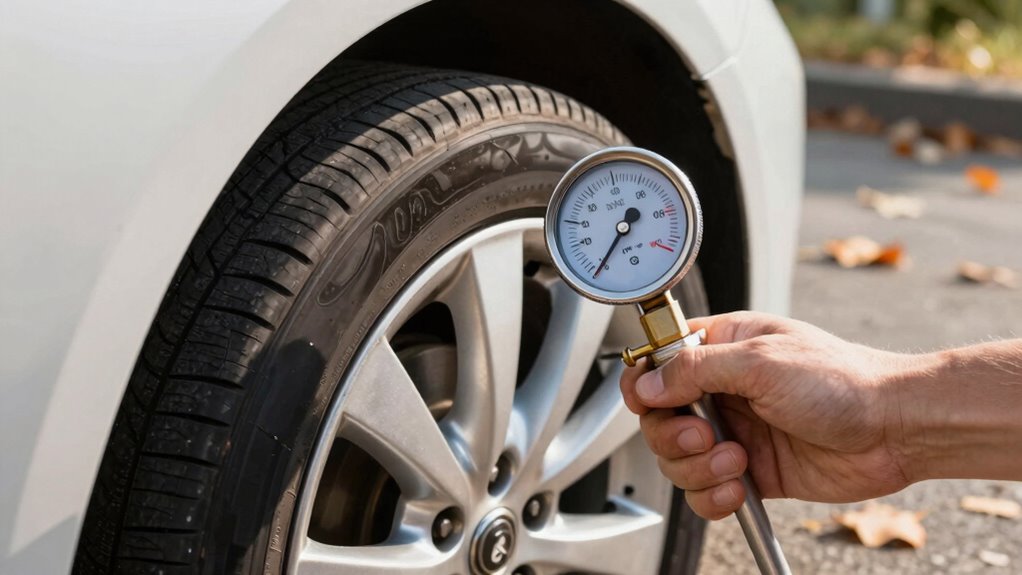
When it comes to tire pressure, drivers often make critical errors that can impact safety and performance. You might be ignoring regular pressure checks, overinflating your tires, or forgetting to adjust for seasonal changes. Let’s explore these common mistakes to help you keep your tires in top shape.
Ignoring Pressure Checks
Although many drivers overlook the importance of regular tire pressure checks, neglecting this simple task can lead to serious consequences. Ignoring pressure checks can drastically affect your tire health, leading to uneven wear and reduced fuel efficiency. You might believe some pressure myths, like that tires only need checking when they look flat, but this isn’t true. Changes in temperature can cause pressure to fluctuate, so it’s crucial to check your tire pressure at least once a month and before long trips. Regular ADAS sensor calibration can also help ensure your vehicle’s safety systems are functioning correctly, especially after tire maintenance or replacements. By staying on top of this simple task, you not only enhance your vehicle’s performance but also save money on gas and tire replacements. Don’t let ignorance cost you—make tire pressure checks a routine part of your vehicle maintenance.
Overinflating Tires
Many drivers make the mistake of overinflating their tires, thinking that more pressure leads to better performance. However, this tire pressure myth can backfire. Overinflated tires can reduce your vehicle’s grip on the road, leading to longer stopping distances and less control, especially in wet conditions. The overinflated consequences don’t stop there; you’ll also experience uneven tire wear, which shortens their lifespan and costs you more money in the long run. Additionally, overinflation can increase the risk of blowouts, putting your safety at risk. To guarantee peak performance and safety, always check the manufacturer’s recommended tire pressure and avoid the temptation to inflate beyond those guidelines. Your tires—and your wallet—will thank you!
Neglecting Seasonal Adjustments
As temperatures change with the seasons, neglecting to adjust your tire pressure can lead to problems that affect your vehicle’s performance. Seasonal fluctuations in temperature can cause your tire pressure to drop or rise, often by about 1 PSI for every 10-degree change. In colder months, underinflated tires can reduce traction and fuel efficiency, while warmer weather might lead to overinflation, increasing the risk of blowouts. Regularly checking and adjusting your tire pressure according to the temperature effects is essential for maintaining ideal handling and safety. Don’t wait for a warning light; make it a habit to check your tires with each season change. Keeping your tires properly inflated saves you money and enhances your driving experience.

AstroAI L7 Tire Inflator Portable Air Compressor Cordless Mini Bike Pump with Digital Dual Values Display, 150 PSI Car Tires Air Pump with LED Lights&Pressure Gauge for Auto, Motorcycles, Bikes, Balls
ADVANCED TRUEGAUGE SCREEN: This battery tire inflator includes updated sensor technology, capable of collecting pressure data from tire…
As an affiliate, we earn on qualifying purchases.
As an affiliate, we earn on qualifying purchases.
How Under-Inflated Tires Cost You Money

Just a few pounds of pressure can make a significant difference in your tire performance and wallet. Under-inflated tires lead to increased rolling resistance, which means your engine has to work harder. This not only affects fuel efficiency but also accelerates tire wear, costing you more in replacements.
| Issue | Cost Implications |
|---|---|
| Decreased MPG | Higher fuel expenses |
| Premature wear | Frequent tire replacements |
| Poor handling | Potential repair costs |
The Costs of Over-Inflated Tires

Over-inflated tires might seem like a good idea, but they can actually lead to increased tire wear and reduced fuel efficiency. You’ll notice your vehicle’s handling performance suffers too, making your ride less safe and enjoyable. It’s essential to keep your tires properly inflated to avoid these costly issues.
Increased Tire Wear
Maintaining proper tire pressure is essential, as even a slight increase can lead to significant tire wear. When your tires are over-inflated, the center of the tread wears down faster than the edges. This uneven tread wear reduces your tire lifespan, meaning you’ll have to replace them sooner than expected. You might think you’re saving money by inflating them too much, but you’re actually spending more in the long run. Not only do you face higher replacement costs, but the compromised grip can also affect your safety on the road. Keeping an eye on your tire pressure guarantees even tread wear, maximizing your tires’ lifespan and keeping your ride smooth and safe.
Reduced Fuel Efficiency
When tires are over-inflated, you may not realize that you’re also hurting your fuel efficiency. Excessive air pressure can lead to a smaller contact patch with the road, causing your vehicle to work harder to maintain speed. This increased effort directly translates to higher fuel consumption, meaning you’re spending more at the pump. Additionally, while you might think that over-inflated tires enhance tire longevity, the reality is that uneven wear can shorten their lifespan. Instead of saving money, you could end up replacing tires more frequently. To optimize both your fuel efficiency and tire longevity, regularly check your tire pressure and verify it’s at the manufacturer’s recommended level. Keeping your tires properly inflated saves you money in the long run.
Diminished Handling Performance
While you might think higher tire pressure improves performance, it can actually compromise your vehicle’s handling. Over-inflated tires lead to diminished grip on the road, making it harder for you to maintain control during turns or sudden stops. You’ll notice a decrease in your steering response, resulting in a less engaging driving experience. This reduced contact with the road can make your vehicle feel skittish, especially on uneven surfaces. Not only does this impact your safety, but it can also lead to costly accidents. To keep your handling sharp and responsive, make sure to check your tire pressure regularly and inflate them to the recommended levels. Better handling means better performance and peace of mind on the road.
The Impact of Tire Pressure on Fuel Efficiency

Tire pressure plays an essential role in your vehicle’s fuel efficiency, impacting how far you can travel on a gallon of gas. Maintaining the right tire pressure can greatly reduce your fuel consumption, saving you money over time. Tire pressure sensors help monitor your tire pressure, alerting you when it’s too low. Under-inflated tires create more rolling resistance, meaning your engine has to work harder, ultimately consuming more fuel.
| Tire Pressure (PSI) | Fuel Efficiency (MPG) | Fuel Consumption (Gallons) |
|---|---|---|
| 32 | 30 | 10 |
| 28 | 27 | 11.1 |
| 25 | 24 | 12.5 |
Keep your tires inflated to the recommended level to maximize your vehicle’s efficiency.
Tire Pressure Maintenance Best Practices
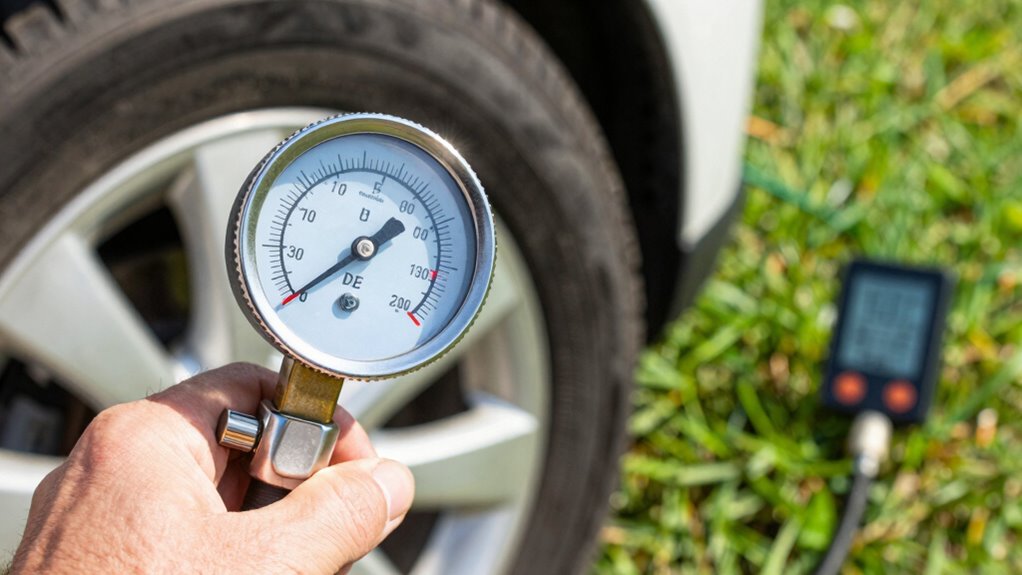
Maintaining proper tire pressure is key to ensuring your vehicle runs efficiently and safely. Regular tire pressure monitoring is essential; check your tires at least once a month and before long trips. Use a reliable gauge to get an accurate reading, and always refer to your vehicle’s manual for the recommended PSI. Remember that temperature changes can affect tire pressure, so adjust accordingly. Keeping your tires inflated to the correct level can lead to significant tire pressure benefits, such as improved fuel efficiency, extended tire life, and enhanced handling. Don’t forget to inspect your tires for signs of wear and damage while you’re at it. Stay proactive, and your tires will thank you!
When to Seek Professional Help With Tire Issues

When should you consider reaching out to a professional for tire issues? If you notice any unusual vibrations or steering problems, it’s time to get a professional inspection. Ignoring these signs can lead to more costly tire repair down the road. Moreover, if you spot any punctures, cuts, or bulges, don’t hesitate to consult an expert. They can assess the damage and determine if the tire is salvageable or needs replacement. In addition, if your tire pressure warning light comes on, it’s best to seek help rather than relying on guesswork. Remember, staying proactive about tire maintenance can save you money and guarantee your safety on the road. Trust professionals to keep your tires in top shape.
How Do You Find the Right Tire Pressure for Your Vehicle?

Understanding your vehicle’s tire pressure is essential for ideal performance and safety. To find the right tire pressure, follow these steps:
- Check Your Vehicle Manufacturer Guidelines: Look for the recommended PSI (pounds per square inch) in your owner’s manual or on the driver’s side door jamb.
- Use a Tire Pressure Gauge: Regularly check your tire pressure with a gauge to guarantee it meets the recommended levels.
- Consider Tire Pressure Calculators: These online tools can help you adjust pressures based on load and driving conditions.
- Inspect Tires Regularly: Look for signs of wear or damage, and make adjustments as needed.
Frequently Asked Questions
Can Tire Pressure Affect Tire Lifespan?
Yes, tire pressure can greatly affect tire lifespan. When your tires aren’t inflated to the recommended levels, it leads to uneven tire wear. Under-inflation causes the edges to wear faster, while over-inflation can wear the center more quickly. Maintaining proper inflation levels not only extends your tire life but also improves handling and fuel efficiency. So, regularly check your tire pressure to verify you’re getting the most out of your tires.
How Does Temperature Change Affect Tire Pressure?
Temperature fluctuations can greatly impact tire pressure—your tires can lose about 1 PSI for every 10-degree drop in temperature. When it gets colder, the air inside your tires contracts, leading to lower pressure. You’ll need to make pressure adjustments regularly to maintain ideal performance. Keeping an eye on tire pressure during seasonal changes can enhance safety and extend tire lifespan, so don’t overlook this important aspect of vehicle maintenance!
What Tools Do I Need to Check Tire Pressure?
To check tire pressure, you need a tire pressure gauge and a digital inflator. First, use the tire pressure gauge to measure the current pressure of your tires. Make sure to do this when the tires are cold for the most accurate reading. If the pressure’s too low, use the digital inflator to add air until it reaches the recommended level. Regular checks will keep your tires in prime condition and improve safety.
Are There Differences in Tire Pressure for Winter Tires?
Oh sure, you think winter tires are just for show? Wrong! Winter tire pressure actually needs to be higher in cold weather because the chilly air can cause it to drop. So, while you’re sipping hot cocoa, don’t forget to check your winter tire pressure. If you don’t, your tires might just give you a frosty surprise. Keep ’em inflated and you’ll glide through winter like a champion, not a chump!
How Often Should I Check My Tire Pressure?
You should check your tire pressure at least once a month, but seasonal checking is crucial as temperatures fluctuate. Changes in temperature can affect tire pressure, so before winter and summer, give your tires a thorough inspection. Don’t forget to check it before long trips or after hitting potholes, too. Staying on top of tire pressure frequency can help guarantee your safety and improve fuel efficiency, ultimately saving you money in the long run.
Conclusion
Keeping your tire pressure in check is like checking the oil in your car; it’s a small task that pays off big. By regularly monitoring your tires, you can avoid costly mistakes and guarantee a smoother ride. Remember, under-inflated or over-inflated tires can drain your wallet and hurt your vehicle’s performance. So, take a few minutes each month to check your tire pressure and enjoy the benefits of better fuel efficiency and a safer drive.