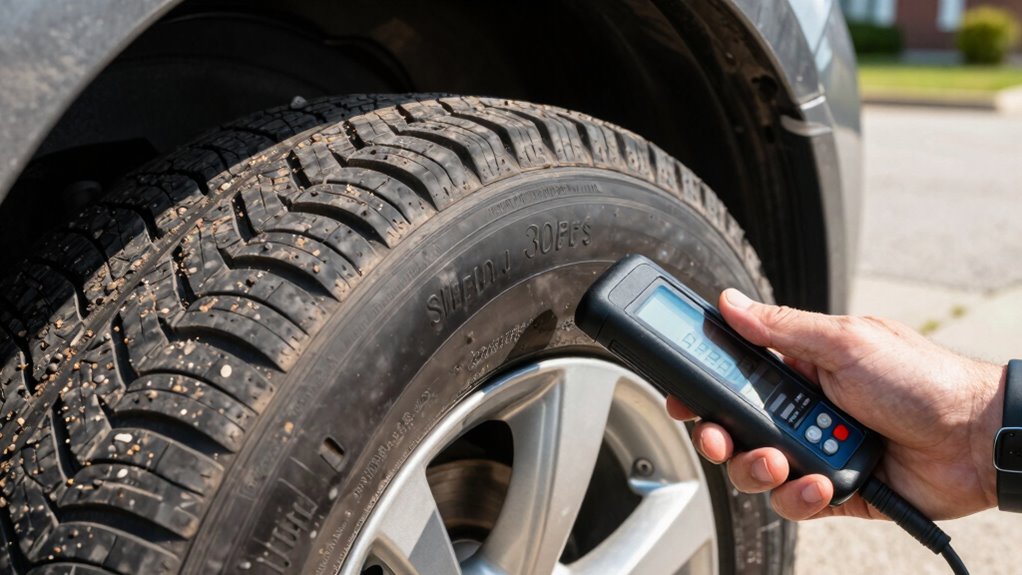

To quickly check your tire tread depth, use the penny test: insert a penny with Lincoln’s head down; if you see the top of his head, it’s time to replace your tires. You can also use a tread depth gauge or a ruler for an accurate measurement. Regular checks can help keep you safe on the road and improve your vehicle’s performance. Stick around to discover more about tire maintenance and safety tips.
Key Takeaways
- Use the penny test by inserting a penny with Lincoln’s head down; if the head is visible, tread is low.
- A tread depth gauge provides a precise measurement of your tire’s tread depth for quick assessment.
- Measure directly with a ruler for a straightforward evaluation of the tread depth.
- Look for uneven wear, cracks, or bulges as visual indicators of tire deterioration.
- Regularly check tread depth, especially during wet conditions, to ensure optimal safety and performance.

Tire Tread Depth Gauge,Tire Tread Gauge Color Coded,Tread Depth Gauge in 1/32 inch(Pack of 2)
1.Accurate and Efficient: Different colors on the bar represents different scopes, the red range on bar: 0 -…
As an affiliate, we earn on qualifying purchases.
As an affiliate, we earn on qualifying purchases.
Why Regular Tire Tread Checks Are Essential
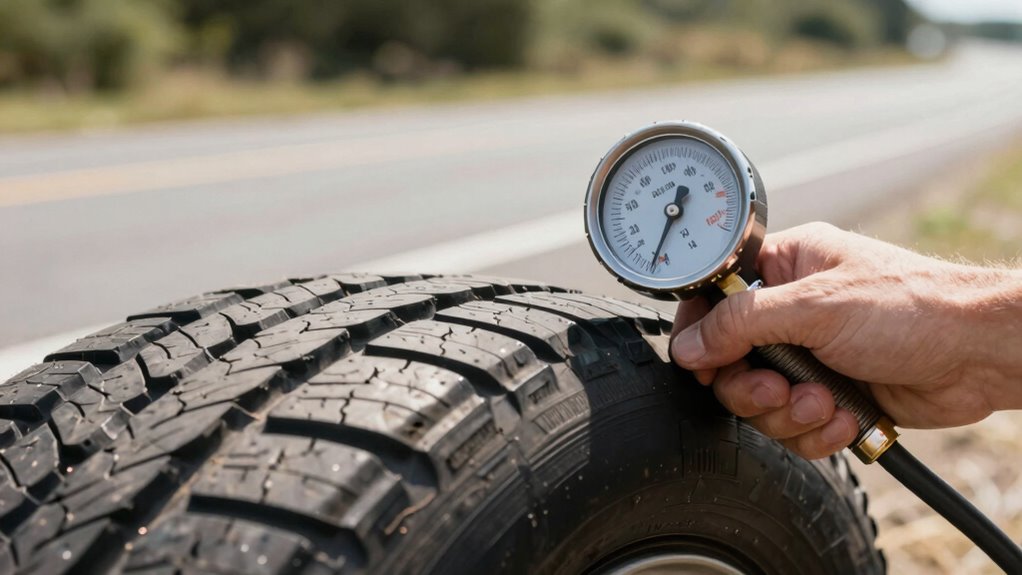
Although it might seem like a small detail, regularly checking your tire tread depth is essential for your safety on the road. Worn tires can greatly compromise tire safety, leading to reduced grip, especially in wet conditions. When your tread wears down, your car’s driving performance suffers, making it harder to stop or maneuver effectively. This not only increases your risk of an accident but can also lead to costly repairs down the line. By ensuring your tires have adequate tread, you enhance your vehicle’s handling and stability. Consistent checks help you recognize when it’s time for replacements, allowing you to drive with confidence. A simple habit like this can make a huge difference in your overall driving experience and safety.
Tire Tread Depth Gauge,Tire Tread Gauge Color Coded,Tread Depth Gauge in 1/32 inch(Pack of 2)
1.Accurate and Efficient: Different colors on the bar represents different scopes, the red range on bar: 0 -…
As an affiliate, we earn on qualifying purchases.
As an affiliate, we earn on qualifying purchases.
How to Measure Tire Tread Depth: Quick Methods
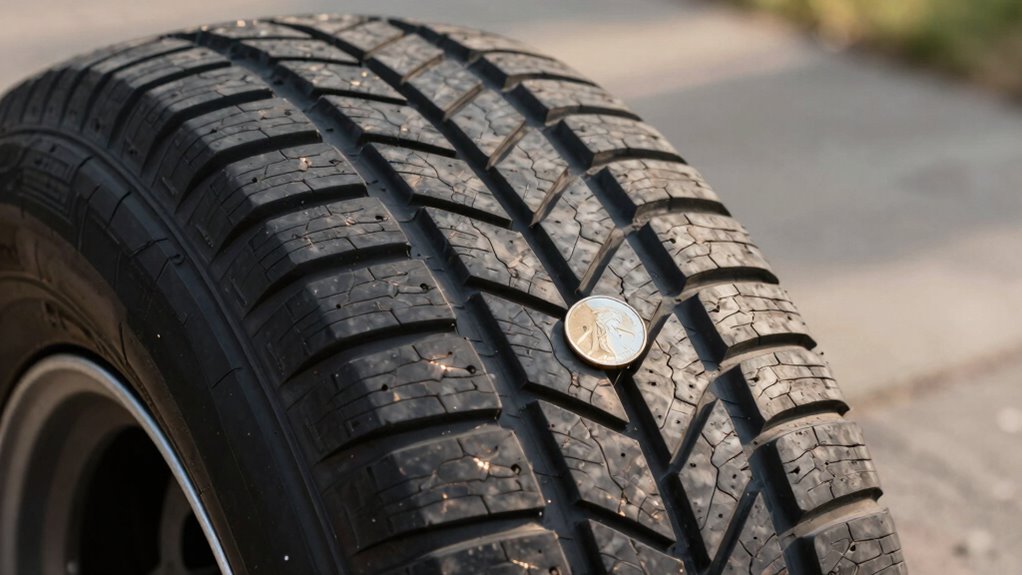
Measuring your tire tread depth is quick and easy, and you can do it with just a few simple methods. One popular DIY tool is the penny test. Insert a penny into the tread with Lincoln’s head down; if you can see all of his head, your tread wear is too low, and it’s time to evaluate new tires. Another method involves using a tread depth gauge, which provides an accurate measurement. Simply insert the gauge into the tread grooves and read the depth marked. You can also use a ruler for a straightforward measurement. Regularly checking your tread wear guarantees safety and peak performance on the road. Keep an eye on it to protect yourself and your passengers.

AICEYI Digital Depth Gauge Measuring Ruler for tire Tread Depth, Measuring Ruler for Wheel Tread wear, Measuring Ruler for Corrosion Depth of machined Parts, Electronic Tool
Digital depth gauge Measuring ruler for tire tread depth, measuring ruler for wheel tread wear, measuring ruler for…
As an affiliate, we earn on qualifying purchases.
As an affiliate, we earn on qualifying purchases.
When to Replace Tires Based on Tread Depth?

Knowing when to replace your tires is essential for your safety. You’ll want to keep an eye on the legal minimum tread depth and follow visual inspection guidelines to assess wear. If your tread is getting low, it’s time to contemplate a replacement.
Legal Minimum Tread Depth
The legal minimum tread depth for tires is typically 2/32 of an inch in many regions, and it’s crucial to replace your tires once they reach this limit. Ignoring tread depth regulations can lead to serious consequences, including decreased traction and longer stopping distances, increasing your risk of accidents. Additionally, driving on tires below the legal limit can result in hefty fines and legal implications if you’re pulled over. It’s important to monitor your tread depth regularly, making sure your tires meet or exceed this minimum requirement. Keeping your tires in good condition not only enhances your safety but also helps you avoid potential legal troubles. So, be proactive and check your tread depth to guarantee a safe driving experience.
Visual Inspection Guidelines
Regularly checking your tire tread depth helps confirm your safety on the road. During your visual inspection, look for key visual indicators that signal when it’s time to replace your tires. Check for uneven wear, cracks, or bulges in the sidewalls. Use tread pattern recognition to identify if your tires have lost their grip; if the grooves are shallow or worn down, it’s a clear sign replacement is necessary. You should also perform the penny test—insert a penny into the tread; if you can see Lincoln’s head, it’s time to buy new tires. Trust your observations; if your tires look questionable, don’t hesitate to get a professional opinion. Keeping an eye on these factors confirms your continued safety on the road.

GODESON Tire Tread Depth Gauge,Two-Sided Smart Color Coded Tire Tread Depth Measurement Tool, Tire Wear Gauge in 32nds(Pack of 2)
Easy to read. Two calibration meters(inch and millimeter) in order to make people read more easily and suitable…
As an affiliate, we earn on qualifying purchases.
As an affiliate, we earn on qualifying purchases.
Signs of Worn Tires: Understanding the Risks
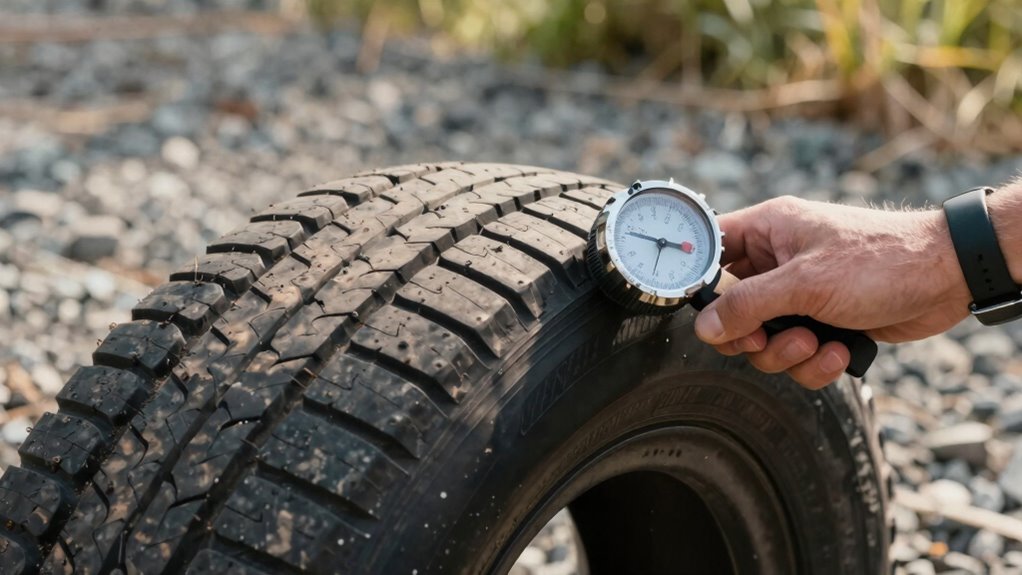
Worn tires can pose serious risks to your safety on the road. If you notice uneven wear, cracks, or low tread depth, it’s time to take action. Pay attention to tread indicators; they’re designed to show you when your tires are getting too worn. A tire with insufficient tread can’t grip the road properly, increasing your chances of hydroplaning or losing control, especially in wet conditions. Additionally, worn tires can lead to longer stopping distances and decreased fuel efficiency. Regularly checking your tire safety isn’t just about performance; it’s vital for your overall safety and that of others on the road. Don’t gamble with your safety—stay vigilant about your tire condition.
How Weather Affects Tire Performance and Safety
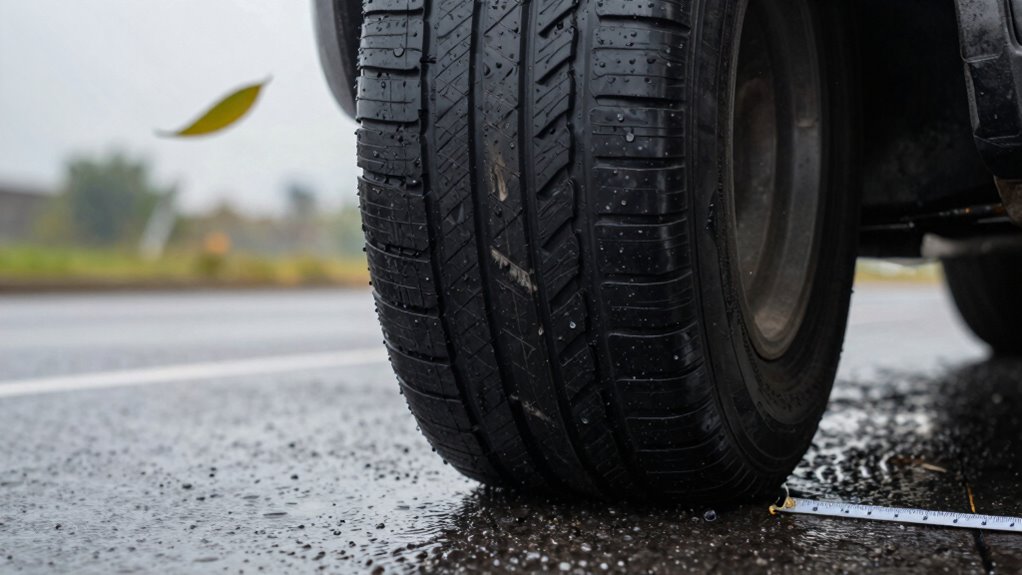
While you might not realize it, weather conditions can considerably impact your tires’ performance and safety. Rain effects can reduce traction, making it easier for your vehicle to hydroplane. When roads are wet, your tires need sufficient tread depth to channel water away effectively. On the other hand, temperature fluctuations can lead to tire pressure changes. Warmer weather often causes tires to expand, while colder temperatures can cause them to contract, affecting grip and wear. Regularly checking your tire pressure and tread depth is essential, especially during seasonal shifts. By understanding how weather influences your tires, you can make informed decisions to enhance safety and performance on the road. Stay proactive to guarantee your tires are up for any weather challenge!
Tips for Maintaining Tire Health
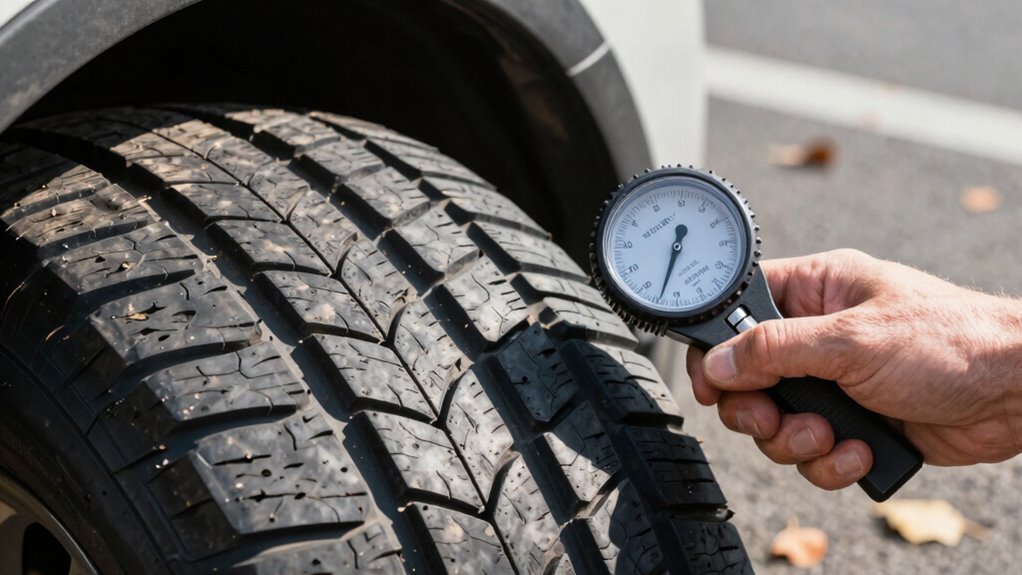
Five simple tips can help you maintain your tire health and guarantee your vehicle runs smoothly.
| Action | Frequency |
|---|---|
| Tire Rotation | Every 6,000 miles |
| Alignment Checks | Every 12,000 miles |
| Visual Inspections | Monthly |
Regular tire rotation guarantees even wear, extending tire life and improving performance. Don’t forget alignment checks; misaligned tires can lead to uneven wear and decrease fuel efficiency. Additionally, keep an eye on tire pressure—under-inflated tires can compromise safety and handling. Proper pressure monitoring is essential for optimal tire performance. Finally, inspect your tires for any damage or debris regularly. By following these tips, you’ll not only enhance your vehicle’s performance but also guarantee your safety on the road. Remember, well-maintained tires mean a safer journey for you and your passengers.
Common Questions About Tire Tread Depth Answered
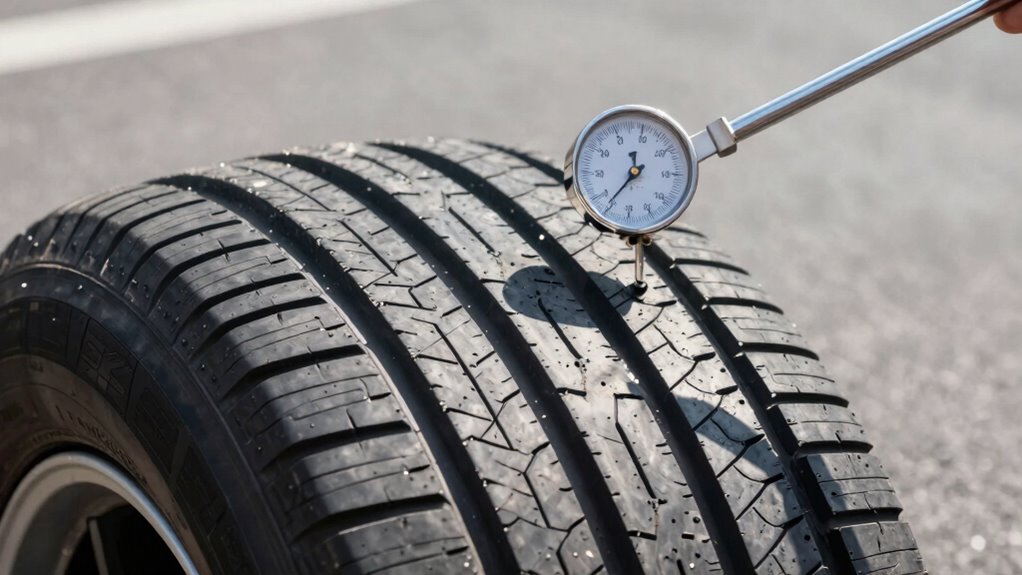
Have you ever wondered why tire tread depth is so crucial for your safety on the road? Understanding tread wear can help you stay safe and prolong your tires’ life. Here are some common questions about tire tread depth answered:
Tire tread depth is vital for your safety; knowing when to check and replace your tires can enhance your driving experience.
- What’s the minimum tread depth? Generally, 2/32 of an inch is the bare minimum for tire safety.
- How often should I check my tread depth? Regular checks are advisable, ideally every month or before long trips.
- What causes uneven tread wear? Misalignment, improper inflation, and worn suspension components can all lead to uneven wear.
- When should I replace my tires? Replace them when tread depth falls below the safe threshold to maintain ideal grip and performance.
Stay proactive about your tire safety!
Frequently Asked Questions
Can Tire Tread Depth Affect Fuel Efficiency?
Yes, tire tread depth can affect fuel efficiency. When your tires experience significant tread wear, they lose grip, which can lead to increased rolling resistance. This means your vehicle has to work harder, causing higher fuel consumption. By keeping an eye on your tread depth and replacing tires when they’re worn, you can maintain better traction and improve your vehicle’s overall efficiency. So, regularly check your tires to save on fuel!
How Often Should I Check My Tire Tread?
You should check your tire tread regularly to stay ahead of the game. Aim for at least once a month, especially if you drive a lot. Keeping an eye on tread wear helps guarantee your tires grip the road well, contributing to your vehicle’s overall safety and performance. Regular tire maintenance can save you from costly replacements down the line. So, don’t let it slip through the cracks—stay proactive!
Are There Specific Tools for Measuring Tread Depth?
Yes, there are specific measurement tools for checking tread depth. You can use a tread depth gauge, which provides an accurate reading in millimeters or 32nds of an inch. Alternatively, a penny can work in a pinch; just insert it into the tread. If Lincoln’s head is visible, it’s time to replace your tires. Regularly measuring tread depth guarantees your safety on the road and helps maintain peak performance.
Do Different Tire Types Require Different Tread Depths?
Yes, different tire types do require varying tread depths. For example, winter tires need deeper tread to enhance traction in snow and ice, while summer tires often have shallower tread patterns for better handling on dry roads. Each tire type is designed for specific conditions, and maintaining the right tread depth is essential for peak tire performance. So, always check your tires based on their intended use to guarantee safety and efficiency.
Can I Visually Inspect Tire Tread Depth Effectively?
Yes, you can visually inspect tire tread depth effectively. To do this, look for signs of tread wear, such as uneven patterns or shallow grooves. Use inspection methods like the penny test, where you insert a penny into the tread; if you can see Lincoln’s head, it’s time to replace your tires. Regular checks help guarantee your safety and improve your vehicle’s performance, so don’t skip this essential maintenance step!
Conclusion
In today’s fast-paced world, keeping an eye on your tire tread depth is as essential as checking your smartphone for updates. Regularly measuring your tires can save you from dangerous blowouts and improve fuel efficiency. Don’t wait until your tread looks like it’s from the Stone Age—act now! By staying proactive about your tire health, you’ll enjoy safer drives and longer-lasting tires. Remember, a little maintenance goes a long way in keeping you on the road.