Trickle chargers and maintainers both keep your vehicle’s battery charged but work differently. Trickle chargers deliver a slow, steady current mainly for long-term storage, whereas maintainers monitor voltage constantly and adjust output to keep your battery at its best without overcharging. Maintainers are more responsive and adaptable, making them ideal for everyday use. Curious about which one fits your needs? Keep going to discover more about their features and best applications.

Get the little things that make your day delivered free with Prime
- Fast, free delivery on millions of items
- Prime Video, Amazon Music and more included
- Member-only deals all year
Key Takeaways
- Trickle chargers deliver a slow, steady current to recharge batteries, while maintainers monitor voltage and adjust output automatically.
- Maintainers respond quickly to voltage drops, providing faster, adaptive maintenance compared to the slow charging of trickle chargers.
- Trickle chargers are ideal for long-term storage of unused vehicles, whereas maintainers keep batteries ready for use without disconnecting.
- Modern maintainers include features like temperature compensation and automatic shut-off, enhancing battery protection and safety.
- Both devices prevent overcharging but differ in speed, responsiveness, and suitability for specific storage or active maintenance needs.
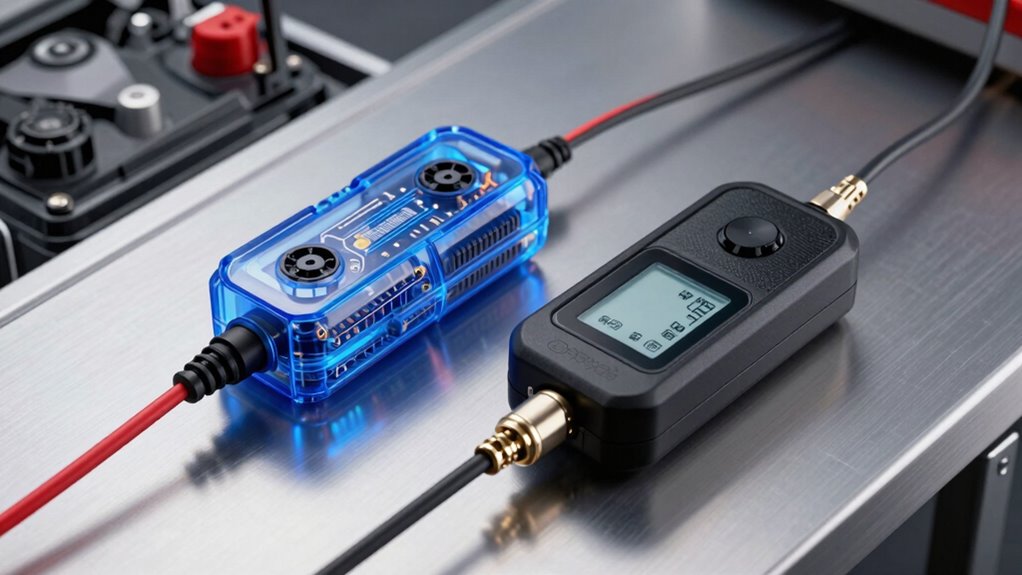
When it comes to keeping your vehicle’s battery charged, understanding the difference between trickle chargers and maintainers is essential. Both devices serve the purpose of preserving your battery’s charge, but they do so in different ways, and knowing which one to use depends on your specific needs. One key aspect to evaluate is how each device interacts with your battery’s capacity and the charging speed they provide. A trickle charger delivers a slow, steady current designed to replenish a battery over time, typically at a low amperage. It’s ideal for long-term maintenance, especially if your vehicle sits unused for weeks or months. Because of its gentle approach, a trickle charger can help prevent overcharging, which can damage the battery’s internal components and reduce its lifespan. However, the trade-off is that the charging speed is quite slow, meaning it takes hours or even days to fully recharge a depleted battery. This slow process makes it less suitable if you need a quick boost or are trying to bring a very discharged battery back to life rapidly. Additionally, some models may include automatic shut-off features to further protect your battery during prolonged use.
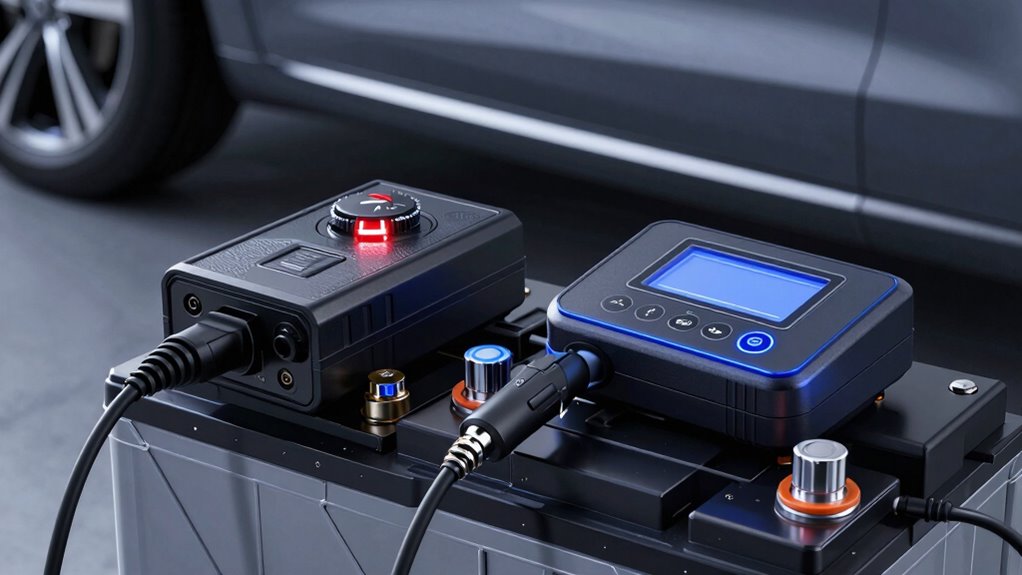
Maintainers, on the other hand, are more sophisticated devices that monitor your battery’s voltage continuously, providing just enough current to keep it at its best capacity without overcharging. They’re designed with smart technology that adjusts their output based on your battery’s needs at any given moment. This means they can respond quickly when the battery’s voltage drops slightly, maintaining a healthy charge without the risk of damaging it. Because maintainers are more responsive and adaptable, their charging speed is generally faster than trickle chargers when needed, but they still operate at a gentle pace to protect your battery’s health. They also incorporate features to prevent overcharging, making them a safer option for long-term storage and maintenance. Additionally, modern maintainers often include temperature compensation features to optimize charging in different environmental conditions. They’re especially useful if you want to keep your vehicle ready for use without constantly disconnecting and reconnecting the battery. Plus, a maintainer’s ability to prevent overcharging makes it a safer choice for long-term storage.
Furthermore, the ability of maintainers to adapt their output ensures they can accommodate different battery sizes and types, providing a versatile solution for various vehicles.
To maximize their effectiveness, both devices benefit from understanding your specific battery type and storage environment, ensuring you select the most suitable option for your needs.
As an affiliate, we earn on qualifying purchases.
Frequently Asked Questions
Can Trickle Chargers Damage My Car’s Battery?
Trickle chargers generally won’t damage your car’s battery if used properly, but improper use can affect battery lifespan and charging efficiency. Overcharging or leaving the charger connected too long can lead to battery damage, reducing its longevity. To prevent this, choose a quality charger with automatic shut-off features. Regularly monitoring your battery’s condition helps guarantee it stays healthy, maximizing both lifespan and charging efficiency.
Are Maintainers Suitable for All Battery Types?
Maintainers are suitable for most battery types, but you should check the battery chemistry first. Lead-acid, AGM, and gel batteries generally benefit from maintainers, as they help optimize charging efficiency and prevent overcharging. However, certain lithium batteries might require specific chargers. Always verify compatibility to guarantee your maintainer won’t damage your battery or reduce its lifespan. Proper matching ensures safe, effective maintenance and extends your battery’s life.
How Long Can I Leave a Charger or Maintainer Connected?
You can usually leave a charger or maintainer connected for several weeks or even months without harming your battery. This helps improve battery longevity and maintains ideal charging efficiency. However, it’s best to check the manufacturer’s guidelines, as some chargers automatically shut off or reduce current to prevent overcharging. Regularly inspecting your battery and charger ensures you’re not risking damage, keeping your vehicle ready to go whenever you need it.
Do I Need to Disconnect My Battery Before Using These Devices?
You don’t always need to disconnect your battery before using a trickle charger or maintainer, but it’s a smart move for safety. Imagine the battery’s capacity as a delicate balance; disconnecting guarantees maximum charging efficiency without risking sparks or damage. If your device is designed for direct connection, follow the manufacturer’s instructions. Otherwise, disconnecting adds a layer of safety, protecting both you and your vehicle’s electrical system.
Are There Any Safety Risks Using Trickle Chargers or Maintainers?
Yes, there’s a small safety risk if you don’t follow proper procedures. Using trickle chargers or maintainers improperly can cause battery corrosion or even short circuits. To stay safe, make certain the charger is compatible with your battery and avoid overcharging, which affects charging speed. Always read the manufacturer’s instructions, disconnect the charger before inspecting the battery, and keep the area well-ventilated to prevent safety hazards.
trickle charger for car batteries
As an affiliate, we earn on qualifying purchases.
As an affiliate, we earn on qualifying purchases.
Conclusion
While trickle chargers and maintainers both keep your battery alive, they serve different purposes—one charges, the other preserves. Imagine a trickle charger as a gentle rain, steadily filling a thirsty plant, while a maintainer acts like a vigilant guardian, preventing the plant from wilting during droughts. Knowing when to use each guarantees your vehicle’s battery stays healthy and ready. Don’t just keep your battery alive—keep it thriving with the right choice.
smart battery maintainer with temperature compensation
As an affiliate, we earn on qualifying purchases.
As an affiliate, we earn on qualifying purchases.
long-term vehicle battery charger
As an affiliate, we earn on qualifying purchases.
As an affiliate, we earn on qualifying purchases.
Evergreen bestsellers Picks
bestsellers
As an affiliate, we earn on qualifying purchases.