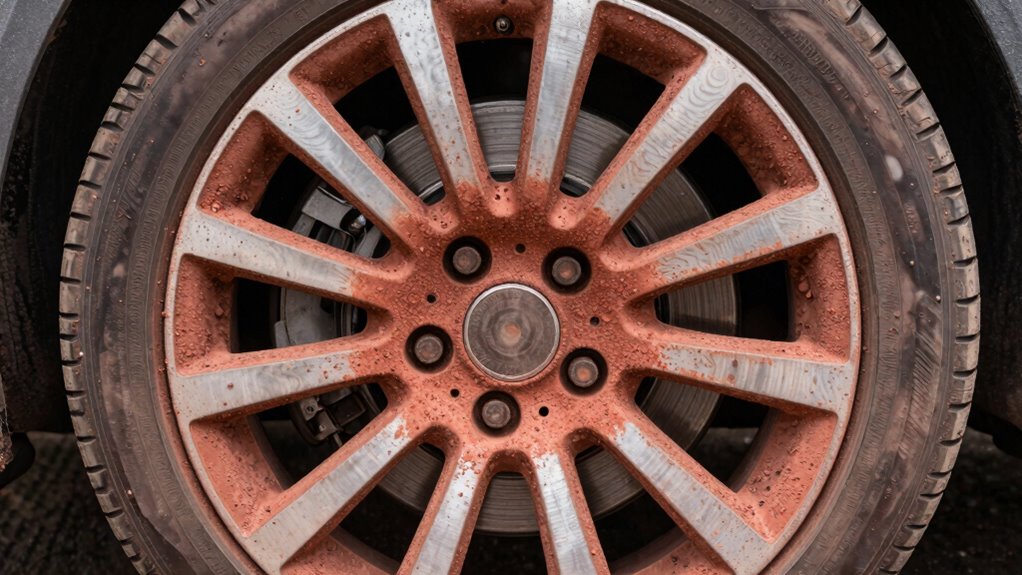
Brake dust builds up quickly because frequent braking causes your brake pads to wear and shed tiny particles, especially if they are semi-metallic or abrasive. These microscopic metal and brake pad fragments cling to your wheels, making dust appear faster. The type of wheel finish also influences how visible the dust is, with smoother surfaces holding onto more particles. To understand how different factors affect dust accumulation and how to manage it, keep exploring further.
Key Takeaways
- Friction between brake pads and rotors releases microscopic metal and ceramic particles into the air.
- Abrasive or worn brake pads shed more dust during each use.
- High-frequency braking accelerates the accumulation of brake dust on wheels.
- Certain brake pad materials, like semi-metallic, produce more dust than ceramic or organic pads.
- Wheel surface texture and finish influence how readily dust adheres and becomes visible.
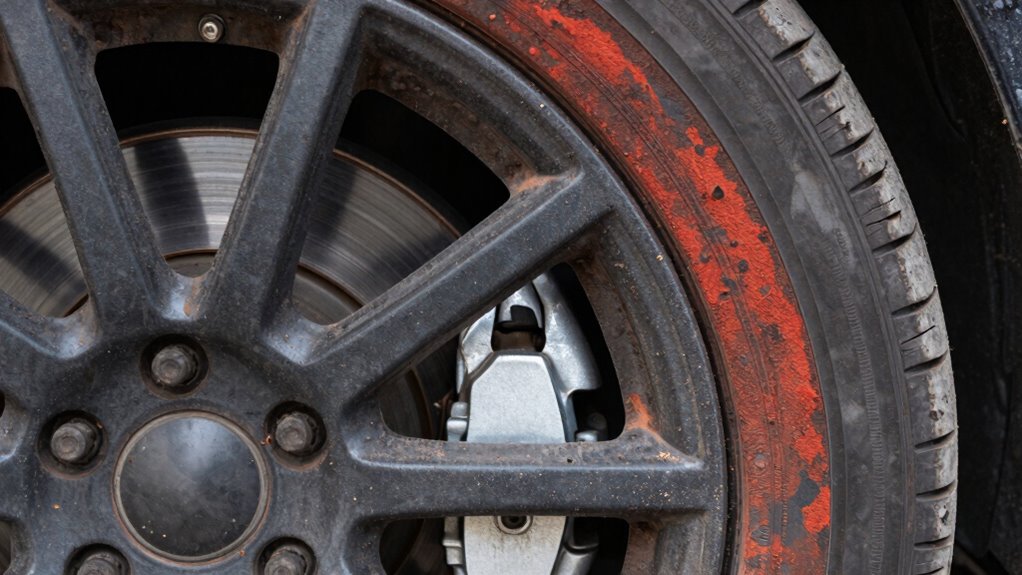
Brake dust tends to accumulate quickly because the friction between your brake pads and rotors constantly wears down the brake components, releasing tiny particles into the air. This process isn’t random; it’s directly influenced by the brake pad composition and how the wheel material interacts with the braking system. When you press the brake pedal, your brake pads create friction against the rotors to slow down or stop your vehicle. During this process, microscopic particles are shed from the brake pads, especially when the pads are made from abrasive materials or worn down over time. The composition of your brake pads—whether they’re ceramic, semi-metallic, or organic—significantly impacts how much brake dust is produced.
Brake dust forms from friction wear between pads and rotors, influenced by pad material and wheel surface.
Ceramic brake pads tend to generate less dust because they’re designed to produce finer, lighter particles that are less noticeable and less likely to cling to your wheels. Semi-metallic pads, on the other hand, often produce more brake dust due to their higher metal content, which wears down more aggressively. Organic pads produce the least amount of dust but may fade faster under heavy braking. The materials used in your brake pads are engineered for performance, but they also determine the amount and type of dust that gets kicked up onto your wheels. Additionally, the brake pad composition influences how much dust is created, as different materials shed different amounts of particles during use. Understanding the dust production process can help you make better choices for maintenance and appearance. Recognizing how brake system wear affects dust creation can assist you in planning for regular maintenance. Being aware of the dust accumulation process can also guide you in selecting appropriate cleaning routines.
Another crucial factor is the interaction between your wheel material and the brake system. When brake dust particles settle on your wheels, the type of wheel material—aluminum, steel, or alloy—affects how visible and adherent the dust becomes. Aluminum wheels, common in many vehicles, tend to show brake dust more prominently because the fine particles cling to the surface, particularly if the wheels are not regularly cleaned. The texture and finish of your wheels can influence how easily brake dust sticks. Smooth, painted, or polished wheels may hold onto dust more readily than matte or textured finishes, which can sometimes hide the buildup. Proper wheel maintenance can help reduce the visible accumulation of brake dust and protect your wheels from corrosion.
In essence, the rapid buildup of brake dust is a combination of your brake pad composition and how the dust interacts with your wheel material. Higher metal content in pads produces more dust, and the type of wheel surface determines how noticeable that dust becomes. Regular cleaning and choosing the right brake pad material for your driving style can help manage the dust, but some level of buildup is inevitable as long as you use your brakes. Understanding these factors helps you better anticipate and control the appearance of brake dust on your vehicle.
As an affiliate, we earn on qualifying purchases.
Frequently Asked Questions
Can Brake Dust Damage My Car’s Paint?
Yes, brake dust can damage your car’s paint if left untreated. The dust contains tiny metal particles that can corrode your paint over time, especially without proper paint protection. To prevent this, you should regularly wash your car and use dust prevention techniques, like applying a protective wax or coating. These steps help keep the brake dust from sticking and damaging your paint, maintaining your car’s glossy finish.
Does Driving Style Affect Brake Dust Accumulation?
Yes, your driving style impacts brake dust accumulation. Aggressive driving habits, like hard braking and rapid acceleration, increase brake pad wear, which produces more brake dust. Frequent city driving with lots of stop-and-go traffic also leads to faster dust buildup. By adopting smoother driving habits, you can reduce brake pad wear and slow down dust accumulation, helping keep your wheels cleaner for longer.
Is Brake Dust Harmful to My Health?
Brake dust can pose health risks, especially if you’re exposed regularly, as it may lead to respiratory issues. Think of it as a silent threat lurking around your vehicle. While occasional exposure isn’t usually dangerous, prolonged contact or inhalation can worsen allergies or cause lung problems. To stay safe, keep your vehicle well-maintained and wash your hands after handling brakes. Safety first, because prevention is better than cure.
How Often Should I Clean Brake Dust off My Wheels?
You should clean brake dust off your wheels every 1 to 2 weeks to prevent buildup. Regular cleaning maintains your wheels’ appearance and protects the finish. Use gentle wheel cleaner and a soft brush for best results. Incorporate this into your maintenance tips to keep your wheels looking new and avoid long-term damage. Consistent cleaning frequency guarantees brake dust doesn’t cause corrosion or impair wheel performance over time.
Do Different Brake Pad Materials Produce More Dust?
Different brake pad materials produce varying amounts of dust due to their composition and friction properties. Organic pads tend to generate less dust, while semi-metallic and ceramic pads often produce more. Dust production factors include brake pad composition, heat generated during braking, and pad wear rate. You’ll notice that softer materials create more debris, so choosing the right brake pad composition can help reduce the amount of brake dust accumulating on your wheels.
As an affiliate, we earn on qualifying purchases.
Conclusion
So, next time you see that layer of brake dust, imagine it as tiny, rebellious artists spray-painting your wheels with reckless abandon. It’s like your car’s way of leaving a glittery, gritty masterpiece behind—except, you know, it’s actually just metal and brake pad particles. So, embrace the dust as your vehicle’s signature graffiti, and remember, unless you’re aiming for a “rustic” look, regular cleaning is your only hope to keep that artistic chaos at bay.
As an affiliate, we earn on qualifying purchases.
As an affiliate, we earn on qualifying purchases.