
Choosing the wrong flooring for your home gym can seriously impact your workout experience. You might ignore shock absorption, overlook essential safety features, or select materials that aren’t durable. Don’t forget about installation complexities and ongoing maintenance needs either. Balancing aesthetics with functionality is vital too. If you compromise on any of these factors, you risk increasing injury chances and replacing flooring sooner than expected. Discover the common mistakes many make and how to avoid them.
Key Takeaways
- Neglecting shock absorption can lead to joint injuries and discomfort during workouts, making it essential to choose appropriate flooring materials.
- Choosing aesthetics over functionality may compromise safety and comfort, impacting overall workout effectiveness and environment.
- Failing to consider durability can result in frequent replacements and increased long-term costs, undermining investment in flooring.
- Ignoring maintenance requirements may lead to hygiene issues and reduced flooring lifespan, affecting workout conditions over time.
- Skipping proper installation measures can cause flooring damage and safety hazards, especially if subfloor preparation is overlooked.
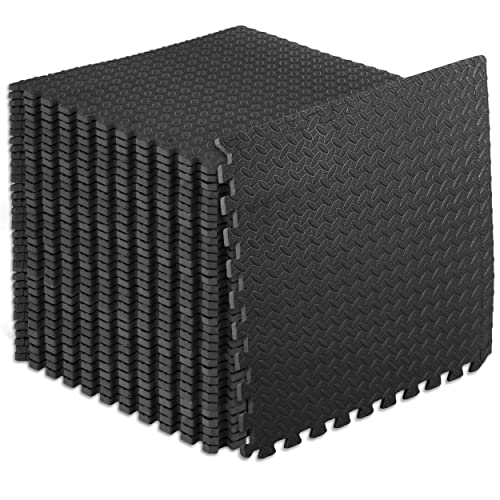
ProsourceFit Puzzle Exercise Mat ½ in, EVA Interlocking Foam Floor Tiles for Home Gym, Water-Resistant Mats Workout Equipment, Floor Padding for Kids, Black, 24 in x 24 in x ½ in, 144 Sq Ft – 36 Tiles
PROTECTIVE GYM FLOOR MAT: Durable, non-skid gym flooring for home gym that covers and protects your floor or…
As an affiliate, we earn on qualifying purchases.
As an affiliate, we earn on qualifying purchases.
Why Choosing the Right Flooring for Your Home Gym Matters
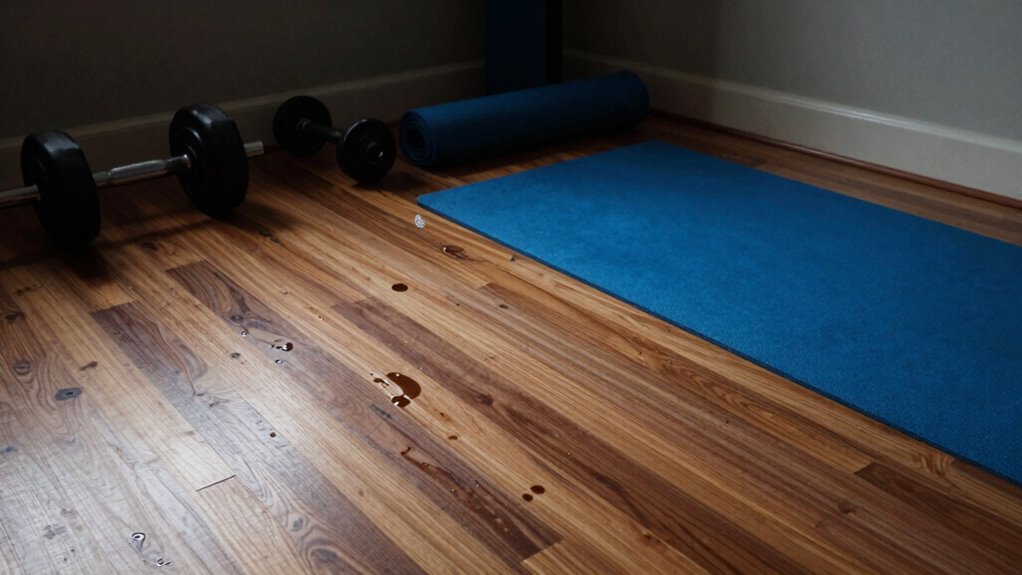
When you’re setting up your home gym, choosing the right flooring can make all the difference in your workout experience. The flooring impact on your body and your performance is significant. Proper flooring can enhance your workout efficiency by providing the right amount of grip and support. If you opt for hard surfaces, you may find that your joints suffer, leading to discomfort and decreased performance. On the other hand, a soft, cushioned floor can absorb impact, reducing strain during high-impact exercises. Additionally, the right flooring can help you maintain your balance and stability, allowing you to push yourself further in your workouts. Ultimately, selecting the appropriate flooring sets the foundation for a successful and enjoyable fitness journey. Choosing the right flooring material is essential to ensure durability and safety during your routines.

ZENY Large Exercise Equipment Mat 96"x38" – Heavy Duty Floor Protection for Treadmill, Bike & Elliptical, 6mm Thick Non-Slip Shock Absorbing Gym Mat
SUPERIOR FLOOR PROTECTION FOR HEAVY EQUIPMENT – Engineered with high-density 6mm thick material to safeguard hardwood floors and…
As an affiliate, we earn on qualifying purchases.
As an affiliate, we earn on qualifying purchases.
Ignoring the Importance of Shock Absorption in Home Gym Flooring
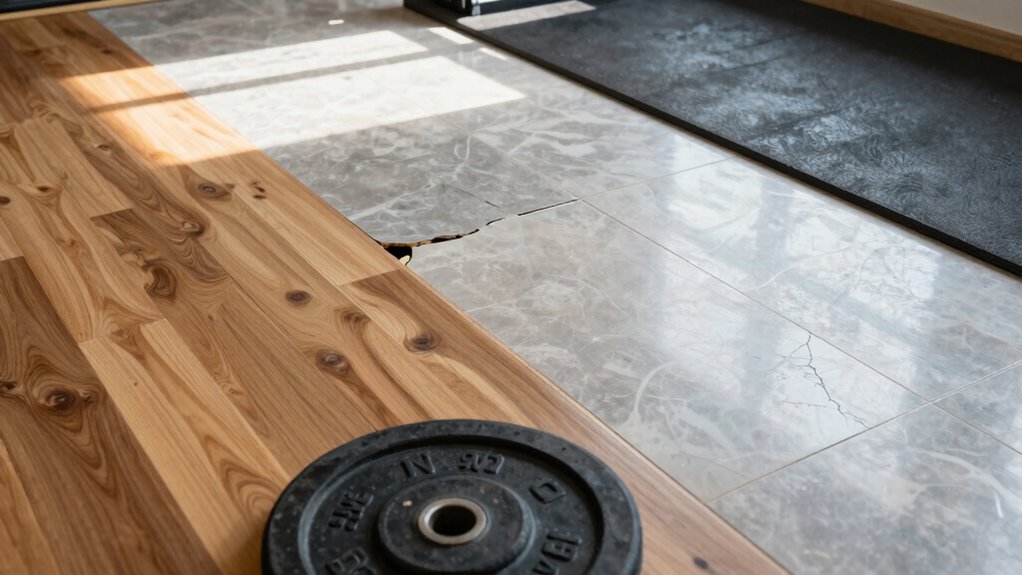
While you might focus on aesthetics or durability, overlooking shock absorption in your home gym flooring can lead to serious repercussions for your body. Proper shock resistance is essential for reducing impact during workouts, protecting your joints and muscles. Without adequate impact protection, you risk injuries that could sideline your fitness journey. Additionally, selecting flooring with anti-fatigue properties can help minimize fatigue and discomfort during prolonged exercise sessions.

ProsourceFit Puzzle Exercise Mat ½ in, EVA Interlocking Foam Floor Tiles for Home Gym, Water-Resistant Mats Workout Equipment, Floor Padding for Kids, Black, 24 in x 24 in x ½ in, 48 Sq Ft – 12 Tiles
PROTECTIVE GYM FLOOR MAT: Durable, non-skid gym flooring for home gym that covers and protects your floor or…
As an affiliate, we earn on qualifying purchases.
As an affiliate, we earn on qualifying purchases.
Balancing Aesthetics and Functionality in Home Gym Flooring Choices
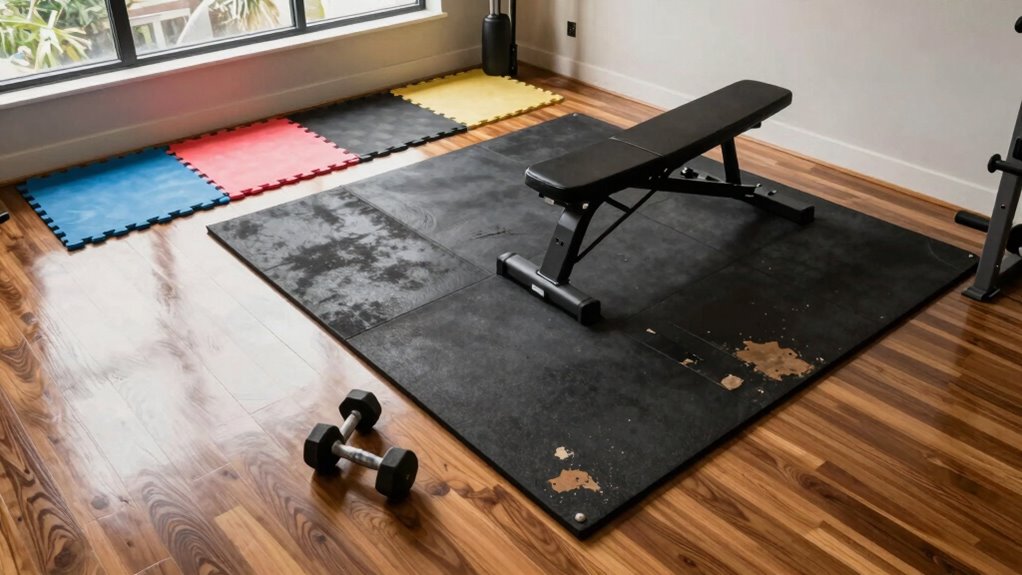
When choosing flooring for your home gym, you’ll want to balance aesthetics with functionality. Think about the right material that not only looks good but also supports your workouts, and consider how colors can enhance your space. Don’t forget maintenance—select a flooring option that’s easy to clean and maintain while still fitting your style.
Choosing The Right Material
Choosing the right flooring material for your home gym is essential, as it directly impacts both your workout experience and the overall aesthetic of the space. You want to strike a balance between functionality and style. Consider these key factors when selecting material types and installation methods:
- Durability: Choose materials that withstand heavy use, like rubber or vinyl. Selecting appropriate mounting and installation techniques can also help prevent damage and ensure safety, extending the lifespan of your flooring. Proper installation methods, such as seam sealing or shock absorption, can further enhance durability and safety.
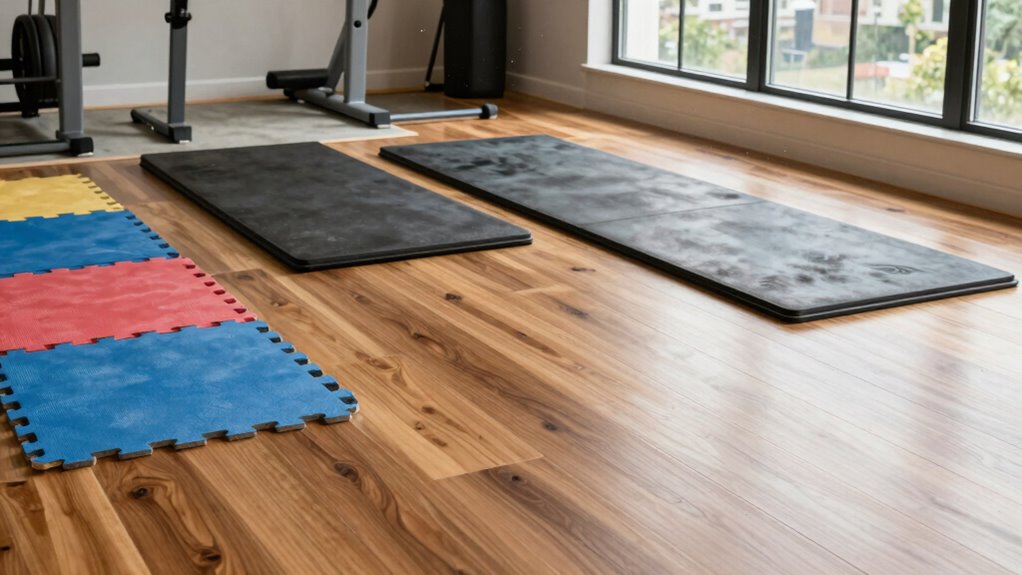
- Comfort: Look for options that provide cushioning to protect your joints, such as foam tiles or cork.
- Maintenance: Opt for flooring that’s easy to clean and maintain, ensuring your gym stays fresh.
Color Coordination Tips
After selecting the right material for your home gym, it’s time to contemplate how color can enhance both its functionality and aesthetics. Choosing the right color schemes can greatly affect your workout environment. For instance, lighter colors can make a small space feel larger and more open, while darker shades can create a cozy atmosphere. Aim for aesthetic harmony by coordinating your flooring with wall colors and equipment. You might consider using accent colors to inject energy and motivation into your space. Don’t overlook practical aspects, too; darker colors may hide dirt better, while vibrant shades can boost your mood. Ultimately, select colors that resonate with your personal style while ensuring the space remains functional for your workouts. Incorporating color psychology principles can also help you select hues that enhance focus and energy levels during exercise. Additionally, considering visual perception can aid in choosing colors that reduce eye strain and improve overall comfort during workouts. Being mindful of lighting conditions can further optimize how colors appear and influence your workout experience. Recognizing how perceived space is affected by color choices can help you create a more inviting and effective workout environment.
Maintenance Considerations
While aesthetics play a significant role in your home gym flooring selection, maintenance shouldn’t be overlooked. You need to take into account both maintenance frequency and maintenance costs to guarantee your gym remains functional and appealing. Here are some key points to keep in mind:
- Cleaning Routine: Regularly sweep and mop to prevent dirt buildup, which can damage your flooring over time.
- Durability: Choose materials that withstand heavy use, as this can lower maintenance frequency and costs in the long run.
- Repairs: Factor in potential repair needs; some flooring options may require more costly fixes than others.
- Air Quality Considerations: Selecting flooring that minimizes the release of microplastics in dust can contribute to a healthier indoor environment. Additionally, opting for low-emission materials can further improve indoor air quality by reducing airborne pollutants.
ProsourceFit Puzzle Exercise Mat ½ in, EVA Interlocking Foam Floor Tiles for Home Gym, Water-Resistant Mats Workout Equipment, Floor Padding for Kids, Black, 24 in x 24 in x ½ in, 48 Sq Ft – 12 Tiles
PROTECTIVE GYM FLOOR MAT: Durable, non-skid gym flooring for home gym that covers and protects your floor or…
As an affiliate, we earn on qualifying purchases.
As an affiliate, we earn on qualifying purchases.
Don’t Forget About Installation and Maintenance Needs for Flooring

When choosing flooring for your home gym, don’t overlook the installation and maintenance needs. Consider how complex the installation might be and what long-term care your flooring will require. Keeping your space clean and well-maintained will guarantee it stays functional and looking great for years to come.
Installation Complexity Considerations
Choosing the right flooring for your home gym isn’t just about aesthetics; it also involves considering the complexity of installation and ongoing maintenance. You’ll want to address potential installation challenges and guarantee flooring compatibility with your gym equipment. Here are some factors to keep in mind:
- DIY vs. Professional Installation: Do you have the skills and tools to tackle this yourself, or should you hire a pro?
- Subfloor Preparation: Will your existing floor require extensive prep work, or is it ready for new flooring?
- Installation Time: How long can you afford for the installation process to take, especially if you need to use the gym right away?
Long-Term Maintenance Requirements
Even after the installation is complete, maintaining your gym flooring is essential for its longevity and performance. You need to take into account the long-term durability of the materials you choose. Some options may require minimal upkeep, while others could demand regular attention and higher maintenance costs. For example, carpet tiles might need frequent replacements, while rubber flooring can often withstand wear and tear better. Knowing the maintenance requirements upfront will help you plan your budget effectively. Regular inspections can catch potential issues early, preventing costly repairs down the line. Additionally, understanding home appliance and air system compatibility can ensure your gym environment remains safe and efficient. Considering proper ventilation and climate control is also key to preserving flooring material integrity over time. Proper cleaning routines tailored to your flooring type can significantly extend its lifespan. Incorporating proper airflow can also help reduce moisture buildup that might damage certain flooring materials. By investing time in maintenance, you’ll guarantee your flooring stays in top shape, providing a safe and functional workout space for years to come.
Cleaning and Care Tips
While selecting the right flooring is essential, proper cleaning and care are equally important to keep your home gym in top condition. To maintain your flooring, consider these tips:
- Set a cleaning frequency: Establish a regular schedule—weekly or bi-weekly—to keep dirt and sweat at bay.
- Choose the right care products: Use gentle cleaners that won’t damage your flooring material. Avoid harsh chemicals that can wear it down.
- Inspect for damage: Regularly check for scuffs or tears. Addressing issues early can prolong the life of your flooring. Regular inspections help prevent minor issues from becoming major repairs.
- Maintain proper humidity levels: Controlling indoor humidity can prevent warping and mold growth, helping to preserve your flooring over time. Proper humidity management can also reduce the risk of moisture-related damage.
Selecting the Best Flooring Materials for Your Workouts
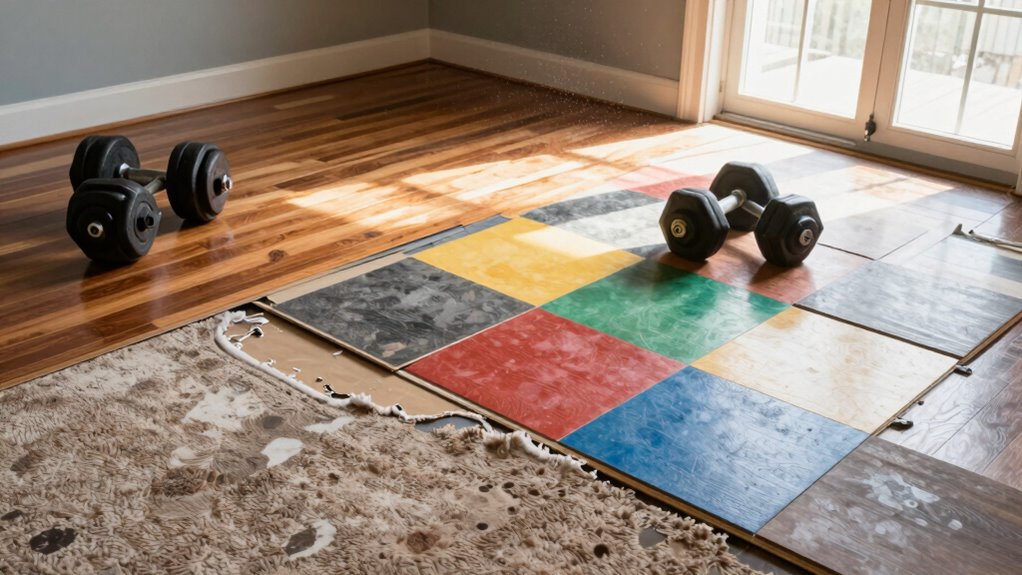
What factors should you consider when selecting flooring materials for your home gym? First, think about the type of workouts you’ll be doing. If you’re into high-impact exercises, you’ll need flooring that offers good shock absorption. Look for eco-friendly options, like rubber or cork, which are durable and sustainable. Next, consider texture variety; some surfaces provide better grip, while others might feel softer underfoot. This can enhance your performance and comfort during workouts. You also want to guarantee that the flooring is easy to clean and maintain, as hygiene is essential in a gym setting. Additionally, selecting outdoor-grade materials can be advantageous if your gym space is exposed to the elements or requires extra durability. Finally, choose a design that complements your space, making your gym both functional and inviting.
Neglecting to Evaluate Flooring Durability and Longevity
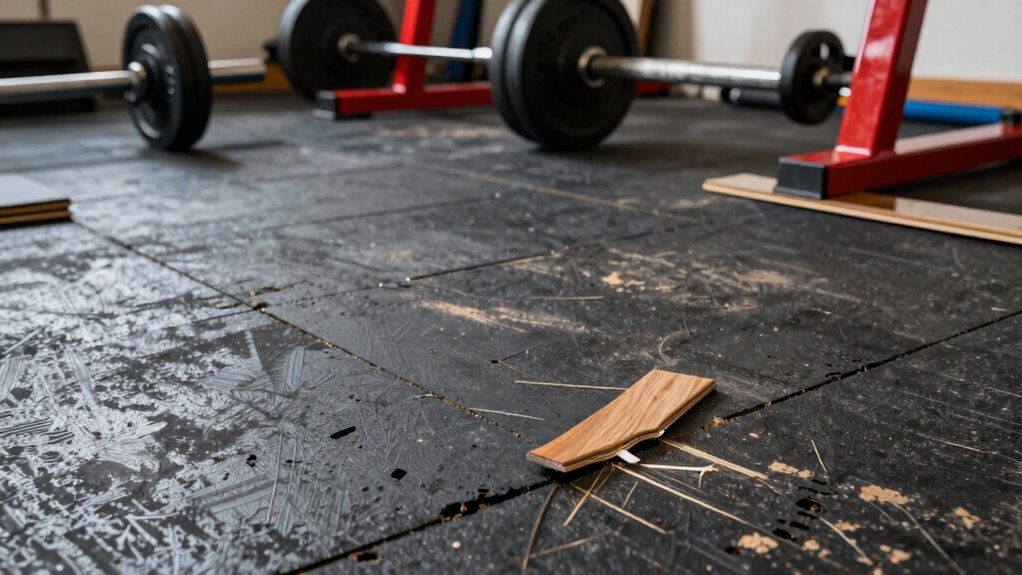
When you overlook the importance of flooring durability and longevity, you risk facing costly replacements and safety hazards down the line. To avoid these pitfalls, make certain to focus on the following aspects during your flooring selection process:
Overlooking flooring durability can lead to costly replacements and safety risks; prioritize longevity in your selection process.
- Durability Testing: Ensure the materials can withstand heavy use and resist wear and tear over time.
- Longevity Assessment: Choose options that offer long-lasting performance, minimizing the need for frequent replacements.
- Impact Resistance: Select flooring that can handle the demands of your workout routine without compromising safety.
Ignoring Safety Features for High-Impact Workouts
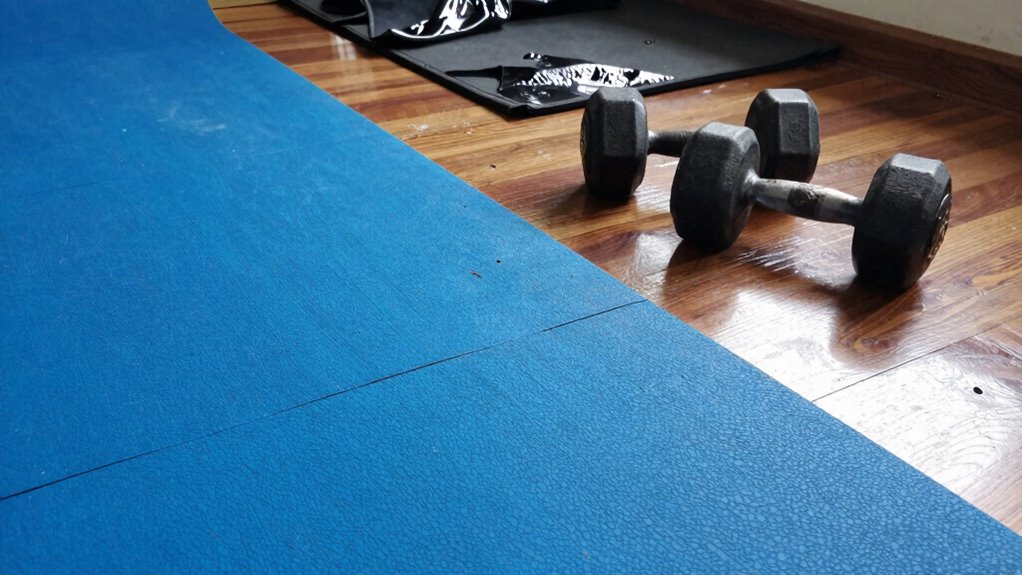
Choosing durable flooring isn’t just about longevity; it’s also about ensuring safety during your workouts. Ignoring safety features can lead to injuries, especially during high-impact exercises. You need flooring that meets safety standards and offers excellent impact resistance.
Consider the following factors when selecting your gym flooring:
| Feature | Importance |
|---|---|
| Safety Standards | Protects against injuries |
| Impact Resistance | Absorbs shock and reduces strain |
| Slip Resistance | Prevents falls |
| Thickness | Enhances cushioning |
Understanding How Flooring Affects Equipment Performance
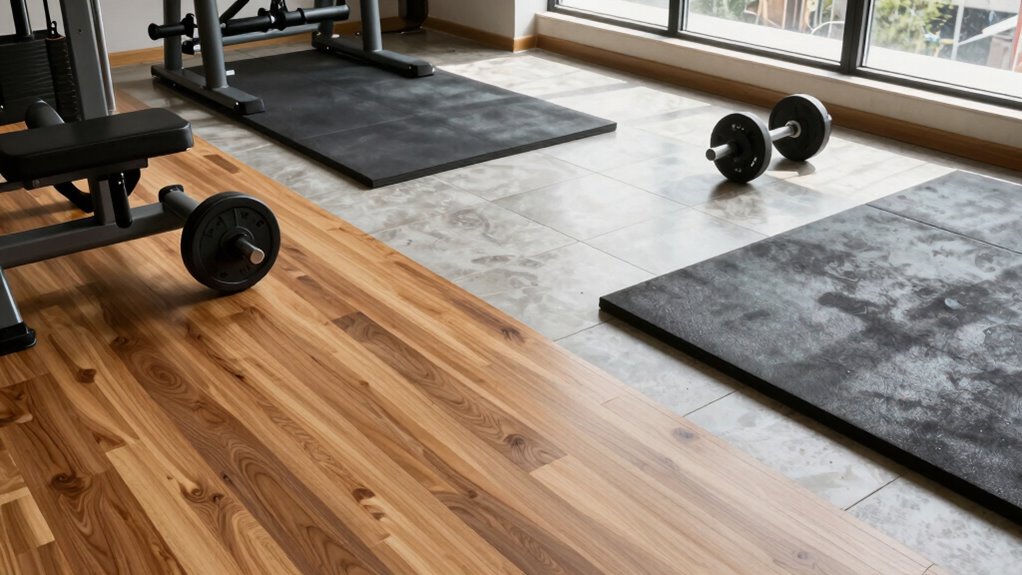
While you might focus on the type of equipment you use in your home gym, the flooring underneath plays an essential role in how well that equipment performs. The right flooring can greatly impact equipment stability and provide performance enhancement. Here are a few ways flooring matters:
- Shock absorption: Reduces impact on your joints and equipment, guaranteeing longevity.
- Grip: Offers traction to prevent slips during dynamic movements, enhancing safety.
- Level surface: Ensures your equipment remains stable, preventing wobbling or tipping.
Choosing the right flooring isn’t just about aesthetics; it directly influences your workout effectiveness. So, consider how your flooring choice can elevate your home gym experience while keeping your equipment safe and functional.
Researching Cost vs. Value in Home Gym Flooring Options

The performance benefits of flooring make it important to contemplate not just the materials but also the cost versus the value they provide. When researching options, conduct a thorough cost analysis to see how different flooring types impact your budget over time. Don’t just look at the initial price; consider durability, maintenance, and safety features, too. A lower upfront cost might lead to higher long-term expenses if you need to replace the flooring more frequently. Performing a value assessment allows you to weigh these factors against your gym’s specific needs. Ultimately, investing in quality flooring can enhance your workout experience and save you money down the line, making it a vital part of your home gym decision.
Frequently Asked Questions
Can I Mix Different Flooring Types in My Home Gym?
Yes, you can mix different flooring types in your home gym, but you should consider flooring compatibility and aesthetic considerations. For example, rubber and foam tiles work well together for shock absorption, while hardwood might clash with those materials visually. Ascertain the different types provide the right functionality and maintain a cohesive look. By carefully selecting complementary styles, you can create an appealing and practical workout space that meets your needs.
What Is the Best Flooring for Yoga and Stretching?
You’d think the best flooring for yoga and stretching would be a solid surface, right? Actually, yoga mats are your best bet! They provide excellent grip quality, essential for those tricky poses. For stretching, look for soft, cushioned surfaces that enhance your comfort levels. Combining a mat with a padded floor can give you the perfect setup for both yoga and stretching, ensuring you stay stable and comfortable throughout your practice.
How Do I Clean and Maintain My Gym Flooring?
To clean and maintain your gym flooring, start by sweeping or vacuuming to remove dirt and debris. Use a damp mop with a gentle cleaner specifically designed for your flooring type to avoid damage. Regularly inspect for any signs of wear and tear, and address them promptly. For rubber floors, consider using cleaning techniques like vinegar and water for deeper cleans. Following these maintenance tips will keep your gym floor in top shape.
Are There Eco-Friendly Flooring Options Available for Home Gyms?
Yes, there are eco-friendly flooring options for your home gym. You can choose sustainable materials like bamboo or cork, which are both durable and renewable. Natural alternatives such as rubber sourced from recycled tires also provide excellent shock absorption while being kind to the environment. By opting for these materials, you’re not only creating a great workout space but also contributing to a healthier planet. It’s a win-win for you and the Earth!
What Thickness of Flooring Is Recommended for Heavy Weightlifting?
For heavy weightlifting, the recommended thickness of flooring is typically between 3/8 inch to 1 inch. This thickness provides the cushioning you need while absorbing shock and protecting your subfloor. When you choose weightlifting mats, make sure they’re dense and durable to withstand the impact. You’ll want to prioritize safety and performance, so go for options that combine comfort with stability. Investing in the right thickness helps you lift without worry!
Conclusion
In summary, choosing the right flooring for your home gym can make all the difference in your workout experience. For instance, if you opt for rubber flooring, it not only absorbs shock but also provides a safe surface for high-impact exercises. Imagine trying to do burpees on a slippery surface—yikes! By avoiding common mistakes and prioritizing durability, safety, and maintenance, you’ll create a functional space that supports your fitness goals and keeps you motivated.