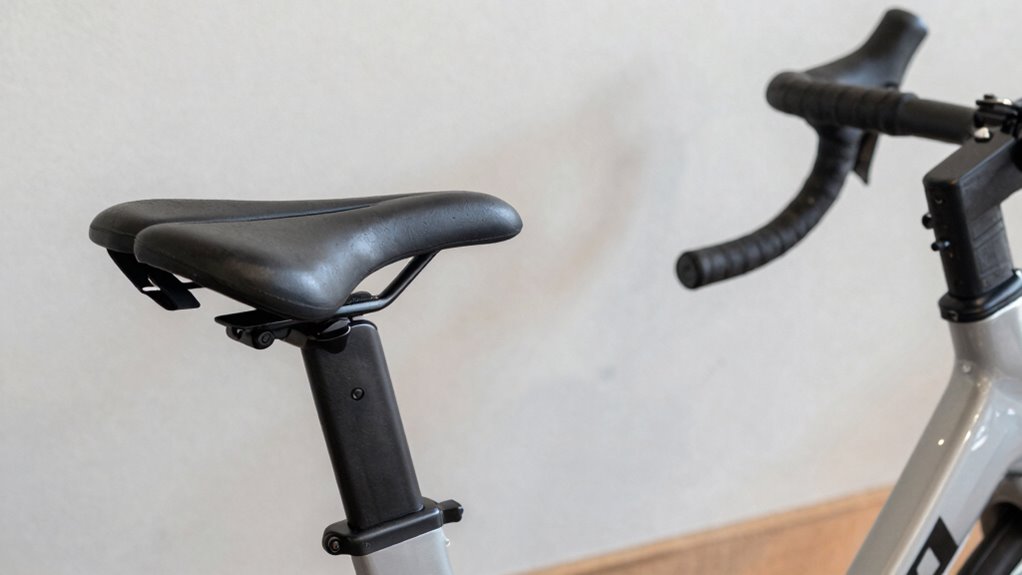

To guarantee comfort and protect your knees on a recumbent bike, start by adjusting the seat height so your knees are slightly bent at the pedal’s bottom. Position the seat forward or back to avoid overreaching, and align your feet flat on the pedals with knees tracking directly over your feet. Keep your posture relaxed, shoulders down, and hands comfortably on the handlebars. Small adjustments over time can make a big difference, and you’ll discover more tips as you go.

Get the little things that make your day delivered free with Prime
- Fast, free delivery on millions of items
- Prime Video, Amazon Music and more included
- Member-only deals all year
Key Takeaways
- Ensure the seat height allows legs to extend comfortably with a slight knee bend at pedal bottom.
- Position the backrest to support the lower back and promote an upright, relaxed posture.
- Adjust pedal position so knees track directly over the pedals, preventing inward or outward stress.
- Keep the seat and handlebars at a comfortable distance to avoid overreaching and knee strain.
- Regularly reassess fit, making small adjustments to maintain comfort and proper knee alignment.
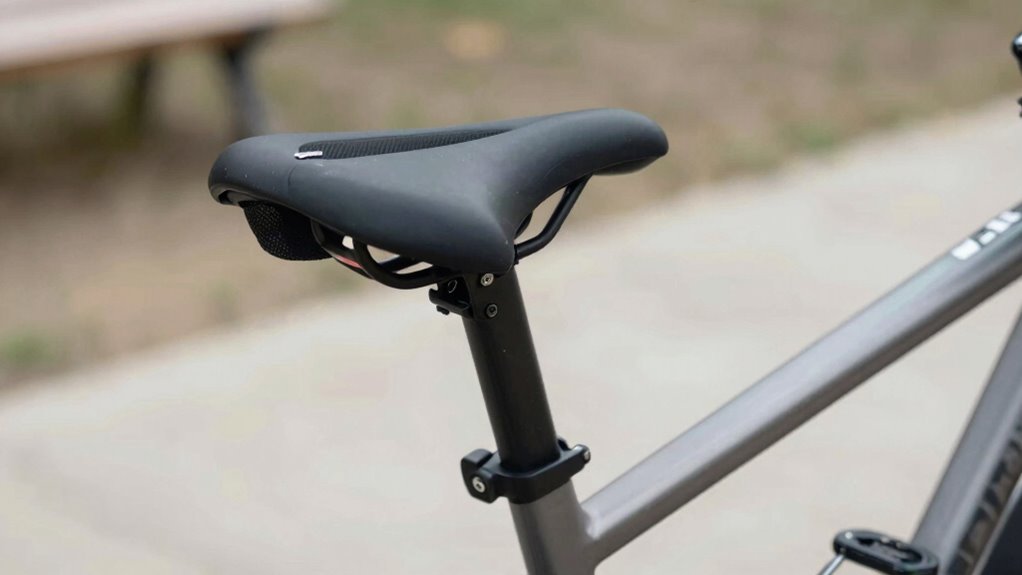
Getting the right fit on a recumbent bike is essential for comfort, efficiency, and preventing injury. One of the first things to focus on is your saddle, which should be ergonomic to support your pelvis and lower back. An ergonomic saddle helps distribute your weight evenly, reducing pressure points that can cause discomfort during longer rides. When adjusting the saddle height, make sure your legs are almost fully extended at the bottom of the pedal stroke, with a slight bend in your knees. This position optimizes power transfer and minimizes strain on your knees.
Ensure your saddle is ergonomic, supporting your pelvis and lowering back for comfort and better ride efficiency.
Pedal positioning is equally important. Your feet should rest flat on the pedals with your heels aligned properly, and the pedals should be positioned so that your knees track directly over your feet. Proper pedal alignment ensures that your knees don’t turn inward or outward, which can lead to joint stress or injury over time. Adjusting the pedal straps or clip-ins can help keep your feet secure and maintain correct positioning throughout your ride. If your knees feel sore or strained, revisit your pedal placement and saddle height — small adjustments here can make a significant difference.
Beyond saddle height and pedal position, you want to guarantee your seat is adjusted forward or backward to avoid overreaching or feeling cramped. When your hips are stable and your torso is upright, you’ll find it easier to maintain good form, reducing fatigue and preventing unnecessary knee movement. This is especially important for longer rides, where maintaining proper alignment helps prevent overuse injuries. Proper bike fit is crucial for ensuring comfort and reducing the risk of joint issues over time. Also, consider bike ergonomics to customize your setup for optimal comfort and efficiency.
Pay attention to your posture as well. Keep your shoulders relaxed and your chest open, avoiding a hunched position that can put unnecessary pressure on your knees and back. Your hands should rest comfortably on the handlebars without forcing your shoulders or arms into awkward angles. Proper posture combined with a well-fitted saddle and pedal position creates a balanced, ergonomic setup that minimizes stress on your joints. Regularly checking your bike fit and making adjustments based on your comfort level can help you maintain optimal alignment. Additionally, ensuring your pedal alignment is correct can prevent knee tracking issues and improve overall ride quality.
Finally, take time to regularly reassess your fit. As you become more comfortable or as your flexibility and strength change, small tweaks to your saddle height, pedal position, or seat angle may be necessary. Making these adjustments ensures you stay comfortable and prevent injuries, especially in your knees, during extended or intense rides. When you pay attention to these fit fundamentals, you’ll enjoy smoother rides, improved efficiency, and a lower risk of discomfort or injury.
As an affiliate, we earn on qualifying purchases.
Frequently Asked Questions
How Often Should I Recheck My Recumbent Bike Fit?
You should recheck your recumbent bike fit every few months or if you notice discomfort. Focus on bike seat positioning and pedal alignment during these checks. Changes in your flexibility or body weight can affect fit, so adjusting the seat height or position helps prevent strain. Also, confirm pedal alignment stays correct to avoid knee pain. Regularly reassessing keeps your ride comfortable and safe, especially if you ride frequently.
Can Bike Fit Adjustments Help With Knee Pain?
If you adjust your bike fit, it can seriously reduce knee pain—like turning a mountain into a molehill. Proper pedal alignment guarantees your knee joint moves smoothly, preventing excess strain. When you fine-tune saddle height and position, you help your knees glide effortlessly, avoiding awkward angles that cause pain. These adjustments work together to protect your knee joint, making every pedal stroke feel easier and less painful.
What Are Signs of an Improper Recumbent Bike Fit?
If your saddle height feels too high or low, or if the handlebar reach makes you stretch or hunch, your bike fit might be off. Signs include knee discomfort during pedaling, numbness, or pain in your hips or back. You might also notice instability or difficulty maintaining proper posture. Adjusting saddle height and handlebar reach can fix these issues, ensuring a more comfortable and efficient ride.
Does Bike Fit Affect Overall Cycling Performance?
Yes, bike fit greatly influences your overall cycling performance. Proper bike ergonomics guarantees you’re comfortable and reduces fatigue, allowing you to ride longer and more effectively. When your bike fits well, pedaling efficiency improves because you’re engaging the right muscles without strain. A good fit minimizes discomfort and energy waste, helping you maintain ideal speed and endurance. Prioritizing bike fit ultimately boosts your performance and enjoyment on every ride.
Are There Specific Fit Considerations for Taller Riders?
Yes, taller riders should focus on bike fit to guarantee comfort and efficiency. Adjust the bike height so your legs extend comfortably at the bottom of the pedal stroke without overextending. Also, set the saddle position to maintain a slight bend in your knees at the top of the pedal cycle. Proper bike height and saddle positioning help prevent strain, improve power, and guarantee a comfortable ride for taller cyclists.
As an affiliate, we earn on qualifying purchases.
Conclusion
Getting your recumbent bike fit just right guarantees maximum comfort and keeps your knees happy, so you can enjoy your ride without fuss. Remember, a proper fit is like a trusty steed—ready for adventure and less prone to trouble. Don’t be a knave—take the time to adjust and fine-tune your setup. With a little patience, you’ll be cruising smoothly, feeling like a true knight of the road, ready to conquer any journey ahead.
As an affiliate, we earn on qualifying purchases.
As an affiliate, we earn on qualifying purchases.
Halloween Picks
halloween
As an affiliate, we earn on qualifying purchases.