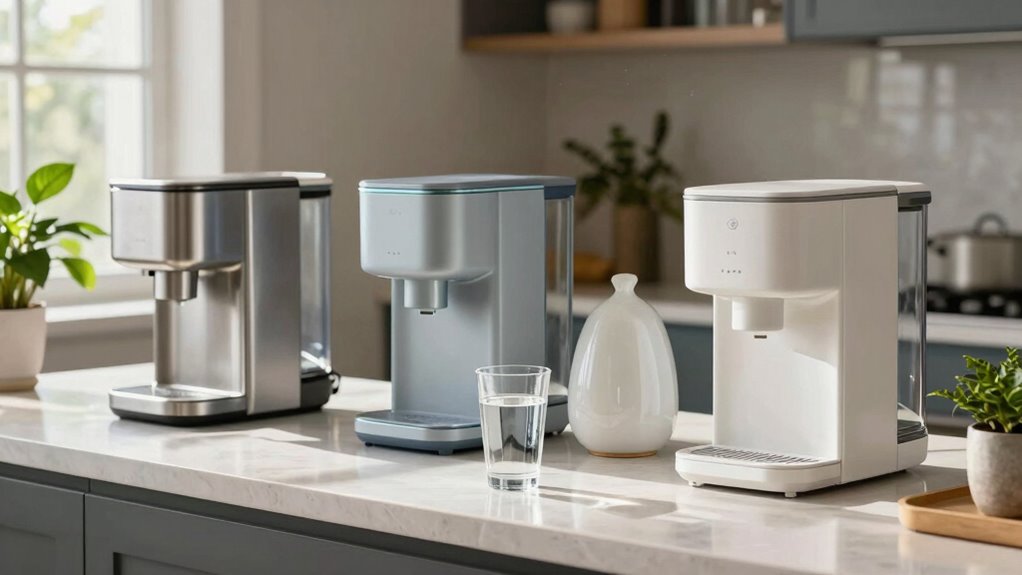

Choosing the right water filter system isn’t complicated. Start by understanding the different types, like activated carbon, reverse osmosis, and UV filters. Next, assess your water needs by testing for contaminants and considering daily usage. Look into the benefits of each filter type, and factor in maintenance, installation, and costs. Finally, compare prices to find the best value. You’ll discover even more tips to make the right choice for your home.

Get the little things that make your day delivered free with Prime
- Fast, free delivery on millions of items
- Prime Video, Amazon Music and more included
- Member-only deals all year
Key Takeaways
- Assess your water quality and specific contaminants to determine the right filtration needs for your household.
- Consider daily water usage and choose a filter that meets your consumption requirements effectively.
- Evaluate various filter types based on their benefits, such as taste enhancement or contaminant removal capabilities.
- Factor in installation complexity and maintenance frequency to ensure the filter fits your lifestyle and budget.
- Compare initial costs and ongoing maintenance expenses to find a filter system that offers the best overall value.
best activated carbon water filter system
As an affiliate, we earn on qualifying purchases.
As an affiliate, we earn on qualifying purchases.
Understand the Different Types of Water Filters
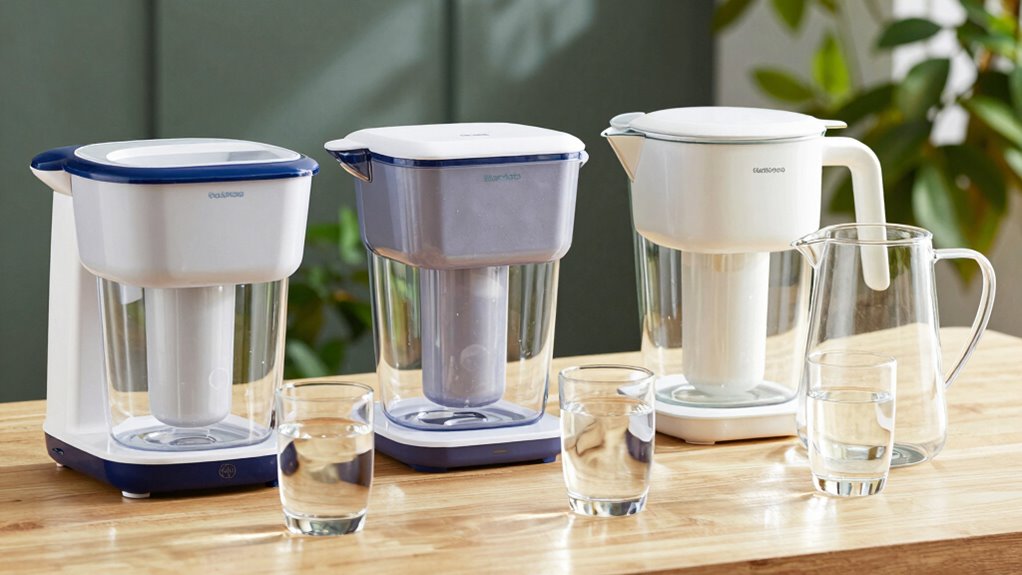
When you’re considering a water filter system, it’s essential to understand the different types available to you. Various filter technologies utilize unique filtration methods, each with its pros and cons. You might come across activated carbon filters, which effectively reduce chlorine and improve taste. Reverse osmosis systems, on the other hand, excel at removing contaminants, including heavy metals and bacteria. If you’re looking for a more eco-friendly option, ceramic filters use natural materials to purify water without chemicals. Finally, UV filters sanitize water by eliminating harmful microorganisms. By familiarizing yourself with these options, you can make an informed decision that best suits your needs and guarantees clean, safe drinking water for you and your family.
reverse osmosis water purifier for home
As an affiliate, we earn on qualifying purchases.
As an affiliate, we earn on qualifying purchases.
How to Figure Out What Your Water Needs?
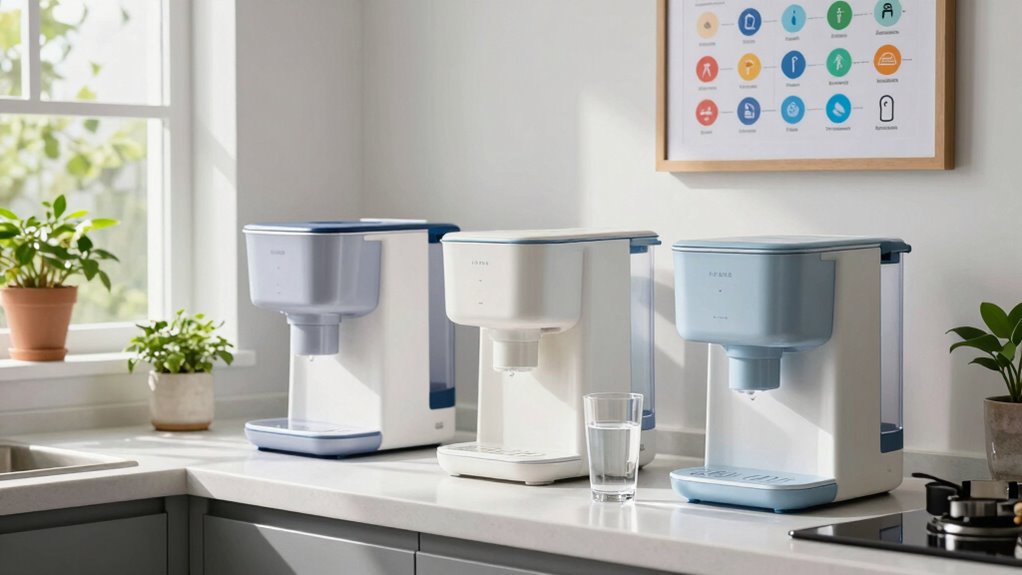
How can you determine your specific water needs? Start by evaluating your water quality. Test for contaminants like chlorine, lead, or bacteria, and identify any issues that could affect your health. This information helps you understand what type of filtration efficiency you require in a system. Next, consider how much water you use daily. Are you filtering for drinking, cooking, or both? The volume of water you need will influence the size and type of filter you choose. Finally, think about your budget and maintenance preferences. Some systems require more upkeep than others. By evaluating these factors, you’ll gain a clearer picture of your water needs and can select a filter that meets both your health requirements and lifestyle.
UV water sterilizer for drinking water
As an affiliate, we earn on qualifying purchases.
As an affiliate, we earn on qualifying purchases.
Discover the Benefits of Popular Water Filter Types

Curious about the different types of water filters and their benefits? Let’s explore a benefits overview of popular options. Each filter type has its unique advantages, making it essential to understand your choices. Here are four common types and their benefits:
- Activated Carbon Filters: Great for removing chlorine and improving taste.
- Reverse Osmosis Systems: Effective for eliminating heavy metals and contaminants.
- UV Filters: Ideal for killing bacteria and viruses without chemicals.
- Ceramic Filters: Perfect for reducing sediment and larger pathogens.
As an affiliate, we earn on qualifying purchases.
Consider Key Factors When Choosing Your Water Filter
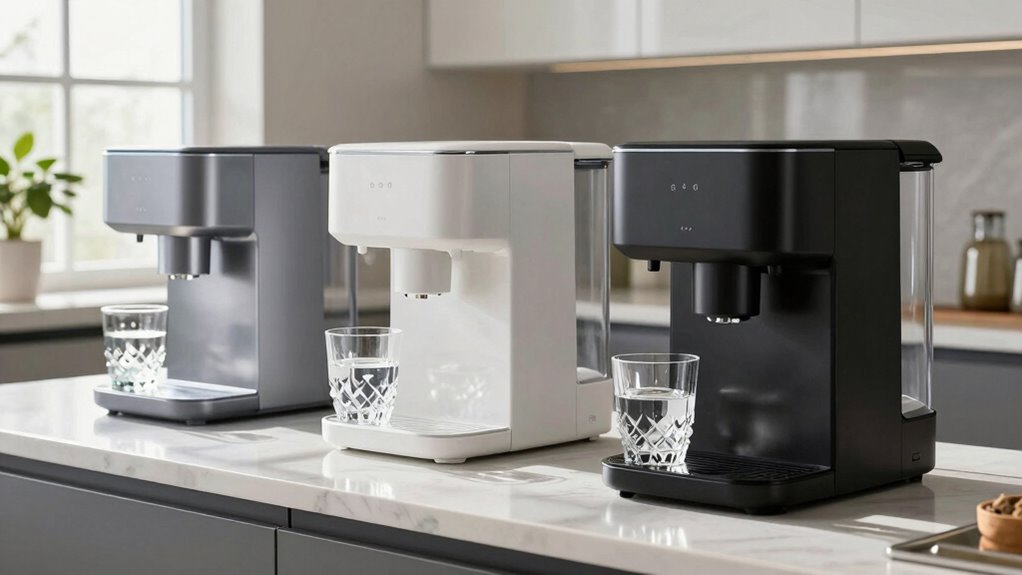
With a solid understanding of the benefits each water filter type offers, it’s time to contemplate key factors that will influence your choice. Start by evaluating your filtration capacity considerations; how much water do you need filtered daily? Next, think about filter maintenance tips. Some systems require more frequent upkeep than others, which can affect your decision.
Here’s a handy comparison:
| Factor | Importance | Example Type |
|---|---|---|
| Filtration Capacity | Daily water needs | Reverse Osmosis |
| Maintenance Frequency | Time and effort needed | Activated Carbon |
| Installation Complexity | DIY vs. professional help | Under-sink Filters |
Comparing Water Filter Costs
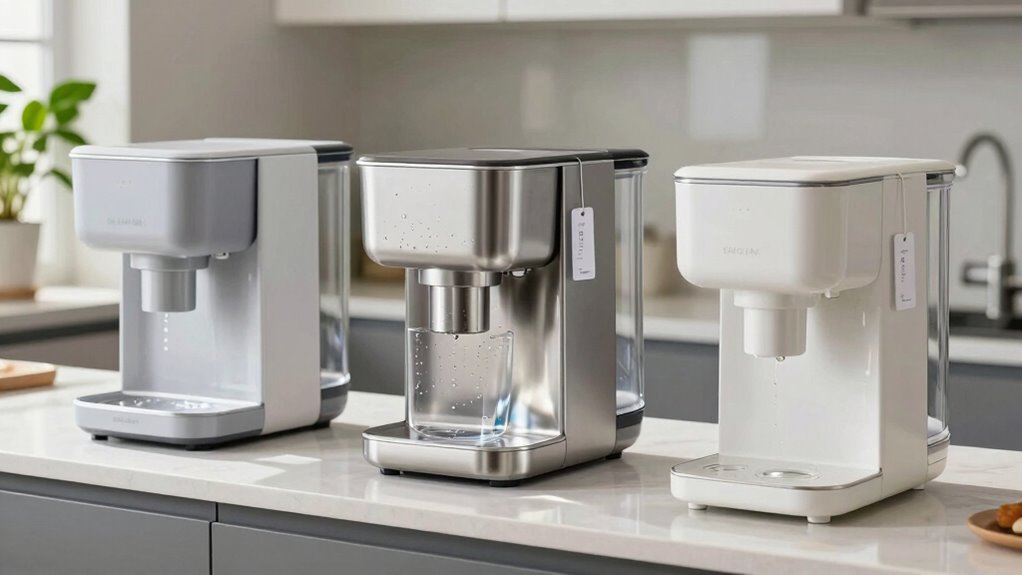
When comparing water filter costs, what factors should you consider to guarantee you’re making a wise investment? First, evaluate the water filter price. Some systems may have higher upfront costs but save you money in the long run. Next, think about maintenance costs. Filters need replacing, and some systems have more affordable replacement options than others. Third, consider the filter lifespan; longer-lasting filters often justify a higher initial price. Finally, check for any warranty or service agreements. A good warranty can save you money on repairs or replacements. By weighing these factors, you can ascertain that you’re not just looking at the initial water filter price but also at the overall value you’ll receive from your investment.
Frequently Asked Questions
How Often Should I Replace My Water Filter?
You should replace your water filter every 6 to 12 months, depending on the filter lifespan and your water usage. Keep an eye out for replacement indicators, like a change in taste or odor, or if the filter’s flow rate decreases. Regularly checking the manufacturer’s guidelines can help you determine the best time for replacement. Staying proactive guarantees you always have clean, safe water for drinking and cooking.
Can Water Filters Remove Fluoride Effectively?
Yes, water filters can remove fluoride effectively, but not all filters do. Think about it: if you want to enjoy clean water, you need the right filter types. Reverse osmosis systems and activated alumina filters are known for their fluoride removal capabilities. However, standard carbon filters often miss the mark. So, if fluoride’s a concern for you, make sure to choose a filter specifically designed for that purpose. Your health deserves it!
Are There Any Maintenance Tips for Water Filters?
Yes, there are essential maintenance tips for water filters. First, keep track of your filter lifespan; most need replacement every six months to two years, depending on usage. Establish a maintenance schedule to check for clogs or leaks regularly. Clean the filter housing and replace cartridges as needed. By following these steps, you’ll guarantee your water filter functions efficiently, providing you with clean, safe water for your home.
Do Water Filters Affect Water Taste or Smell?
Yes, water filters can greatly affect both taste and smell. When you use a quality filter, you’ll notice a taste improvement as it removes chlorine, sediment, and other impurities that can make water taste stale. Additionally, many filters excel at odor removal, ensuring your water smells fresh and clean. If you’ve been hesitant about your tap water, investing in a good filter can enhance your drinking experience dramatically. You’ll love the difference!
Can I Install a Water Filter Myself?
Yes, you can definitely install a water filter yourself! Many filter types, like countertop or faucet-mounted filters, are designed for easy DIY installation. Just follow the instructions provided, and you’ll have clean water in no time. Make sure you have the right tools and check compatibility with your plumbing. With a little effort, you’ll enjoy better-tasting water while saving on installation costs. It’s a rewarding project you can tackle on your own!
Conclusion
Choosing the right water filter doesn’t have to feel like searching for the Holy Grail. By understanding the different types, evaluating your water needs, and weighing the benefits, you’re already on the right path. Remember, it’s not just about clean water; it’s about the peace of mind that comes with knowing you’re making a healthy choice for you and your family. So immerse yourself, and let your quest for the perfect water filter begin!
Fall Picks
fall essentials
As an affiliate, we earn on qualifying purchases.