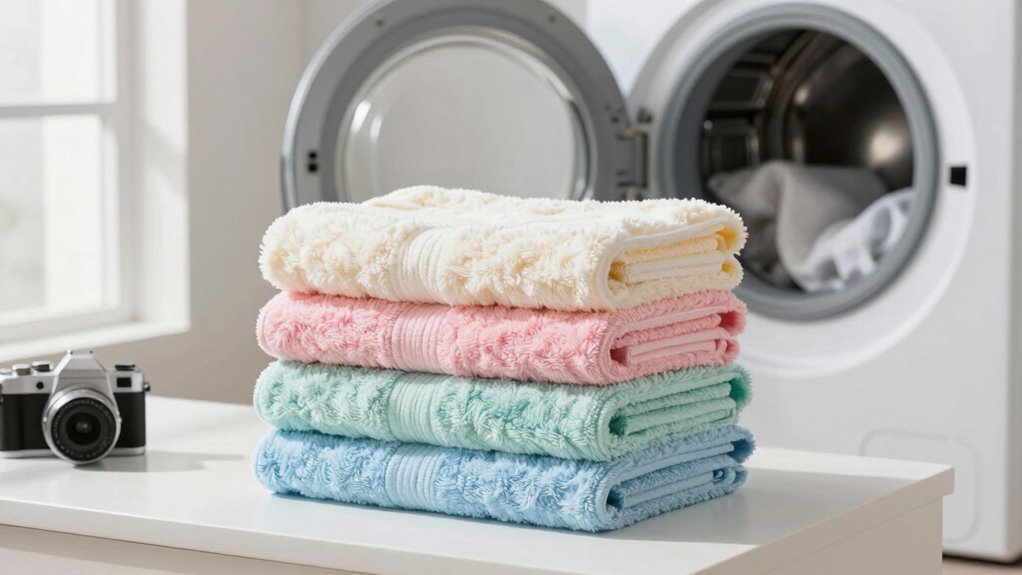

To keep your towels fluffy, wash them with a gentle detergent and avoid overloading the machine. Use warm or cold water, and consider adding vinegar during rinsing to break down residue and soften fibers. Don’t over-dry or use high heat, and remove towels promptly from the dryer. Store them loosely in a dry space, and skip fabric softeners in favor of natural options like baking soda or vinegar. Keep going for more tips to maintain towel softness.
Key Takeaways
- Use a gentle detergent without harsh chemicals and avoid overloading the washing machine.
- Wash towels in warm or cold water to protect fibers and maintain softness.
- Add vinegar during the rinse cycle to break down residues and enhance fluffiness.
- Avoid fabric softeners; instead, use baking soda or vinegar to keep towels soft.
- Remove towels promptly after washing and dry on low heat or air dry to prevent stiffness.
Why Towels Lose Their Fluff and How Proper Washing Can Help
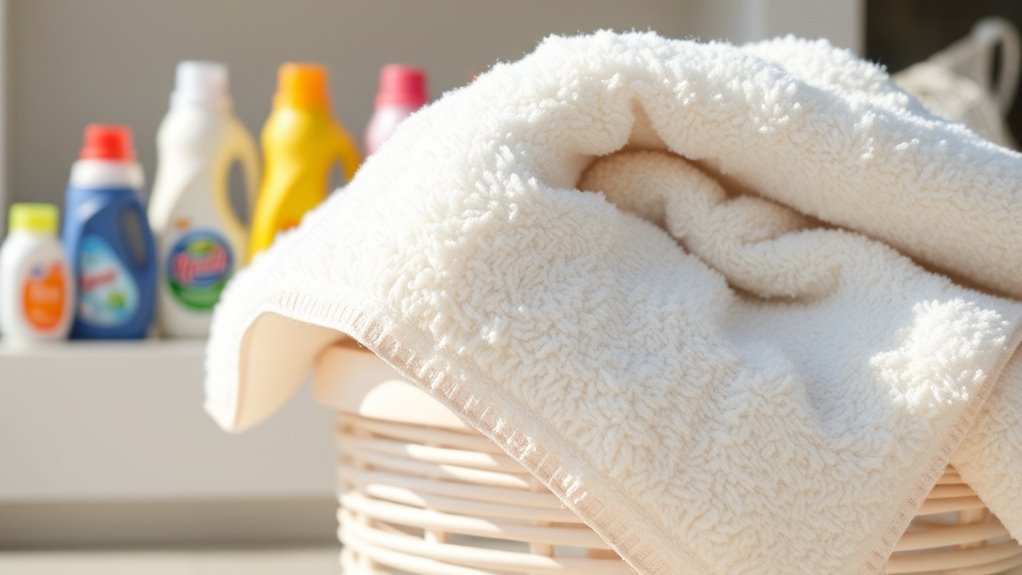
Over time, towels lose their fluff because the fibers become compressed and worn down through repeated washing and drying. This compression reduces the towel’s ability to trap air, making it feel rough and stiff. Proper washing techniques can help preserve that plush feel. Using fabric softening products during laundry can help maintain the fibers’ softness, preventing them from matting down prematurely. Additionally, how you store your towels matters—avoid overcrowding your linen closet, as tight storage can crush fibers further. Instead, fold towels loosely and keep them in a dry, well-ventilated space. Maintaining proper storage conditions can significantly extend the softness and lifespan of your towels. Ensuring that towels are dried thoroughly and stored in a ventilated area can also prevent mold and unpleasant odors, keeping them fresh longer. Regularly air-drying towels after washing can help preserve their fluffiness over time. These simple practices promote better towel fluffiness and longevity, ensuring your towels stay soft, absorbent, and inviting with each wash.
Common Mistakes That Make Towels Stiff or Rough
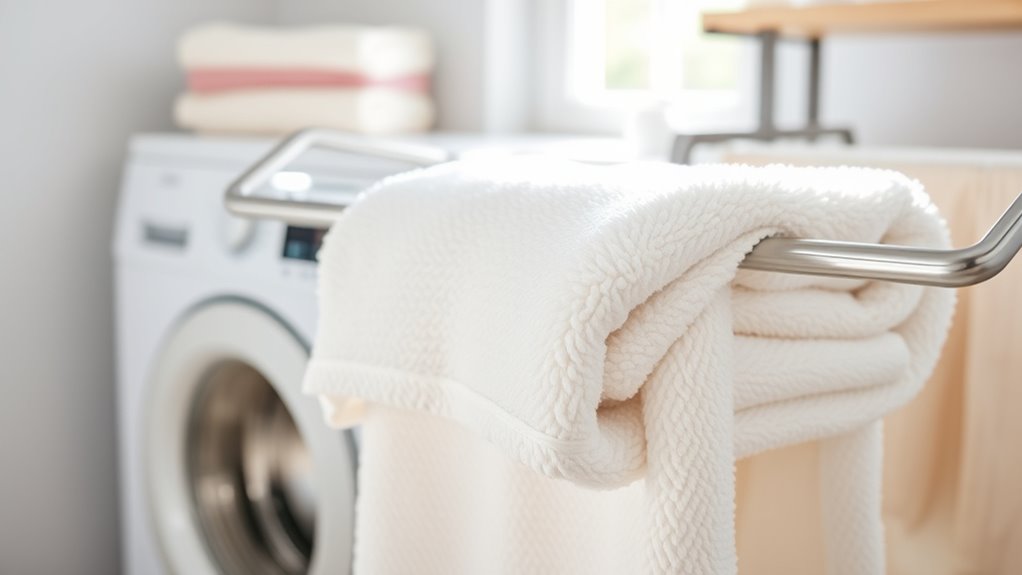
Many common laundry habits can cause your towels to become stiff or rough, diminishing their softness and absorbency. Using fabric softeners frequently might seem helpful, but they can actually leave a residue that builds up over time, making towels feel rough. Similarly, relying on bleach or harsh bleach alternatives can weaken fibers, leading to stiffening. Overloading the washer prevents proper rinsing, leaving detergent and residues that contribute to roughness. Additionally, washing towels with heavily soiled items or at high temperatures can damage fibers, reducing fluffiness. To keep towels soft, avoid these mistakes by using gentle, fiber-friendly products and ensuring thorough rinsing. Steering clear of excessive fabric softener and harsh chemicals helps maintain their plushness and absorbency longer. Regularly replacing your washing machine can also help ensure optimal cleaning and rinsing efficiency. Incorporating a proper washing routine, including occasional vinegar rinses, can further preserve towel softness and longevity.
How to Properly Wash Towels for Softness and Fluffiness
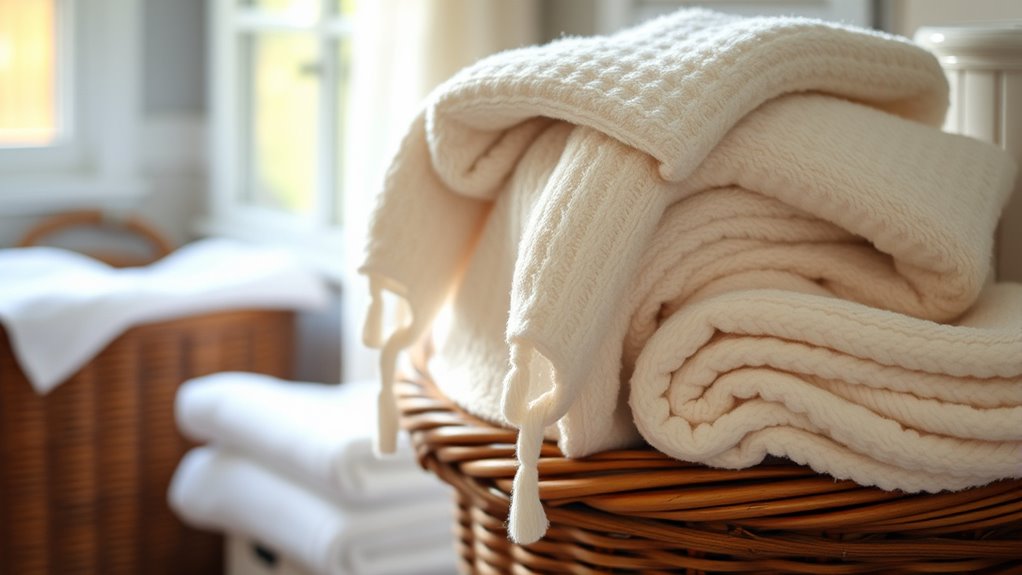
To keep your towels soft and fluffy, make sure you use the right detergent—preferably one that’s gentle and free of harsh additives. Avoid overloading your washing machine, as this prevents towels from rinsing properly and becoming stiff. When you follow these steps, your towels will feel fresh, plush, and inviting every time. Incorporating filter maintenance in your routine can also help maintain the overall quality of your home textiles.
Use Proper Detergent
Choosing the right detergent is essential for maintaining your towels’ softness and fluffiness. Opt for gentle detergent types that are free of harsh chemicals and optical brighteners, which can build up and make towels stiff over time. Look for formulas designed for delicate fabrics or those labeled as “fiber care,” as they clean effectively without damaging fibers. Be cautious with fragrance additives; while a fresh scent is nice, strong fragrances can leave residues that weigh down towels. If you prefer scented towels, consider using a fragrance-free detergent and adding a natural scent booster later. Using the proper detergent guarantees your towels stay plush, soft, and fluffy wash after wash, preventing buildup and preserving their quality. Additionally, choosing detergents with appropriate cleaning power ensures deep cleaning without compromising the towel fibers. To further enhance towel fluffiness, consider adding a fabric softener during the rinse cycle, but use it sparingly to avoid buildup that can reduce softness over time. Incorporating natural fabric softeners like vinegar can also help maintain towels’ fluffiness naturally. Regularly washing towels with the correct detergent prevents detergent residue from accumulating and keeps them feeling fresh and fluffy longer.
Avoid Overloading Machine
Overloading your washing machine can prevent towels from getting thoroughly cleaned and can lead to increased friction, which damages fibers and reduces softness. To maintain fluffy towels, keep your laundry room organized so you can easily load your machine without packing it too tightly. Proper machine maintenance is essential; a overloaded drum strains components and decreases washing efficiency. When washing towels, load no more than about three-quarters full to allow water and detergent to circulate properly. This ensures towels are cleansed thoroughly and fibers stay intact. Avoid cramming the machine, as overloading hampers rinsing and can cause residue buildup. Maintaining an organized laundry space and respecting your machine’s capacity helps preserve towel softness and prolongs its lifespan. Additionally, understanding your washing machine capacity can help prevent overloading and ensure optimal cleaning results. Being mindful of fabric care guidelines can further enhance the longevity and fluffiness of your towels. Proper loading also allows for effective rinsing, which is crucial for removing detergent residues that can weigh down towels. Regularly checking and cleaning your filter and drainage system can also improve washing performance and towel fluffiness.
Tips for Drying Towels Without Stiffening Them
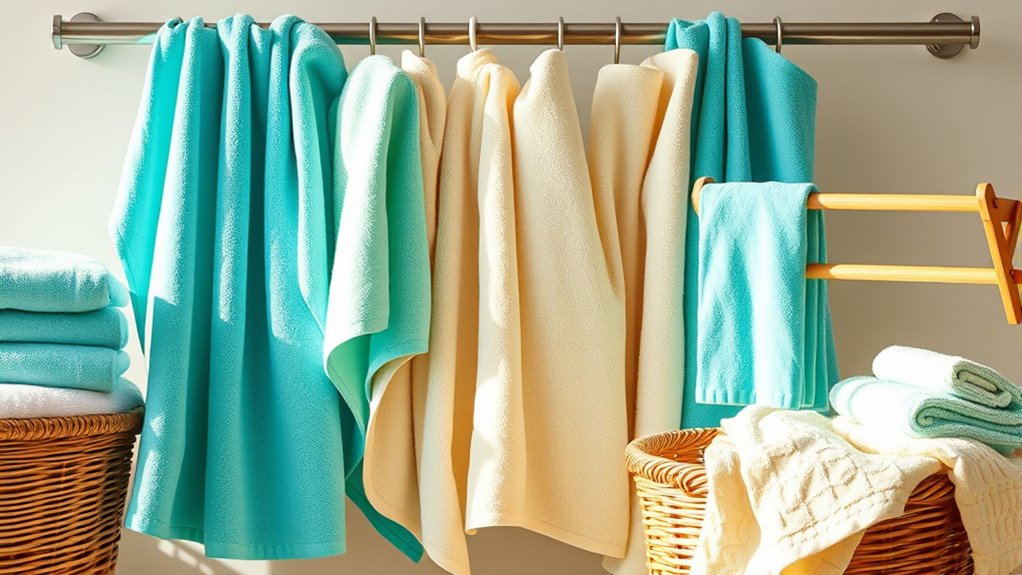
To prevent stiff towels when drying, start by choosing the right spin cycle settings to remove excess water without over-drying. Consider adding vinegar or a fabric softener during the rinse to keep fibers soft and fresh. Remember, avoid over-drying, which can make towels stiff and rough to the touch.
Proper Spin Cycle Settings
If you want to prevent your towels from becoming stiff after washing, adjusting the spin cycle settings is essential. Use a gentle or medium spin cycle to avoid over-extracting excess water, which can lead to stiffness. High spin speeds remove more water but increase the risk of stiffening your towels. Opt for a lower spin speed if your machine allows it, especially for fluffy results. Water temperature also plays a role; washing in warm or cold water helps keep fibers soft and prevents them from becoming hard and rough. Avoid hot water, which can set stiffness and damage fibers. Additionally, choosing efficient water and waste management solutions that incorporate innovative portable restroom solutions can contribute to eco-friendly laundry practices. Properly maintaining your washing machine’s spin cycle can further ensure optimal water extraction without compromising towel softness. Using proper laundry techniques can also help preserve the natural fluffiness of your towels over time. By carefully choosing your spin cycle and water temperature, you help keep your towels soft, fluffy, and comfortable after each wash.
Use Vinegar or Softener
Using vinegar or fabric softener during the drying process can help keep your towels soft and fluffy. Vinegar benefits include natural fabric softening without harsh chemicals, helping to break down detergent residues that cause stiffness. If you prefer softeners, choose a quality fabric softening product designed for towels. To maximize softness: 1. Add ½ cup of vinegar to the rinse cycle to naturally soften fibers. 2. Use a small amount of fabric softener during drying for added plushness. 3. Avoid overloading the dryer to ensure proper airflow. 4. Remove towels promptly to prevent stiffness from over-drying. Vinegar benefits extend beyond softening, as it also helps eliminate odors and build-up. Both options are effective, but vinegar offers a natural, chemical-free way to maintain towel fluffiness and fabric softening. Additionally, selecting the right drying method can prevent towel stiffness and preserve their softness over time. Proper drying techniques can also extend towel lifespan, ensuring they stay soft and plush for longer.
Avoid Overdrying
Overdrying towels can cause them to become stiff and less absorbent, undoing the softness benefits from vinegar or fabric softeners. To prevent this, pay attention to your towel material and adjust your washing machine settings accordingly. Natural fibers like cotton may need a gentler cycle, while microfiber towels require careful drying to avoid stiffness. Use a low or medium heat setting and avoid over-drying, which pulls moisture out of the fibers too thoroughly. Remove towels promptly once they’re dry or slightly damp to maintain their fluffiness. If your machine has a delicate or air-dry setting, use it. Properly timed drying preserves the towel’s softness and absorbency, ensuring they stay plush and comfortable after every wash. Additionally, understanding how indoor air quality can impact fabric freshness can help you maintain cleaner, more comfortable towels.
Easy Hacks to Restore Softness to Old Towels
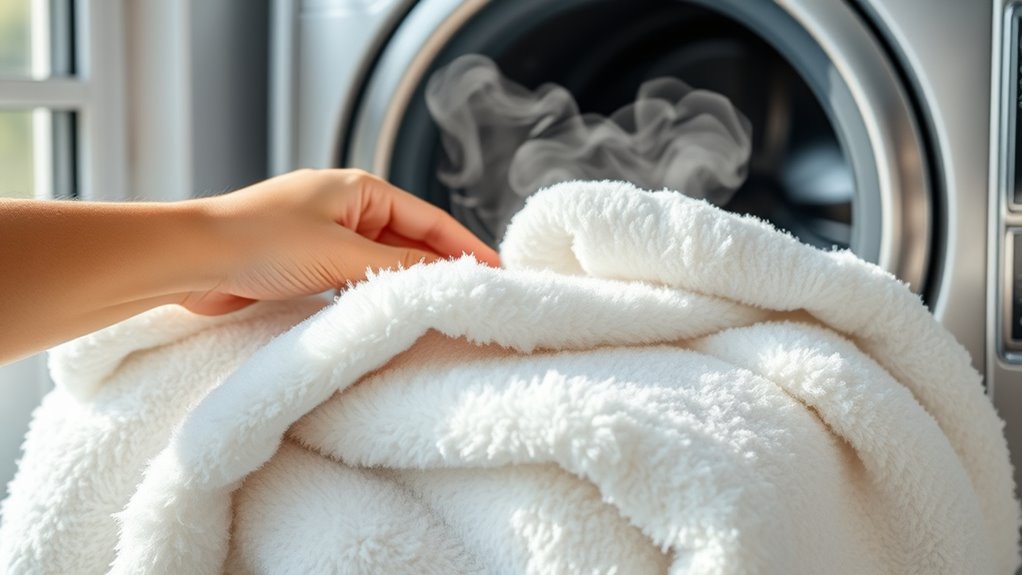
Old towels tend to lose their softness over time, but you can easily revive them with simple hacks. First, wash them with half a cup of white vinegar to break down residue and restore fabric softening. Second, skip fabric softening products, which can build up and make towels stiff; instead, add a small amount of baking soda during washing. Third, dry towels properly—avoid overdrying, as it damages fibers—preferably tumble dry on low or hang to air dry. Fourth, store towels in a dry, well-ventilated towel storage area to prevent mustiness and maintain softness. Additionally, using natural fibers in the towel’s material can help retain softness longer. Incorporating proper laundering techniques can further enhance towel fluffiness and longevity. Regularly rotating towels and avoiding overcrowding the washing machine can help maintain their softness and durability, ensuring they stay plush and inviting every time you use them. These tricks help restore the fluff, keep your towels plush, and extend their lifespan, ensuring they stay cozy and inviting every time you use them.
How to Keep Towels Soft and Fresh Every Time
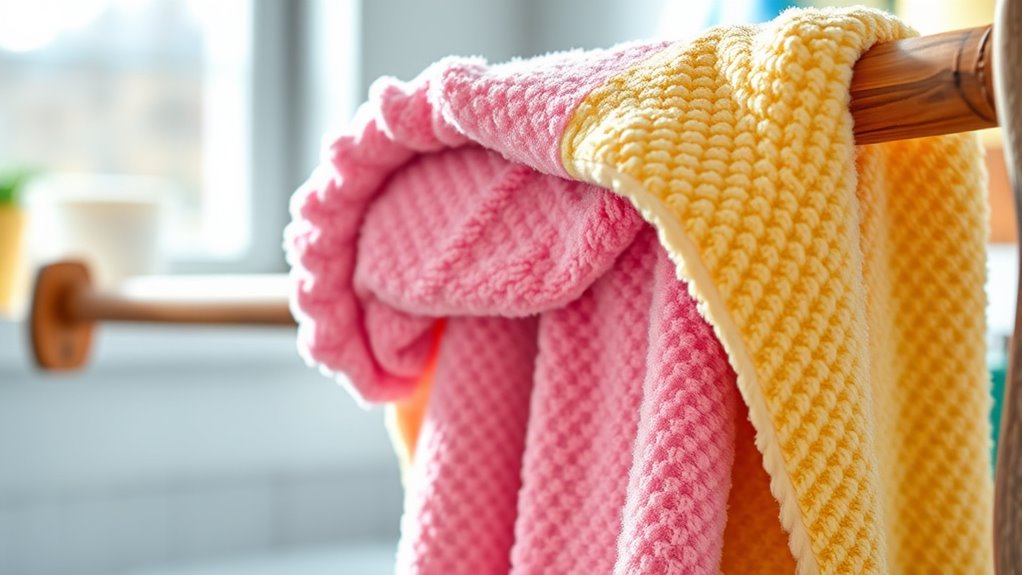
After restoring your towels’ softness, maintaining their freshness becomes the next step to guarantee they stay inviting with each use. Proper towel storage is key; keep them in a dry, well-ventilated space to prevent mustiness and odors. Avoid overusing fabric softener, as it can leave residues that diminish fluffiness over time. Instead, opt for natural alternatives like white vinegar occasionally. To evoke emotion, consider this:
| Freshness Level | Towel Storage Tips | Fabric Softener Limitations |
|---|---|---|
| Cozy & Inviting | Store in a breathable basket | Too much softener dulls fibers |
| Crisp & Clean | Hang in a dry, airy space | Residue builds up, reducing fluff |
| Soft & Fluffy | Keep towels fully dry | Softener can weaken fibers |
| Bright & Fresh | Rotate towels regularly | Overuse hampers softness |
Frequently Asked Questions
Can Using Fabric Softener Damage Towel Fibers Over Time?
Using fabric softener can damage towel fibers over time by causing fabric softener buildup. This buildup coats the fibers, reducing their absorbency and making towels less fluffy. The chemicals in softeners can also lead to towel fiber degradation, weakening the material. To keep your towels soft and fluffy, it’s best to avoid fabric softeners and opt for natural alternatives like vinegar, which clean without causing damage.
How Often Should I Wash Towels to Maintain Softness?
You should wash your towels after every 3 to 4 uses to maintain softness. Regular laundry frequency keeps towels fresh and prevents buildup of dirt and oils that can make them feel rough. Towel drying can cause fibers to loosen over time, so washing them regularly helps preserve their fluffiness. Be sure to avoid overloading the washer and use gentle detergent to keep towels soft and plush.
Are Natural Alternatives to Fabric Softeners Effective?
Think of vinegar benefits as a gentle rain revitalizing your towels’ fibers. Eco-friendly options like vinegar effectively soften towels without harsh chemicals, acting as natural fabric softeners. Vinegar breaks down detergent residue, keeps fibers fluffy, and restores absorbency. Using it periodically in your wash cycle is a simple, sustainable way to maintain towel softness while protecting the environment. Trust vinegar to nourish your towels just like rain nurtures the earth.
Does Water Temperature Affect Towel Fluffiness?
Yes, water temperature influences towel fluffiness. Hot water helps remove detergent residues and oils that can make towels feel stiff, keeping them softer and fluffier. Warm water balances cleaning power without damaging fibers, while cold water might not effectively clean or remove buildup. To maintain towel fluffiness, use warm or hot water for washing, but always check care labels to avoid damage. Proper water temperature ensures your towels stay plush and inviting.
Can Using Too Much Detergent Make Towels Stiff?
Using too much detergent can definitely make your towels stiff. When you overload, detergent isn’t rinsed out completely, leading to buildup and residue from soap. This buildup traps dirt and moisture, making towels less fluffy and rough. To keep them soft, use the right amount of detergent and run an extra rinse cycle if needed. Regularly deep clean your washing machine to prevent detergent residue from affecting your towels’ texture.
Conclusion
To keep your towels fluffy and soft, stick to proper washing and drying techniques. Avoid overloading the washer, skip fabric softeners that can build up, and dry towels thoroughly but gently. Remarkably, some believe adding vinegar or baking soda can restore softness, and research shows that these natural remedies do help break down residue. By following these simple tips, your towels will stay plush, fresh, and inviting every time you use them.