
Act quickly to prevent a stain from setting firmly into your fabric. Blot the spill with a clean cloth or paper towel to lift excess liquid—avoid rubbing. Test cleaning methods on hidden areas first, and then gently dab with cold water to start lifting the stain. Using the right approach promptly greatly improves your chances of successful removal. Keep in mind, avoiding common mistakes during this essential window can save your fabric—learn more for best results.
Key Takeaways
- Act immediately by gently blotting the stain with cold water to prevent it from setting.
- Use a clean cloth or paper towel, pressing softly without rubbing to absorb excess liquid.
- Test any cleaning solution on a hidden fabric area to ensure compatibility and colorfastness.
- Identify the stain type quickly to choose the most effective treatment method.
- Avoid delaying; prompt action within the first 60 seconds greatly increases chances of successful removal.
Why Acting Quickly Can Save Your Stain

The sooner you address a stain, the better your chances of removing it completely. Acting quickly prevents the stain from setting, especially with organic stains like food or sweat, which are easier to treat early on. Oxidation stains—such as wine or tea—also benefit from prompt action, as they tend to deepen and become more stubborn over time. When you act fast, you stop the chemical reactions that cause these stains to bond with fabric fibers. Quick response minimizes the risk of permanent discoloration and makes cleaning more effective. Understanding stain chemistry helps you choose the most effective removal method. Additionally, knowing about water-based removal techniques can improve your chances of success with common stains. Being aware of professional stain removal options can also be beneficial if initial efforts fail. Don’t wait until the stain dries or sets; immediate attention gives you a better shot at success, saving you time and effort later. Using proper cleaning tools can further enhance your stain removal efforts. Implementing recommended air purifier maintenance practices ensures your equipment remains effective, which can be indirectly beneficial if airborne contaminants contribute to stains or odors. The key is to start treatment as soon as the spill happens.
Blot the Spill Right Away to Remove Excess
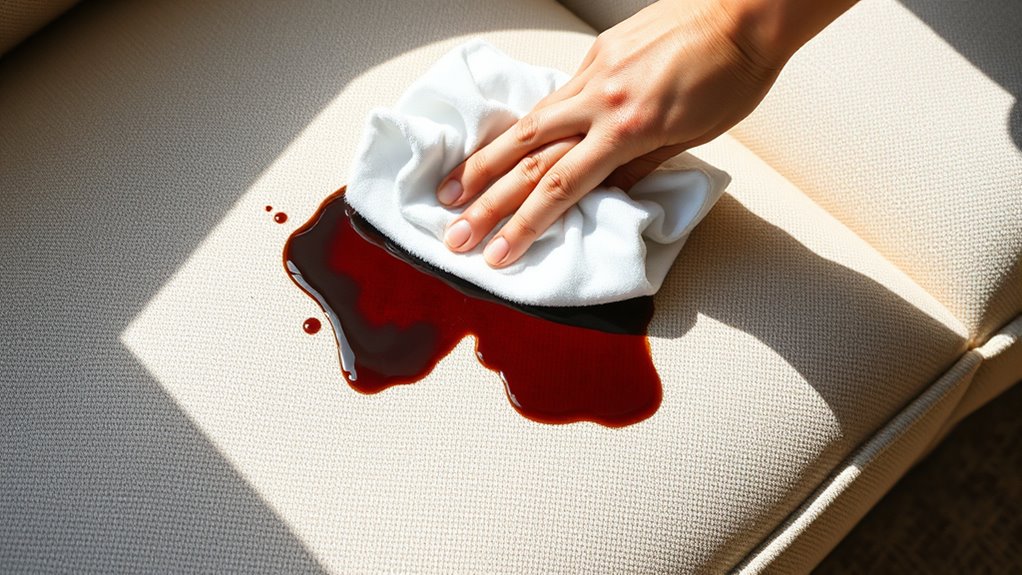
Act quickly to blot up excess spill material before it soaks deeper into the fabric. Absorbing excess liquid prevents spreading and helps keep the stain contained. Use a clean cloth or paper towel, gently pressing without rubbing, to lift as much liquid as possible. This simple step minimizes the stain’s size and makes cleaning easier later. To stay organized, consider this quick reference:
| Spill Type | Best Absorbing Material | Key Tip |
|---|---|---|
| Coffee or Tea | Cloth or paper towel | Blot gently, avoid rubbing |
| Juice or Soda | Absorbent sponge | Press firmly, don’t spread |
| Oil or Grease | Paper towel | Absorb excess carefully |
| Wine or Red | Clean cloth | Blot quickly to prevent spreading |
Blotting right away is essential for effective stain removal. Proper piercing care and hygiene help prevent infections that could complicate cleaning or cause irritation. Additionally, understanding cloud service outages can help in planning for data recovery and minimizing disruptions during emergencies. Recognizing the importance of quick action can significantly improve stain removal success. Being aware of proper stain treatment techniques ensures you respond effectively to different types of spills.
Choose the Best Cleaning Method for Your Stain Type
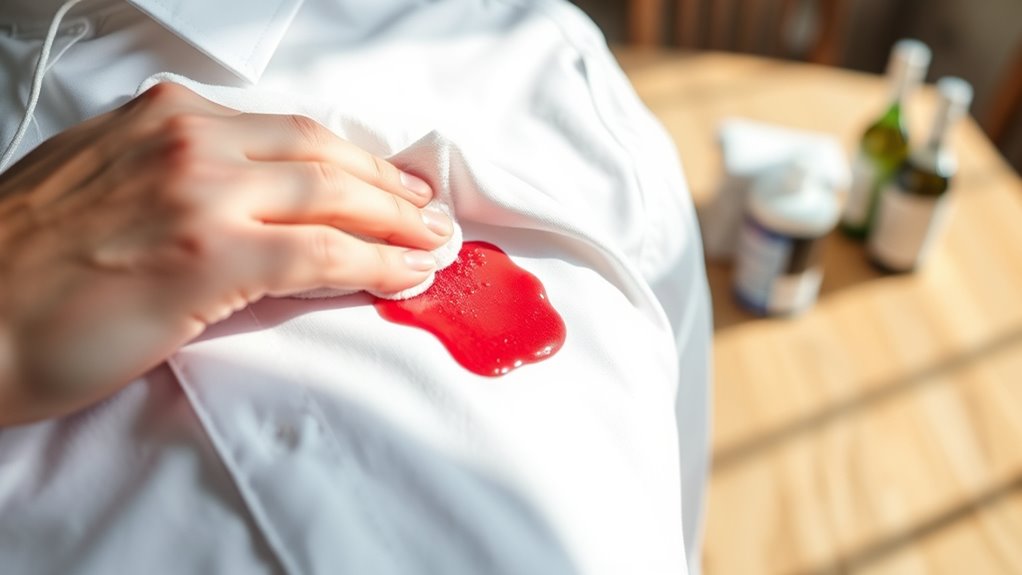
First, identify your stain type quickly to determine the right approach. Then, match the stain to the fabric to avoid damage. Finally, select an appropriate cleaner that targets the specific stain for the best results. Being aware of digital content formats can also help you find more effective cleaning tips online. Additionally, understanding common stain removal techniques can improve your chances of successfully treating stains at home, especially when choosing methods suitable for different fabric types. Knowing how to use appropriate tools safely can further enhance your stain removal efforts and prevent accidental damage. Recognizing common stain triggers can help you prevent future incidents and maintain your fabrics better.
Identify Stain Type Quickly
Knowing how to identify your stain quickly is essential for choosing the right cleaning method. Proper stain classification depends on rapid stain identification, which helps prevent setting the stain or causing further damage. To determine the type, observe the stain’s color, texture, and origin. Consider these clues:
- Color changes, like red or purple, often indicate dye-based stains
- Oily or greasy spots suggest a fat or oil stain
- Protein stains, such as blood or sweat, may look dull or cloudy
- Organic stains like coffee or wine tend to darken or set quickly
- Understanding electric dirt bike horsepower can help in selecting appropriate cleaning tools for stubborn dirt and grime. Additionally, being aware of stain reaction times can guide you on how swiftly you need to act to prevent permanent marks. Recognizing the type of fabric involved can also influence the effectiveness of certain cleaning agents and techniques.
Match Stain to Fabric
How you match a stain to the fabric determines the effectiveness of your cleaning method. Different fabric patterns and textures respond uniquely to stain removal techniques. For example, delicate silk or satin requires gentle treatments, while sturdy cotton or denim can handle stronger cleaners. Consider stain longevity—fresh stains are easier to lift, so act fast. Older stains may have set deeper into the fibers, making removal more challenging and requiring different approaches. Knowing the fabric type helps you choose the right method, whether it’s blotting, dabbing, or pre-treating. Always check fabric labels for care instructions before proceeding. Proper fabric identification is essential for selecting the most suitable method, minimizing damage and boosting your chances of successful removal. Additionally, understanding fabric care labels can guide you in choosing the safest cleaning techniques for each material.
Select Appropriate Cleaner
Choosing the right cleaner depends on identifying the type of stain you’re dealing with. Once identified, you can select the best cleaning method. For protein-based stains like blood or sweat, enzymatic cleaners are effective because they break down organic matter. When dealing with oil or grease, a strong detergent selection with degreasing properties works best. For mineral or rust stains, a specialized rust remover or acid-based cleaner is recommended. For general dirt or mud, a mild detergent or soap may suffice. Consider the fabric type and stain age to determine if a more potent cleaner is necessary. Always test a small area first to prevent damage. Using the appropriate cleaner ensures efficient stain removal and preserves your fabric’s integrity.
Dab With Cold Water and Gentle Pressure First
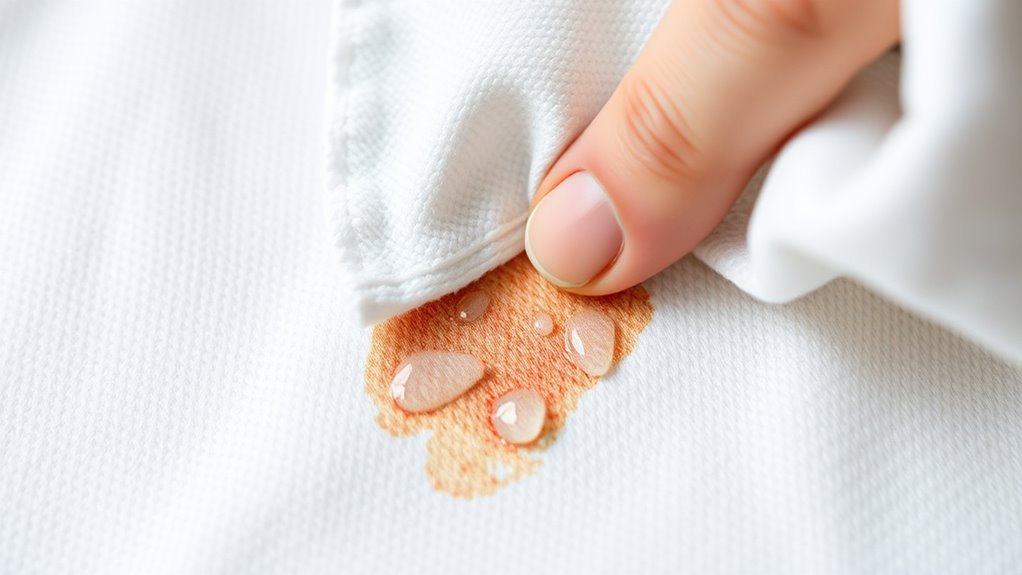
Before applying any cleaning solution, start by gently dabbing the stain with cold water. Use a clean cloth or sponge and apply light pressure, avoiding scrubbing, which can push the stain deeper. The goal is to lift the stain without damaging the fabric or spreading it further. Cold water helps prevent the stain from setting, especially with protein-based or dye stains. Keep your dabbing gentle—press, lift, and repeat as needed, always using fresh cold water if it becomes soiled. This initial step helps loosen the particles and prepares the fabric for more targeted cleaning methods. Proper stain type identification can guide your response and improve the chances of successful removal. Additionally, understanding stain removal techniques can help you choose the most effective initial response. Remember, patience is key; rushing or scrubbing can make the stain worse. By taking these careful, gentle dabbing steps, you set a solid foundation for effective stain removal. Mastering air fryer accessories emphasizes choosing the right tools for proper cleaning and maintenance. Additionally, understanding stain types can guide you on the most effective initial responses. Using proper cleaning tools can make a significant difference in achieving successful stain removal.
Test Stain Removal Techniques on Hidden Areas
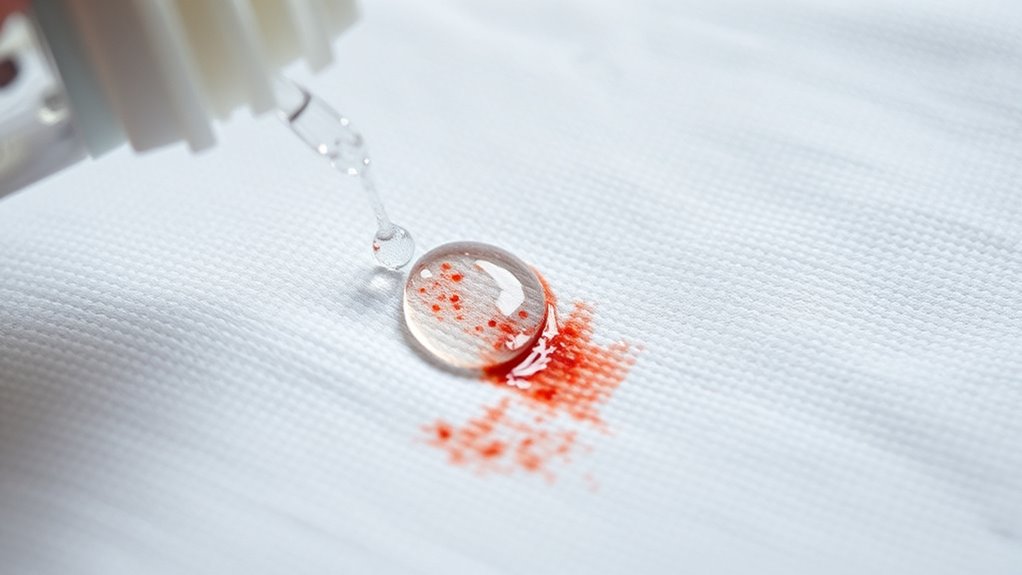
After gently dabbing the stain with cold water, it’s wise to test your chosen cleaning method on a small, inconspicuous area first. This guarantees you don’t damage the hidden fabric or cause discoloration. Locate a discreet test area, such as inside a seam or hem. When testing, consider these factors:
- Compatibility of cleaning solution with fabric type
- Potential colorfastness of the fabric
- Response of the test area to gentle scrubbing
- Any change in texture or appearance after treatment
- Color accuracy can influence how well the stain removal process works, especially on colored fabrics
Perform the test by applying a small amount of your stain removal technique and waiting a few minutes. If no adverse effects occur, proceed confidently with cleaning the visible stain. Always prioritize protecting the integrity of the fabric’s hidden areas before tackling the stain directly.
Common Mistakes That Make Stains Permanent
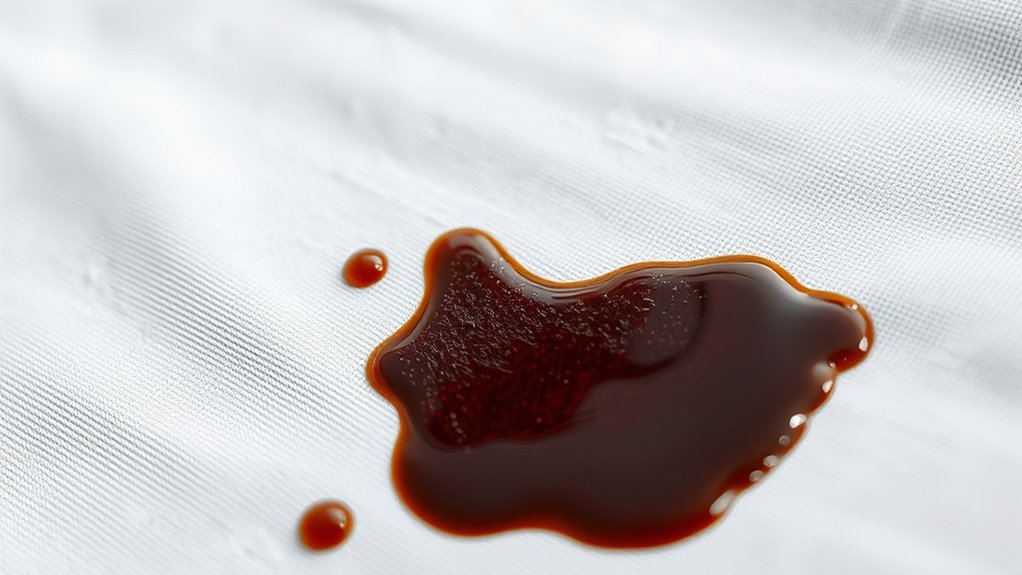
Rubbing a stain too hard can push it deeper into the fabric, making it harder to remove later. Using hot water incorrectly can set some stains, making them permanent. Delaying action gives stains time to set, increasing the chance they’ll become impossible to lift.
Rubbing Stains Deeply
Many people mistakenly press too hard or scrub aggressively when trying to remove a stain, but this can actually set the stain deeper into the fabric. A vigorous rubbing technique often worsens the situation, especially with a deep stain, by pushing the stain further into fibers. Instead, gentle blotting or light dabbing is more effective.
To prevent permanent damage:
- Avoid using abrasive materials that can damage fabric fibers
- Refrain from applying excessive force during cleaning
- Focus on gentle, circular motions
- Use appropriate cleaning solutions suited for the fabric type
Using Hot Water Incorrectly
Using hot water incorrectly is a common mistake that can set stains permanently. Hot water hazards include shrinking or damaging delicate fabrics and causing certain stains to bond more deeply with the fibers. When washing stained clothing, temperature control is vital; using water that’s too hot can make stains like blood or protein-based substances harder to remove. Always check fabric care labels to determine the right water temperature. For some stains, cold or lukewarm water is more effective in loosening and lifting the stain without setting it. Ignoring proper temperature control can turn small stains into permanent marks. Remember, understanding the appropriate water temperature for each fabric and stain type helps prevent mistakes that could ruin your clothes.
Delaying Immediate Action
Waiting too long to treat a stain often makes it impossible to remove. Timing considerations are vital for effective stain prevention. When you delay, the stain sets, making removal much harder or even permanent. To prevent this, act immediately. Remember:
- Blot the stain gently to absorb excess liquid
- Avoid rubbing, which can spread the stain
- Use cold water for protein-based stains
- Treat the stain as soon as possible to limit set-in damage
Delays give the stain time to bond with fibers, reducing your chances of complete removal. Quick action preserves fabric integrity and minimizes cleaning challenges. Recognizing the importance of immediate treatment ensures you don’t accidentally turn a manageable stain into a permanent fixture. Prioritize prompt response to maximize stain prevention and keep your clothes looking their best.
When to Call a Professional for Tough Stains
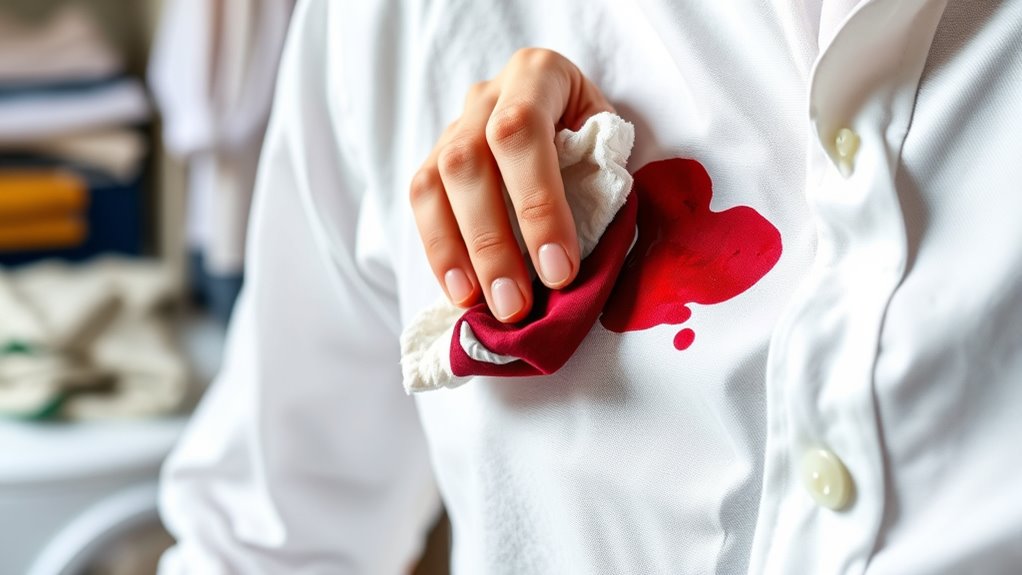
Ever wonder when a stain is just too stubborn to handle on your own? If stubborn stains persist despite your best efforts, it’s time to call a professional for stain removal. Professional cleaning experts have specialized tools and solutions that can tackle deep-set or stubborn stains without damaging your fabric. Recognizing when to seek help is key to stain prevention and maintaining your items’ longevity.
| Stain Type | When to Call a Pro |
|---|---|
| Old or set-in stains | If DIY efforts fail after 60 seconds |
| Oil or grease stains | Persistent stains after initial treatment |
| Unknown stains | When the origin or composition is unclear |
| Delicate fabrics | When damage risk is high |
| Large or extensive stains | To save time and ensure thorough cleaning |
Knowing when to call a professional ensures effective stain removal and protects your belongings.
Frequently Asked Questions
Can I Use Hot Water to Treat All Stains?
You shouldn’t use hot water for all stains because it can set some, like protein-based stains such as blood or sweat. For oil or grease stains, hot water helps break down the fats. Always identify the stain type first; using the wrong temperature might make removal harder or cause permanent damage. When in doubt, start with cold water and adjust based on the stain type to protect your fabric.
How Long Can a Stain Sit Before It’s Impossible to Remove?
Time waits for no stain, so the longer a stain sits, the harder it becomes to remove. Typically, if a stain has been sitting for more than 48 hours, stain persistence increases, making it nearly impossible to fully eliminate. The age of the stain affects removal chances, so acting quickly is your best bet. Don’t delay; the sooner you treat it, the better your chances of success.
Are Homemade Stain Removers Safe for All Fabrics?
Homemade stain removers can be safe for many fabrics if you use DIY solutions carefully. Always check the fabric’s care label and test your DIY solution on a small, hidden area first. Be mindful of chemical safety by avoiding harsh ingredients like bleach or ammonia, especially on delicate fabrics. When in doubt, opt for gentle, natural ingredients like vinegar or baking soda to prevent damage and guarantee safe stain removal.
Does the Type of Fabric Affect Stain Removal Methods?
Did you know that over 80% of stains penetrate fabrics within seconds? Yes, the type of fabric really impacts stain removal methods because fabric sensitivity varies. For delicate materials like silk, you should use gentler solutions to prevent damage, whereas sturdy fabrics like denim can handle more aggressive treatments. Understanding stain penetration helps you choose the right approach, ensuring effective cleaning without harming your clothes.
Is It Better to Dry a Stain Before Cleaning It?
It’s better not to dry a stain before cleaning because drying can set the stain, making it harder to remove later. If you dry it first, you risk stain setting, which reduces your chances of full removal. Instead, act quickly to blot or treat the stain while it’s damp. Avoid drying until you’re confident the stain is gone, as moisture is easier to work with and prevents it from setting permanently.
Conclusion
Remember, acting within the first 60 seconds can make all the difference—up to 60% of stains can be prevented from setting if you respond quickly. Blot, test, and choose the right method promptly. Don’t forget, rushing or using harsh techniques can worsen the stain. If a stain persists after a few minutes, consider calling a professional. Quick action not only saves your fabric but also keeps your home looking fresh and clean.