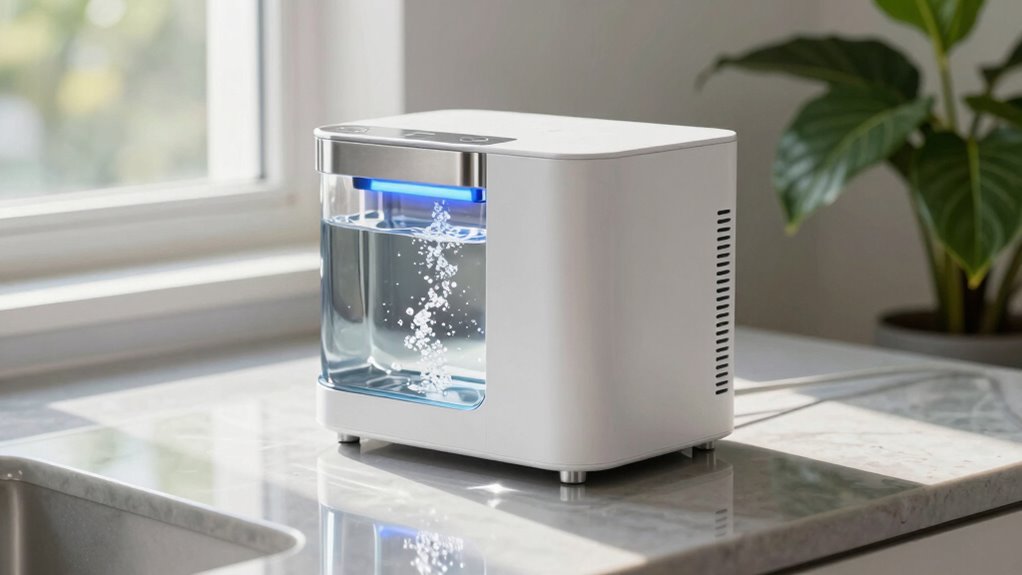

UV water sterilization uses ultraviolet light to kill harmful germs in your water without chemicals. It disrupts the DNA of bacteria, viruses, and pathogens, preventing them from reproducing while maintaining the water’s taste and quality. This eco-friendly method is low-maintenance and cost-effective, offering a reliable way to guarantee safe drinking water. If you’re curious about how it compares to other purification methods or the essential features of UV sterilizers, there’s much more to discover.

Get the little things that make your day delivered free with Prime
- Fast, free delivery on millions of items
- Prime Video, Amazon Music and more included
- Member-only deals all year
Key Takeaways
- UV water sterilizers use ultraviolet light to eliminate harmful microorganisms by disrupting their DNA, ensuring safe drinking water.
- This chemical-free process does not alter the taste or odor of water, maintaining its quality.
- UV sterilization is low-maintenance, requiring only annual lamp replacements and regular cleaning of the quartz sleeve.
- It efficiently targets bacteria and viruses without generating waste or using chemicals, making it an eco-friendly option.
- While effective against pathogens, UV sterilizers do not remove heavy metals or chemicals, so pre-filtration may be necessary for optimal results.
As an affiliate, we earn on qualifying purchases.
What Is UV Water Sterilization?
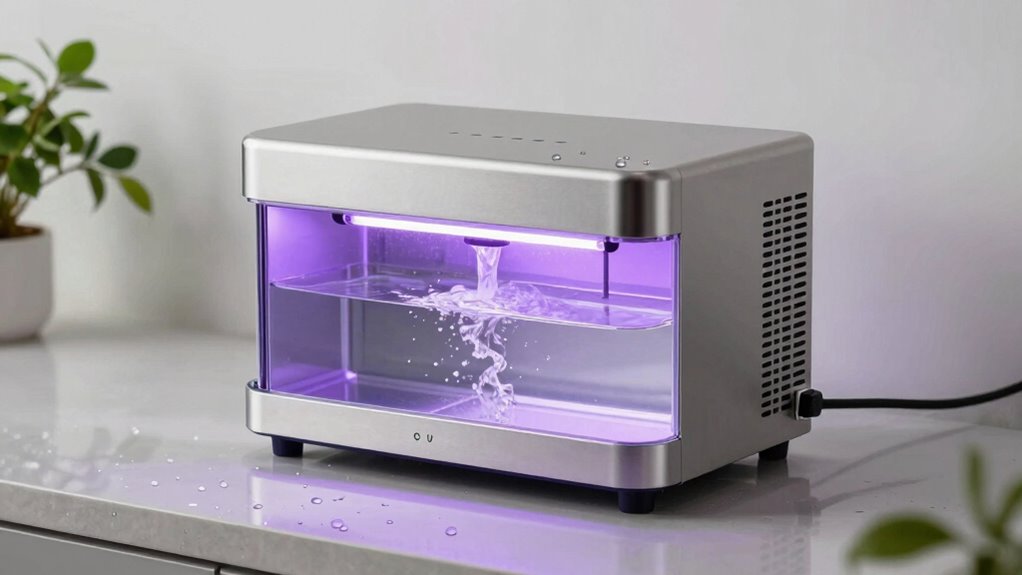
UV water sterilization is a powerful method that uses ultraviolet light to eliminate harmful microorganisms from water. This process is a key component of effective water purification, ensuring that you drink safe, clean water. When UV light penetrates the cells of bacteria, viruses, and other pathogens, it disrupts their DNA, preventing them from reproducing and causing illness. You’ll find that this technology is not only efficient but also chemical-free, making it a safe choice for your household. Plus, it doesn’t alter the taste or odor of water, which is a huge bonus. By choosing UV water sterilization, you’re investing in reliable germ elimination, giving you peace of mind regarding the quality of your drinking water.
As an affiliate, we earn on qualifying purchases.
Benefits of UV Water Sterilization for Home Quality
Using UV water sterilization in your home offers numerous advantages that enhance the overall quality of your drinking water. First and foremost, it effectively eliminates harmful bacteria and viruses, ensuring your water is safe and clean. This method is also eco-friendly, as it doesn’t rely on chemicals, which can be harmful to the environment. Additionally, UV sterilization systems are relatively low-maintenance, saving you both time and effort. You’ll enjoy significant cost savings since it typically requires less energy than other purification methods, leading to lower utility bills. By choosing UV water sterilization, you’re not just improving your water quality; you’re also making a responsible choice for your health and the planet.
As an affiliate, we earn on qualifying purchases.
How Does UV Water Sterilization Compare to Other Methods?
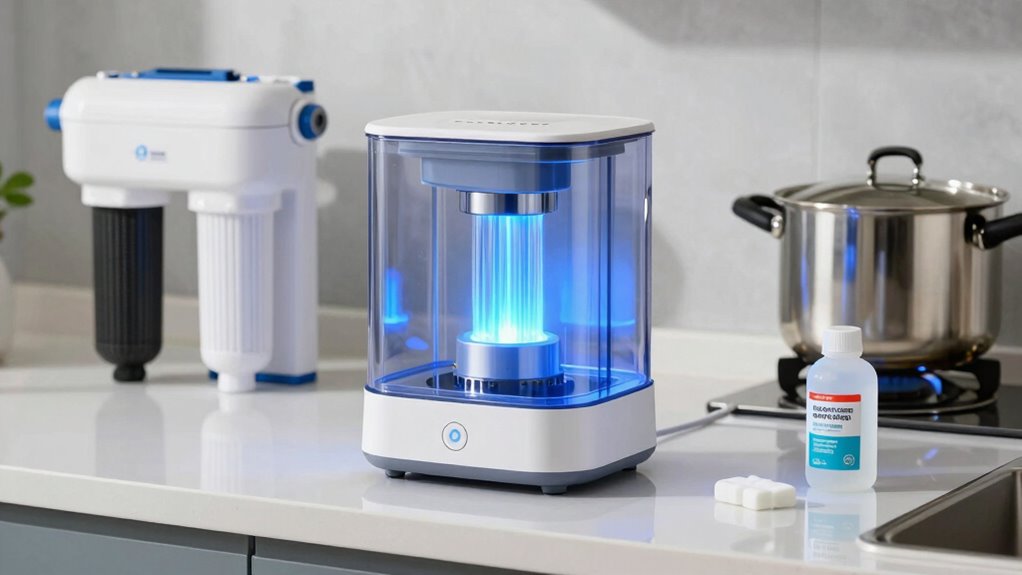
When considering water purification methods, how does UV sterilization stack up against traditional techniques like chlorine treatment or reverse osmosis? UV sterilization stands out because it doesn’t rely on chemical treatments. Instead, it uses ultraviolet light to neutralize harmful microorganisms, making it a chemical-free option. Unlike filtration systems that can clog or require regular maintenance, UV systems are low-maintenance and efficient. Additionally, UV sterilization can help reduce the presence of microplastics in dust that may contaminate water sources. It also minimizes the environmental impact of water treatment, making it a more sustainable choice. Chlorine treatment, while effective, can leave undesirable tastes and odors in your water. Reverse osmosis, although thorough, wastes a significant amount of water in the process. UV sterilization offers a quick, effective method to guarantee your water is free from pathogens without the drawbacks of chemicals or extensive filtration. It’s a modern solution for cleaner, safer drinking water.
UV water sterilizer replacement lamp
As an affiliate, we earn on qualifying purchases.
As an affiliate, we earn on qualifying purchases.
How Ultraviolet Light Kills Germs in Your Water
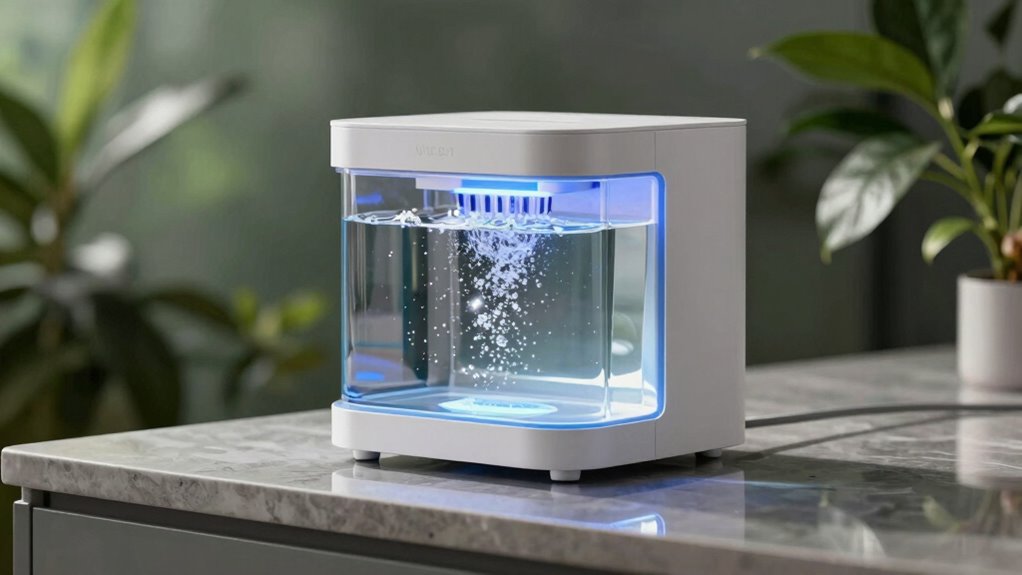
Ultraviolet light effectively kills germs in your water by disrupting their DNA, rendering them unable to reproduce and causing them to die off. This germicidal mechanism is a key component of water purification processes. When water passes through a UV sterilizer, the ultraviolet rays penetrate the cells of bacteria, viruses, and other pathogens, targeting their genetic material. Without intact DNA, these microorganisms can’t replicate, leading to their elimination. This method is not only efficient but also environmentally friendly, as it doesn’t introduce harmful chemicals into your water supply. By utilizing UV light, you can guarantee that your drinking water is safe and free from harmful contaminants, providing peace of mind for you and your family.
What Are Common Myths About UV Water Sterilization?
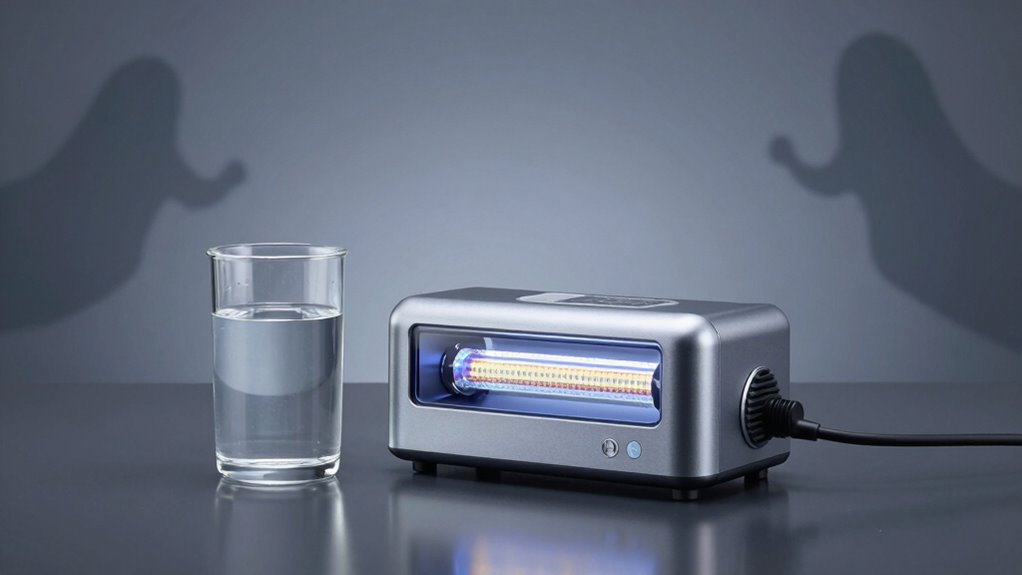
You might have heard some myths about UV water sterilization that could make you hesitant to use it. Many believe UV light is dangerous or that it only works on clear water, but that’s not the whole story. Let’s clear up these misconceptions and reveal the truth behind instant water purification.
UV Light Is Dangerous
While many people associate UV light with danger, it’s important to separate fact from fiction when it comes to UV water sterilization. Yes, UV radiation hazards exist, but the risk is mainly linked to prolonged exposure to direct UV light, not its use in water purification. When used correctly, UV sterilizers are safe and effective. You just need to follow safety precautions, like avoiding direct skin contact with the UV lamp and ensuring the unit is properly shielded. By understanding how UV water sterilization works, you can appreciate its benefits without fearing its dangers. Remember, the real risk comes from misuse, not the technology itself. Proper UV water sterilization protocols help ensure safety and maximize effectiveness. Embracing this method can lead to cleaner, safer drinking water.
Only For Clear Water
Many people mistakenly believe that UV water sterilizers can only effectively purify clear water. This myth stems from the idea that UV light needs unobstructed access to effectively eliminate contaminants. While it’s true that clear water sources allow UV light to penetrate better, many modern UV systems can handle some degree of turbidity. They can still work on slightly cloudy water, provided you meet specific water clarity requirements. Using pre-filtration methods can help improve water clarity before UV treatment. So, don’t let misconceptions hold you back—UV sterilization can still be a viable option for less-than-perfect water conditions. Just make sure you’re aware of your water’s clarity and take any necessary steps to optimize the sterilization process.
Instant Water Purification Myth
How quickly do you think UV water sterilizers can purify your water? Many people fall for the water myths suggesting instant purification. While UV sterilizers work efficiently, they don’t provide immediate results. The process requires time to effectively neutralize harmful microorganisms. Typically, the water needs to flow through the UV chamber for a specific duration to guarantee proper exposure to the light. Additionally, understanding the science behind UV sterilization helps set realistic expectations for what these devices can achieve. Moreover, UV treatment doesn’t remove contaminants like heavy metals or chemicals; it only deactivates pathogens. So, if you’re relying on UV sterilization alone for instant purification, you might be disappointed. Understanding these limitations helps you use UV technology effectively and guarantees safe drinking water. Don’t let misconceptions cloud your judgment!
Essential Features of Effective UV Water Sterilizers
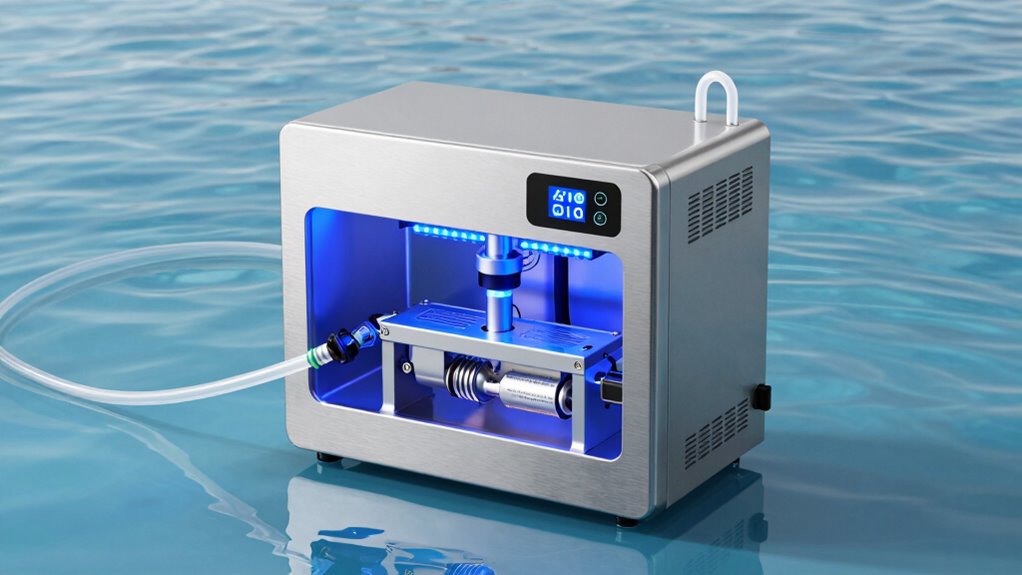
When you’re choosing a UV water sterilizer, understanding its essential features can make all the difference in guaranteeing safe and clean water. Look for units with high filter efficiency, as they effectively remove contaminants before UV treatment. A good sterilizer will also have a UV lamp that provides adequate intensity and coverage to eliminate harmful microorganisms. Additionally, consider the energy consumption of the unit; energy-efficient models will save you money on utility bills while still delivering reliable performance. Check the flow rate, too, as it determines how quickly you can access purified water. By prioritizing these features, you’ll guarantee that your UV water sterilizer meets your needs and provides safe drinking water for you and your family.
Installing and Maintaining Your UV Sterilizer
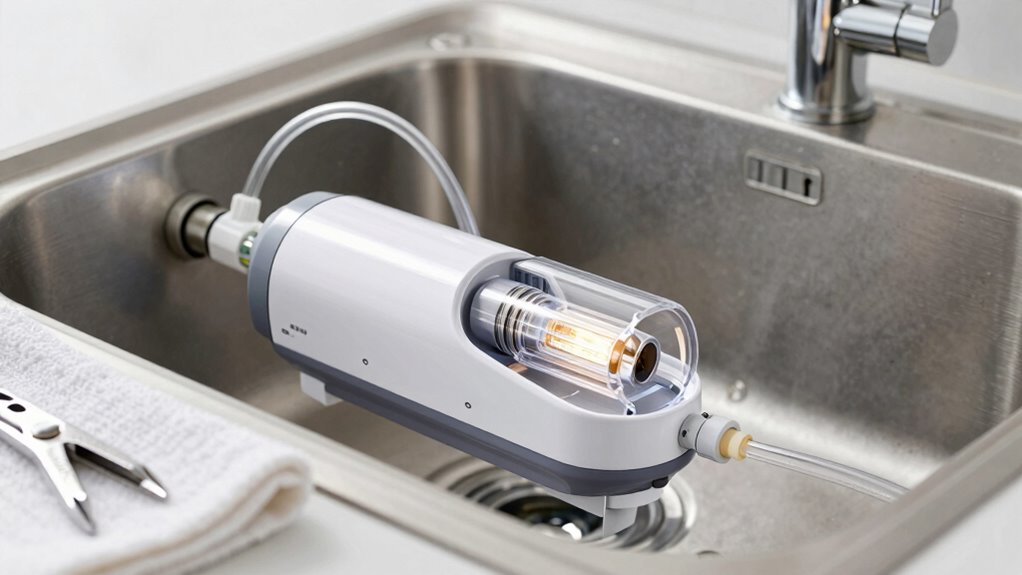
Proper installation and regular maintenance are essential for guaranteeing your UV water sterilizer operates efficiently. Start by following the manufacturer’s installation tips to place the unit near a power source and water supply, guaranteeing it’s level and secure. Check for leaks after installation, and inspect the UV lamp for any damage.
Create a maintenance schedule that includes regular cleaning of the quartz sleeve to prevent buildup. Replace the UV lamp annually, as its effectiveness decreases over time. Monitor the system for any irregularities, and test the water quality periodically to guarantee peak performance. Keeping up with these tasks will help maximize your sterilizer’s lifespan and maintain safe, clean water for your needs.
Frequently Asked Questions About UV Water Sterilization?
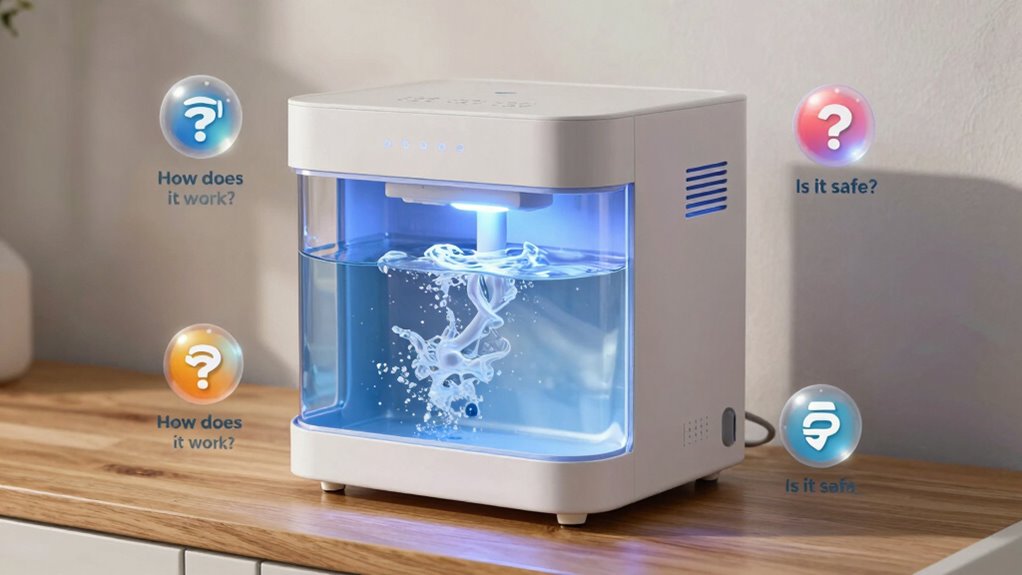
You probably have some questions about how UV water sterilization works and its benefits. It’s important to understand the technology behind it and how to maintain your system for peak performance. Let’s tackle these common queries to help you make the most of your UV sterilizer.
How Does UV Work?
While many people are curious about how UV water sterilization works, understanding the science behind it can help clarify its effectiveness. UV sterilizers use ultraviolet wavelengths to target and neutralize harmful microorganisms in water. When water passes through the UV chamber, it’s exposed to these wavelengths, specifically around 254 nanometers, which is ideal for germicidal effectiveness. This exposure disrupts the DNA of bacteria, viruses, and other pathogens, preventing them from reproducing and causing illness. Fundamentally, UV light acts like a powerful disinfectant without chemicals. As a result, you get safe, clean water without altering its taste or quality. Knowing this can give you confidence in choosing UV sterilization for your water needs.
Benefits Of UV Sterilization
Understanding how UV sterilization works opens the door to its many benefits. One of the primary health benefits is its ability to effectively eliminate bacteria, viruses, and other pathogens without adding harmful chemicals to your water. This means you can enjoy clean, safe drinking water without worrying about contaminants. Additionally, UV sterilization helps maintain the water quality by preventing microbial growth, ensuring your water remains safe over time.
Moreover, UV sterilization has a positive environmental impact. Unlike traditional water treatment methods that may produce chemical byproducts, UV systems use minimal energy and generate no waste. This eco-friendly approach not only conserves resources but also supports sustainability.
Maintenance And Care Tips
To keep your UV water sterilizer functioning effectively, regular maintenance is crucial. Start by checking and replacing the filters according to the manufacturer’s guidelines. A clogged filter can reduce the system’s efficiency, so don’t overlook this essential step. Next, make sure you’re performing routine system cleaning. Dust and debris can accumulate, affecting the UV lamp’s performance. Gently wipe the lamp and housing with a soft, dry cloth to maintain peak operation. Always inspect the UV bulb; if it’s flickering or dim, replace it promptly. Finally, keep an eye on the water quality; if you notice any changes, it might be time to reassess your system. Following these tips will help prolong the life of your sterilizer and guarantee clean water.
Frequently Asked Questions
Can UV Water Sterilizers Remove Heavy Metals From Water?
No, UV water sterilizers can’t remove heavy metals from water. They’re designed for water purification by killing bacteria, viruses, and other microorganisms using ultraviolet light. If you’re dealing with heavy metal contamination, you’ll need different methods like reverse osmosis or activated carbon filters. These systems specifically target and remove heavy metals, ensuring your water is safe for consumption. So, combine UV sterilizers with other filtration methods for thorough water treatment.
How Long Does a UV Lamp Last Before Needing Replacement?
A UV lamp typically lasts about 9,000 to 12,000 hours before needing replacement. You should check the UV lamp lifespan every year to guarantee it’s still effective. If you’re using it regularly, plan for replacement every year or two, depending on usage. Regular maintenance helps maintain ideal water purification, so don’t forget to monitor the lamp’s performance and schedule its replacement frequency to keep your water safe and clean.
Are UV Sterilizers Safe for Pets and Children?
Sure, letting your pets and kids bask in UV light sounds like a great idea—until you realize it’s not. UV sterilizers are generally safe for pets and children when used correctly, as they don’t present direct UV exposure during operation. Just make sure they’re not near the device while it’s running. Always prioritize UV safety, keeping curious paws and little hands at a distance to avoid any potential risks.
Do UV Sterilizers Require Electricity to Operate?
Yes, UV sterilizers do require electricity to operate. They need a power source to activate the UV light, which effectively eliminates harmful microorganisms from water. While energy consumption varies between models, most are designed to be energy-efficient, using just enough power to keep your water safe without greatly impacting your electricity bill. So, if you’re considering one for your home, rest assured that they won’t drain your energy resources too much.
Can UV Water Sterilization Affect the Taste of Water?
Imagine tasting a crystal-clear stream after a rejuvenating hike. UV water sterilization doesn’t change that delightful experience; it actually enhances your water quality. You won’t notice any odd flavors, as the process targets harmful microorganisms without adding chemicals. Your taste perception remains intact, letting you savor every sip just as nature intended. So, feel free to enjoy your purified water—it’s safe, clean, and ready to quench your thirst without altering its essence.
Conclusion
In a world where pure water is as precious as gold, UV water sterilizers shine like a beacon of hope. By harnessing the power of ultraviolet light, you can transform your tap water into a crystal-clear oasis, free from harmful germs. With easy installation and low maintenance, they’re a wise choice for safeguarding your home’s water quality. Embrace this modern marvel, and let every sip be a revitalizing reminder that clean water is just a flicker away!
Evergreen bestsellers Picks
bestsellers
As an affiliate, we earn on qualifying purchases.