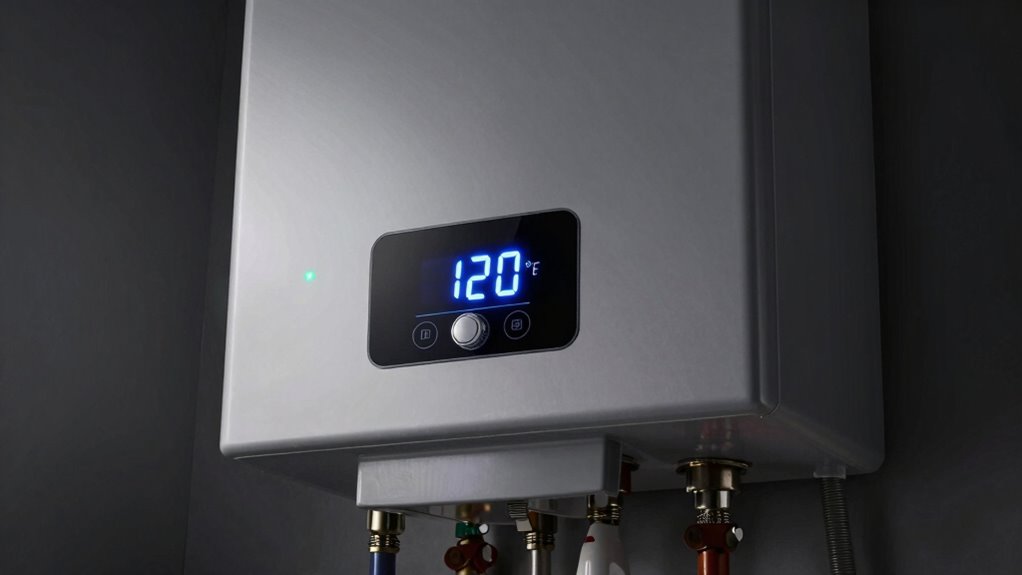

The safest water heater temperature is around 120°F to prevent scalding and bacterial growth. Setting it higher increases the risk of burns, especially for children and seniors, while lower temperatures can lead to bacteria like Legionella. Regularly check and adjust your thermostat, use thermometers, and consider safety devices. If you want to learn how proper adjustments improve safety and efficiency, keep exploring the best practices.
Key Takeaways
- Maintain the water heater temperature between 120°F and 130°F to balance safety and bacterial control.
- Regularly verify water temperature with a thermometer after adjustments to ensure safety.
- Turn off power before adjusting the thermostat; set to approximately 120°F for optimal safety.
- Install anti-scald devices and conduct routine inspections for leaks or corrosion for added household safety.
- Avoid setting the thermostat above 140°F to prevent burns, energy waste, and equipment wear.

BN-LINK Reptile Thermostat Temperature Controller, Digital Heat Mat Thermostat for Seed Starting, Plant Germination, Greenhouse, Incubator, Brooder, Brewing, Reptiles Tank,40-108°F, 1000W, ETL Listed
✓ EFFORTLESS SET UP: Easily program your desired temperature or switch between Fahrenheit and Celsius using just 3…
As an affiliate, we earn on qualifying purchases.
As an affiliate, we earn on qualifying purchases.
Why Is Water Heater Temperature Important for Safety and Efficiency?
Setting your water heater to the right temperature is essential because it directly impacts both safety and efficiency. Proper temperature regulation helps prevent scalding injuries, especially if you have children or elderly family members. It also reduces energy consumption by avoiding overheating, which can waste power and increase costs. Monitoring water temperature also ensures your system remains within optimal safety margins, and understanding halal safety standards** in various regions can better inform your safety practices. Regularly checking your temperature settings can prevent issues before they arise and keep your household secure. Additionally, utilizing Free Floating technology can help maintain consistent water temperature without frequent manual adjustments, further enhancing safety and efficiency. Using the appropriate styling tools** can also contribute to overall home safety and energy efficiency by reducing the need for excess heating or cooling.

DONFAMDS 2pcs Electric Water Heater Anti-Leakage Device Kitchen Bathroom Leakage Protection Integrated Copper Head for Solar Easy Installation and Electric Shock Prevention Accessories
Leakage prevention: equipped with anti leakage features, this device minimizes the risk of electrical accidents,anti-leakage accessories,electric device replacement
As an affiliate, we earn on qualifying purchases.
As an affiliate, we earn on qualifying purchases.
What Is the Safe and Recommended Water Heater Temperature?
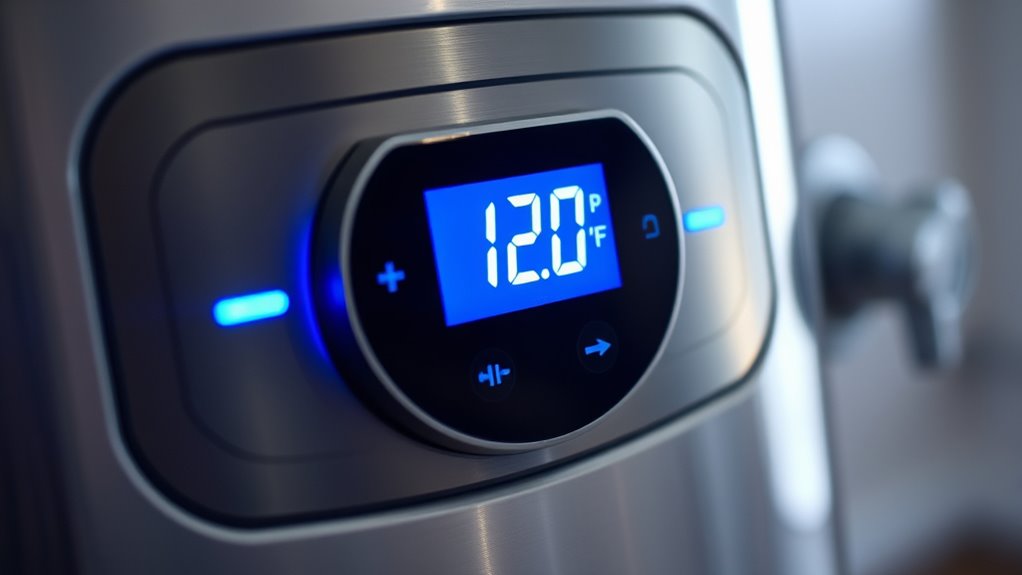
Setting your water heater to the recommended temperature range of 120°F to 140°F helps keep your home safe and efficient. Going higher increases the risk of scalding and can cause energy waste, while lower settings might not provide enough hot water. Knowing the safe temperature helps you avoid these issues and protect your household. Additionally, maintaining an optimal temperature can help reduce microplastics in dust and improve overall indoor air quality. Proper temperature settings can also contribute to energy savings, reducing your utility bills and environmental impact. Keeping your water heater within this range can also minimize the formation of bacterial growth, ensuring safer water for your household. Regularly checking the thermostat can prevent unnecessary temperature fluctuations that compromise safety and efficiency.
Recommended Temperature Range
To guarantee your water heater operates safely and efficiently, the recommended temperature range is typically between 120°F and 140°F. Maintaining this range helps prevent scalding risks while ensuring adequate hot water supply. Proper thermostat calibration is essential to keep the temperature consistent, avoiding fluctuations that could compromise safety or efficiency. Additionally, good insulation efficiency around your water heater helps retain heat, allowing the thermostat to maintain the set temperature more accurately and reduce energy waste. Good insulation also contributes to energy efficiency, reducing overall operating costs and prolonging the lifespan of your water heater. Regularly checking and adjusting your thermostat to stay within this ideal temperature window is crucial for safe water temperatures, preventing potential hazards. Monitoring temperature fluctuations can help you identify issues before they become safety concerns. Keeping the water heater’s temperature within the recommended range is vital to prevent unnecessary energy consumption and mitigate potential hazards. Proper safety precautions are also important when managing water heater temperatures to prevent accidents.
Risks of High Settings
Choosing a temperature higher than the recommended range can lead to serious safety concerns. Excessively hot water increases the risk of scalding injuries, especially to children and seniors. It also strains your water heater’s temperature regulation, causing it to work harder and potentially shorten its lifespan. To understand the risks better, consider this table:
| Temperature | Risk | Effect |
|---|---|---|
| Above 120°F | Scalding | Burns in seconds |
| 130-140°F | Increased injury risk | Greater chance of burns |
| 150°F+ | Severe burns | Immediate skin damage |
Always follow safety protocols by setting your water heater within the safe range to prevent accidents and guarantee ideal performance. Additionally, maintaining proper temperature regulation can help optimize safety and efficiency.

DEWENWILS Digital Temperature Controller, Heavy Duty 15A/1800W Thermostat Outlet Plug, VA Display Heating Cooling Control Timer, -40℉~210℉, Cyclic Timing/Countdown, for Greenhouse Incubator Homebrew
[Powerful Performance & Safety] Equipped with a 15A high-power output, this plug in thermostat supports up to 1800W…
As an affiliate, we earn on qualifying purchases.
As an affiliate, we earn on qualifying purchases.
What Are the Risks of Setting Your Water Heater Too Hot or Too Cold?

Setting your water heater too hot can cause scalding accidents, especially for children or seniors. If it’s too cold, you risk bacteria like Legionella growing in the tank. Additionally, running the heater at unnecessary high or low temperatures wastes energy and increases your utility bills. To maintain a safe water temperature, it’s recommended to set your thermostat between 120°F and 140°F. Properly monitoring your water heater settings can help prevent these issues and promote safety and efficiency. Regularly checking your temperature controls ensures the system operates within the optimal range for safety and energy savings. Being aware of credit card security measures can also help protect your financial information when managing utility payments online. Understanding the importance of energy efficiency can further help reduce costs and environmental impact.
Risk of Scalding
When your water heater is set too high, you risk exposing yourself and others to serious burns from scalding water. Proper temperature regulation is essential for scald prevention, especially in homes with children or elderly residents. Water temperatures above 120°F increase the chance of accidental burns, which can happen quickly and cause lasting damage. Conversely, setting the temperature too low may reduce scald risk, but it can lead to other issues like bacterial growth. To balance safety and comfort, keep your water heater at a safe, moderate temperature. This helps prevent scalding incidents while maintaining effective temperature regulation. Always test the water temperature before use, especially after adjusting your heater, to make certain of safety for everyone. Additionally, understanding floating on water techniques can help you stay safe around pools and water heaters alike. Maintaining proper water heater temperature settings is also crucial for energy efficiency and equipment longevity. Regularly monitoring water temperature can help ensure optimal safety and performance. Being aware of common financial terms related to energy savings, such as ‘cost-benefit analysis,’ can also help you make informed decisions about water heater adjustments. Properly setting your water heater not only safeguards your household but can also contribute to significant energy savings over time.
Bacterial Growth Concerns
Have you considered how your water heater’s temperature affects bacterial growth? If it’s too low, bacteria like Legionella can thrive, risking water safety. Conversely, setting the temperature too high can cause scalding but reduces bacterial presence. To balance water safety and bacterial control, keep these points in mind:
- Temperatures below 120°F (49°C) promote bacterial growth, increasing health risks.
- Temperatures above 140°F (60°C) inhibit bacteria but raise scalding hazards.
- Maintaining a temperature around 130°F (54°C) offers a compromise, minimizing bacterial growth while reducing burn risk.
Understanding these dynamics helps you set your water heater at a safer, bacteria-controlled temperature, ensuring both water safety and comfort.
Energy Waste Issues
Ever wonder how your water heater’s temperature affects energy bills? Setting it too high wastes energy because your system works harder to maintain that temperature, increasing your energy consumption. Conversely, setting it too low may lead to inefficient water usage, forcing you to run the tap longer to get hot water, which also wastes energy. Both extremes compromise energy conservation and can inflate your utility costs. An overly hot setting not only consumes more power but also risks scalding accidents. On the other hand, a colder setting might save energy initially but can result in increased water usage and longer wait times for hot water. Finding the right balance guarantees efficient energy use and reduces waste, helping you save money while maintaining safety.
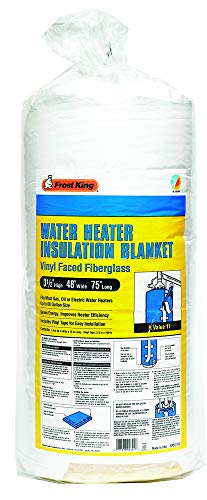
Frost King SP57/11C All Season Water Heater Insulation Blanket, 3” Thick x 48” x 75”, R10
Vinyl backed fiberglass insulation blankets are designed for gas, oil or electric water heaters up to 60 gallon…
As an affiliate, we earn on qualifying purchases.
As an affiliate, we earn on qualifying purchases.
How Do You Adjust Your Water Heater to the Right Temperature?
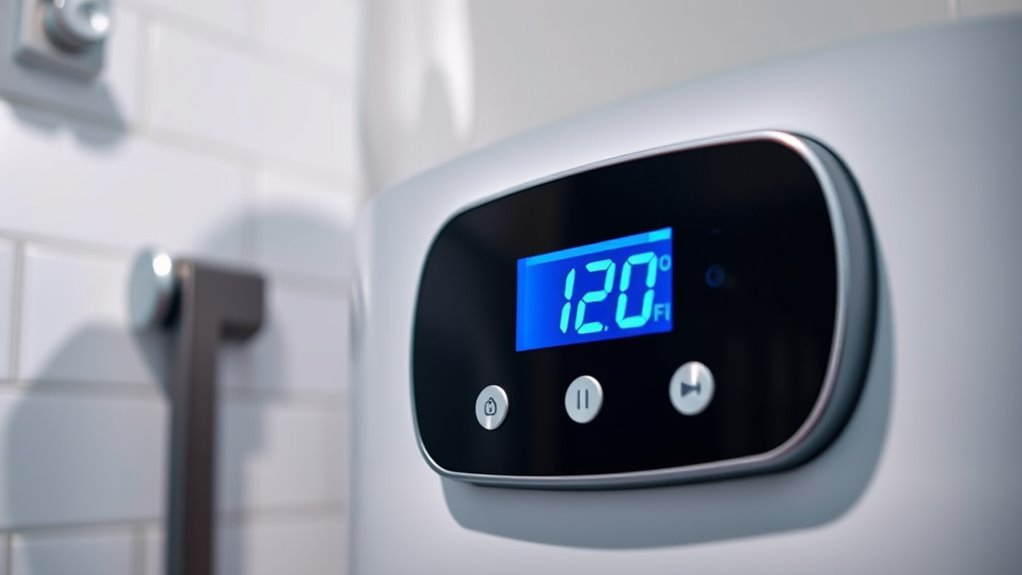
Adjusting your water heater to the right temperature is a straightforward process that can help you save energy and prevent scalds. To do this effectively, focus on your thermostat’s temperature control and safety adjustments. Here’s how:
Adjust your water heater to a safe, energy-efficient temperature around 120°F for safety and savings.
- Turn off the power supply to your water heater to ensure safety during adjustments.
- Locate the thermostat, usually behind an access panel, and adjust the temperature dial to a safe setting—typically around 120°F (49°C).
- Turn the power back on, then check the water temperature after about an hour to confirm the setting.
Always prioritize safety adjustments to prevent hot water burns, and remember that proper temperature control balances comfort with energy efficiency.
How Can You Tell If Your Water Heater Is Set Correctly?
You can tell if your water heater is set correctly by checking the water temperature with a thermometer. Pay attention to how hot the water feels when you turn on the tap, and observe if it’s comfortable and safe. Also, keep an eye on water quality; signs of scalding or mineral buildup can indicate the temperature needs adjusting.
Check Water Temperature
To determine if your water heater is set correctly, start by measuring the water temperature with a reliable thermometer. Proper temperature regulation is essential for water safety and to prevent scalding or bacterial growth. Check the temperature at the tap closest to your heater to get an accurate reading. If it’s too high or too low, consider adjusting the thermostat accordingly. Here are some steps to help you assess your current setting:
- Run hot water for several minutes to ensure a stable reading.
- Record the temperature in multiple spots to verify consistency.
- Compare your readings to the recommended safe range of 120°F to 125°F.
This process helps you confirm if your water heater’s temperature aligns with safety standards, reducing risk and optimizing performance.
Use a Thermometer
Using a thermometer is the most accurate way to determine if your water heater is set correctly. With proper thermometer usage, you can monitor the water temperature precisely, ensuring safety and efficiency. Place the thermometer in a hot water sample from your tap, away from the outlet, and wait a few moments for an accurate reading. Regular temperature monitoring helps you verify that your heater is operating at the desired setting—around 120°F (49°C) for safety and energy savings. If the temperature is too high or too low, adjust your thermostat accordingly. This simple step ensures you avoid scalding hazards and reduce energy waste. Consistent thermometer usage provides peace of mind and keeps your water heater functioning at its best.
Observe Water Quality
How can water quality indicate whether your water heater is set correctly? Poor water quality can signal improper temperature settings, affecting water conservation and filtration. If you notice mineral buildup, cloudy water, or unusual odors, your heater may be too hot or too cold. To evaluate this:
- Check for sediment or mineral deposits, which suggest high mineral content due to temperature fluctuations.
- Observe water clarity; cloudy or discolored water may result from improper heating affecting water filtration.
- Smell for any metallic or foul odors, indicating temperature-related bacterial growth or corrosion.
Maintaining the correct temperature helps preserve water quality, reduces mineral buildup, and supports effective water filtration. Adjusting your heater to the ideal setting promotes safer, cleaner hot water and conserves resources.
What Are Common Mistakes When Setting Your Water Heater Temperature?
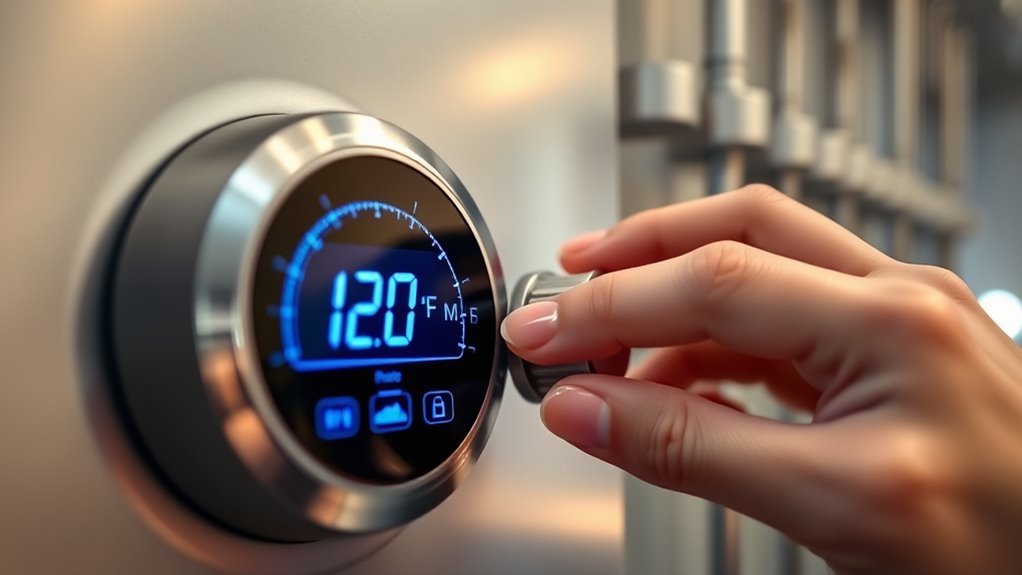
One common mistake people make when setting their water heater temperature is choosing a setting that’s too high, often out of habit or a desire for instant hot water. This hampers proper temperature regulation and can create safety hazards like scalding. Many assume higher temperatures mean better performance, but in reality, it increases the risk of burns and accidents, especially for children and the elderly. Setting the thermostat above 120°F may also cause energy waste and unnecessary wear on your heater. Conversely, too low a setting might lead to bacterial growth, but that’s a separate issue. To avoid these mistakes, it’s crucial to find a balance that ensures safety without compromising water quality or energy efficiency. Proper temperature regulation is key to a safe and efficient water heating system.
How Does Water Temperature Affect Bacterial Growth and Water Quality?

Setting your water heater to the right temperature not only guarantees safety but also influences water quality by impacting bacterial growth. When water is too hot, it prevents bacteria like Legionella from thriving, reducing health risks. Conversely, if the temperature is too low, bacteria can multiply rapidly, compromising water quality. To optimize safety and water quality, consider these points:
- Temperatures above 120°F (49°C) inhibit bacterial growth effectively.
- Maintaining a consistent temperature prevents bacterial colonies from developing.
- Regularly monitoring water temperature ensures bacteria don’t proliferate, safeguarding water quality.
Balancing these factors helps you maintain safe water, minimize bacterial growth, and ensure the water quality remains high. Proper temperature settings are essential for both health and the longevity of your water system.
How Can You Maintain the Correct Water Heater Temperature Over Time?
To keep your water heater operating at the correct temperature over time, regular maintenance and monitoring are essential. Proper temperature regulation prevents overheating or cooling, which can compromise safety and efficiency. Follow these maintenance tips to ensure consistent performance:
| Maintenance Tip | Purpose |
|---|---|
| Check the thermostat regularly | Ensures accurate temperature regulation |
| Flush sediment buildup annually | Maintains efficiency and prevents malfunctions |
| Inspect for leaks and corrosion | Avoids water damage and maintains safety |
| Test temperature accuracy | Confirms proper temperature setting |
| Replace aging components | Keeps the system functioning reliably |
Regularly adhering to these tips helps sustain the correct water heater temperature over time, ensuring safety, energy efficiency, and water quality.
When Should You Call a Professional to Adjust Your Water Heater?
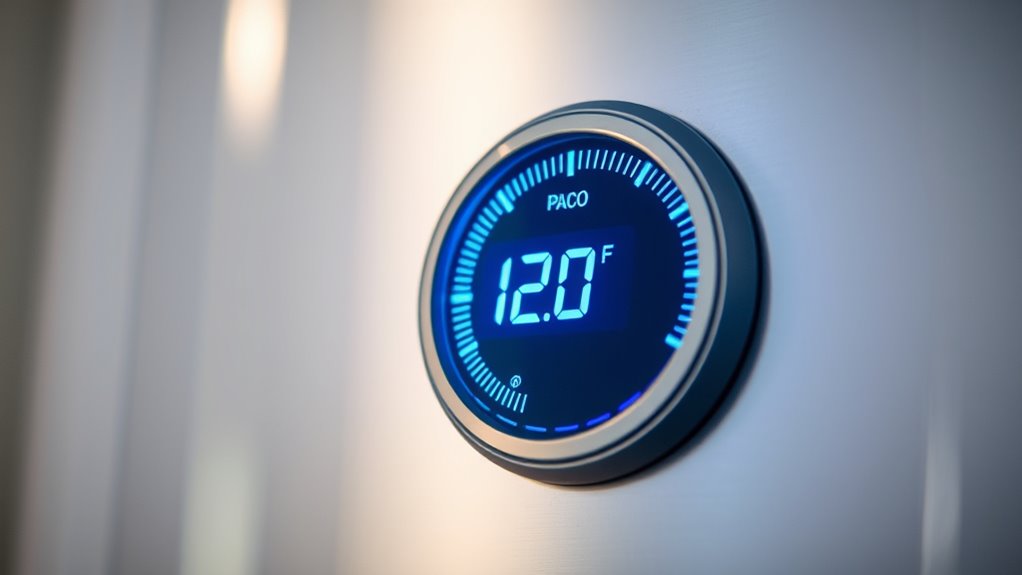
While regular maintenance can address many water heater issues, there are times when calling a professional is essential. If you notice persistent problems, such as inconsistent water temperature or unusual noises, it’s time to seek expert help. Also, consider calling a professional if you encounter these situations:
- Unusual leaks or corrosion that could indicate internal damage.
- Faulty thermostats or electrical issues beyond basic maintenance tips.
- Emergency procedures, like gas leaks or water heater failures, that pose safety risks.
Attempting DIY repairs in these cases can worsen the problem or cause injury. A licensed professional can accurately diagnose the issue, perform necessary adjustments, and ensure your system operates safely and efficiently. Knowing when to call a pro helps prevent costly damage and maintains safe hot water use.
What Are Tips for Balancing Comfort and Safety in Your Hot Water?
Maintaining the right water temperature is key to ensuring both comfort and safety in your home. To achieve this, focus on proper temperature regulation by setting your water heater to around 120°F (49°C). This balance minimizes the risk of scalding while providing enough hot water for daily needs. Always follow safety protocols, such as installing anti-scald devices and regularly inspecting your system for leaks or corrosion. Keep a thermometer handy to verify water temperature periodically. If you have children or elderly family members, consider lowering the temperature slightly or adding safety devices to prevent accidents. Consistent temperature regulation helps protect your household from burns and water damage, ensuring a safe, comfortable shower or bath every time.
Frequently Asked Questions
How Often Should I Check My Water Heater’s Temperature Setting?
You should check your water heater’s temperature setting at least once a year as part of your maintenance schedule. Regular checks help verify proper temperature calibration, preventing scalding and energy waste. If you notice inconsistent water temperatures or changes in hot water supply, it’s a good idea to confirm and adjust the setting. Keeping an eye on this annually keeps your system safe, efficient, and functioning correctly.
Can Temperature Settings Affect My Water Heater’s Energy Consumption?
Did you know that setting your water heater too high can increase energy use by up to 25%? Temperature regulation directly impacts energy efficiency, so adjusting your thermostat to around 120°F balances safety and savings. When you keep the temperature in this safe range, you reduce energy consumption while preventing scalding risks. Always check and fine-tune your water heater’s temperature to conserve money and ensure safe, efficient hot water.
Are There Specific Safety Guidelines for Children and Elderly Users?
Yes, there are safety guidelines for children and elderly users. You should set your water heater to 120°F (49°C) to prevent scalding, which helps safeguard child safety and elderly protection. Always supervise children around hot water and consider using anti-scald devices. Regularly check your water temperature, and educate family members about safe water use to minimize burn risks and ensure everyone’s safety.
What Signs Indicate My Water Heater Needs Maintenance or Adjustment?
Like a silent sentinel, your water heater whispers warnings when it needs care. If you notice sediment buildup at the tank’s bottom or hear unusual noises, it’s time for maintenance. Leaking valves or puddles around the unit also signal trouble. These signs indicate it’s overdue for a flush, inspection, or valve repair, ensuring your heater runs efficiently and safely, just as a vigilant guardian would watch over its domain.
How Does Ambient Temperature Impact Water Heater Performance?
Ambient effects and temperature fluctuations profoundly impact your water heater’s performance. When the surrounding temperature drops, your heater works harder to maintain the set water temperature, which can increase energy use and wear. Conversely, warmer environments reduce its workload. Sudden temperature fluctuations can cause inconsistent water temperature and strain the unit. To guarantee ideal performance, keep your water heater in a stable environment and consider insulation if ambient conditions vary widely.
Conclusion
Finding the right water heater temperature balances safety, efficiency, and comfort. By setting your thermostat between 120°F and 130°F, you minimize scalding risks while preventing bacterial growth. Think of it like a thermostat’s sweet spot—not too hot, not too cold. Regular checks and adjustments keep your water safe and efficient. Don’t hesitate to call a pro if you’re unsure; it’s worth the peace of mind. After all, a small tweak today prevents bigger issues tomorrow.