When choosing caulk for your projects, you’ll generally find three main types: silicone, acrylic, and hybrid. Silicone caulk is great for non-porous surfaces and offers flexibility, making it ideal for areas that see movement. Acrylic caulk works well on porous materials but is less flexible. Hybrid caulk combines the best features of both, providing good adhesion without the need for a primer. Each type has its unique advantages, so stick around to discover how to select the best one for your needs.
Key Takeaways
- Silicone Caulk: Provides excellent adhesion on non-porous surfaces, ideal for areas prone to movement, and offers long-lasting flexibility.
- Acrylic Caulk: Best suited for porous materials, easy to clean with water, and paintable, though less flexible and may crack over time.
- Hybrid Caulk: Combines benefits of silicone and acrylic, offering good adhesion, flexibility, and resistance to mold, and is also paintable.
- Application Considerations: Choose flexible caulk for areas with movement, and ensure surfaces are clean and dry before application for optimal adhesion.
- Aesthetic Options: Select paintable caulk for customization, and consider clear finishes to match surrounding materials and enhance project appearance.

GE All Purpose Silicone Caulk, Clear, 10 fl oz Cartridge, 1 Pack – 100% Waterproof Silicone Sealant, Stronger Adhesion, Freeze & Sun Proof
100% Waterproof and Weatherproof: This 100% silicone formula offers protection from water damage, providing a reliable seal in…
As an affiliate, we earn on qualifying purchases.
As an affiliate, we earn on qualifying purchases.
Understanding Caulk: What It Is and Why You Need It
While you might not think about it often, caulk plays an essential role in maintaining your home’s integrity. It seals gaps and cracks, preventing air and moisture from entering your living space. Understanding caulk applications is important; whether you’re sealing windows, doors, or bathroom fixtures, using the right type guarantees durability and effectiveness. Regular caulk maintenance is key to avoiding costly repairs down the line. Inspect your caulk regularly for signs of wear, such as cracks or discoloration. If you notice any issues, it’s time to reapply. Keeping your caulk in good shape not only enhances your home’s energy efficiency but also improves its overall appearance. Proper caulk selection is crucial for ensuring the longevity of your sealing efforts. So, don’t overlook this simple yet important task in your home upkeep routine.

DAP Alex Painter's Acrylic Latex Caulk, White, 10.1 Oz (7079818670)
White caulk adheres to wood, plaster, drywall, & masonry
As an affiliate, we earn on qualifying purchases.
As an affiliate, we earn on qualifying purchases.
Differences Among Silicone, Acrylic, and Hybrid Caulks
When choosing caulk, understanding the differences between silicone, acrylic, and hybrid options can really help you make the right choice. Each type varies in adhesion properties, flexibility, and durability, impacting how well it performs in different situations. Let’s break down what sets them apart so you can pick the best one for your project.
Adhesion Properties Compared
Understanding the differences in adhesion properties among silicone, acrylic, and hybrid caulks can help you choose the right product for your project. Proper surface preparation is essential to guarantee effective adhesion. Here are key points to take into account:
- Silicone Caulk: Excellent for non-porous surfaces, it bonds well with glass and metal but requires clean, dry surfaces.
- Acrylic Caulk: Best for porous materials like wood and drywall, it adheres effectively but may need a primer for tough surfaces.
- Hybrid Caulk: Combines the best of both worlds, offering good adhesion on various surfaces without needing primers.
- Adhesion Techniques: Always follow manufacturer guidelines for application and curing times to maximize bonding strength.
- Surface Compatibility: Choosing the appropriate caulk depends heavily on the surface porosity and environmental conditions to ensure optimal adhesion.
Choose wisely based on your specific needs!
Flexibility And Durability Differences
Flexibility and durability are essential factors to evaluate when choosing between silicone, acrylic, and hybrid caulks for your projects. Silicone caulk offers superior flexibility and durability, making it ideal for areas prone to movement, like windows and doors. It cures quickly, allowing for faster application techniques. On the other hand, acrylic caulk is less flexible and can crack over time, but it’s easier to paint and clean up, making it suitable for indoor projects. Hybrid caulks combine the best of both worlds, providing good flexibility and durability while offering easier application techniques. When considering curing times, silicone typically cures faster than acrylic, giving you a quicker finish. Choose the right caulk based on your specific needs for the best results.

Gorilla 100% Silicone Waterproof Caulk, All‑Purpose Sealant, Mold & Mildew Resistant, Flexible Seal, White, 10 oz Cartridge (Pack of 1)
Indoor/Outdoor 100% Waterproof Caulk – Durable, long-lasting white silicone sealant for indoor and outdoor use; ideal for showers,…
As an affiliate, we earn on qualifying purchases.
As an affiliate, we earn on qualifying purchases.
The Benefits of Using Silicone Caulk for Your Projects
When you’re tackling a project, using silicone caulk can really pay off. Its superior flexibility and durability mean it can handle movement without cracking, while its excellent water resistance keeps moisture at bay. You’ll find that these properties make silicone a top choice for both indoor and outdoor applications.
Superior Flexibility And Durability
Choosing the right caulk can make a significant difference in the longevity and effectiveness of your projects, especially when you opt for silicone caulk. Its superior flexibility and durability make it an ideal choice for various applications. Here are some key benefits of using silicone caulk:
- Flexible Applications: It can easily adapt to different surfaces and movements, making it perfect for areas prone to expansion and contraction.
- Long-lasting Adhesion: Silicone adheres well to a variety of materials, ensuring a strong bond over time.
- Resistant to Cracking: Durable materials used in silicone caulk prevent cracking and peeling, maintaining your project’s integrity.
- Easy to Apply: Its smooth consistency allows for precise application, reducing mess and waste during your projects.
Excellent Water Resistance Properties
One of the standout features of silicone caulk is its excellent water resistance, making it a top choice for areas exposed to moisture. Whether you’re sealing around sinks, tubs, or outdoor fixtures, silicone provides reliable waterproofing techniques that keep water at bay. This caulk forms a strong, flexible bond that withstands temperature fluctuations and prevents water infiltration. Additionally, silicone caulk can help reduce the buildup of microplastics in dust, contributing to a healthier indoor environment. Its resistance to mold and mildew further solidifies its role in moisture-prone areas, ensuring a clean and durable finish. By choosing silicone, you’re investing in a dependable solution that effectively combats water damage and maintains the integrity of your installations. The moisture resistance of silicone caulk also makes it suitable for use in humid environments, extending its usefulness in various home improvement projects.

Selsil Siliconized Super Acrylic Latex Sealant, Indoor & Outdoor Paintable Caulk – Flexible, Weather & Moisture Resistant, White Caulking for Baseboards, Windows, Doors & More – 5.5 oz (160 ml)
ENHANCED STRENGTH & FLEXIBILITY: Our SELSIL Acrylic Latex Sealant is reinforced with silicone emulsion that enhances its strength…
As an affiliate, we earn on qualifying purchases.
As an affiliate, we earn on qualifying purchases.
Acrylic Caulk: Advantages and Disadvantages

Although acrylic caulk is often favored for its ease of use, it comes with both advantages and disadvantages that you should consider before application. Here are some acrylic caulk benefits and drawbacks to keep in mind:
- Easy to clean: It can be cleaned up with water before it dries, making your project less messy.
- Paintable: You can easily paint over it, allowing for seamless integration with your surfaces.
- Less flexible: While good for static joints, it doesn’t handle movement as well as silicone.
- Water resistance: It’s suitable for indoor use but may not hold up in areas with high moisture, limiting its applications.
Consider these factors to decide if acrylic caulk is right for your needs.
Hybrid Caulk: The Best of Both Worlds?

If you’re looking for a versatile solution that combines the benefits of different caulk types, hybrid caulk might be what you need. This modern option merges the best features of silicone and acrylic, making it ideal for various hybrid applications. You’ll find that hybrid caulk offers excellent adhesion, flexibility, and durability, which can handle both interior and exterior projects. One of the key hybrid advantages is its paintability, allowing you to achieve a seamless finish without sacrificing performance. Plus, it’s often resistant to mold and mildew, making it a smart choice for areas prone to moisture. With hybrid caulk, you get the flexibility to tackle a wide range of tasks efficiently and effectively.
How to Choose the Right Type of Caulk for Your Project
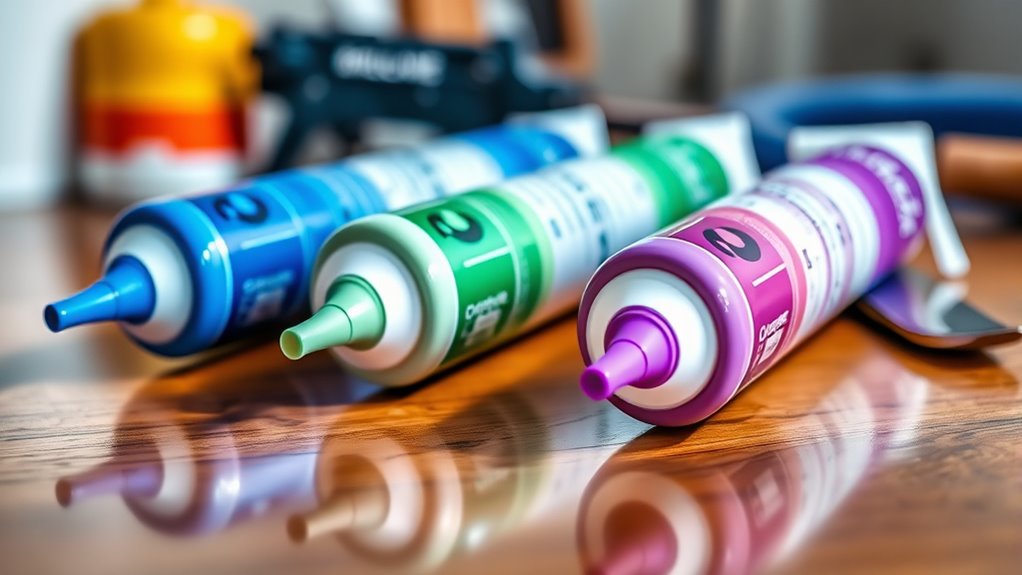
Choosing the right type of caulk for your project can make all the difference in achieving a durable and professional finish. To guarantee you select the best option, consider these factors:
Selecting the appropriate caulk is crucial for a durable, professional finish in your project.
- Surface Material: Identify whether you’re applying caulk on wood, metal, or tile, as different materials may require specific caulk types.
- Location: Determine if it’s for indoor or outdoor use, as weather resistance is vital for exterior projects.
- Flexibility Needs: Assess how much movement the joint will experience; flexible caulk is better for areas prone to expansion and contraction.
- Aesthetic Finish: Choose a caulk that can be painted or has a clear finish, depending on your project requirements.
Applying Caulk for a Lasting Seal: Here’s How

To achieve a lasting seal when applying caulk, it’s essential to prepare your surfaces properly before getting started. Clean the area thoroughly, removing dust and debris, and make certain it’s dry. Use a caulking gun for precise application and cut the nozzle at a 45-degree angle. This angle helps you control the flow. Apply steady pressure for an even bead, and don’t rush. For better adhesion, smooth the caulk with a wet finger or a caulking tool, following the bead closely. This technique not only enhances the seal but also improves the finished look. Remember these sealing tips: avoid applying caulk in extreme temperatures, and allow adequate curing time for a strong bond. With these application techniques, your caulking job will last.
Common Mistakes to Avoid When Using Caulk

Even with proper application techniques, mistakes can still undermine your efforts when using caulk. Here are some common application errors to avoid:
- Ignoring Surface Prep: Always clean and dry the surface before applying caulk to guarantee proper adhesion.
- Overfilling Gaps: Applying too much caulk can lead to messy finishes and excessive cleanup. Use just enough to fill the gap.
- Using Old Caulk: Check expiration dates and follow caulk storage tips. Old caulk may not adhere properly.
- Neglecting Temperature Conditions: Caulk performs best within specific temperature ranges. Avoid applying in extreme heat or cold.
Frequently Asked Questions
Can I Paint Over Silicone Caulk?
You can’t paint over silicone caulk effectively since it repels paint, leaving you with a less-than-ideal finish. If you’re looking for painting options, consider using silicone alternatives like acrylic or hybrid caulks, which accept paint much better. These alternatives bond well and can be painted over after drying. If you’ve already used silicone, you might need to remove it and replace it with a paintable option for the best results.
How Long Does Caulk Take to Cure?
You might think caulk cures instantly, but it actually takes time. Generally, you can expect a curing time of 24 to 48 hours, depending on the type and conditions. While some caulks may feel dry to the touch sooner, the drying process means it’s not fully ready for action. So, resist the urge to poke it; give it time to bond properly and guarantee a lasting seal in your project.
Is Caulk Waterproof After Drying?
Yes, caulk is waterproof after drying, but it depends on the type you use. Most caulks offer good water resistance once fully cured, which typically takes 24 hours. However, some may take longer, so always check the manufacturer’s instructions for specific drying times. If you’re applying it in wet areas, choosing a high-quality product designed for moisture exposure will guarantee it holds up against water effectively.
Can I Use Caulk Outdoors?
Yes, you can use caulk outdoors, and it’s vital for protecting your home. Some might worry about durability, but high-quality caulk offers excellent outdoor durability and weather resistance. It keeps moisture out and seals gaps effectively, preventing damage from rain or extreme temperatures. Just make certain to choose a product specifically designed for exterior use, and you’ll guarantee your projects stand up against the elements while maintaining a long-lasting seal.
How Do I Remove Old Caulk?
To remove old caulk, start with caulk removal techniques like scoring the edges with a utility knife. This helps break the seal. Then, use a putty knife or caulk removal tool to pry it away. For stubborn residue, a heat gun can soften the caulk, making it easier to scrape off. The best tools often include a scraper and a solvent for a clean finish. Don’t forget to wear gloves for protection!
Conclusion
In the epic showdown of caulks, choosing the right one can feel like picking a superhero for your project! Silicone stands tall against moisture, acrylic flexes its paint-friendly muscles, and hybrid swoops in like a caped crusader, combining the best traits. By knowing their unique powers, you’ll conquer leaks and gaps with ease. So grab your caulk gun and prepare for battle—you’re not just sealing, you’re releasing a force field of protection around your space!