Choosing a table saw starts with evaluating your woodworking needs, whether you’re crafting small projects or building furniture. Next, understand the types of saws, like portable, contractor, or cabinet models. Focus on key features like blade size, motor power, and safety mechanisms. Compare these specifications to find the best fit for you. Don’t forget to determine your budget, as quality varies widely. Stick around to uncover more tips that will simplify your decision-making process!
Key Takeaways
- Assess your woodworking projects to determine the size and power needs of your table saw.
- Choose the appropriate type of table saw (portable, contractor, cabinet, or hybrid) based on your woodworking experience and requirements.
- Prioritize key features such as blade size, motor power, safety mechanisms, and rip capacity for optimal performance.
- Set a budget aligned with your woodworking needs, considering entry-level to professional-grade saws.
- Compare specifications and read reviews to ensure the table saw meets your specific project demands and safety preferences.

MIMYTH Mini Table Saw for Crafts, Multifunctional Portable Table Saws Adjustable Cutting Angle,Speed,SawDepth; Small Table Saw for Cutting, Grinding, Sanding; Tablesaw (Eternal Silver-Dual Motor)
Precision Mini Table Saw for All Crafting NeedsOur mini circular saw saw is excellent for cutting a wide…
As an affiliate, we earn on qualifying purchases.
As an affiliate, we earn on qualifying purchases.
Assessing Your Woodworking Needs for Choosing a Table Saw

When it comes to choosing a table saw, how do you know which one suits your woodworking needs? Start by evaluating the types of woodworking projects you plan to tackle. Are you focusing on small crafts or larger furniture builds? Your projects will determine the power and size requirements. Consider the user experience, too; a more intuitive design can make your work smoother and more enjoyable. Look for features like easy blade adjustments and stable support systems, as these can greatly enhance your efficiency. Think about your skill level as well—if you’re a beginner, a simpler model might be best. By matching your needs with the right table saw, you’ll set yourself up for success in your woodworking journey.
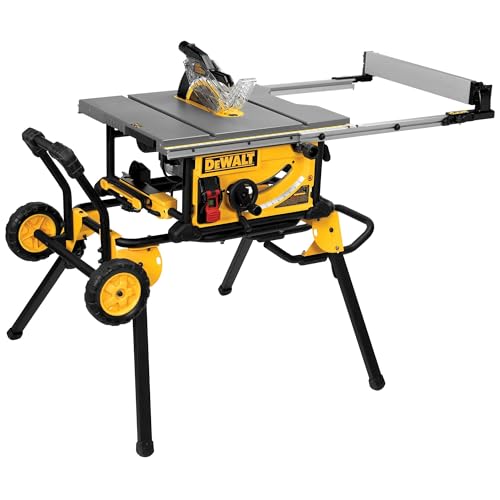
DEWALT Table Saw 10 Inch with Foldable Rolling Table Saw Stand, 15 Amp, 4800 RPM, 32-1/2-Inch Rip Capacity (DWE7491RS)
Rack & Pinion Telescoping Fence System Make fence adjustments fast, smooth and accurate
As an affiliate, we earn on qualifying purchases.
As an affiliate, we earn on qualifying purchases.
Understanding the Different Types of Table Saws

As you explore your options, understanding the different types of table saws can greatly impact your woodworking experience. A table saws overview reveals several categories: portable, contractor, cabinet, and hybrid saws. Portable table saws are lightweight and ideal for job sites, while contractor saws offer a balance of mobility and stability for serious hobbyists. Cabinet saws are heavy-duty machines designed for professional woodworkers, providing superior accuracy and power. Hybrid saws combine features of both cabinet and contractor models, making them versatile for various projects. By knowing these table saw categories, you can choose the right one that fits your needs and workspace, ensuring your woodworking projects turn out just as you envision.
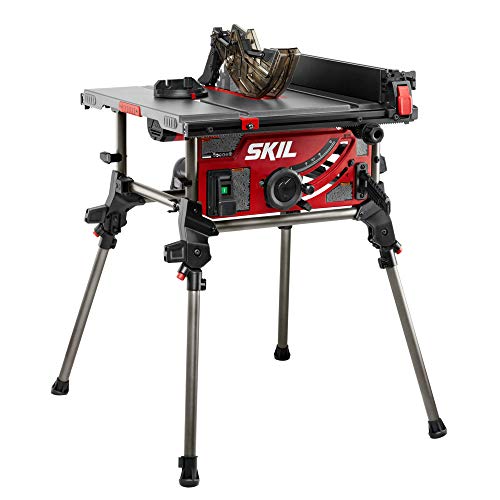
SKIL 15 Amp 10 Inch Portable Jobsite Table Saw with Folding Stand- TS6307-00
RACK AND PINION FENCE RAILS – Ensures fence stays parallel to blade for fast smooth, and accurate cuts
As an affiliate, we earn on qualifying purchases.
As an affiliate, we earn on qualifying purchases.
Key Features to Consider: Blade Size, Power, and Safety Mechanisms
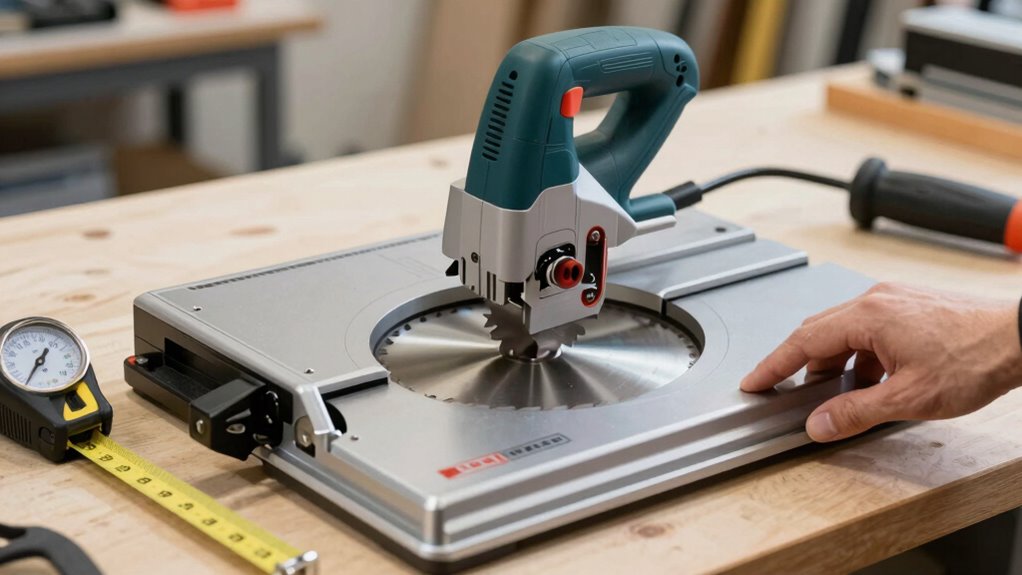
When choosing a table saw, you’ll want to pay close attention to blade size, as it directly impacts your cutting capabilities. Equally important are the safety mechanisms in place, which can protect you from potential accidents. Understanding these key features will help you make an informed decision for your woodworking projects.
Blade Size Importance
Choosing the right blade size for your table saw is essential to achieving precise cuts and ensuring safety in your woodworking projects. Larger blades can handle deeper cuts, making them ideal for thicker materials. However, consider your typical cutting depth when selecting blade size. If you’re mostly cutting plywood or thin hardwood, a smaller blade might suffice. Additionally, blade material types, such as carbide-tipped or high-speed steel, can affect performance and longevity. Carbide-tipped blades, for instance, stay sharper longer and can tackle tougher materials effectively. Ultimately, balancing blade size with your project’s needs and the materials you use will help you make the best choice for your table saw.
Safety Mechanisms Overview
While the blade size and power of your table saw are essential, safety mechanisms should be your top priority. Look for saws equipped with advanced safety features like blade guards, anti-kickback devices, and flesh detection technology. These mechanisms play a vital role in injury prevention, helping you avoid serious accidents while you work. A table saw with a reliable safety system can give you peace of mind, allowing you to focus on your project rather than worrying about potential hazards. Additionally, consider models that have an emergency shut-off switch, as this can be a lifesaver in critical situations. Always prioritize safety first, making sure your equipment is designed to protect you effectively. Your well-being should never be compromised.

Diablo Fine Finish Saw Blade for Wood – Ultra-Smooth Cuts, 60 Hi-ATB Teeth, 10" Diameter, .098" Kerf, 5/8" Arbor – D1060X
Ultra-Smooth Finish – High tooth count and Hi-ATB geometry deliver clean, precise cuts, minimizing blowout and reducing the…
As an affiliate, we earn on qualifying purchases.
As an affiliate, we earn on qualifying purchases.
How to Compare Table Saw Features Effectively
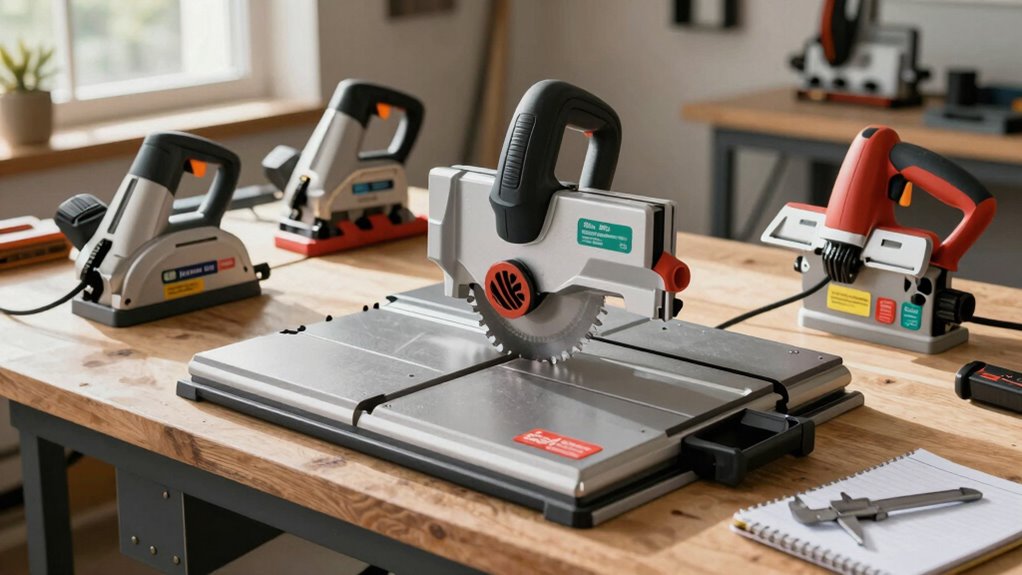
To effectively compare table saw features, you’ll want to focus on key specifications that directly impact performance and usability. Prioritize features based on your specific needs through table saw comparisons. Here’s a simple guide to help you:
| Feature | Importance Level |
|---|---|
| Motor Power | High |
| Blade Size | Medium |
| Rip Capacity | High |
| Weight | Low |
| Safety Features | High |
Understanding each feature’s significance will aid in your decision-making process. By prioritizing what matters most, you’ll find a table saw that aligns with your woodworking goals. Remember, not all features are equal; focus on what enhances your projects.
Stationary vs. Jobsite: Which Is More Portable?
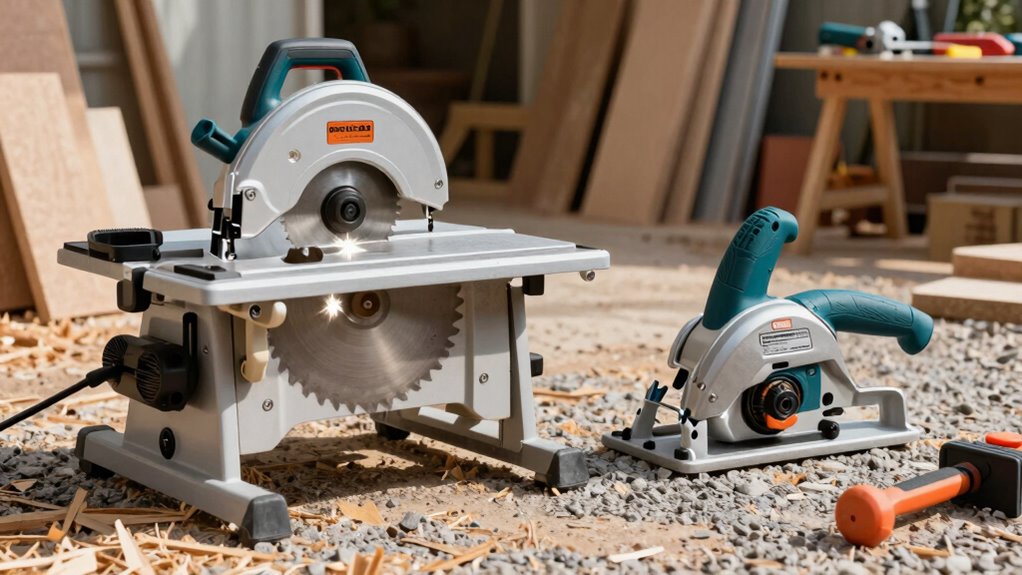
How do you decide between a stationary table saw and a jobsite model when portability is a key factor? Stationary saws offer advantages like stability and power, making them ideal for long-term setups in a workshop. However, if you need to move your saw frequently, jobsite models shine with their flexibility. They’re designed for easy transport, often featuring wheels and lighter frames, allowing you to set up wherever your projects take you.
Consider the types of jobs you tackle. If you’re working on-site or in different locations, the jobsite saw’s portability will serve you well. But if you’re focused on precision cuts in a fixed workspace, the stationary saw’s advantages will outweigh the need for mobility.
How Much Should You Spend on a Table Saw?
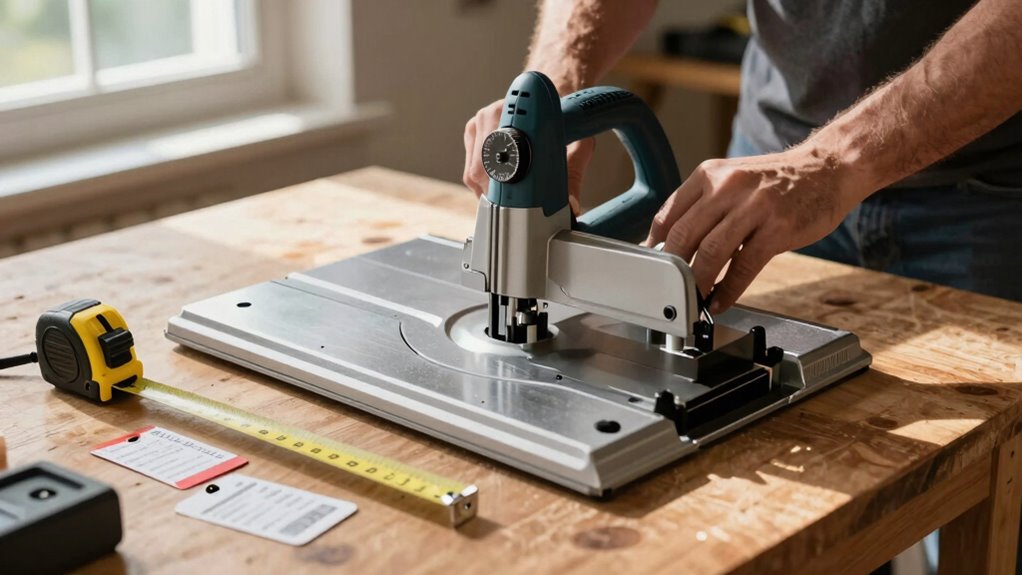
Determining how much to spend on a table saw can be challenging, especially with so many options available. Start by setting clear budget considerations that align with your needs. If you’re a hobbyist, you might find a reliable entry-level saw for around $300 to $600. For serious woodworkers, investing between $600 and $1,200 could provide the durability and precision you desire. If you’re professional, consider spending over $1,200 for high-end models that offer advanced features. Keep your spending limits in mind, as it’s easy to get tempted by flashy extras. Always weigh the importance of quality and performance against your budget to guarantee you make a sound investment that meets your woodworking goals.
Reading Reviews and Recommendations: Making an Informed Choice
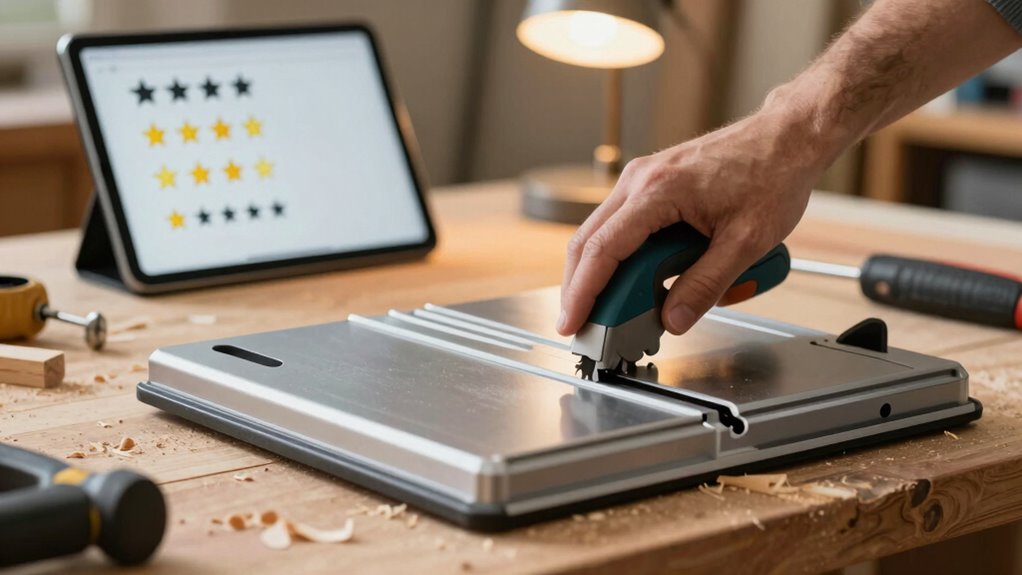
Steering through the sea of table saw options can be overwhelming, but reading reviews and recommendations can help you make a more informed choice. User reviews offer real-world experiences, highlighting both pros and cons of different models. Meanwhile, expert insights can provide technical evaluations that you might overlook.
Here’s a quick comparison to guide you:
| Source Type | Value |
|---|---|
| User Reviews | Practical, firsthand feedback |
| Expert Insights | Detailed, technical analysis |
| Overall Rating | Balanced perspective |
Frequently Asked Questions
What Is the Best Brand of Table Saw for Beginners?
The best brand of table saw for beginners is usually Dewalt or Bosch. These brands offer reliable performance and durability, making them great choices for newcomers. Look for their best beginner models which often feature user-friendly designs and safety features. You’ll appreciate the brand reliability too, ensuring your investment lasts through your early projects. Always check for reviews and recommendations to find the perfect fit for your woodworking needs!
Can I Use a Table Saw for Cutting Metal?
You can’t cut corners when it comes to using a table saw for metal cutting. While some might attempt it, table saws aren’t designed for that purpose. They work best with wood, so trying to cut metal can damage your saw and pose safety risks. If you need to cut metal, invest in a metal-specific saw, like a bandsaw or a chop saw, to get the job done safely and effectively.
How Often Should I Replace the Table Saw Blade?
You should replace your table saw blade every 6 to 12 months, depending on usage and the materials you cut. Regular blade maintenance is essential; dull blades can compromise your cutting performance and lead to frustrating results. If you notice burn marks or the blade struggling to cut, it’s time for a change. Keeping your blade sharp not only improves precision but also guarantees safety while you work on your projects.
What Safety Gear Should I Wear While Using a Table Saw?
When you fire up that table saw, you’ll wanna make certain you’re geared up like a knight going into battle. First, grab your safety gloves to protect your hands from splinters and debris. Don’t forget your eye protection, too; safety goggles will shield your eyes from flying particles. Wearing these essential items guarantees you’re staying safe while tackling your woodworking projects, letting you focus on your craft without worrying about injuries.
Are There Table Saws Designed for Left-Handed Users?
Yes, there are table saws designed with left-handed users in mind. These left-handed designs enhance user accessibility, making it easier for you to operate the saw comfortably. Look for models that feature blade adjustments and controls positioned for left-handed use. Additionally, some manufacturers offer ambidextrous options, allowing you to choose based on your preferences. By selecting the right table saw, you can guarantee a safer and more efficient woodworking experience.
Conclusion
Now that you know how to choose a table saw, you can make a confident decision that suits your woodworking needs. Did you know that nearly 70% of woodworkers consider safety features the most essential aspect when selecting a saw? With this in mind, weigh the options carefully, and remember that investing in quality can save you time and enhance your projects. Happy woodworking, and may your new table saw help you create amazing pieces!