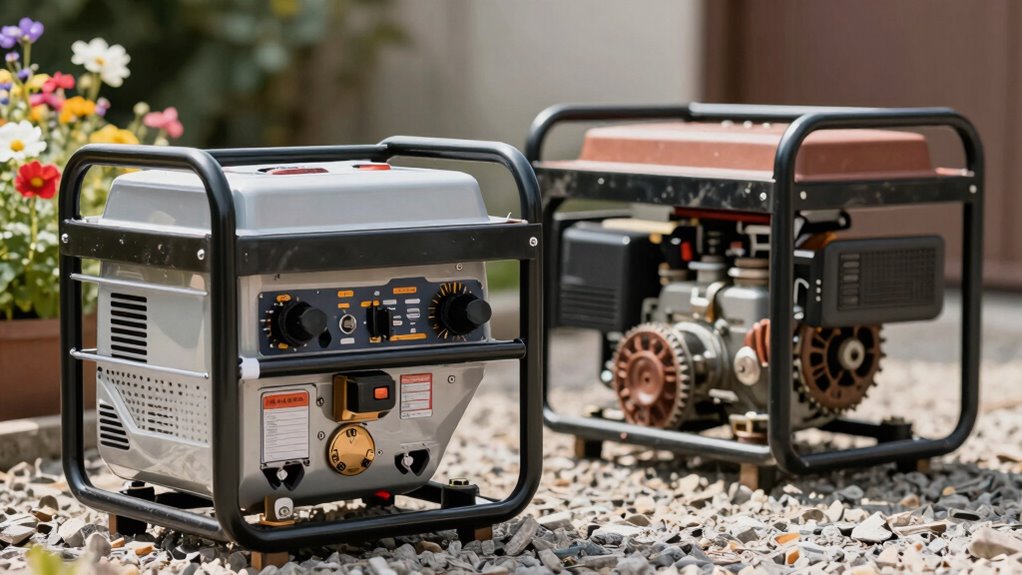

When choosing between inverter and conventional generators, you need to take into account efficiency, noise levels, and fuel consumption. Inverter generators are compact, quieter, and more fuel-efficient, adjusting power output to match demand, which can save you money long-term. In contrast, conventional generators offer higher energy output and are reliable for heavy-duty tasks but tend to be louder and less fuel-efficient. Each type has its pros and cons, and understanding these differences can help you make an informed decision about your power needs. Explore more to find out what suits you best!
Key Takeaways
- Inverter generators produce cleaner, stable energy, making them ideal for sensitive electronics compared to conventional generators.
- They are more fuel-efficient, adjusting power output to reduce waste and lower long-term costs.
- Inverter generators operate at lower noise levels, enhancing outdoor experiences without disturbing others.
- Conventional generators deliver higher energy output, suitable for heavy-duty tasks, but are typically louder and less fuel-efficient.
- Consider portability, noise levels, and power requirements when choosing between inverter and conventional generators for your needs.

Champion Power Equipment 4000-Watt RV Ready Portable Inverter Generator with Quiet Technology and CO Shield
At less than 49 pounds, this inverter is one of the lightest 4000-watt inverters in the industry
As an affiliate, we earn on qualifying purchases.
As an affiliate, we earn on qualifying purchases.
What Is an Inverter Generator?

An inverter generator is a compact and efficient power source designed for various applications, from camping trips to emergency backup. With advanced inverter technology, these generators produce clean, stable energy that’s safe for sensitive electronics like laptops and smartphones. You’ll appreciate the lightweight design, making it easy to transport wherever you need power. The generator benefits include quieter operation compared to conventional generators, which can be a relief in quiet outdoor settings or residential areas. Plus, their fuel efficiency means you’ll save money in the long run. Whether you’re powering tools at a job site or enjoying a weekend getaway, an inverter generator offers versatility and reliability, ensuring you’ve got the energy you need without the hassle.

ERAYAK 4500W Portable Inverter Generator for Home Use, Super Quiet Small Generator for Camping Outdoor Emergency Power Backup, Gas Powered Engine, ECO Mode, EPA Compliant
Powerful & Clean Energy Output:4500W peak watts / 3500W running watts, delivering dependable power for RVs, camping, home…
As an affiliate, we earn on qualifying purchases.
As an affiliate, we earn on qualifying purchases.
Understanding Conventional Generators

While inverter generators are popular for their efficiency and quiet operation, conventional generators offer a different approach to power generation. These machines rely on traditional mechanical components, such as an engine, alternator, and fuel system, to generate electricity. You’ll find that conventional generators can provide a higher energy output compared to their inverter counterparts, making them suitable for heavy-duty tasks like powering construction sites or running multiple appliances at once. They operate at a fixed speed, which means they produce a steady flow of power but can be louder and less fuel-efficient. If you need reliable power for demanding situations, understanding how conventional generators work will help you determine if they’re the right choice for your needs.
heavy-duty conventional generator
As an affiliate, we earn on qualifying purchases.
As an affiliate, we earn on qualifying purchases.
Efficiency Comparison: Which Generator Is More Cost-Effective?

How do inverter generators stack up against conventional ones when it comes to cost-effectiveness? When you evaluate cost savings and energy efficiency, inverter generators often come out on top. They use advanced technology to adjust power output based on demand, preventing energy waste. This translates to lower fuel costs over time.
Here’s a quick comparison to illustrate:
| Generator Type | Fuel Efficiency | Average Operating Cost |
|---|---|---|
| Inverter Generator | High | Low |
| Conventional | Moderate | High |
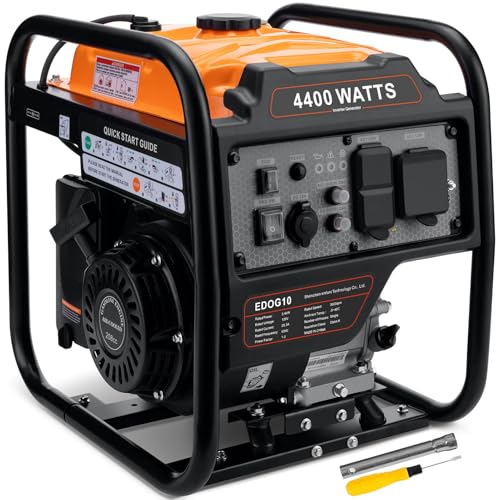
Oxseryn 4400-Watts Inverter Generator, Open Frame Generator Gas Powered, Emergency Home Backup, RV Ready 30A Outlet, EPA Compliment
Powerful Output: 4400 peak watts and 3400 running watts, 2*120V AC ports, 1* 30A RV port, 1*12V DC…
As an affiliate, we earn on qualifying purchases.
As an affiliate, we earn on qualifying purchases.
Noise Levels: Inverter vs. Conventional Generators

When considering noise levels, inverter generators typically excel compared to their conventional counterparts. You’ll find that inverter models operate at a lower decibel level, greatly reducing noise pollution. This means you can enjoy outdoor activities without the annoying hum of a traditional generator. If you’re camping or tailgating, having a quieter generator makes a huge difference, enhancing your experience. Plus, inverter generators often come with better sound insulation, further minimizing disruptions. You won’t have to worry about waking neighbors or disturbing wildlife. Choosing an inverter generator not only helps you maintain peace in your surroundings but also allows you to enjoy the convenience of power without the noise that usually comes with conventional units.
Fuel Consumption: How Each Generator Stacks Up
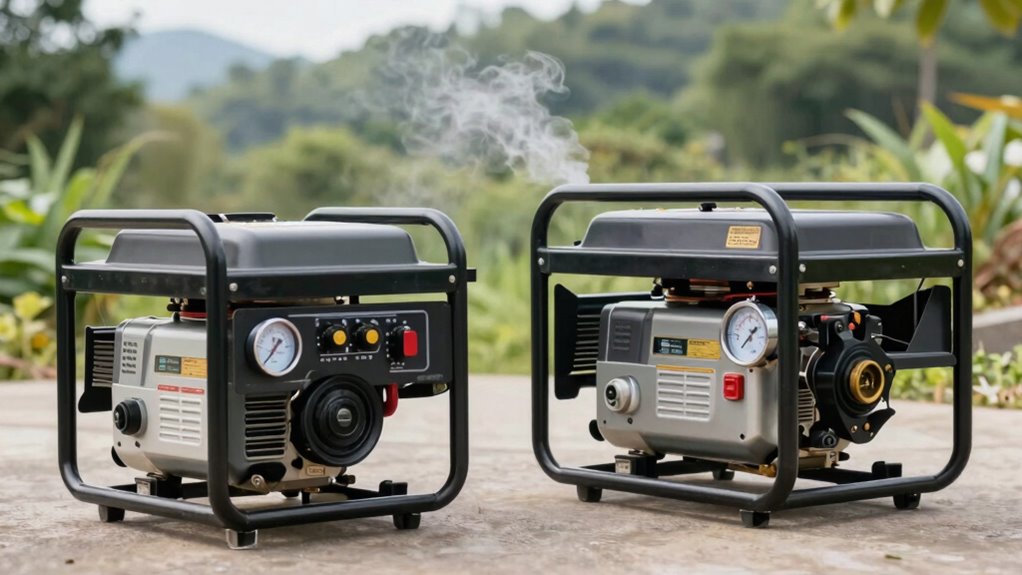
Fuel consumption is a critical factor to evaluate when choosing between inverter and conventional generators, as it directly impacts both your wallet and the environment. Inverter generators are known for their fuel efficiency, often using less fuel than conventional types while providing the same power output. This means you’ll save money on fuel over time, making them a more economical choice for extended use. On the other hand, conventional generators tend to consume more fuel, especially under heavy loads. If you’re focused on reducing your carbon footprint and saving on fuel costs, opting for an inverter generator could be your best bet. Ultimately, considering fuel consumption helps you make a smarter investment tailored to your needs.
How to Choose the Best Generator for Your Lifestyle?
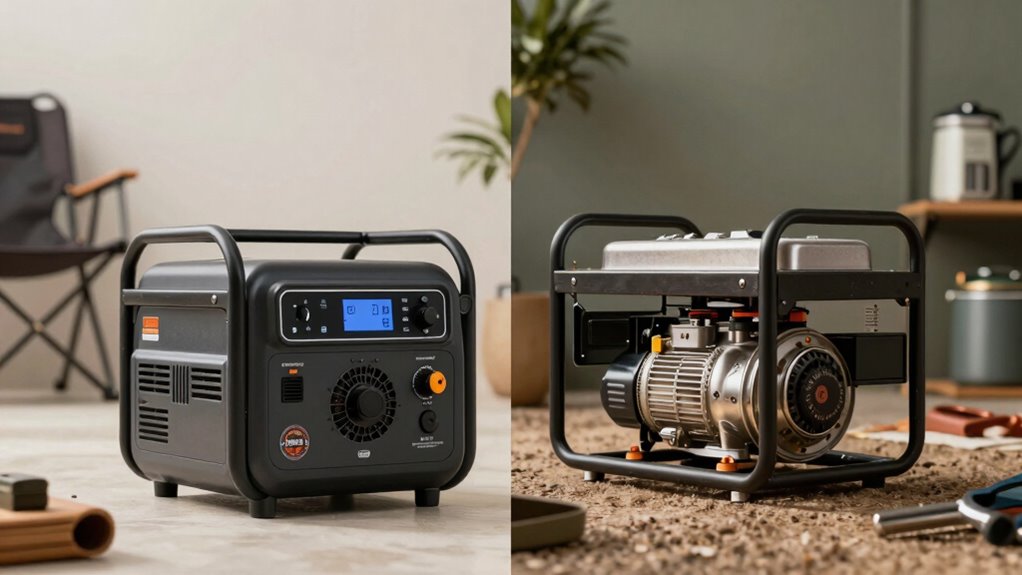
Choosing the best generator for your lifestyle starts with evaluating your power requirements, so you know what capacity you need. You’ll also want to take into account portability and noise levels, especially if you plan to use it for camping or outdoor events. Balancing these factors will help you find the perfect fit for your needs.
Power Requirements Assessment
Evaluating your power requirements is essential for selecting the right generator that fits your lifestyle. Start by identifying your power needs—reflect on what appliances and devices you plan to run. This includes everything from lights and refrigerators to tools and electronics. Conduct a load evaluation to calculate the total wattage required. Don’t forget to take into account surge power, which is higher when starting certain appliances. Once you have a clear picture of your power needs, you can compare generators based on their output capacity. Make certain to choose a generator that not only meets your current requirements but also allows for future additions. By accurately evaluating your power needs, you’ll guarantee your generator supports your lifestyle effectively.
Portability and Noise Levels
When you’re considering a generator, portability and noise levels can greatly impact your experience. If you’re planning to take your generator on the go—like camping or tailgating—you’ll want to prioritize portability features. Inverter generators are typically lighter and quieter, making them ideal for such activities. In contrast, conventional generators usually offer more power but come with added weight and noise.
Here’s a quick noise comparison:
| Generator Type | Noise Level (dB) |
|---|---|
| Inverter Generator | 50-60 |
| Conventional Generator | 70-90 |
Frequently Asked Questions
How Long Do Inverter Generators Typically Last Compared to Conventional Ones?
Inverter generators typically last longer than conventional ones, often reaching 10 to 15 years with proper care. When you consider lifespan comparison, durability factors play a key role. Inverter models usually have advanced technology and better components, which enhance their longevity. On the other hand, conventional generators might only last around 5 to 10 years. So, if you’re looking for durability, investing in an inverter generator could be a wise choice.
Can Inverter Generators Run Sensitive Electronic Devices Safely?
Yes, inverter generators can run sensitive electronic devices safely thanks to their superior power quality. Unlike conventional generators, which can produce fluctuating voltage, inverter generators maintain a consistent output that’s compatible with delicate electronics. This means you can confidently power laptops, smartphones, and other sensitive devices without the risk of damage. Always check the manufacturer’s specifications to verify compatibility, but you’ll generally find inverter generators are a reliable choice for your electronics.
What Maintenance Do Inverter Generators Require Over Time?
Think of your inverter generator like a trusty steed—it needs care to keep galloping smoothly. Over time, you’ll want to perform regular oil changes to guarantee its heart runs clean and strong. Don’t forget about filter replacements, either; they’re like a revitalizing boost for your generator, preventing dust and debris from clogging its performance. With these simple steps, you’ll keep your generator humming happily for years to come.
Are Inverter Generators More Portable Than Conventional Generators?
Yes, inverter generators are generally more portable than conventional generators. You’ll notice a significant weight comparison; inverter models are often lighter due to their compact design differences. With smaller dimensions and built-in handles, they’re easier to transport for camping trips or outdoor events. Conventional generators, while powerful, tend to be bulkier and heavier, making them less convenient for on-the-go use. So, if portability’s a priority, you’ll likely prefer an inverter generator.
Can You Connect Multiple Inverter Generators Together?
Connecting multiple inverter generators together is like creating a powerful team to tackle a big job. You can achieve this through parallel operation, provided the generators are compatible. Most modern inverter generators have this feature, allowing you to double your power output seamlessly. Just check the manufacturer’s specifications for compatibility before linking them. Once you set them up correctly, you’ll enjoy increased power and efficiency for your needs.
Conclusion
In the end, choosing between an inverter generator and a conventional one boils down to your unique needs. If you crave quiet efficiency and portability, the inverter might just be the perfect companion for your adventures. However, if you need robust power for heavy-duty tasks, the conventional generator could be your trusty workhorse. Ultimately, consider your lifestyle and priorities—finding the right generator could be the key to accessing a world of convenience and peace of mind.