
To prioritize small home repairs effectively, start with urgent safety issues like leaks and electrical problems. Organize tasks into phases, beginning with structural and safety repairs, then move to cosmetic updates. Make sure you’re prepared with tools and safety gear, and be flexible if surprises come up. Keep a budget, track your progress, and know when to call professionals for complex tasks. Keep going for more tips to make your repair process smoother and safer.
Key Takeaways
- Prioritize safety and structural repairs before cosmetic updates to ensure a secure foundation.
- Address urgent issues like leaks and electrical hazards first to prevent further damage.
- Organize repairs into manageable phases, starting with critical safety and structural tasks.
- Gather tools, materials, and safety gear beforehand to streamline the repair process.
- Stay flexible and adapt the repair order as new issues or costs arise during the project.
When it comes to maintaining your home’s value and safety, having a clear small home repairs order is essential. You want to avoid chaos and ensure each task gets done efficiently, so you stay on top of things without feeling overwhelmed. Starting with a prioritized list helps you focus on the most urgent repairs first, such as fixing leaks or electrical issues, which could pose safety hazards if left unattended. It’s smart to incorporate DIY safety into your planning—know your limits before tackling repairs that might require specialized skills or tools. For example, attempting electrical work without proper knowledge can be dangerous, so save those projects for professionals or do thorough research beforehand. Additionally, understanding home repair safety can help you recognize when a task exceeds your skill level and requires professional assistance. Recognizing potential hazards and proper safety protocols is a key part of effective home repair management.
Prioritize urgent repairs safely and know your limits to protect your home and avoid unnecessary risks.
Budget planning plays a crucial role in establishing your repair order. You need to identify what you can afford to fix immediately and what can wait. Creating a realistic budget prevents you from overspending or neglecting essential repairs due to lack of funds. Break down costs for each task, including materials and potential labor, and allocate funds accordingly. This way, you can tackle repairs systematically without draining your finances or postponing critical safety upgrades. Incorporating repair prioritization techniques can further streamline your process and help you make informed decisions.
Once you’ve prioritized repairs based on urgency and safety, organize them into manageable phases. For instance, start with repairs that protect your home’s structure and safety, like fixing broken windows or sealing gaps that let in drafts. Afterward, move on to cosmetic updates or less urgent repairs, such as repainting or replacing fixtures. This phased approach prevents overwhelm and allows you to see tangible progress, motivating you to keep going. Planning your repairs in stages also helps you stay within your budget and avoid unnecessary stress.
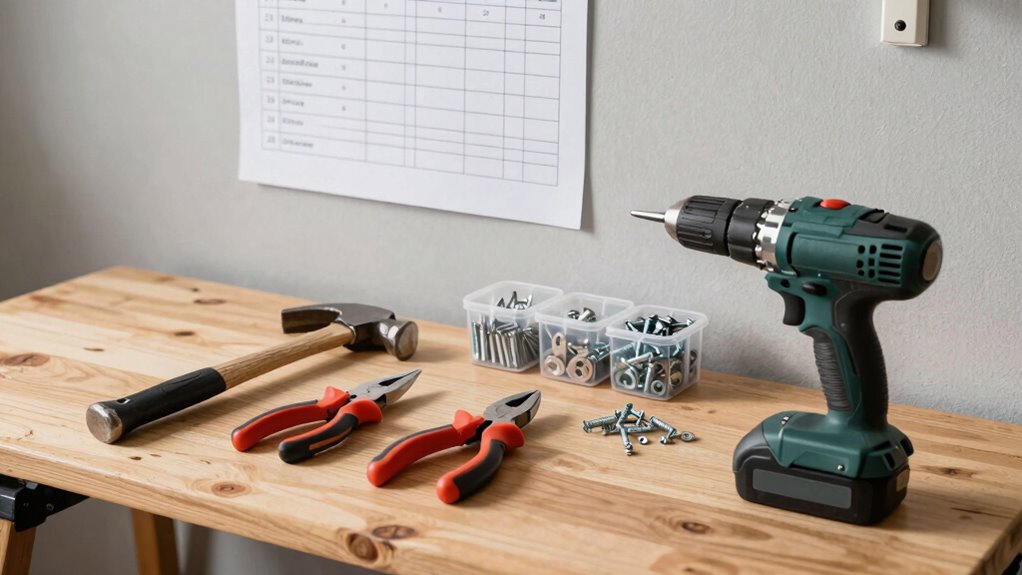
Always remember to gather the right tools and materials before beginning each task. Having everything on hand minimizes delays and helps you work more efficiently. When it comes to DIY safety, double-check safety equipment like gloves, goggles, and masks—especially when working with chemicals, paint, or power tools. Following safety guidelines reduces the risk of injury and ensures your repairs are effective. Proper preparation and safety awareness are integral to successful and safe home repairs, especially for more complex or hazardous tasks.
Finally, stay flexible with your plan. Unexpected issues can arise, and some repairs might take longer or cost more than anticipated. Keep your budget buffer and adjust your repair order accordingly. By maintaining a logical sequence and keeping safety and budget planning at the forefront, you’ll make your small home repairs a manageable, safe, and budget-friendly process. Flexibility allows you to adapt to unforeseen circumstances and ensures your home remains well-maintained and safe over time.
As an affiliate, we earn on qualifying purchases.
Frequently Asked Questions
How Do I Prioritize Repairs With a Limited Budget?
When faced with budget constraints, start by evaluating urgent repairs that affect safety and security, like electrical issues or leaks. Use repair prioritization to tackle the most critical problems first, then address cosmetic fixes later. Make a list of necessary repairs, estimate costs, and allocate your limited funds accordingly. This approach guarantees you handle essential repairs first, maximizing safety and functionality without overspending.
What Tools Are Essential for Small Home Repairs?
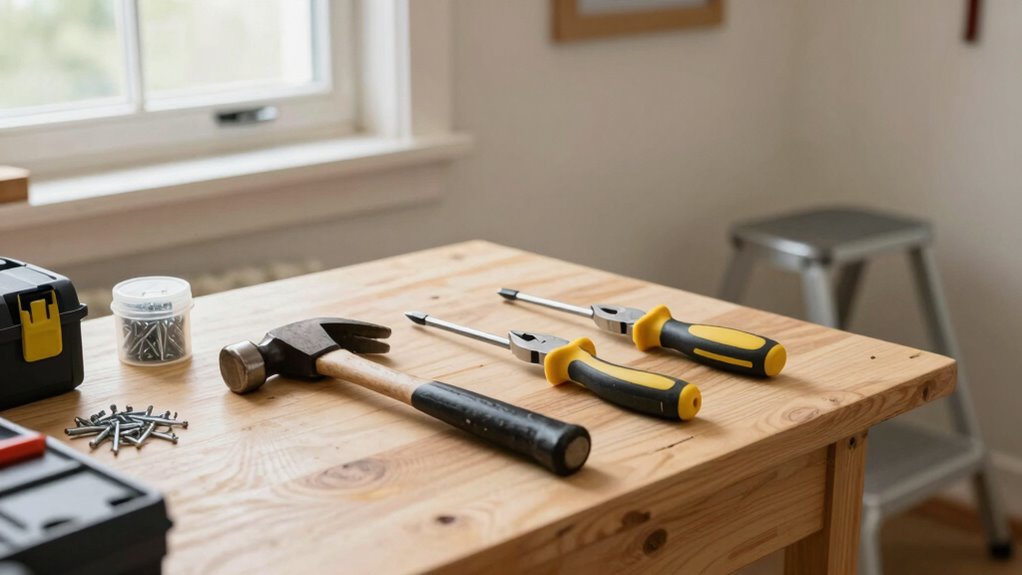
For small home repairs, you need essential tools like a hammer, screwdrivers, pliers, a tape measure, and a utility knife. These tools help you handle basic tasks efficiently. Always practice tool safety by wearing gloves and eye protection, and guarantee tools are in good condition before use. Having these essentials on hand makes your home repair projects safer and more manageable, saving you time and money.
When Should I Call a Professional Instead of DIY?
When the task feels like steering through a minefield, it’s time to call a professional. If your home improvement project involves electrical wiring, plumbing, or structural changes, DIY safety risks escalate. If you lack experience or proper tools, avoid the temptation to fix it yourself. Instead, seek expert help to guarantee safety and quality. Remember, knowing when to ask for help keeps your home and loved ones safe.
How Often Should I Schedule Routine Home Maintenance?
You should schedule routine home maintenance at least twice a year, ideally during spring and fall. Conduct seasonal inspections to identify potential issues early, like leaks or electrical problems. Use this time to check your emergency preparedness, ensuring smoke detectors, fire extinguishers, and emergency kits are ready. Regular maintenance keeps your home safe, efficient, and reduces costly repairs later, giving you peace of mind year-round.
Are There Safety Precautions for DIY Repairs?
Yes, there are safety precautions for DIY repairs. Always wear appropriate safety gear, like gloves, goggles, and masks, to protect yourself from hazards. Be aware of potential dangers, such as electrical shocks, sharp tools, or unstable surfaces. Turn off power when working on electrical systems, and keep your workspace organized to prevent accidents. Staying alert and cautious guarantees your safety while completing home repairs effectively.
As an affiliate, we earn on qualifying purchases.
Conclusion
By following the proper order for small home repairs, you guarantee each task is completed efficiently and effectively, saving you time and frustration. Skipping steps or tackling repairs haphazardly might seem faster initially, but it often leads to more issues down the line. With a clear plan, you’ll feel confident handling repairs yourself, even if you’re new to fixing things around the house. Remember, thoughtful preparation makes all the difference—so don’t underestimate the power of a good repair strategy.
As an affiliate, we earn on qualifying purchases.
As an affiliate, we earn on qualifying purchases.