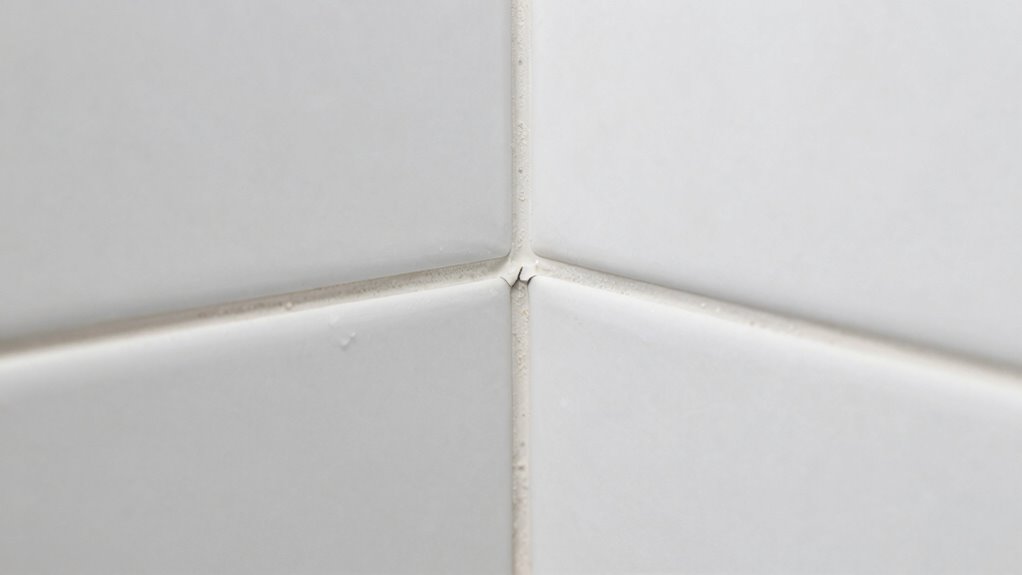
Caulk in bathrooms cracks quickly because it faces constant water exposure, temperature changes, and improper application. Water seeping behind cracks weakens the bond, while hot and cold shifts cause the material to expand and contract, making it brittle and prone to cracking. Poor surface preparation or using low-quality caulk can speed up deterioration. If you want to discover more about preventing cracks and prolonging caulk’s lifespan, keep exploring the details ahead.

Get the little things that make your day delivered free with Prime
- Fast, free delivery on millions of items
- Prime Video, Amazon Music and more included
- Member-only deals all year
Key Takeaways
- Frequent moisture exposure behind tiles causes caulk to weaken and crack.
- Temperature fluctuations from hot water expand and contract the caulk, leading to deterioration.
- Poor surface preparation and low-quality caulk reduce adhesion and speed up cracking.
- Inadequate application techniques and lack of maintenance compromise caulk’s durability.
- Lack of regular reapplication and inspection allows small cracks to worsen quickly.
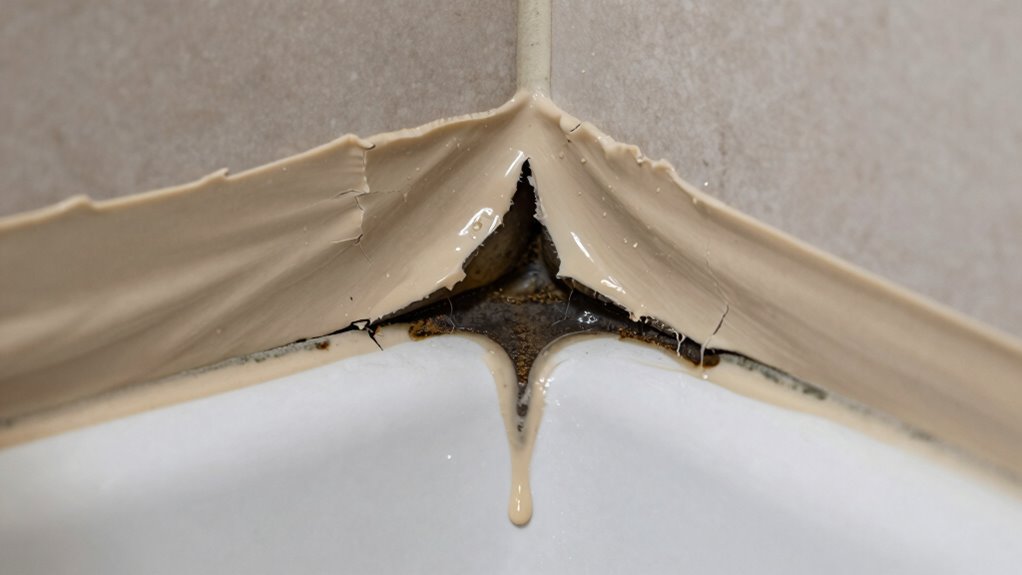
Cracks in bathroom caulk may seem like minor issues, but they can lead to bigger problems if left unaddressed. Over time, these small gaps can allow water to seep behind tiles and fixtures, which not only compromises the integrity of your bathroom but also creates a perfect environment for mold growth. When moisture gets behind the caulk, it’s harder to detect and can cause significant water damage to the underlying walls and structures. That’s why understanding why caulk crumbles so quickly in bathrooms is essential to maintaining a safe, clean space.
Cracked bathroom caulk can lead to water damage and mold growth if not promptly repaired.
Bathrooms are constantly exposed to moisture, and this high humidity accelerates the deterioration of caulk. Unlike other areas of your home, the continual presence of water in showers, tubs, and sinks means the caulk is under constant stress. When the caulk isn’t flexible enough or if it wasn’t properly applied initially, it begins to crack and peel. These cracks give water an easy route behind the tiles and into the walls, where it can cause rot, mold, and other structural issues. Moisture trapped behind the caulk also creates an ideal environment for mold spores to settle and grow, which can lead to health problems over time.
Temperature fluctuations in bathrooms contribute to the quick deterioration of caulk, too. When hot water is used, the temperature inside the bathroom rises, causing the caulk to expand. When the bathroom cools down, the caulk contracts. This constant stretching and shrinking weaken the adhesive bonds, leading to cracking. If the caulk isn’t designed to handle these temperature changes or if it was applied improperly, it will break down faster. This cycle of expansion and contraction diminishes the caulk’s ability to form a watertight seal, increasing the risk of water damage and mold development. Additionally, the constant exposure to moisture and temperature shifts accelerates the breakdown of caulk, making timely reapplication crucial. Using high-quality, flexible caulk can significantly improve its lifespan in these conditions. Proper surface preparation and selecting the right type of caulk are also critical to ensuring a longer-lasting seal.
Poor application techniques are another common reason for rapid caulk failure. If you don’t clean the surface thoroughly before applying, or if you don’t use the right type of caulk, it won’t adhere properly. Over time, this poor adhesion results in cracks and gaps. Using low-quality caulk or applying it in low temperatures can also reduce its lifespan. Regular maintenance, including re-caulking when necessary, helps prevent water from seeping behind tiles and keeps mold from taking hold. Additionally, surface preparation plays a vital role in ensuring the caulk adheres properly and lasts longer.
In essence, the combination of constant moisture, temperature shifts, and application issues explains why bathroom caulk cracks so quickly. Addressing these challenges early—by choosing the right caulk, applying it properly, and reapplying when needed—can prevent water damage and mold growth, keeping your bathroom safer and cleaner longer. Recognizing the importance of proper caulk maintenance is key to extending its effective lifespan and avoiding costly repairs down the line.
As an affiliate, we earn on qualifying purchases.
Frequently Asked Questions
Can Temperature Fluctuations Cause Bathroom Caulk to Crack?
Yes, temperature fluctuations can cause bathroom caulk to crack. When temperatures change, it leads to temperature expansion and contraction of the materials, putting stress on the caulk. Over time, this repeated movement causes material fatigue, weakening the caulk’s structure. As a result, cracks form more easily. To prevent this, use high-quality, flexible caulk designed to withstand temperature changes and reduce the risk of cracking.
Does Using Certain Cleaning Products Damage Bathroom Caulk?
Certain cleaning agents can cause caulk to crack because harsh chemicals trigger chemical reactions that weaken the material. You might notice damage if you use strong or abrasive cleaners regularly, as these products break down the caulk’s structure over time. To protect your bathroom’s seal, opt for gentle, non-abrasive cleaners. Keep caulk in pristine condition by avoiding harsh chemicals that can cause cracks, creating a caulk crisis you definitely want to avoid.
How Does Humidity Affect Caulk Longevity in Bathrooms?
Humidity considerably impacts caulk longevity in bathrooms. When humidity levels are high due to poor ventilation, it creates an environment conducive to mold growth and accelerates caulk deterioration. You might notice cracks or peeling sooner if your bathroom lacks proper airflow. To extend the life of your caulk, guarantee good ventilation, remove excess moisture, and clean mold promptly. This helps prevent mold growth and keeps the caulk intact longer.
Are There Specific Types of Caulk More Resistant to Cracking?
Yes, certain caulks resist cracking better. Silicone caulk offers superior durability and is highly resistant to moisture and temperature changes, making it ideal for bathrooms. Acrylic caulk, on the other hand, provides greater flexibility, which helps it adapt to movement and reduces cracking over time. Selecting a high-quality silicone with good durability or an acrylic that emphasizes flexibility guarantees your bathroom caulking stays intact longer.
How Often Should Bathroom Caulk Be Inspected for Cracks?
To guarantee ideal caulk durability, you should inspect your bathroom caulk every six to twelve months. Regular inspections help catch minor issues before they develop into bigger problems, preserving the seal and preventing water damage. By maintaining a consistent inspection frequency, you prolong the lifespan of your caulk, reducing the need for frequent replacements. Staying attentive to caulk condition keeps your bathroom both functional and visually appealing.
As an affiliate, we earn on qualifying purchases.
Conclusion
If you ignore those tiny cracks in your bathroom caulk, they can turn into a disaster worse than a flood in a teacup. Moisture, temperature swings, and poor application are like ruthless termites eating away at your sealant’s strength. Keep an eye on the caulk, reapply when needed, and don’t let tiny flaws become a catastrophe. Because, honestly, a bathroom without cracks is like a castle without a moat—strong, secure, and ready to stand the test of time.
As an affiliate, we earn on qualifying purchases.
caulk removal and reapplication kit
As an affiliate, we earn on qualifying purchases.
As an affiliate, we earn on qualifying purchases.
Halloween Picks
halloween
As an affiliate, we earn on qualifying purchases.