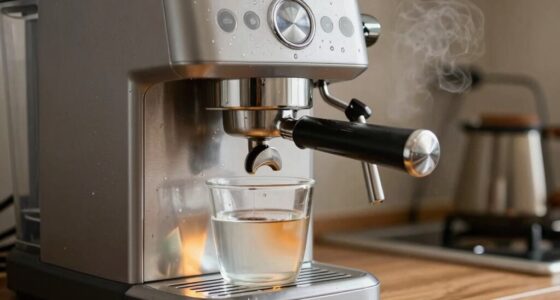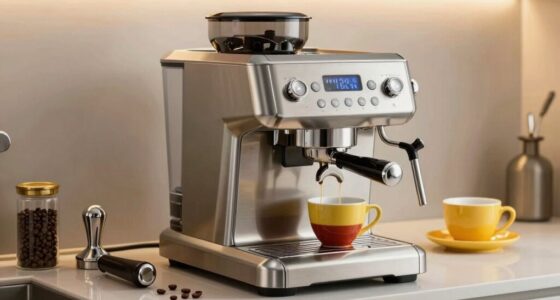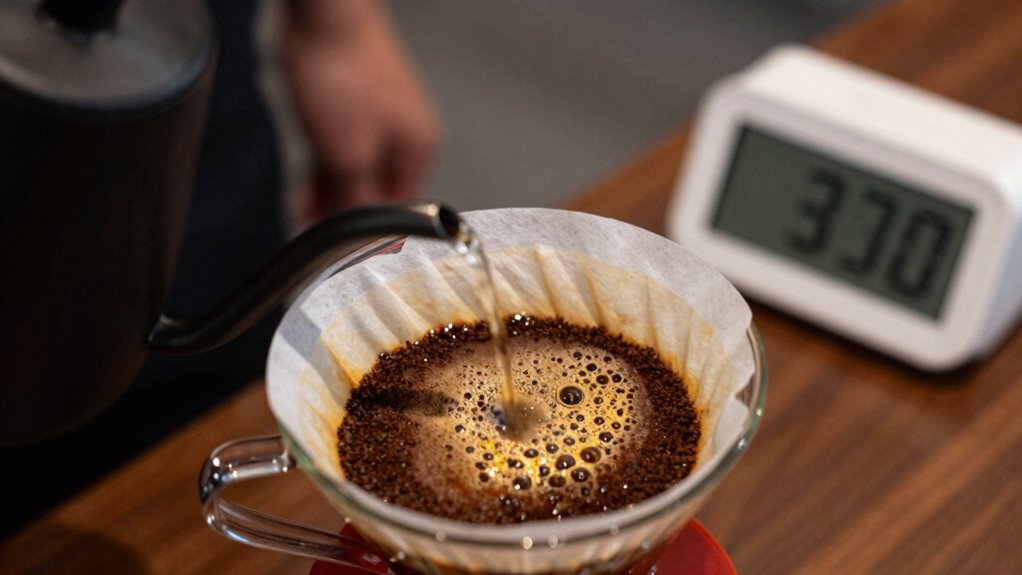
Brew time is how long water interacts with your coffee grounds, while extraction is the process of dissolving the best flavors and compounds during brewing. Even if your brew time is correct, improper grind size or water flow can cause over- or under-extraction, affecting taste. Understanding this difference helps you control flavor clarity and balance. Keep exploring, and you’ll discover how mastering these details can elevate your coffee experience.

Get the little things that make your day delivered free with Prime
- Fast, free delivery on millions of items
- Prime Video, Amazon Music and more included
- Member-only deals all year
Key Takeaways
- Brew time is the duration of water contact, while extraction is the process of dissolving flavors from coffee grounds.
- Proper grind size influences extraction efficiency, regardless of brew time.
- Over-extraction can occur with long brew times or fine grinds, leading to bitterness.
- Under-extraction results from short brew times or coarse grinds, causing flat flavors.
- Achieving optimal flavor depends on balancing brew time, grind size, and water flow, not time alone.
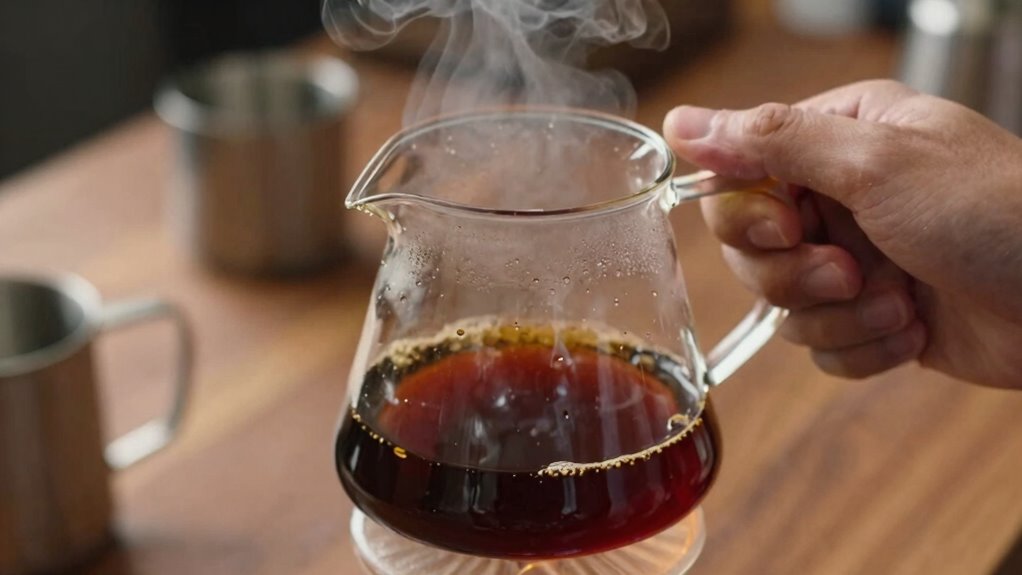
Have you ever wondered why two coffee brews with the same brewing time can taste completely different? The answer lies beyond just the clock—it’s about how extraction works and what influences it. One of the most overlooked factors is grind size, which plays a crucial role in achieving flavor clarity. When you grind your coffee too fine or too coarse, it impacts how water interacts with the grounds, directly affecting extraction. A finer grind increases the surface area, allowing more compounds to dissolve quickly, but it can also lead to over-extraction and a bitter taste. Conversely, a coarser grind slows down extraction, potentially resulting in under-extracted, weak flavors. So, even if you keep the brewing time consistent, variations in grind size can make your coffee taste vastly different. Proper grind size is essential because it directly influences how water interacts with the grounds and how effectively it pulls out desirable compounds. Understanding the extraction process can help you better control the flavor profile of your brew. Extraction is about more than just time; it’s about the balance of solubles dissolved from the coffee grounds. If your grind size isn’t dialed in properly, you might be extracting too much or too little, which impacts flavor clarity—the crispness and distinctiveness of each flavor note. When extraction is ideal, you get a clean, well-defined taste where the coffee’s unique character shines through. But if the grind is off, the flavors can become muddled or flat, regardless of how long you brew. That’s because the grind size determines how evenly water passes through the grounds and how effectively it pulls out desirable compounds. Achieving the right grind consistency is vital for consistent results and optimal flavor extraction. Proper water flow ensures that water evenly saturates the grounds, preventing channeling and uneven extraction. When these factors are aligned, your brew highlights the coffee’s best qualities, making the flavors clearer and more vibrant. Additionally, temperature control can influence extraction, as water temperature affects how quickly compounds dissolve and how flavors develop during brewing.
coffee grind size for optimal extraction
As an affiliate, we earn on qualifying purchases.
As an affiliate, we earn on qualifying purchases.
Frequently Asked Questions
How Does Grind Size Affect Brew Time and Extraction?
Your grind size and consistency directly impact brew time and extraction. Finer grinds, with smaller particle sizes, increase surface area, leading to faster extraction but can over-extract if overdone. Coarser grinds slow down brew time, resulting in under-extraction. Maintaining consistent particle size guarantees even extraction, preventing over- or under-extraction. Adjust grind size based on your brewing method to optimize flavor, balance, and brew time effectively.
Can Water Temperature Influence Extraction Independently of Brew Time?
Yes, water temperature can influence extraction independently of brew time. Higher temperatures generally increase extraction rates, pulling more flavors from your coffee, regardless of how long you brew. Water chemistry also plays a role, affecting solubility and flavor clarity. Using a suitable brewing vessel guarantees temperature stability, helping you control extraction precisely. So, adjusting water temperature can substantially impact your brew’s strength and flavor, even if you keep the brewing time constant.
What Role Does Coffee Roast Level Play in Extraction?
Your coffee roast level greatly influences extraction, as it shapes the roast profile and affects how flavors develop. Light roasts, with their higher acidity and complex flavors, require precise extraction to highlight their nuances. Dark roasts, with a bolder profile, extract more quickly and can become bitter if overdone. Adjusting your grind size and brew time helps balance extraction, allowing you to release the full flavor complexity tailored to each roast level.
Is Longer Brew Time Always Better for Flavor?
Think of brewing as tuning a radio; longer brew time isn’t always better, as it can turn your cup into a symphony with discordant, bitter notes. You aim for flavor balance, where each note shines without overpowering. If you extend brewing too long, you risk extracting undesirable flavors. So, instead of just lengthening, focus on precision—finding that sweet spot where aroma, acidity, and bitterness harmonize perfectly.
How Do Different Brewing Methods Impact Extraction?
Different brewing methods considerably impact extraction, shaping flavor complexity and aroma development. For example, pour-over brewing offers precise control, enhancing nuanced flavors and aromatic qualities. French press extracts bold, full-bodied notes, while espresso emphasizes intense aroma and richness through rapid extraction. You can influence flavor profiles by adjusting variables like grind size and brew time, ensuring each method highlights different aspects of the coffee’s aromatic and flavor complexity.
As an affiliate, we earn on qualifying purchases.
Conclusion
Understanding the difference between brew time and extraction is like knowing the secret to a perfect cup—it’s all in the details. Brew time is simply how long your coffee spends in contact with water, but extraction is what truly brings out the rich flavors. Think of it as the difference between a clock ticking and a symphony playing; mastering both guarantees every sip is a harmonious delight. Get these right, and your coffee will never disappoint.
coffee water flow control device
As an affiliate, we earn on qualifying purchases.
As an affiliate, we earn on qualifying purchases.
As an affiliate, we earn on qualifying purchases.
NFL season / tailgating Picks
team gear
As an affiliate, we earn on qualifying purchases.