
To care for your cast iron without stripping its seasoning, avoid harsh soaps and abrasive scrubbers. Instead, rinse with hot water and use a soft brush or coarse salt for stubborn spots, then dry thoroughly. Regularly oil and bake at high heat to re-season as needed. Store in a dry place and address rust or dullness promptly. Keep these tips in mind, and you’ll learn more ways to maintain your pan’s non-stick surface effectively.
Key Takeaways
- Use hot water and a soft brush for cleaning; avoid harsh soaps that strip seasoning.
- Dry thoroughly and apply a thin layer of oil before storing to prevent rust.
- Re-season your pan periodically with high smoke point oil baked at 450°F to maintain a non-stick surface.
- Remove rust promptly with a salt scrub or vinegar soak, then re-season to restore the pan.
- Store in a dry, well-ventilated area and establish a regular maintenance routine to prolong pan lifespan.

OXO Good Grips Cast Iron Brush
Scrubs without soap to preserve seasoning and protect surfaces
As an affiliate, we earn on qualifying purchases.
As an affiliate, we earn on qualifying purchases.
Why Proper Care Keeps Your Cast Iron Pan in Top Shape
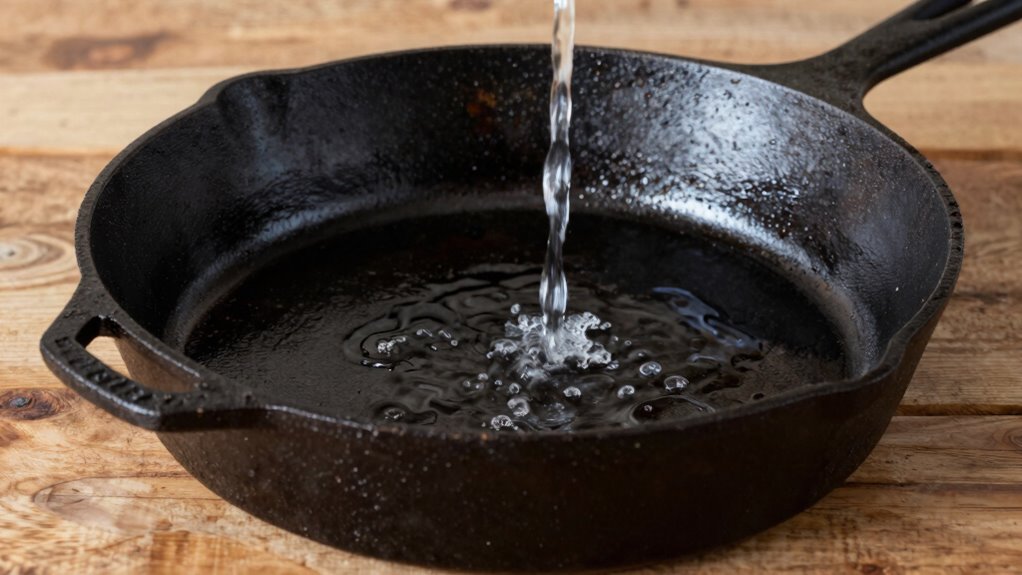
Proper care is essential to keep your cast iron pan performing its best and lasting for years. Many people believe the common cast iron myths, like that you should never clean it with soap or that seasoning is a one-time process. These seasoning myths can lead to improper maintenance, causing rust or sticking. By understanding the truth about cast iron, you can avoid these misconceptions and treat your pan correctly. Proper cleaning, drying, and occasional re-seasoning ensure your pan develops a natural non-stick surface and stays rust-free. Taking care of your cast iron isn’t complicated, but it does require avoiding myths that can damage it. When you care for it correctly, your cast iron pan will improve with age, providing reliable performance for many years. Additionally, knowing the correct cleaning methods can help prevent damage and extend the lifespan of your cookware.
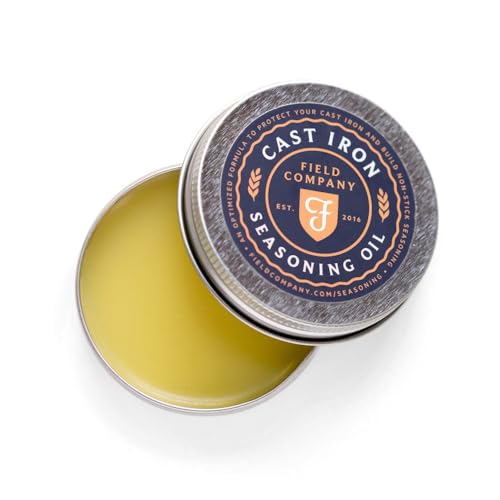
Cast Iron Seasoning Oil – Organic Grapeseed, Sunflower & Beeswax Blend for Conditioning & Restoring Cookware by Field Company
HOW TO USE: The key to naturally nonstick cast iron cookware? Cook often, and apply Seasoning Oil every…
As an affiliate, we earn on qualifying purchases.
As an affiliate, we earn on qualifying purchases.
What You Need to Know About Your Cast Iron: Seasoning, Material, and How It Works
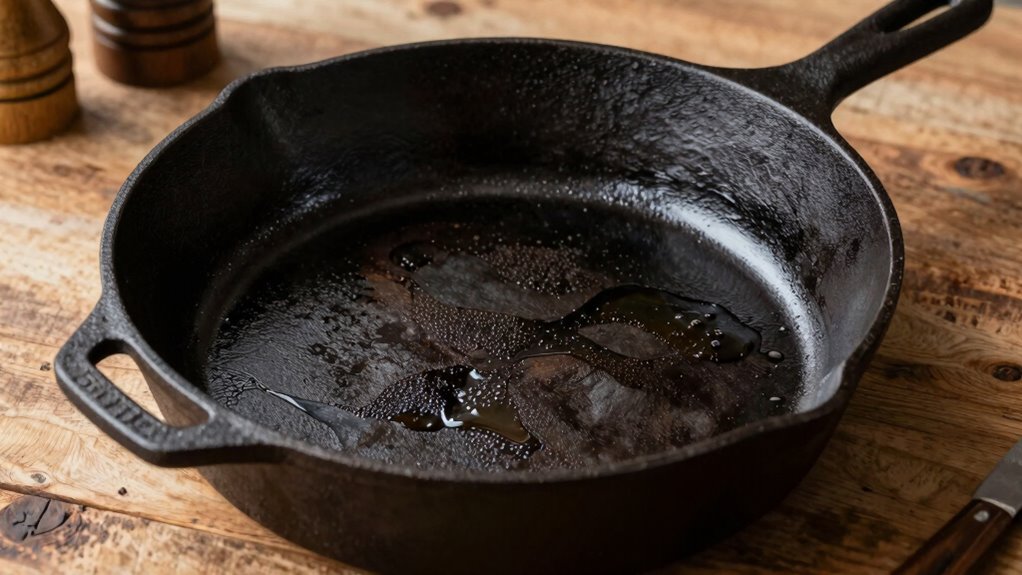
Understanding how your cast iron works starts with knowing about seasoning, which creates a natural non-stick surface. The material’s heat retention and distribution influence how your food cooks and how the pan responds to temperature changes. By mastering these basics, you’ll keep your cast iron in great shape and get the best results every time. Proper seasoning techniques also help prevent rust and maintain the pan’s longevity.
Seasoning Science Explained
To keep your cast iron skillet in top shape, maintaining proper seasoning is essential. Understanding the science behind seasoning clarifies many cast iron myths and seasoning myths alike. Your skillet’s seasoning isn’t just a coating; it’s a polymerized layer of fats baked onto the surface. When heated, these fats bond with the iron, creating a natural, non-stick surface. Many believe seasoning is a build-up needing frequent reapplication, but it actually develops over time with proper care. Some seasoning myths suggest that soap or harsh abrasives ruin the seasoning, but gentle cleaning doesn’t harm it if you reseason when needed. Knowing how seasoning forms and maintains itself helps you avoid unnecessary stripping and keeps your pan performing its best for years. Additionally, understanding the impact of high-quality seasoning layers can enhance your pan’s durability and cooking performance over time.
Material and Heat Dynamics
Your cast iron skillet’s performance hinges on more than just seasoning; it also depends on the materials it’s made from and how heat interacts with its surface. The material composition influences heat transfer efficiency, affecting how evenly your food cooks. Cast iron excels at retaining and distributing heat, thanks to its dense, thick construction. This property allows for steady cooking temperatures and fewer hot spots. Understanding heat dynamics helps you avoid thermal shock or warping, especially when moving between stove and oven. The better your skillet conducts and retains heat, the easier it is to achieve perfect searing or frying. Paying attention to material and heat flow ensures your cast iron remains durable and performs at its best, making your cooking experience more predictable and enjoyable. Additionally, awareness of heat flow can help prevent damage caused by sudden temperature changes, prolonging your skillet’s lifespan.

Rust Eraser, Premium Rust Remover for Cast Iron Pans, Knives & Tools, Hard Anodized Cookware and Other Pots, Remove Rust from Any Metallic Surface – 1 Pack
Non-Toxic and Safe: Our rust eraser is made of rubber and silicon carbide, and do not contain harmful…
As an affiliate, we earn on qualifying purchases.
As an affiliate, we earn on qualifying purchases.
How to Clean Your Cast Iron Without Removing the Seasoning

Cleaning your cast iron without stripping away the seasoning is all about gentle techniques that preserve that coveted patina. You want to maintain the seasoning while keeping your pan clean. Start by wiping it out with a dry paper towel or soft brush after each use. For tougher residue, use hot water and a gentle scrub brush—avoid soap, which can remove seasoning. To keep your seasoning in top shape, dry the pan thoroughly and apply a light coat of oil after cleaning. Here are some effective cleaning techniques:
- Use hot water and a soft brush for routine cleaning
- Wipe with a dry cloth or paper towel to remove moisture
- Lightly oil after each wash for seasoning maintenance
These steps help preserve your pan’s seasoning and extend its lifespan.

Lodge Seasoned Cast Iron Care Kit 5-Piece Set, One Size, Assorted
Includes 6 Ounce Seasoning Spray, Pan Scraper, Silicone Handle Holder, Scrub Brush, and Use and Care Booklet
As an affiliate, we earn on qualifying purchases.
As an affiliate, we earn on qualifying purchases.
Safe Ways to Remove Stuck-On Food From Your Pan
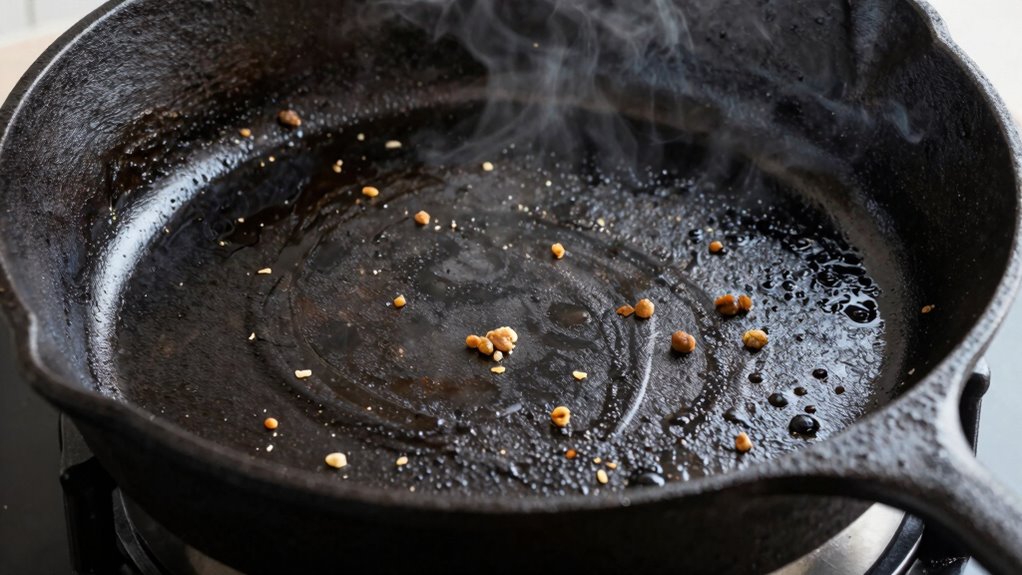
When food gets stuck, try softening it first by adding a bit of water and heating the pan gently. Once the residue is softened, use a non-abrasive tool like a wooden or plastic scraper to gently lift it away. This approach helps keep your seasoning intact while effectively cleaning your pan. Additionally, avoiding harsh abrasives preserves the seasoning layer, which is essential for non-stick performance.
Soften Food Residue
Stuck-on food can be frustrating to remove, but softening it first makes the process much easier. When dealing with food residue that’s stubborn, softening it helps loosen the debris and makes residue removal simpler. Here are three effective methods:
- Fill your pan with hot water and a little dish soap, letting it soak for 15-20 minutes to loosen residue.
- Boil water in the pan, then let it sit until the food residue softens, making it easier to wipe away.
- Use a mixture of coarse salt and water as a gentle abrasive to help break down stuck-on bits without damaging your seasoning.
Softening food residue before scraping preserves your pan’s seasoning while ensuring residue removal is safer and more efficient. Additionally, understanding the chemistry of seasoning can help you better care for your pan and maintain its non-stick properties.
Use Gentle Scraping
To remove stuck-on food safely, gentle scraping is key. Use a soft brush or non-abrasive scraper to loosen food without damaging the seasoning or causing rust removal issues. Avoid metal spatulas or harsh scrubbers, which can strip your pan’s seasoning and lead to rust. Instead, gently scrape the surface, applying light pressure to lift stubborn bits. For tougher spots, warm the pan slightly to soften residues before scraping. Afterward, rinse with warm water and dry thoroughly to prevent rust. Remember, aggressive scraping can damage your seasoned surface and introduce rust, so patience and gentle techniques protect your pan’s longevity. Regular, careful cleaning with gentle scraping keeps your cast iron in prime condition, ensuring many years of use. Incorporating inclusive casting practices in your cleaning routine can also help promote a more sustainable and respectful approach to maintaining your cookware.
When and How to Re-Season Cast Iron for Long-Lasting Non-Stick Performance
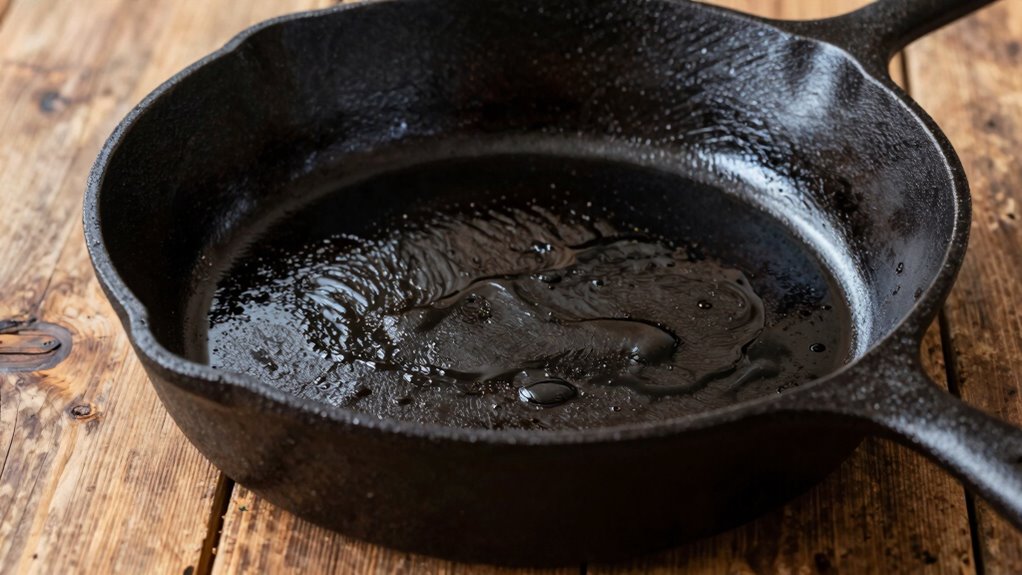
Re-season your cast iron whenever its non-stick surface begins to degrade or shows signs of rust. This is essential for proper pan restoration and maintaining its performance. The right timing depends on how often you cook with it and how well you care for it. Typically, you should re-season when food starts sticking or the coating looks dull. To re-season effectively:
Re-season your cast iron when food sticks or rust appears to keep it non-stick and durable.
- Clean the pan thoroughly, removing rust or old seasoning.
- Apply a thin layer of oil, like flaxseed or vegetable oil.
- Bake it upside down in the oven at 450°F for about an hour.
- Early warning signs such as dullness or rust are key indicators for re-seasoning needs.
Repeat this process as needed, especially if you notice the seasoning wearing thin. Regular seasoning frequency ensures your cast iron stays non-stick and durable over time.
Common Mistakes That Damage Your Cast Iron and How to Avoid Them
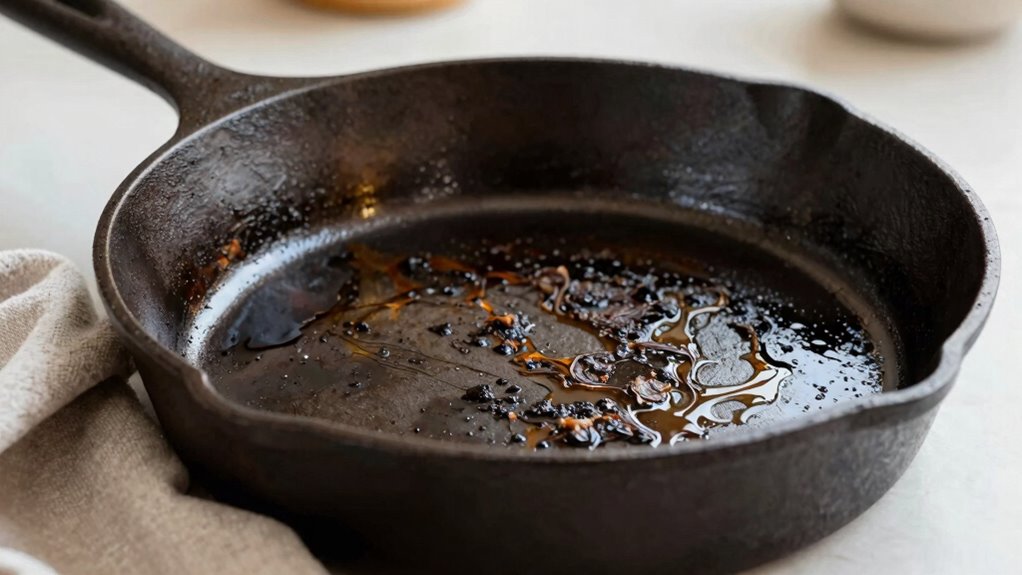
Neglecting proper care can quickly damage your cast iron skillet, undoing all the hard work of seasoning and maintenance. Common mistakes like seasoning build up or soap misuse can lead to rust, sticky surfaces, and loss of non-stick qualities. Over time, seasoning build up creates a rough, uneven surface that’s hard to clean and impairs cooking. Using soap improperly can strip away your seasoning, leaving your pan vulnerable to corrosion. To avoid these pitfalls, always clean with minimal soap and avoid harsh abrasives. Proper maintenance is essential for preserving your cast iron’s longevity and performance. Here’s what to watch for:
| Mistake | Consequence |
|---|---|
| Seasoning build up | Uneven cooking surface |
| Soap misuse | Stripped seasoning, rust |
| Excessive scrubbing | Damage to seasoning layer |
| Not drying thoroughly | Rust formation |
| Improper storage | Moisture buildup, rust |
Tips for Regular Maintenance and Preventing Rust
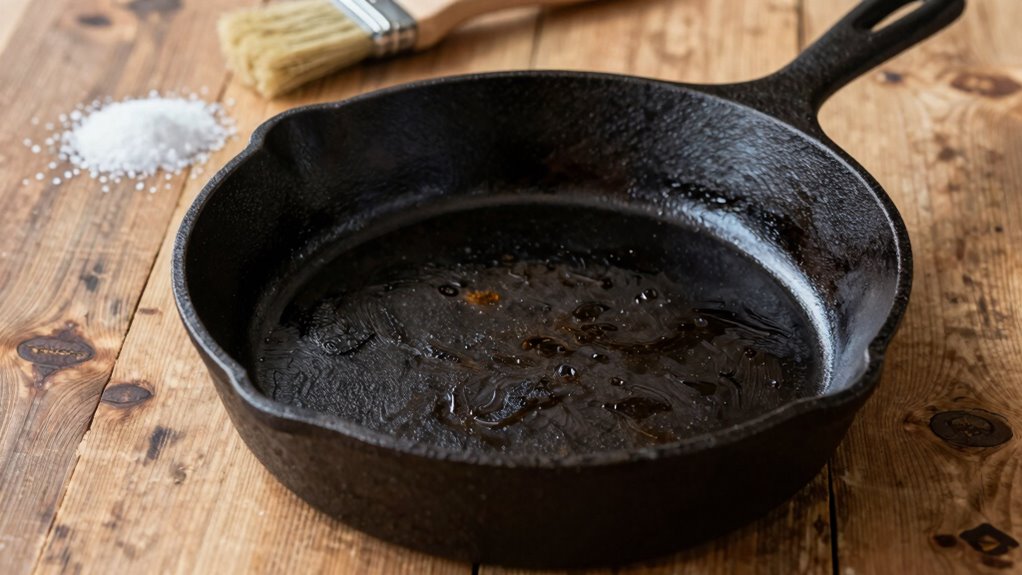
Regular maintenance is essential to keep your cast iron skillet in top condition and prevent rust from forming. Establishing a consistent maintenance schedule helps you stay proactive and avoid corrosion. To guarantee rust prevention, follow these tips:
- Clean your skillet immediately after use with hot water and a brush, avoiding soap.
- Dry thoroughly, then apply a thin layer of oil before storage to create a barrier against moisture.
- Store in a dry, well-ventilated area to prevent humidity buildup that leads to rust.
- Incorporate preventive measures such as periodic seasoning to maintain a protective layer and prolong the skillet’s lifespan.
Troubleshooting Dull or Rusted Cast Iron Pans
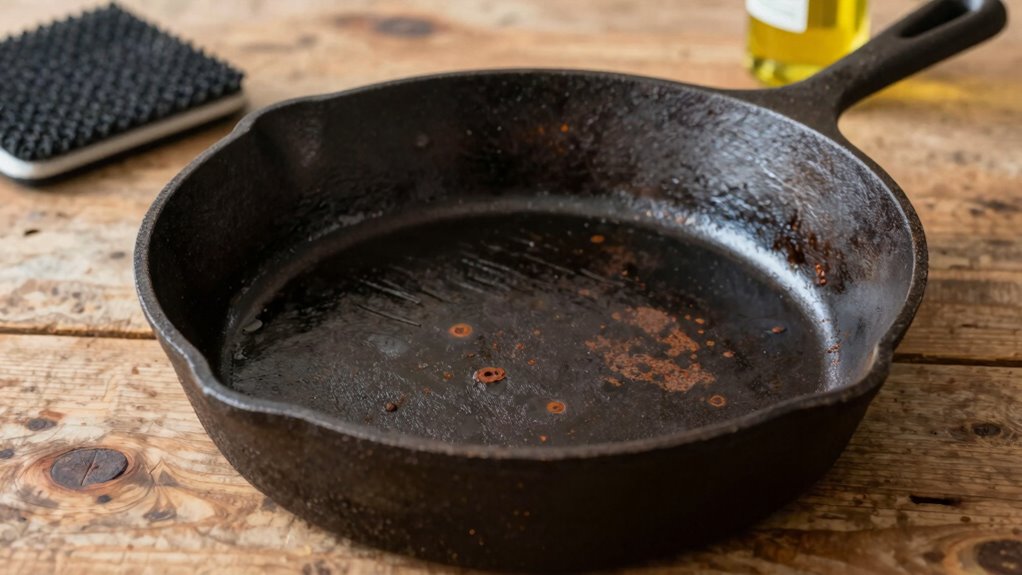
If your cast iron pan has become dull or rusted, addressing the issue promptly can save it from further damage. For cast iron restoration, start by removing rust using effective rust removal techniques like scrubbing with a mixture of coarse salt and a bit of water or applying a vinegar soak for stubborn spots. After rust removal, wash the pan thoroughly, then dry it completely. To restore its luster, reseason the pan with a thin layer of oil and bake it at high heat until it develops a shiny, protective coating. Regular maintenance can prevent future dullness or rust, but if issues persist, these simple rust removal techniques will help bring your cast iron back to life and extend its lifespan.
Frequently Asked Questions
Can I Use Soap on My Seasoned Cast Iron?
Yes, you can use dish soap on your seasoned cast iron, but do so sparingly. Dish soap won’t ruin your seasoning if used occasionally, and it helps with cleaning stubborn residue. Just rinse thoroughly and dry immediately to maintain your seasoning. Regularly cleaning with soap can actually help with seasoning maintenance, ensuring your pan stays non-stick and rust-free without stripping away the seasoned layer.
How Often Should I Re-Season My Cast Iron Pan?
Re-season your cast iron like watering a thirsty plant—when it starts to look dull or food sticks easily, it’s time. Typically, you should re-season every 6 months or after extensive cleaning. Keep in mind, proper seasoning frequency depends on how often you cook with it. For best results, follow re-seasoning tips like applying a thin coat of oil and baking it in the oven to maintain that slick, non-stick surface.
Is It Safe to Store Food Directly in Cast Iron?
Storing food directly in cast iron is generally safe, but you should consider food storage and cast iron safety. Cast iron is porous and can absorb flavors or moisture, leading to rust or flavor transfer. To prevent this, avoid storing highly acidic foods and always clean and dry your pan thoroughly after use. For added safety, use a paper towel or lid to protect the surface and maintain your pan’s seasoning.
What Temperature Is Best for Cooking With Cast Iron?
Think of cast iron as a chameleon—you can adapt its temperature to suit your needs. For best results, cook on medium heat to evenly distribute heat, preventing hot spots and sticking. Use seasoning tips like preheating and oiling to maintain a non-stick surface. Proper heat management is key; avoid high heat for delicate foods, and always monitor your pan to keep it in prime condition for perfect cooking every time.
How Do I Prevent Rust on My Cast Iron During Storage?
To prevent rust on your cast iron during storage, always apply a thin oil coating after cleaning, which creates a protective barrier. Make sure you dry the pan thoroughly with a towel or heat it gently to remove any moisture. Store your cast iron in a dry, low-humidity place, and avoid stacking other cookware on top. Proper drying and oil coating are key to keeping rust at bay.
Conclusion
By mastering these care techniques, your cast iron pan can last a lifetime. But beware—rare mistakes can silently sabotage your efforts, turning your prized tool into a rusted relic. Stay vigilant, keep up with proper cleaning and seasoning, and your pan will reward you with unbeatable performance. Are you ready to unleash its full potential? The secret to flawless cooking lies just beneath the surface—are you prepared to discover it?