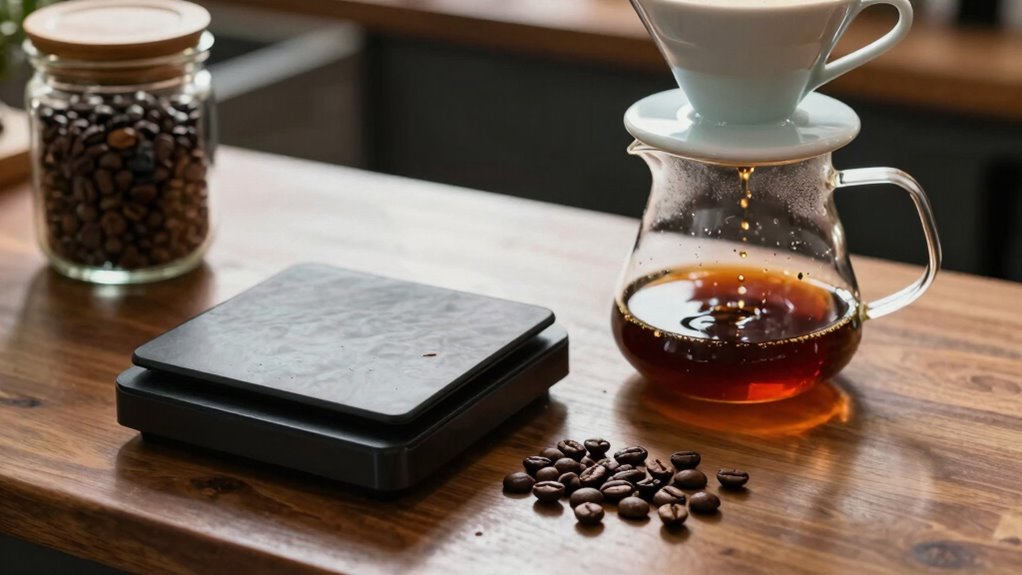
Understanding coffee brewing ratios is key to making a great cup. A basic rule is the 1:15 coffee-to-water ratio, meaning you’ll use about 10g of coffee for every 150ml of water. Different brewing methods like drip or French press have specific ratios too. Adjusting these ratios based on your taste can transform your coffee experience. Plus, the grind size you choose can also impact flavor. Stick around to discover more tips for achieving your perfect brew.
Key Takeaways
- The standard coffee-to-water ratio is typically 1:15, meaning 1 gram of coffee for every 15 grams of water.
- For a stronger brew, increase the coffee amount; for a milder taste, decrease it while maintaining the ratio.
- Different brewing methods may require different ratios; for example, French press often uses a 1:12 ratio for richer flavors.
- Consistent grind size is essential, as it affects extraction; coarser grinds work better with longer brew times.
- Accurate measurements using scales enhance consistency and flavor, allowing for effective experimentation with different coffee types.

Maestri House Mini Coffee Scale with Timer, USB-C Rechargeable Espresso Scale, 2kg/0.1g Accurate Scale for Espresso and Pour-Over Coffee, Portable Digital Kitchen Scale with Auto Timer (Black&Silver)
【Ultra Small, Yet Professional】The Espresso Scale is small enough to fit in your palm. It measures 4.13*4.13*0.78 inches…
As an affiliate, we earn on qualifying purchases.
As an affiliate, we earn on qualifying purchases.
How to Brew Coffee: The Essential Ratios
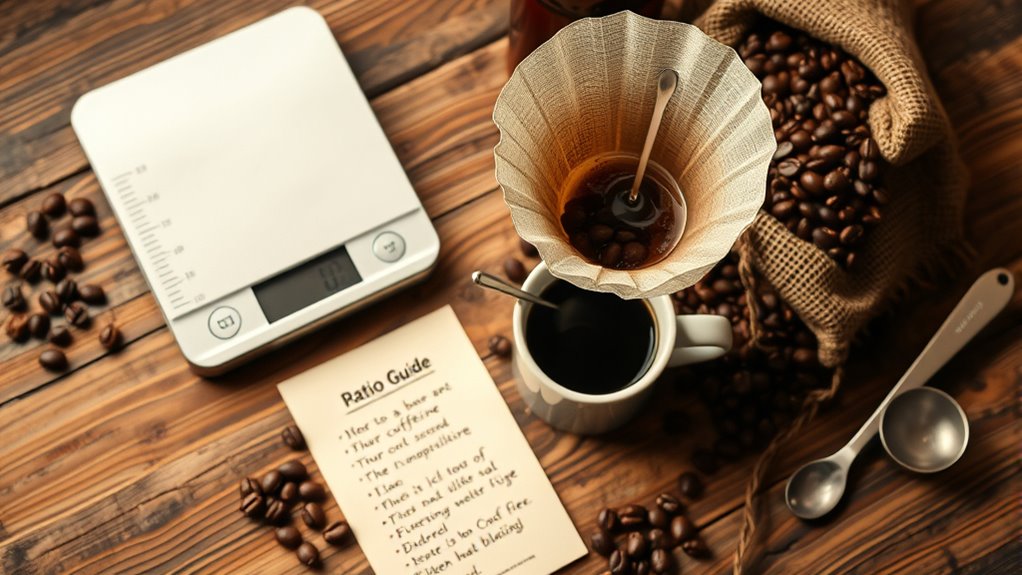
When brewing coffee, understanding the essential ratios can make all the difference in achieving that perfect cup. You’ll want to take into account the coffee origin because different beans have unique flavor profiles that can affect your brewing ratio. For instance, a light roast from Ethiopia may require a different approach than a bold Sumatra. Recognizing how coffee gear influences extraction can help you fine-tune your brewing process for optimal flavor. Additionally, pay attention to the brewing temperature. Ideally, you should aim for water between 195°F and 205°F. If your water’s too hot, it can extract unwanted bitterness; too cool, and you’ll miss out on rich flavors. By combining the right coffee origin with precise brewing temperatures and ratios, you’ll reveal a flavorful experience that truly showcases your chosen coffee bean.

Veken French Press Coffee Maker 34oz, No Plastic Touching Cafe,Thickened Glass Stainless Steel Brewer, Cold Brew Cafetera Tea pot for Kitchen Travel Camping, Gifts, Decor, Bar Accessories, Dark Pewter
No Plastic Touching Food: Made with 304 stainless steel and food-grade silicone, our French press keeps all brewing…
As an affiliate, we earn on qualifying purchases.
As an affiliate, we earn on qualifying purchases.
The Basic Coffee-to-Water Ratio You Need to Know
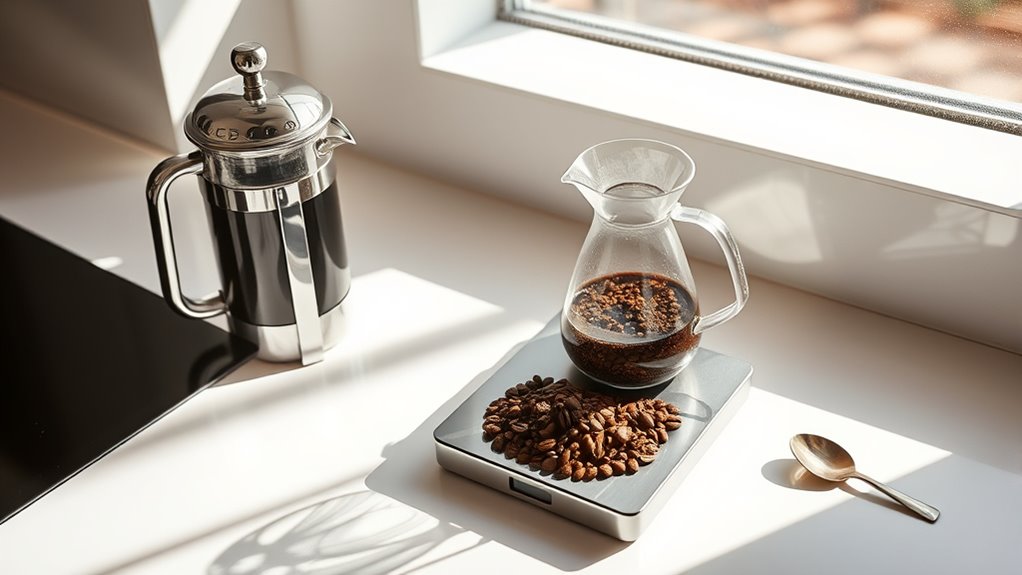
To brew a great cup of coffee, knowing the right coffee-to-water ratio is essential. This ratio directly impacts coffee strength and flavor, so it’s vital to get it right. A common guideline is to use 1:15, meaning one part coffee to fifteen parts water. However, you can adjust based on your taste preferences and the water temperature, which should ideally be between 195°F and 205°F.
| Coffee (g) | Water (ml) |
|---|---|
| 10 | 150 |
| 15 | 225 |
| 20 | 300 |
| 25 | 375 |
| 30 | 450 |
Experiment with these ratios to find what suits your palate best, and enjoy your perfect brew!

Ollygrin Burr Coffee Grinder Electric, Conical Coffee Grinder with Adjustable Grinding, Touchscreen Burr Mill Grinder for Home, Up to 12 Cups, Upgraded for Espresso, Drip & French Press
30 Adjustable Grind Settings: The Ollygrin coffee bean grinder offers precise grind adjustments ranging from fine for espresso…
As an affiliate, we earn on qualifying purchases.
As an affiliate, we earn on qualifying purchases.
Brewing Methods and Their Ideal Ratios
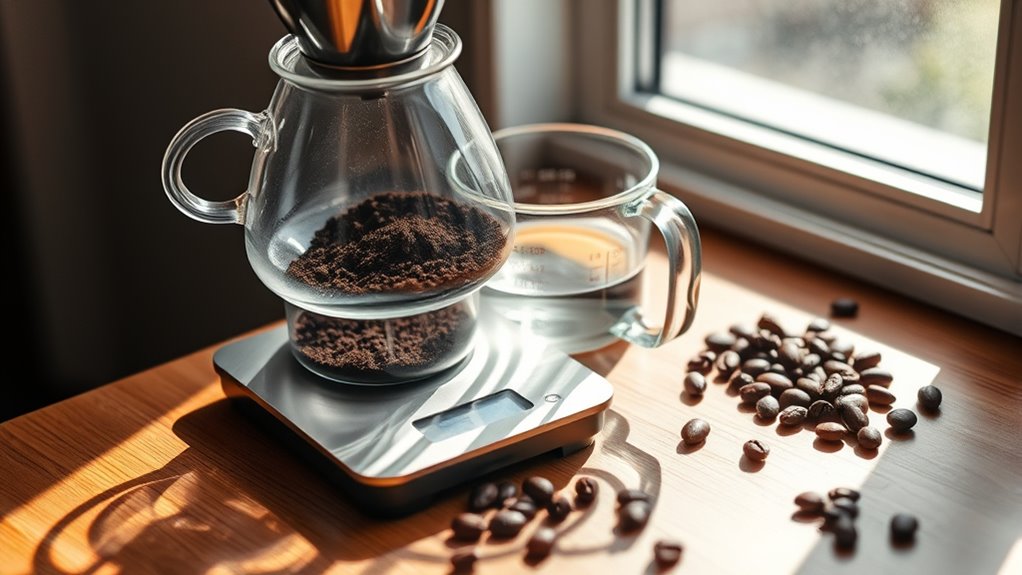
When it comes to brewing coffee, different methods require different ratios. For example, drip coffee typically uses a 1:15 ratio, while the French press leans toward a 1:12 ratio for a richer flavor. Understanding these ideal ratios can elevate your brewing game considerably. Additionally, knowing coffee grind size is essential, as it directly impacts extraction and flavor at each ratio.
Drip Coffee Ratios
Drip coffee brewing is all about precision, and getting the right coffee-to-water ratio can make or break your cup. Typically, you’ll want to use about 1 to 2 tablespoons of coffee for every 6 ounces of water. This ratio can vary based on your taste preferences and the drip technique you’re using. Experimenting with these amounts will help you find your sweet spot. Keep in mind that the brew time also plays an essential role; longer brews extract more flavors but can lead to bitterness if overdone. Aim for a brew time of about 4 to 6 minutes for ideal results. Mastering these ratios will elevate your drip coffee experience and guarantee a consistently delicious cup.
French Press Ratios
French press brewing offers a robust flavor profile that many coffee enthusiasts love. To get the most out of your french press techniques, it’s essential to stick to the right ratios. Generally, a 1:15 coffee-to-water ratio is preferable, but you can adjust it based on your taste. Here are some tips to enhance your brewing experience:
- Use coarsely ground coffee for maximum extraction.
- Stick to a brewing time of 4 minutes.
- Experiment with different coffee beans for unique flavors.
- Preheat your french press to maintain temperature.
- Don’t forget to stir after adding water for even saturation.
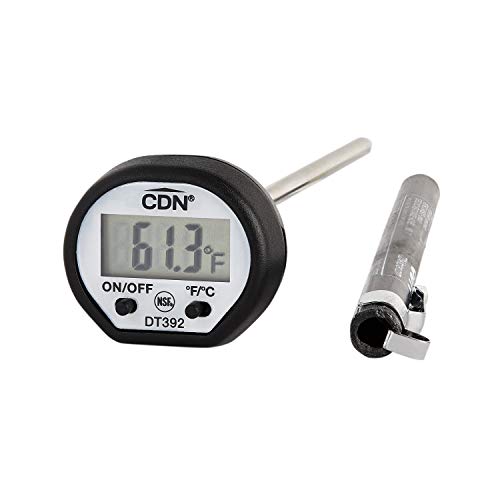
CDN Digital Thermometer | NSF Certified | ProAccurate® | 5" Stem with Protective Sheath | For Meat, Poultry, Candy | Easy One-Button Operation | DT392
Measurement Range: -50 to +392°F/-45 to +200°C
As an affiliate, we earn on qualifying purchases.
As an affiliate, we earn on qualifying purchases.
Adjusting Ratios for Your Taste Preferences
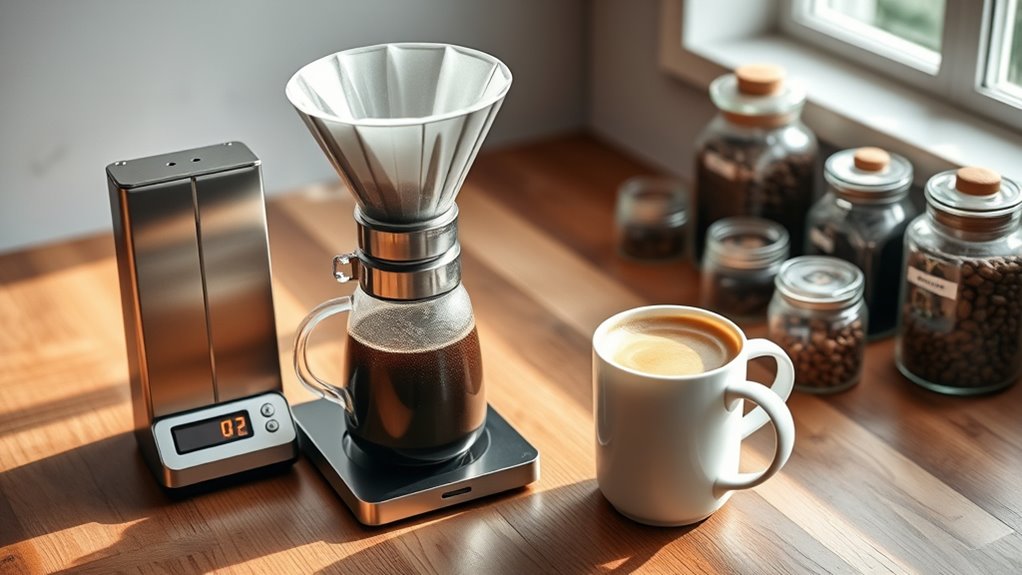
When it comes to brewing coffee, adjusting your ratios can make all the difference in strength and flavor. You might prefer a bolder brew or something more subtle, so don’t hesitate to experiment until you find your perfect balance. Remember, your taste preferences are unique, and that’s what makes your coffee experience special. Additionally, understanding proper brewing ratios can help ensure consistency and optimal flavor in every cup. For example, mastering milk steaming techniques can enhance the overall balance of your espresso drinks, especially when adjusting milk-to-coffee ratios.
Adjusting For Brew Strength
To achieve the perfect cup of coffee tailored to your taste, adjusting the brewing ratio is essential. Strength adjustments can greatly impact your brewing preferences, so it’s important to experiment until you find what you love. Here are some tips to guide you:
- Start with a standard ratio (1:15 or 1:16) and adjust from there.
- If you prefer a stronger brew, increase the coffee-to-water ratio.
- For a milder taste, decrease the amount of coffee.
- Take notes on each brew to track your preferences.
- Don’t be afraid to tweak ratios based on the coffee type or roast level.
Flavor Profile Preferences
Finding the right brewing ratio isn’t just about strength; it also influences the flavor profile of your coffee. By adjusting the coffee-to-water ratio, you can enhance specific flavor notes that resonate with your palate. For instance, a higher coffee ratio often emphasizes bold, rich flavors, while a lower ratio can bring out subtler notes, creating a more delicate taste balance. If you prefer fruity or floral undertones, experiment with ratios that spotlight those characteristics without overwhelming bitterness. Remember, your ideal flavor profile is subjective, so don’t hesitate to tweak your ratios until you find that perfect harmony. Ultimately, it’s all about crafting a brew that satisfies your personal taste preferences and elevates your coffee experience.
Experimenting With Ratios
As you immerse yourself in the world of coffee brewing, experimenting with ratios can reveal a whole new level of flavor tailored to your taste. Adjusting your coffee-to-water ratio is one of the simplest yet most impactful brewing techniques. Here are some tips to help you find your perfect blend:
- Start with a standard ratio (1:15) and adjust from there.
- Increase coffee for a stronger flavor or decrease for a milder taste.
- Keep notes on each experiment to track what works best.
- Try different brewing methods, as each may highlight various flavor profiles.
- Don’t hesitate to brew small batches to minimize waste while you fine-tune.
- Exploring regional flavor profiles can also enhance your understanding of how ratios influence taste.
- Remember that brew strength can be affected by factors beyond ratios, such as grind size and brewing time, so consider these variables as you experiment.
- Understanding coffee chemistry can help you grasp how extraction and solubility impact your final brew.
- Gaining knowledge about water quality is essential, as minerals and pH levels can significantly alter the extraction process and flavor.
- Additionally, using proper maintenance of your brewing equipment ensures consistent results and optimal flavor.
How Grind Size Affects Brewing Ratios

While you might not realize it, the grind size of your coffee beans plays an essential role in determining the ideal brewing ratio. A consistent grind helps guarantee uniform extraction, which is imperative for achieving that perfect cup. If your grind is too coarse, you might find that the brew time needs to be prolonged to extract enough flavor. Conversely, a fine grind can lead to over-extraction in a short brew time, resulting in bitterness. It’s all about finding the right balance; adjusting your grind consistency can help you dial in the perfect ratio. Experimenting with different grind sizes will not only enhance your coffee experience but also help you understand how each factor affects your brewing process.
Avoid These Common Coffee Brewing Mistakes
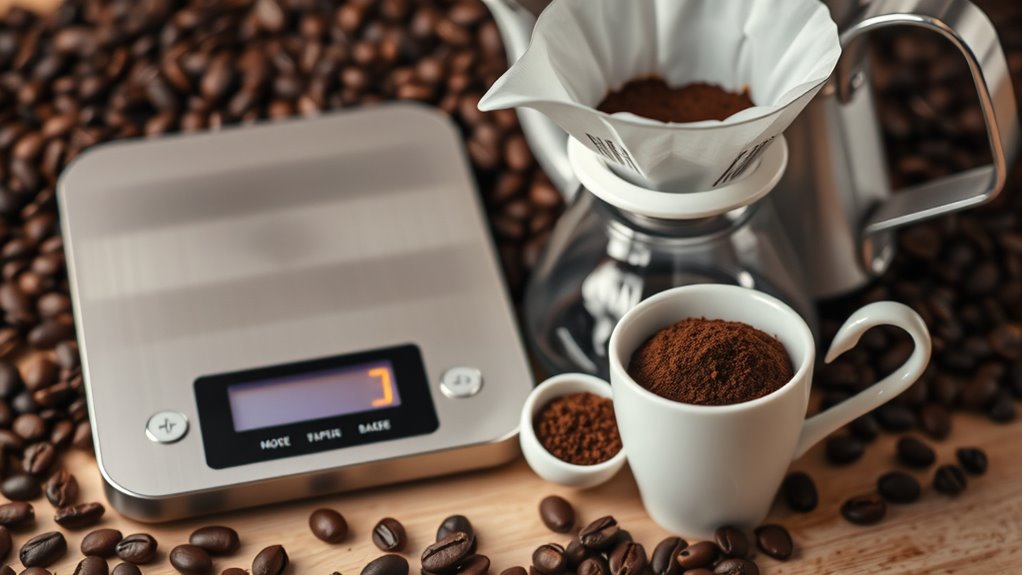
Even with the right grind size, brewing coffee can still go awry if you’re not careful. Many coffee enthusiasts make common mistakes that lead to poor flavor and wasted beans. Here are some brewing errors to avoid:
- Using stale coffee: Freshness matters; always check the roast date.
- Over or under-extracting: Adjust your brew time for the best balance.
- Ignoring water temperature: Aim for 195-205°F for ideal extraction.
- Not pre-wetting your filter: This can affect taste and flow rate.
- Neglecting cleanliness: Regularly clean your equipment to avoid off-flavors.
Scales vs. Scoops: Measuring Coffee Accurately
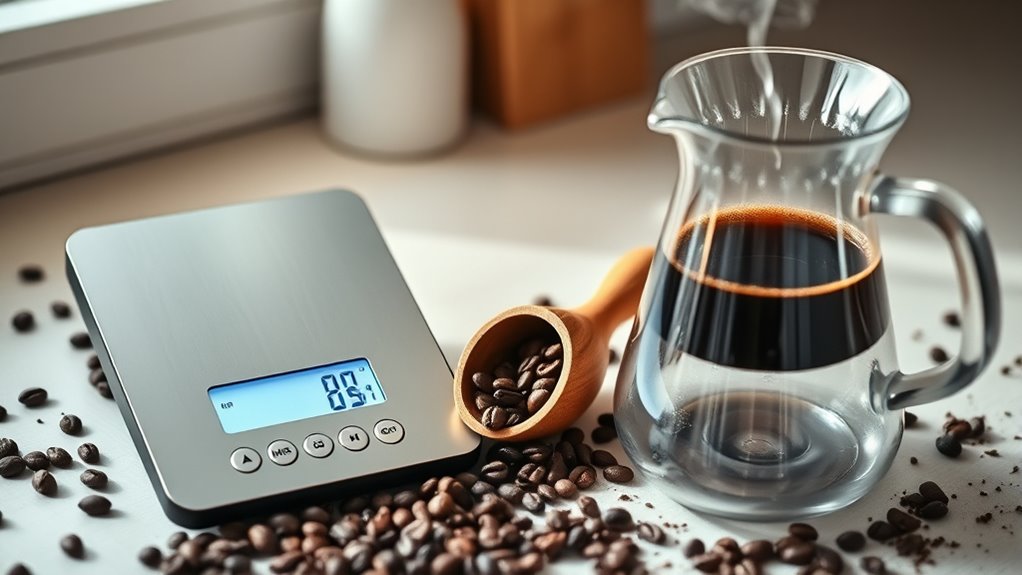
How can you guarantee your coffee is brewed to perfection? The answer lies in your measuring techniques. While scoops can be convenient, they often lead to inconsistencies. A coffee scale, on the other hand, provides precise measurements, ensuring you get the right coffee-to-water ratio every time. By weighing your coffee, you eliminate guesswork and can replicate your favorite brews with ease.
Using a scale allows you to adjust your measurements based on different coffee types and preferences, enhancing your overall brewing experience. So, ditch the scoop and invest in a quality coffee scale. You’ll quickly notice the difference in flavor and consistency, making each cup a reflection of your commitment to coffee excellence.
Finding Your Perfect Brew: Experimenting With Ratios
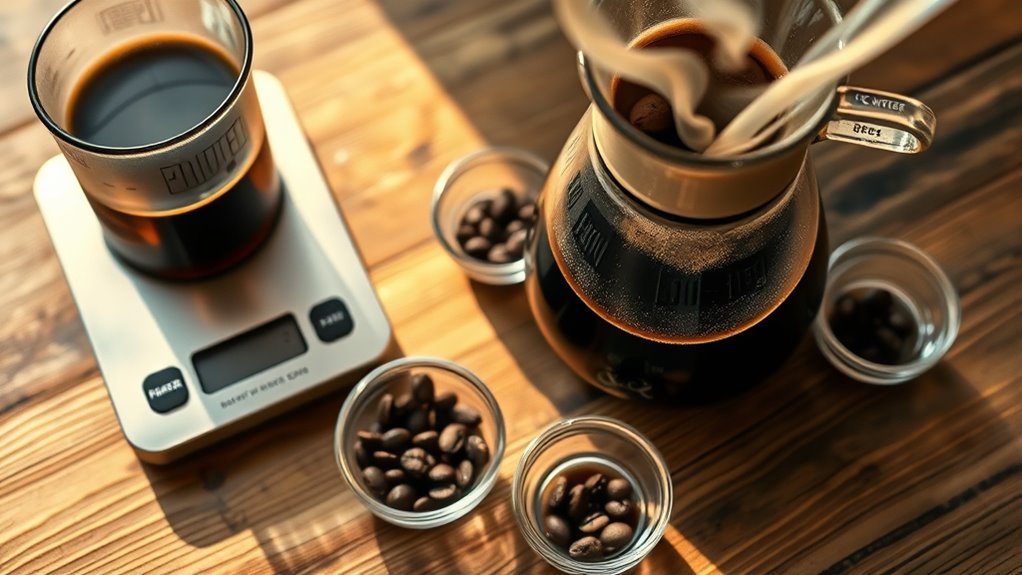
What’s the secret to discovering your ideal cup of coffee? It’s all about experimenting with brewing ratios and techniques! By adjusting the amount of coffee to water, you can reveal a world of flavor exploration. Here are some tips to help you find that perfect brew:
Discovering your perfect cup of coffee is a journey of experimentation with brewing ratios and techniques!
- Start with a 1:15 ratio and adjust from there.
- Try different brewing methods like pour-over, French press, or espresso.
- Take notes on each brew to track what you enjoy.
- Taste as you experiment; your palate is your best guide.
- Don’t be afraid to mix it up; creativity leads to new favorites!
With a little patience and a willingness to explore, you’re bound to find a brew that delights your taste buds!
Tips for Consistency in Coffee Brewing
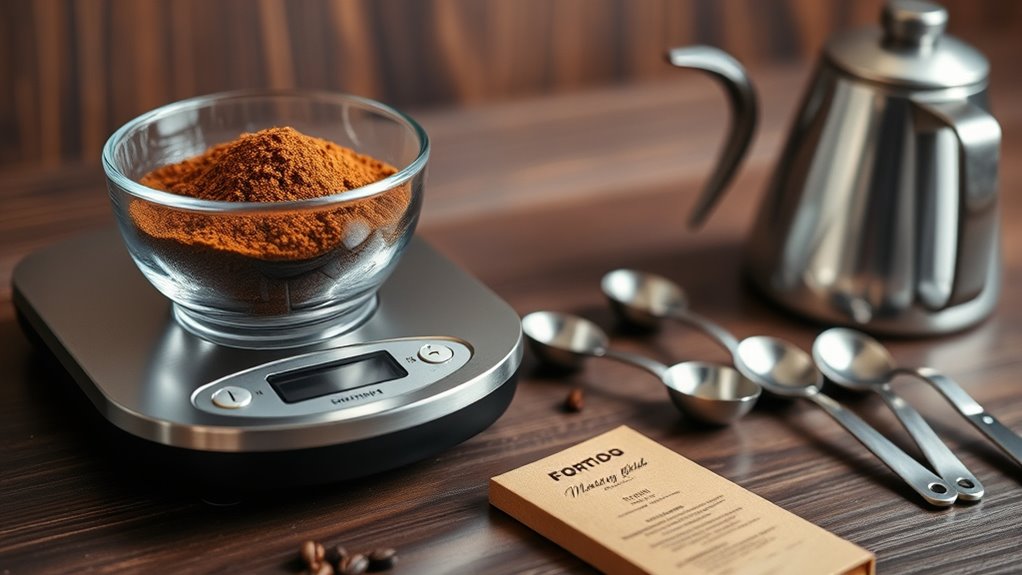
While experimenting with brewing ratios can lead to exciting discoveries, maintaining consistency is essential for replicating your favorite cup. To achieve brewing consistency, start by using a scale to measure your coffee and water accurately. Keep your grind size uniform, as this impacts extraction and flavor balance. Stick to a specific brewing method, whether it’s a French press, pour-over, or espresso, to guarantee you’re following the same process each time. Additionally, pay attention to water temperature and brew time; these factors can greatly alter your results. Finally, take notes on each brew, so you can adjust and refine your technique. With these tips, you’ll enjoy a consistently delicious cup every time.
Frequently Asked Questions
Can I Reuse Coffee Grounds for a Second Brew?
Yes, you can reuse coffee grounds for a second brew! To maximize flavor extraction, try using the grounds within a few hours of the first brew. For better results, consider using a slightly longer steep time or adding fresh grounds to the mix. Keep in mind that the flavor might be weaker, so experiment with different reuse techniques to find what works best for your taste. Enjoy your second cup!
What Type of Water Is Best for Brewing Coffee?
The best type of water for brewing coffee is filtered water. It removes impurities that can affect the taste, ensuring your brew’s flavor shines. Look for water with balanced mineral content; too many minerals can overpower your coffee, while too few can lead to a flat taste. Using filtered water helps you achieve that perfect cup, enhancing the coffee’s natural flavors without any unwanted aftertastes. So, grab that filter and enjoy!
How Does Altitude Affect Coffee Brewing Ratios?
Altitude affects coffee brewing ratios mainly because it changes the brewing temperature and pressure. At higher altitudes, water boils at lower temperatures, which can lead to under-extraction if you don’t adjust your ratios. You might need to increase the coffee-to-water ratio or brew for a longer time to compensate. Keep an eye on your brewing temperature and adjust accordingly to guarantee you get the best flavors from your coffee.
Can I Use Flavored Coffee Beans in My Brewing Ratios?
Absolutely, you can use flavored coffee beans in your brewing ratios! In fact, studies show that about 30% of coffee drinkers prefer flavored options over traditional beans. Keep in mind, flavored beans can greatly impact the taste, so you might want to adjust your ratios slightly. Experimenting with different amounts helps you find the perfect balance between the flavorings and the coffee’s natural profile, creating a delicious cup tailored to your taste!
Does the Age of Coffee Beans Affect Brewing Ratios?
Yes, the age of coffee beans definitely affects brewing ratios. Freshness impacts the flavor and aroma, meaning older beans might require adjustments in your ratios to extract the best taste. If your beans have been improperly stored, their quality diminishes even faster, leading to a less satisfying cup. Always aim to use freshly roasted beans and store them properly to maintain their flavor profile, ensuring your brewing ratios yield the best results.
Conclusion
Now that you understand coffee brewing ratios, you can elevate your daily cup into something extraordinary. Did you know that using the right ratio—like 1:15 coffee to water—can result in a brew that’s 20% more flavorful? Imagine savoring a rich, aromatic cup that perfectly balances boldness and smoothness. Keep experimenting with different methods and ratios to find your ideal brew. With a little practice, you’ll consistently enjoy coffee that’s not just good, but truly great!