
Water quality greatly impacts the flavor of your coffee. It influences extraction, aroma, and acidity, making it essential to choose the right water. Consider mineral content, pH levels, and temperature as they all shape your brew. Hardness, sodium levels, and chlorine can alter taste, while the ideal pH promotes balance. Monitoring these factors can elevate your coffee experience. Keep exploring how to optimize your water chemistry for that perfect cup!
Key Takeaways
- Water quality, including mineral content and pH level, significantly influences the extraction and flavor profile of coffee.
- Ideal brewing water should have balanced minerals, with a pH between 6.5 and 7.5 for optimal taste.
- Water temperature between 195°F and 205°F is crucial for preventing over-extraction or under-extraction during brewing.
- Chlorine and impurities in water can negatively affect coffee flavor, making proper filtration essential.
- Consistent water chemistry ensures uniform brewing results, enhancing the overall coffee experience.

Waterdrop Water Filter Pitcher with 1 Filter, 200-Gallon Long-Life, 10-Cup Large Water Filter Pitcher, Improved Coffee & Tea Taste, NSF Certified, 5X Times Lifetime, Reduces PFOA/PFOS, Chlorine, Blue
Quality Life, Elite Choice: This filter water pitcher with lid has an efficient filtration effect, essential for any…
As an affiliate, we earn on qualifying purchases.
As an affiliate, we earn on qualifying purchases.
Choosing the Right Water for Brewing
When it comes to brewing coffee, the quality of your water can make all the difference. You’ve got several options like spring water, filtered water, and mineral water, each affecting your brew uniquely. Tap water may seem convenient, but its chlorine and minerals can alter the taste. Bottled water offers a quick solution, but be mindful of its source and quality. Distilled water lacks minerals, which can lead to a flat flavor. Pay attention to water hardness, as it influences extraction and overall taste. The right choice balances minerals to enhance your coffee’s profile without overpowering it. Experimenting with different types will help you find the perfect match for your brewing style. Additionally, understanding the impact of water chemistry on extraction can help you optimize flavor and achieve a consistently great cup. Properly managing water mineral content ensures your coffee maintains its optimal flavor profile and quality.

Varify 17in1 Complete Drinking Water Test Kit – 100 Strips + 2 Bacteria Tester Kits – Well, Tap, Home, City Water Testing Strip for Lead, Alkaline, Chlorine, Hardness, Iron, Fluoride, Copper & More
17 IMPORTANT PARAMETERS: The Varify Premium Drinking Water Test Kit offers an unrivaled, complete analysis of your drinking…
As an affiliate, we earn on qualifying purchases.
As an affiliate, we earn on qualifying purchases.
The Importance of Water Quality for Coffee Flavor
Water quality plays an essential role in shaping your coffee’s flavor. The mineral content, pH level, and temperature all influence how your brew tastes and how well it extracts the coffee’s rich notes. By understanding these factors, you can elevate your coffee experience considerably.
Mineral Content Impact
The mineral content in your brewing water plays a crucial role in shaping the flavor profile of your coffee. Achieving the right mineral balance is essential, as it can enhance extraction and influence taste. Consider these factors:
- Water Hardness: Hard water, rich in calcium and magnesium, can create a smoother, fuller flavor, while soft water may lead to a flat taste.
- Sodium Levels: Low sodium levels are preferable; too much can create a salty flavor that masks your coffee’s natural notes.
- Chloride Presence: A small amount of chloride can enhance sweetness, but excessive amounts can overpower other flavors.
pH Level Influence
Mineral content directly affects not just the flavor but also the pH level of your brewing water, which can profoundly influence your coffee’s taste. When you perform pH testing on your water, you’ll find that an ideal pH range—ideally between 6.5 and 7.5—helps maintain a proper acidity balance. If your water’s too acidic or too alkaline, it can overpower the natural flavors of your coffee beans, leading to a less enjoyable cup. You might notice sour or bitter notes that could mask the rich flavors you love. By ensuring your water’s pH is within that ideal range, you set the stage for a balanced and flavorful coffee experience. Quality water is key to revealing the best in your brew.
Temperature Effects
Although you might not think about it, temperature plays an essential role in extracting flavors from your coffee grounds. The right temperature range can enhance the brewing process, leading to a more flavorful cup. Here’s why it matters:
- Flavor Extraction: Different temperatures extract different flavor compounds; lower temps may yield sour notes, while higher temps can bring out bitterness.
- Brewing Techniques: Methods like pour-over or French press require specific temperatures for ideal results—too hot or too cold can ruin your brew.
- Consistency: Maintaining a stable temperature throughout the brewing process guarantees that your coffee tastes great each time you make it.
Paying attention to temperature can elevate your coffee experience greatly!

VIVOSUN Digital pH and TDS Meter Kits, 0.01pH High Accuracy Pen Type pH Meter ± 2% Readout Accuracy 3-in-1 TDS EC Temperature Meter for Hydroponics, Pool and Aquarium, Yellow Blue, UL Certified
Application: Great for all home and laboratory TDS & pH testing applications including aquariums, swimming pools
As an affiliate, we earn on qualifying purchases.
As an affiliate, we earn on qualifying purchases.
How Water Chemistry Influences Coffee Flavor
When you brew coffee, the water you use plays an essential role in shaping its flavor profile. Water hardness affects how well flavors are extracted from the coffee grounds. A balanced mineral content enhances flavor extraction, leading to a richer taste. If the mineral balance is off, you might end up with weak or overly bitter coffee. Additionally, different water sources can introduce unique flavors, influencing your overall taste perception. Consistent brewing requires stable water chemistry; otherwise, you may experience fluctuating results. By paying attention to the water hardness and mineral balance, you can achieve a more enjoyable and consistent cup of coffee, maximizing your brewing experience. Water quality plays a crucial role in maintaining optimal extraction and flavor clarity.

COFFEE WATER Mineral Packs for Making Water for Coffee (Makes 25 Gallons)
COFFEE WATER mineral packs turn pure water into the optimal water for brewing a truly amazing cup of…
As an affiliate, we earn on qualifying purchases.
As an affiliate, we earn on qualifying purchases.
How pH Levels Affect Coffee Extraction?
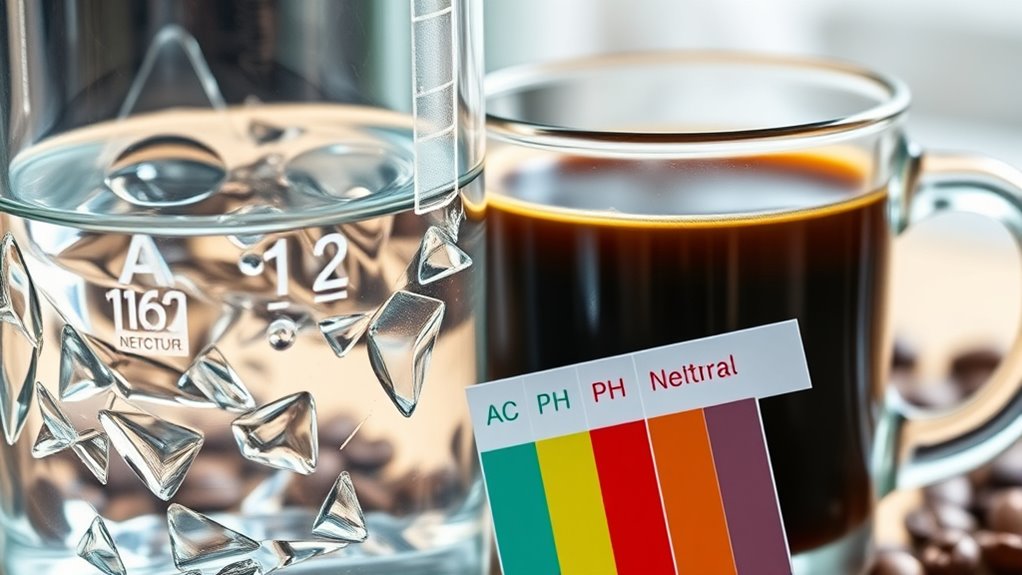
When brewing coffee, the pH level of your water can greatly affect extraction. Water that’s too acidic or alkaline can alter the flavor profile, leading to either sour or bitter notes. Finding the ideal pH range is key to achieving that perfect cup you crave.
Optimal pH Range
Understanding the ideal pH range for your coffee water is essential, as it greatly influences the extraction process. The pH level impacts how flavors are extracted, leading to a better cup of coffee. Aim for a pH measurement between 6.5 and 7.5 for perfect brewing. Here are three reasons why pH matters:
- Flavor Balance: The right pH helps to extract the full spectrum of flavors, enhancing the taste.
- Bitterness Control: A balanced pH can reduce undesirable bitterness, making your coffee smoother.
- Consistency: Maintaining the perfect range promotes consistent brewing results, ensuring every cup is just as good as the last.
Acidic Vs. Alkaline Effects
While pH levels can seem technical, they play an essential role in how your coffee tastes. The acidic balance of your water can enhance the extraction of flavors, highlighting the bright notes in your brew. If your water leans too acidic, it might lead to an overly sharp or sour flavor. On the other hand, alkaline benefits come into play when your water has a higher pH. This can help mellow out the coffee’s taste, making it smoother and less bitter. However, if the pH is too high, it can suppress the desirable flavors. Striking the right pH balance is key to achieving that perfect cup, allowing you to enjoy all the nuances in your favorite beans. Proper water quality is crucial for optimal extraction and flavor profile.
Flavor Profile Influence
As you explore the flavor profile of your coffee, you’ll find that pH levels greatly impact extraction. The acidity or alkalinity of your water can enhance or mute certain flavors in your brew. Here are three key factors to take into account:
- Flavor Extraction: Lower pH (more acidic) water tends to extract brighter, fruitier notes, while higher pH (more alkaline) can emphasize earthy, bitter undertones.
- Water Hardness: Hard water, rich in minerals, can affect the balance of flavors, often leading to a fuller body but potentially dulling delicate notes.
- Brew Method: Different brewing methods react uniquely to pH levels, so adjust your water accordingly for the best extraction and flavor.
Understanding these nuances can elevate your coffee experience considerably!
Why Water Temperature Matters for Your Brew?
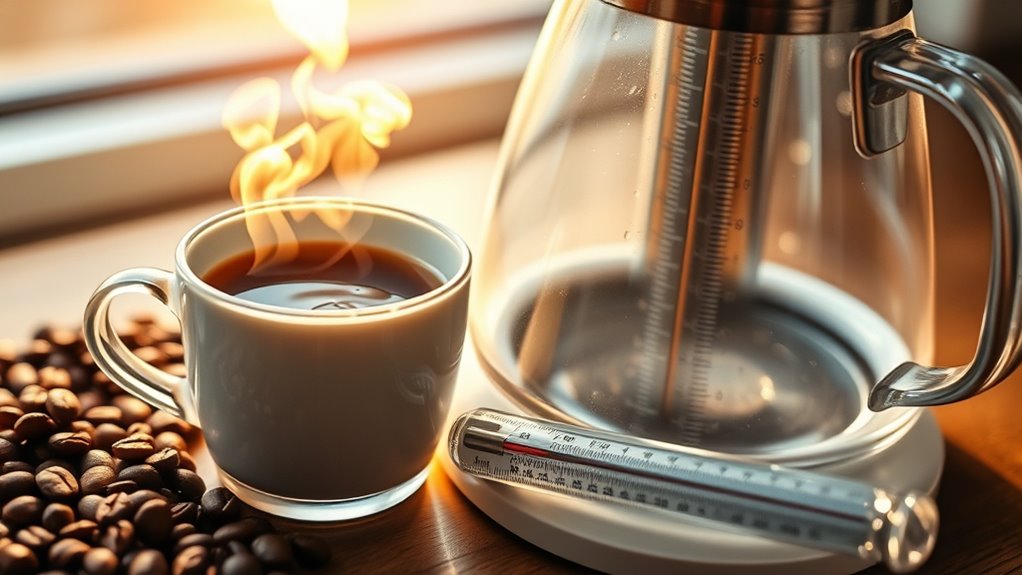
Water temperature plays an essential role in how your coffee turns out, affecting both flavor extraction and overall brewing quality. The ideal brew temperature usually ranges between 195°F and 205°F. When your water’s too hot, you risk over-extraction, which can lead to bitter flavors. Conversely, if it’s too cold, you might under-extract, resulting in a weak and sour brew. Finding that sweet spot improves extraction efficiency, allowing your coffee’s essential oils and flavors to shine through. Adjusting your brew temperature can greatly enhance your cup, ensuring you enjoy the rich taste and aroma that good coffee offers. So, keep an eye on that thermometer—it’s critical for brewing the perfect cup! Proper temperature control is key to consistent and optimal flavor.
Fixing Common Water Issues

How can you guarantee your coffee tastes its best when water issues arise? Start by addressing common problems with a few simple solutions:
- Invest in water filtration: Use a good quality filter to remove chlorine and other impurities that can negatively affect flavor.
- Check mineral balance: Make sure your water has the right levels of minerals like calcium and magnesium. Too much or too little can lead to dull-tasting coffee.
- Test your water regularly: Use a water testing kit to identify pH and mineral content. This helps you adjust your filtration system as needed.
Tips for Experimenting With Water Chemistry in Your Brew
While you might think you have your coffee routine down, experimenting with water chemistry can elevate your brew to new heights. Start by testing different types of water, like filtered, bottled, or even distilled. Each will bring out unique flavors in your coffee. Consider adjusting the mineral content too; adding calcium or magnesium can enhance extraction and balance acidity. Keep track of your brew variations by documenting each experiment. Note the water source, mineral levels, and resulting taste to find what works best for you. Don’t hesitate to use a water testing kit to analyze your tap water, ensuring it complements your beans. With a little water experimentation, you’ll discover a world of flavorful possibilities in every cup.
Frequently Asked Questions
Does Bottled Water Affect Coffee Taste Differently Than Tap Water?
Yes, bottled water can affect your coffee’s taste differently than tap water. Bottled water benefits include consistent mineral content and fewer impurities, which can enhance flavor. On the other hand, tap water drawbacks often include chlorine and varying mineral levels that might alter your brew’s taste. If you want a cleaner, more balanced flavor in your coffee, consider using bottled water to guarantee a better experience with each cup.
Can I Use Distilled Water for Brewing Coffee?
Yes, you can use distilled water for brewing coffee! In fact, about 60% of coffee drinkers believe water quality impacts flavor considerably. Distilled water offers advantages like purity and consistency, removing impurities that can affect taste. However, some brewing preferences lean towards a bit of mineral content for balance. If you choose distilled, consider adding a pinch of minerals to enhance the flavor and achieve a more rounded cup. Enjoy your brew!
What Minerals Should Be Present in Ideal Brewing Water?
For ideal brewing water, you want a good mineral balance. Aim for calcium around 50-100 mg/L and magnesium between 10-30 mg/L. Sodium should be low, ideally under 10 mg/L, while bicarbonate can range from 30-75 mg/L to support flavor. These minerals help enhance the extraction process, but maintaining ideal ratios is essential. Too much or too little can affect your coffee’s taste, so adjust accordingly for the best results.
How Does Water Hardness Impact Coffee Extraction?
Water hardness can make or break your coffee experience—it’s like the difference between a blockbuster hit and a total flop! Hard water, rich in minerals like calcium and magnesium, can enhance extraction efficiency, yielding a fuller flavor profile. However, too much hardness can lead to over-extraction, making your brew bitter. Balancing your water composition is essential for achieving that perfect cup, so pay close attention to your brewing water’s hardness!
Can I Improve Coffee Flavor With Water Filtration Systems?
Yes, you can improve coffee flavor with water filtration systems. By using a filtration system, you remove impurities and unwanted minerals, leading to flavor enhancement. Clean water allows the coffee’s natural characteristics to shine, resulting in a smoother and more balanced cup. You’ll notice a significant difference in taste, as filtered water brings out the best in your coffee beans. Investing in a good filtration system is definitely worth it for coffee lovers!
Conclusion
In the world of coffee brewing, water’s more than just a base; it’s a game changer. By understanding water chemistry, you can reveal flavors that make your cup shine brighter than a neon sign in a 1950s diner. So, don’t just settle for any old tap water—experiment with different qualities and compositions to discover your perfect brew. Immerse yourself in the chemistry, and you’ll elevate your coffee experience to a whole new level. Cheers to better brews!