
When choosing between wood and plastic cutting boards, consider safety and hygiene. Wooden boards are gentle on knives and have natural antimicrobial properties but can trap bacteria in deep cuts, making thorough cleaning challenging. Plastic boards resist bacteria better due to their non-porous surface and are easier to sanitize, especially with antimicrobial options. Proper maintenance of each can extend their lifespan and keep your food safe—continue exploring for detailed tips.
Key Takeaways
- Plastic cutting boards are easier to sanitize and resist bacteria due to their non-porous surface.
- Wooden boards are gentler on knives and less likely to develop deep cuts that harbor bacteria.
- Proper cleaning and maintenance, including regular sanitizing, are essential for both materials to ensure safety.
- Using separate boards for raw meats and produce reduces cross-contamination risks.
- Replacing plastic boards when deep grooves form prevents bacterial buildup, while sanding wooden boards maintains hygiene.

Neoflam Microban Antimicrobial Plastic Cutting Board 3 Sets, BPA Free, Non-Slip EZ Grip Handle, Dishwasher Safe, Reversible Use, Large Juice Grooves, Blue Gray
[VARIOUS SIZES] This versatile cutting board set including 3 different sizes (15.5", 12.5", 10.0") is designed for a…
As an affiliate, we earn on qualifying purchases.
As an affiliate, we earn on qualifying purchases.
What’s the Difference Between Wooden and Plastic Cutting Boards?
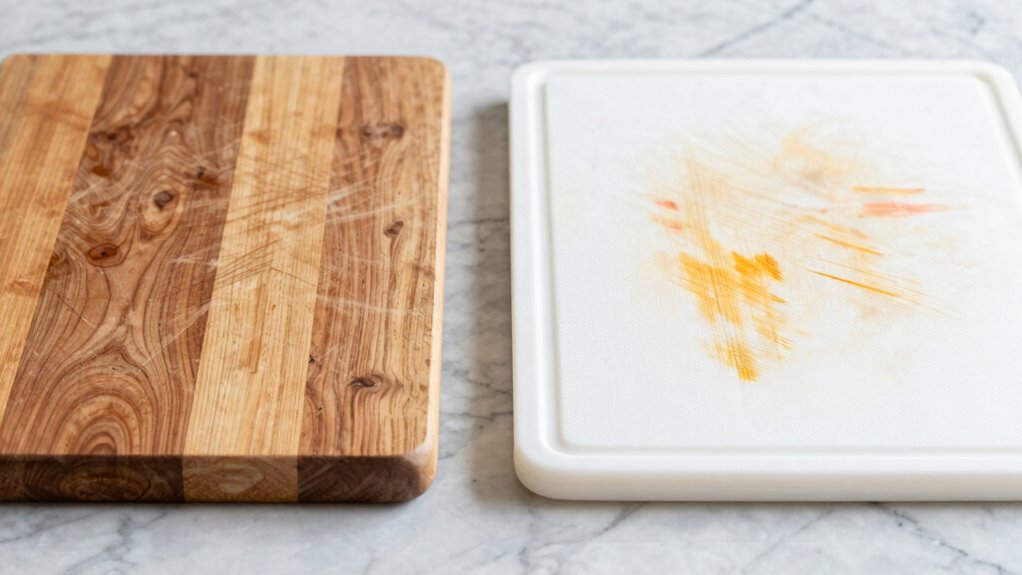
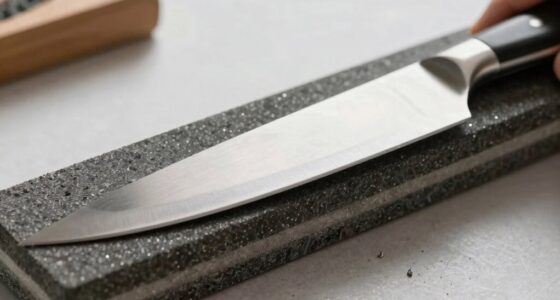
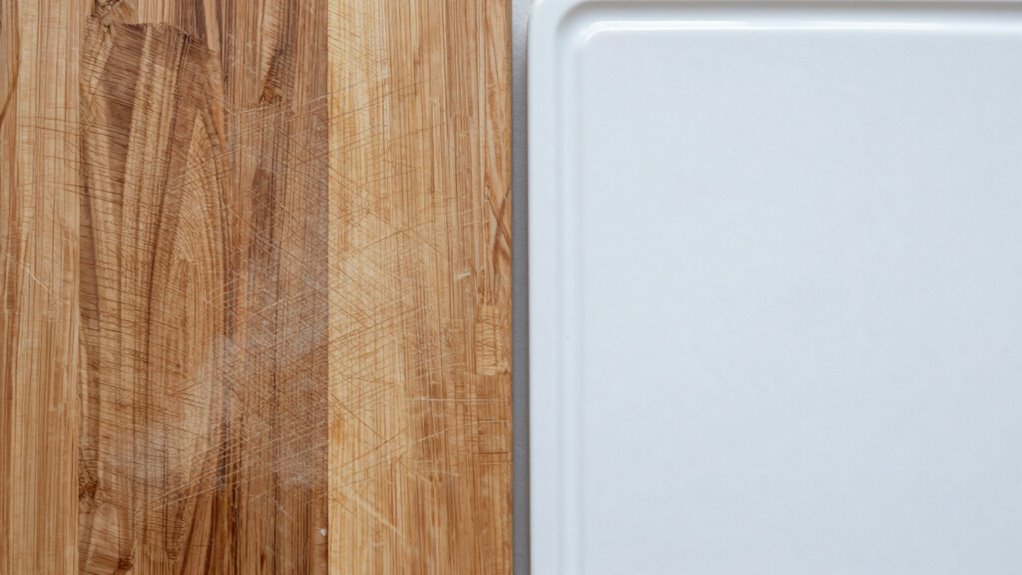
When choosing between wooden and plastic cutting boards, understanding their differences can help you make the best decision for your kitchen. Wooden boards tend to be gentler on your knives, helping maintain knife sharpness longer because their porous surface absorbs less force. They are typically made from natural countertop materials like hardwoods, which provide a sturdy, durable surface. Plastic cutting boards, on the other hand, are usually less expensive and come in bright colors, making them easy to identify for different food types. Their non-porous surface allows for easier cleaning, but they can develop deep cuts that dull knives faster. Overall, your choice depends on your priorities: wooden boards for preserving knife sharpness and aesthetic appeal, or plastic for convenience and affordability. Contrast in material properties also influences how each type handles bacteria and cleaning routines.

Extra Large Cutting Board, 17.6" Bamboo Cutting Boards for Kitchen with Juice Groove and Handles Kitchen Chopping Board for Meat Cheese board Heavy Duty Serving Tray, XL, Empune
【MADE OF BAMBOO】Empune cutting boards are made of bamboo which can give you long-lasting service. Not only can…
As an affiliate, we earn on qualifying purchases.
As an affiliate, we earn on qualifying purchases.
Which Material Is Better for Bacterial Resistance and Hygiene?
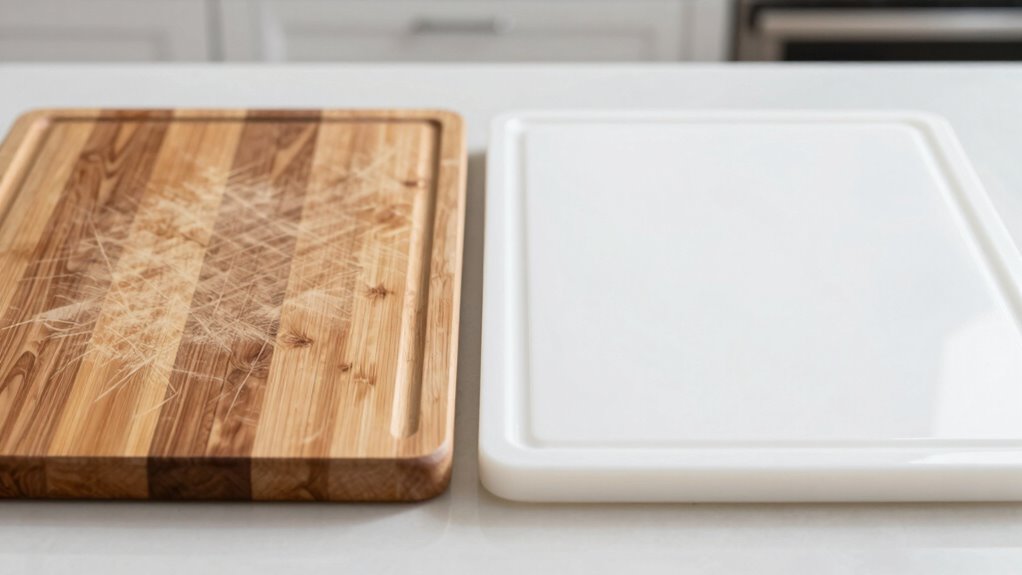
Plastic cutting boards generally offer better bacterial resistance and hygiene than wooden ones because their non-porous surfaces are less likely to absorb bacteria and food particles. This surface porosity in wood can trap bacteria, making it harder to clean thoroughly. Plastic boards can be manufactured with antimicrobial properties, which help inhibit bacterial growth on the surface. These antimicrobial additives work continuously to reduce bacteria, enhancing hygiene. Because plastic is non-porous, it’s easier to sanitize properly, especially with high-temperature washes or sanitizing solutions. Wooden boards, in contrast, require more careful maintenance to prevent bacteria from hiding within the surface porosity. Overall, if bacterial resistance and hygiene are your top priorities, plastic cutting boards often provide a safer, more hygienic option. Additionally, surface porosity plays a significant role in how well a cutting board resists bacterial buildup and can influence the ease of sanitation.

GORILLA GRIP BPA-Free Reversible Kitchen Cutting Board Set of 3, US Designed, Nonporous, Juice Grooves Catch Liquid, Slip Resistant Border, Dishwasher Safe, Durable Large Food Chopping Boards, Black
ULTRA DURABLE STRENGTH: 3rd Party Tested for durability, thick cutting boards have a nonporous surface that won’t splinter…
As an affiliate, we earn on qualifying purchases.
As an affiliate, we earn on qualifying purchases.
How Long Do Wooden and Plastic Cutting Boards Last, and How Do You Maintain Them?
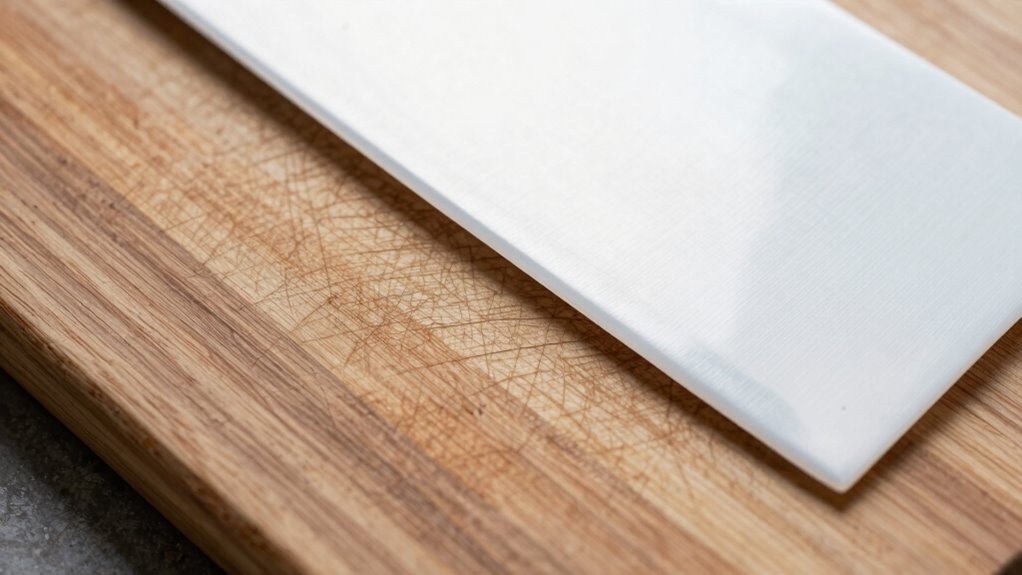
Wooden and plastic cutting boards vary in durability and require different maintenance to keep them in good shape. On average, wooden boards last about 5-10 years with proper care, while plastic ones may last 2-5 years. To extend their lifespan, consider these tips:
- Regularly clean with hot, soapy water and sanitize after use.
- Sand down wooden boards to remove deep cuts and stains, helping with knife maintenance.
- Replace plastic boards once deep grooves appear, as bacteria can hide there.
- Use different cutting board styles for raw meat and vegetables to prevent cross-contamination.
- Incorporating aquatic exercise into your routine can also help improve overall well-being and reduce stress, supporting a healthier lifestyle alongside proper kitchen maintenance.
Maintaining your boards ensures they stay safe and effective for food prep. Proper knife maintenance and choosing the right style of board help prolong their usability and hygiene.
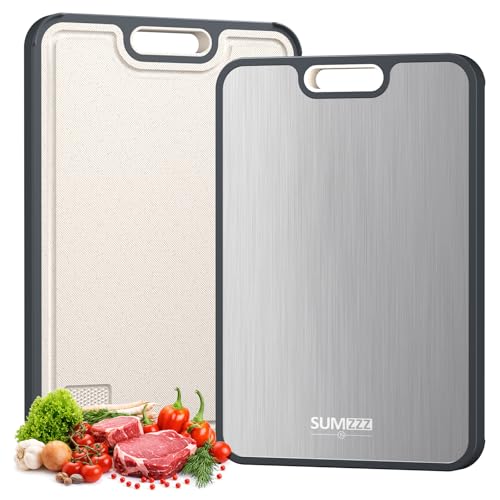
Sumzzz Titanium Cutting Board for Kitchen, Cutting Board Double Sided Food Grade, Pure Titanium/PP, Easy to Clean Large Size 15”×10.3”
【2 IN 1 Cutting Board 】Cutting board is a versatile 2 in 1 kitchen tool, with one side…
As an affiliate, we earn on qualifying purchases.
As an affiliate, we earn on qualifying purchases.
When Should You Use Wooden vs. Plastic Cutting Boards for Different Foods?
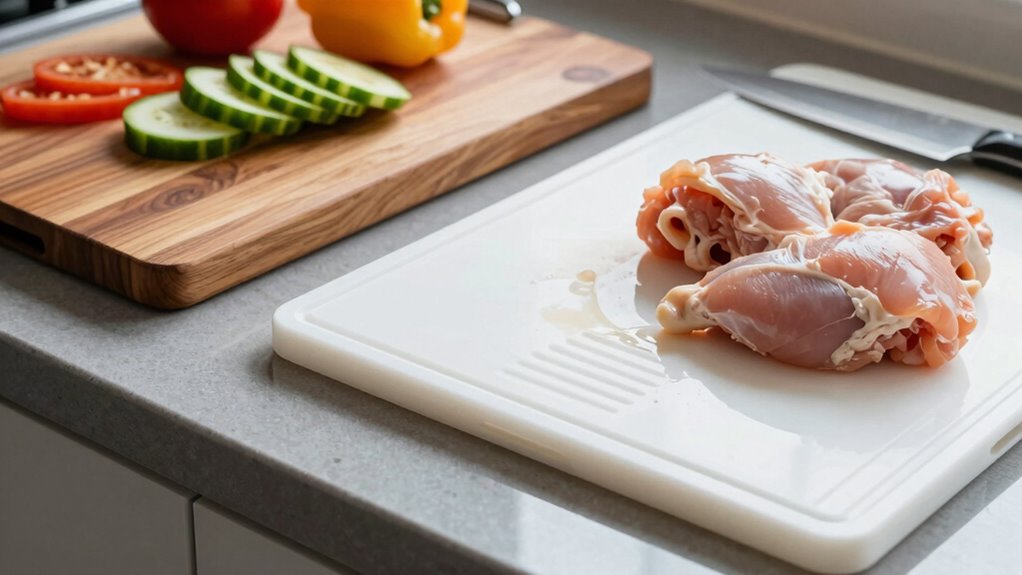
Choosing the right cutting board depends on the type of food you’re preparing. For raw meats, plastic boards are ideal because they’re non-porous and easier to sanitize, reducing cross-contamination risks and enhancing kitchen safety. Use plastic when handling poultry, beef, or seafood to prevent bacteria transfer. Wooden boards are better suited for fruits, vegetables, bread, and cooked foods, as they’re gentler on knives and naturally antimicrobial. Avoid using the same board for raw meats and produce without proper cleaning to prevent contamination. In food preparation, selecting the appropriate cutting surface guarantees safety and efficiency. Properly matching boards to food types minimizes bacteria spread and keeps your kitchen safer, making your food prep both more effective and hygienic. Additionally, understanding material safety can help you choose the most hygienic options for your needs.
How Can You Keep Your Cutting Boards Safe and Properly Maintained?
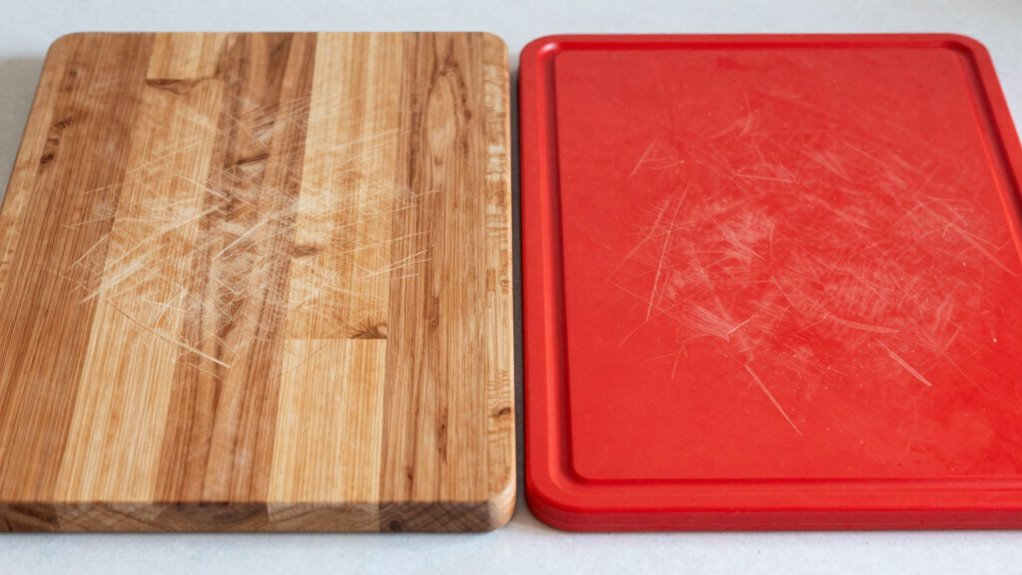
To keep your cutting boards safe and in good condition, regular cleaning and proper maintenance are essential. Here are four ways to do it:
- Clean thoroughly after each use with hot water and soap, then disinfect with a vinegar solution or diluted bleach.
- Inspect for deep cuts where bacteria can hide, and sand down wooden boards to smooth surfaces.
- Practice proper knife maintenance by using sharp knives; dull blades can cause damage and increase the risk of slips.
- Use appropriate storage solutions—store boards upright or in a dry, ventilated area to prevent mold and warping.
Following these steps keeps your cutting boards safe, extends their lifespan, and ensures hygienic food prep.
Frequently Asked Questions
Are There Specific Foods That Shouldn’T Be Cut on Wooden or Plastic Boards?
Yes, you should avoid cutting raw poultry or seafood on wooden boards because they can harbor bacteria, impacting food safety. Plastic boards are better for these foods since they’re easier to sanitize thoroughly. For cutting fruits, vegetables, or cooked foods, both materials work well, but consider material durability. Regularly cleaning and replacing your boards helps prevent cross-contamination, ensuring safer food prep regardless of the material.
Can Cutting Boards Be Safely Recycled or Disposed Of?
Yes, you can recycle or dispose of cutting boards safely. Follow recycling procedures specific to your local guidelines, especially for plastic boards, which are often recyclable. For wooden boards, consider disposal methods like composting if untreated or repurposing them if possible. Always clean thoroughly beforehand. If recycling isn’t an option, dispose of them responsibly by checking with your waste management services to avoid environmental harm.
How Do Dishwasher Cleaning Cycles Impact Cutting Board Longevity?
Imagine your cutting board as a brave knight facing the fiery dragon of dishwasher heat. During cleaning cycles, high heat can cause plastic deformation, weakening the board over time. Repeated exposure to intense heat accelerates wear, reducing its lifespan. To protect your knight, hand wash or choose gentle cycles. This way, you preserve the integrity and longevity of your cutting board, ensuring it remains a trusty kitchen companion.
Are There Eco-Friendly Options for Sustainable Cutting Board Materials?
You can choose eco-friendly cutting boards made from bamboo alternatives or recycled plastics. Bamboo alternatives are sustainable because they grow quickly and require less water, making them a great option. Recycled plastics help reduce waste by repurposing materials that would otherwise end up in landfills. Both options offer durability and safety, allowing you to cook confidently while supporting environmentally responsible practices.
What Are Common Signs That a Cutting Board Needs Replacing?
You’ll know it’s time to replace your cutting board when you notice warping or deep cracks that harbor bacteria. Stain discoloration that won’t wash out or persistent odors also signal it’s worn out. If the surface feels uneven or starts to break down, it’s safer to get a new one. Regularly inspecting your board helps prevent cross-contamination and keeps your food prep safe and hygienic.
Conclusion
Choosing between wood and plastic cutting boards isn’t just about preference—it’s about safety. Each material has its strengths and pitfalls, but the real question is, are you prepared to handle them properly? With the right care, you’ll keep bacteria at bay and extend your boards’ lifespan. But what if a small mistake could compromise your kitchen’s safety? The secrets to keeping your cutting boards safe might surprise you—are you ready to find out?