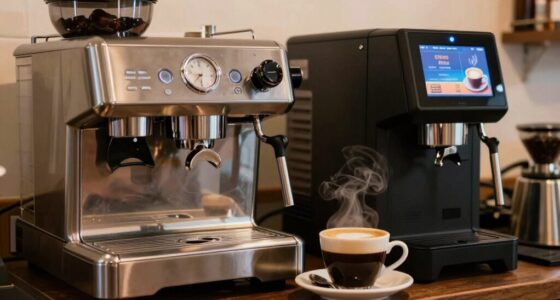
Descaling your coffee machine is essential for keeping it in top shape and ensuring your coffee tastes great. Over time, mineral buildup can affect flavor, lead to clogs, and decrease brewing efficiency. Regular descaling removes these deposits and enhances your machine’s performance, giving you fresher, flavorful coffee every cup. Plus, it helps extend your machine’s lifespan. If you want to learn more about how to recognize when it’s time to descale, keep exploring!

Get the little things that make your day delivered free — and shop member deals
- Fast, free delivery on millions of items
- Access to Prime Big Deal Days deals on October 6–7
- Prime Video, Amazon Music and more included
Key Takeaways
- Descaling is the process of removing mineral buildup to maintain coffee machine performance and extend its lifespan.
- Regular descaling ensures optimal flavor extraction, preventing weak or bitter coffee due to mineral interference.
- Signs that descaling is needed include decreased performance, unusual noises, and visible mineral deposits.
- Using compatible and safe descaling solutions is crucial to avoid damaging the coffee machine.
- A regular descaling schedule, tailored to usage and water hardness, enhances coffee quality and consistency.
As an affiliate, we earn on qualifying purchases.
How to Descale Your Coffee Machine: A Step-by-Step Guide

Descaling your coffee machine is an essential step in maintaining its performance and ensuring you enjoy the best flavor from your brews. To start, you should determine the descaling frequency based on your water hardness. Generally, every three to six months is a good rule of thumb. Next, choose your solution type: commercial descaling products are effective, but you can also use a mixture of equal parts water and white vinegar. Properly applied descaling techniques help prevent mineral buildup and extend the lifespan of your appliance.
Once you’ve prepared your solution, fill the water reservoir and run a brewing cycle without coffee grounds. After the cycle, let the machine sit for 15-20 minutes, then run a couple of cycles with fresh water to rinse any residual solution. Regular descaling keeps your coffee machine in top shape!
descaling solution for coffee maker
As an affiliate, we earn on qualifying purchases.
As an affiliate, we earn on qualifying purchases.
How to Identify When Your Coffee Machine Needs Descaling?

You might notice your coffee machine isn’t brewing as well as it used to, which is a clear sign it needs descaling. If you hear unusual noises during operation or see white mineral deposits, it’s time to take action. Keeping an eye on these indicators can help maintain your machine’s performance.
Decreased Brewing Performance
As coffee lovers know, a decrease in brewing performance often signals that it’s time to give your machine some attention. You might notice your coffee lacking its usual flavor or having inconsistent brewing consistency. If your morning cup tastes weak or bitter, it’s a clear sign that the machine’s internal components are likely clogged with mineral buildup. This buildup can hinder flavor extraction, leaving you with a less satisfying brew. Pay attention to how your coffee pours; if it’s slow or uneven, your machine is definitely in need of descaling. Regular descaling can also prevent damage to internal parts and extend the lifespan of your coffee maker. Don’t ignore these signs—addressing them promptly can restore your coffee’s delightful taste and guarantee every cup is as good as it should be.
Unusual Noises During Operation
When your coffee machine starts producing unusual noises during operation, it’s often a sign that mineral deposits have built up inside. You might hear gurgling, hissing, or grinding sounds that weren’t present before. These coffee machine sounds indicate that the water flow is obstructed, affecting brewing efficiency. If you notice these unusual operational noises, it’s time to take action. Ignoring them can lead to more significant issues, including a complete breakdown. Descaling your machine can help restore normal function and silence those bothersome sounds. Regular maintenance not only enhances your coffee’s flavor but also prolongs your coffee machine’s lifespan. Pay attention to these cues, and guarantee your machine gets the care it needs to keep brewing perfectly.
White Mineral Deposits Visible
Unusual noises are just one indicator that your coffee machine needs attention; visible white mineral deposits are another clear sign. If you notice white, chalky residues around the water reservoir or inside the brew head, it’s time to act. This mineral buildup occurs from hard water and can affect your coffee’s flavor and your machine’s performance. Regularly check for these deposits during routine maintenance. If you spot them, follow these maintenance tips: use a descaling solution specifically designed for coffee machines, and run it through the brewing process. Doing this every few months will help keep your machine running smoothly and extend its lifespan. Incorporating proper water treatment methods can also help reduce microplastics in dust and improve overall indoor air quality. Additionally, using appropriate descaling products can prevent damage to internal components and ensure optimal brewing conditions. Proper descaling frequency is essential for maintaining the efficiency and longevity of your coffee machine. Don’t ignore these signs; addressing them promptly guarantees you’ll always enjoy great coffee.
white vinegar for coffee machine cleaning
As an affiliate, we earn on qualifying purchases.
As an affiliate, we earn on qualifying purchases.
How Does Mineral Buildup Change the Flavor of Your Coffee?

Mineral buildup in your coffee machine can markedly alter the taste of your brew. You might notice bitterness or off-flavors creeping in, making your favorite cup less enjoyable. Understanding how these minerals affect flavor can help you keep your coffee tasting its best.
Taste Alteration From Minerals
As you brew your morning cup, the minerals in your water can considerably alter the flavor of your coffee. Over time, mineral buildup affects your machine’s efficiency and your coffee’s flavor profile. Some key points to take into account include:
- Hard water contains calcium and magnesium, which can enhance body.
- Excessive minerals can mute the coffee’s natural acidity.
- Sodium levels may lead to a saltier taste.
- Iron can impart a metallic flavor, overshadowing the coffee’s richness.
- Different minerals interact uniquely with coffee compounds, creating diverse flavor notes.
Bitterness and Off-Flavors
While you may enjoy a rich cup of coffee each morning, mineral buildup in your machine can introduce unwanted bitterness and off-flavors that overshadow the brew’s natural qualities. This accumulation of minerals affects the coffee extraction process, altering how water interacts with the coffee grounds. As a result, you might notice a muddled flavor profile, where the intended sweetness and acidity of your coffee are masked by harsh, unpleasant notes. Over time, these off-flavors can diminish your overall coffee experience, making each cup less enjoyable. Regular descaling helps maintain ideal extraction conditions, ensuring that your coffee stays true to its intended flavor profile. So, don’t overlook this essential maintenance step if you want to savor your daily brew!
coffee machine descaling tablets
As an affiliate, we earn on qualifying purchases.
As an affiliate, we earn on qualifying purchases.
How to Choose the Best Descaling Solution for Your Coffee Maker
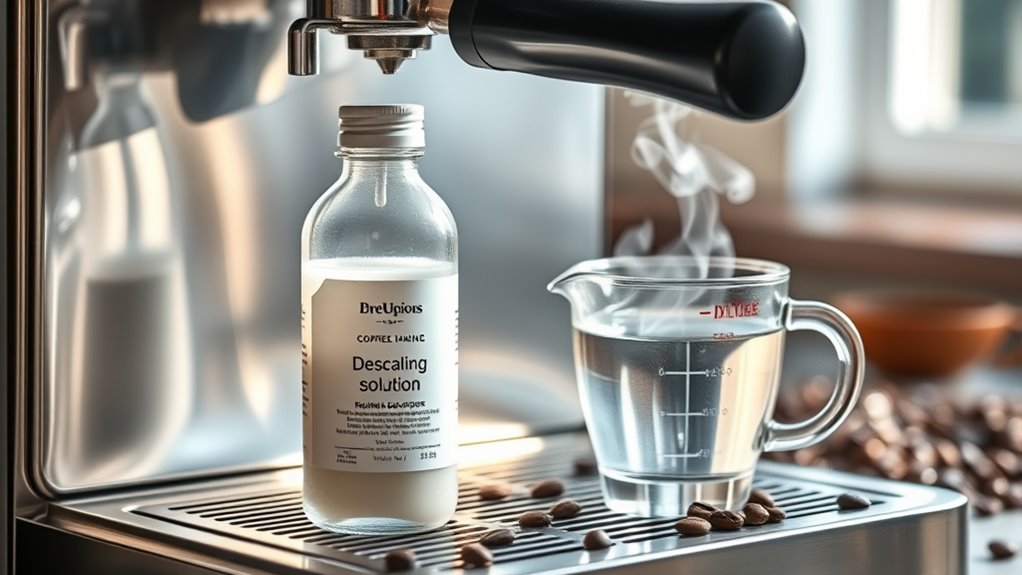
How can you guarantee your coffee maker stays in top shape? Choosing the right descaling solution is key. Here are some factors to take into account:
- Look for natural solutions that are safe and effective.
- Check for compatibility with your specific coffee maker model.
- Compare brands based on user reviews and effectiveness.
- Reflect on the frequency of descaling needed based on your water hardness.
- Evaluate cost-effectiveness over time, not just the initial price.
Step-by-Step Guide to Descaling Your Coffee Maker
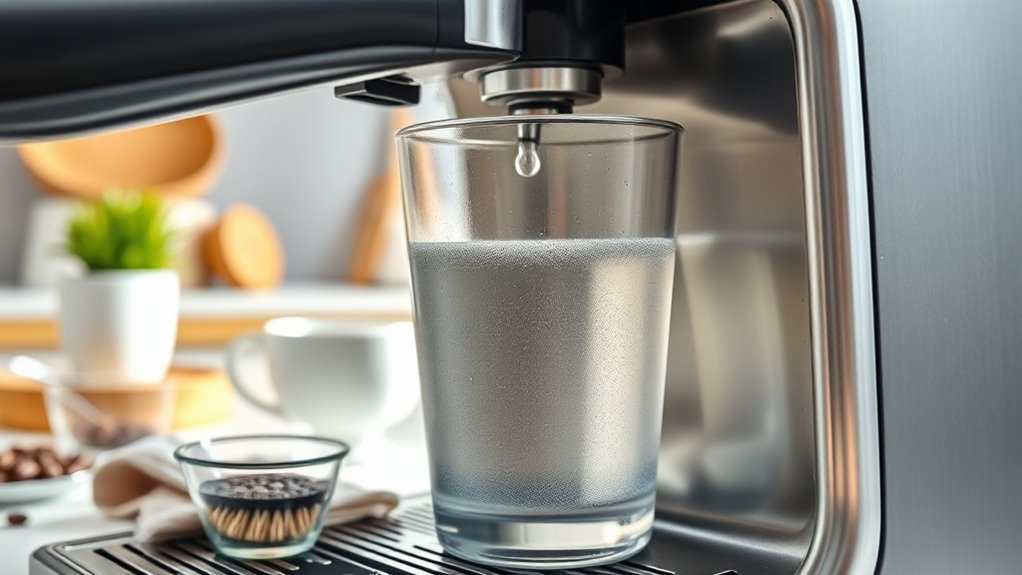
To keep your coffee maker brewing at its best, it is vital to follow a straightforward descaling process. Start by gathering your descaling solution and water. Empty the coffee maker’s reservoir, then mix the solution according to package instructions. Pour it into the reservoir and start a brewing cycle without coffee grounds. Midway, pause the cycle for about 30 minutes to help dissolve any mineral buildup. After the pause, complete the cycle. Rinse the reservoir thoroughly and run two cycles of fresh water to eliminate any residual solution. Regularly check your descaling frequency; doing this every few months can prevent excessive mineral buildup. This routine guarantees your coffee maker operates efficiently and your coffee tastes great!
How Often to Descale Your Coffee Machine?

Wondering how often you should descale your coffee machine? The answer depends on several factors, including your usage and water quality. Here are some frequency guidelines to contemplate for your maintenance schedule:
- Daily Use: Descale every 1-3 months.
- Light Use: Contemplate descaling every 4-6 months.
- Hard Water: If you have hard water, descale every 1-2 months.
- Taste Changes: If your coffee starts tasting off, it’s time to descale.
- Machine Indicator: Follow any alerts from your machine regarding descaling.
Sticking to these guidelines helps guarantee your coffee machine runs efficiently and brews delicious coffee. Regular maintenance keeps mineral buildup at bay, extending the life of your machine.
Common Descaling Mistakes to Avoid

Maintaining a regular descaling schedule is important, but it’s just as essential to avoid common mistakes during the process. One frequent error is not following the manufacturer’s instructions, which can lead to improper descaling and damage. Another common misconception is that descaling frequency is the same for all machines; however, it varies based on usage and water quality. Ignoring warning signs, like decreased coffee flavor, is also a mistake. Some people think that using vinegar is a safe alternative, but it can harm your machine. Finally, don’t rush the process—allow the descaler to work effectively for best results. By steering clear of these pitfalls, you’ll keep your coffee machine in top shape and extend its lifespan.
Why Regular Descaling Improves Your Coffee Experience

While you might not realize it, regular descaling can greatly enhance your coffee experience. By keeping your machine free from mineral buildup, you guarantee better coffee quality and brewing consistency. Here’s how descaling can transform your daily brew:
- Removes mineral deposits that affect flavor
- Enhances the temperature control for peak extraction
- Prevents clogs that slow down brewing time
- Keeps your machine running efficiently and lasts longer
- Guarantees every cup tastes fresh and flavorful
- Regular descaling also supports coffee machine maintenance, ensuring longevity and optimal performance.
When your coffee machine operates at its best, you’ll notice richer flavors and consistent results. So, don’t skip descaling—make it a regular part of your maintenance routine to enjoy every sip to the fullest!
Frequently Asked Questions
Can I Use Vinegar Instead of Commercial Descaling Solutions?
Yes, you can use vinegar instead of commercial descaling solutions. Vinegar’s effectiveness in breaking down mineral deposits makes it a popular alternative. However, while it’s a cost-effective choice, it might not be as potent as some commercial options. If you decide to use vinegar, mix it with water and run it through your machine. Just remember to rinse thoroughly afterward to avoid any lingering taste or odor in your coffee.
Will Descaling Damage My Coffee Machine?
Descaling’s like giving your coffee machine a spa day; it rejuvenates and extends its lifespan. If you’re using the right solution and following manufacturer guidelines, descaling won’t damage your machine. In fact, regular descaling—ideally every 1-3 months—keeps it running smoothly. Think of it as preventative maintenance; neglecting it might lead to mineral buildup, which can harm your machine over time. So, treat your coffee maker well, and it’ll reward you with great brews!
How Long Does the Descaling Process Take?
The descaling process usually takes about 30 to 60 minutes, depending on your machine. You’ll want to contemplate descaling frequency to keep your coffee tasting great and your machine running smoothly. Regular descaling enhances your coffee’s flavor and extends your machine’s lifespan. So, while it might take some time, the benefits of a well-maintained coffee maker are worth it. Just set a reminder, and you’ll enjoy better brews!
Is Descaling Necessary for All Types of Coffee Machines?
Yes, descaling’s necessary for all types of coffee machines, including espresso machines and drip brewers. Over time, mineral buildup can affect performance and flavor. If you want to keep your coffee tasting great and your machine running smoothly, regular descaling is a must. It helps prevent clogs and extends the life of your machine. So, don’t skip this step; your daily brew will thank you!
Does Descaling Affect the Warranty of My Coffee Machine?
Descaling can affect your coffee machine’s warranty coverage if you don’t follow the manufacturer’s guidelines. Most warranties require proper machine maintenance, including regular descaling, to remain valid. If you neglect this step or use incorrect products, you might void the warranty. Always check your manual for specific descaling instructions to guarantee you keep your warranty intact and your machine running smoothly. Taking care of your coffee maker is essential for longevity!
Conclusion
Regularly descaling your coffee machine is essential for maintaining both its performance and the flavor of your brews. For instance, imagine you’re enjoying a morning cup when you suddenly notice a bitter taste. After checking, you discover mineral buildup has clogged your machine. By descaling it promptly, you restore the rich, smooth flavor you love. Don’t let neglect ruin your coffee experience—make descaling a part of your routine and savor every sip!
Halloween Picks
halloween
As an affiliate, we earn on qualifying purchases.