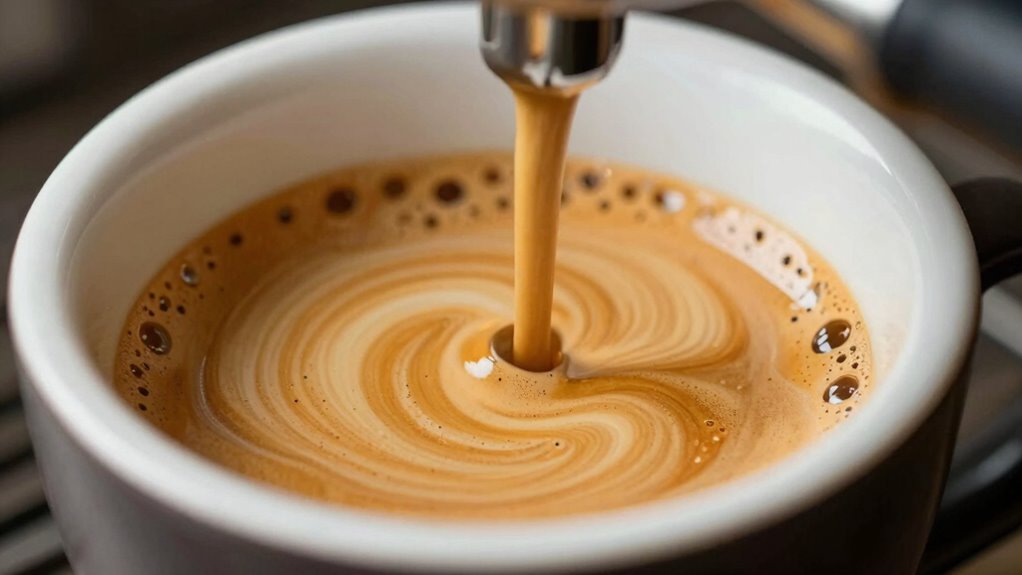

Espresso is a concentrated coffee brewed by forcing hot water through finely ground beans under high pressure, typically around 9 bars. This pressure helps extract rich oils and flavors, creating a thick layer called crema, which signals a well-made shot. Too much or too little pressure affects flavor, but overall, achieving the perfect pressure and crema involves proper grind, tamping, and equipment. Keep exploring, and you’ll discover how to perfect your espresso skillset.
Key Takeaways
- Espresso relies on about 9 bars of pressure to extract rich flavors and create a thick, velvety crema.
- Proper pressure ensures balanced extraction, avoiding under- or over-extraction that affects taste.
- Crema indicates freshness and proper brewing; it results from emulsified oils and CO₂ under high pressure.
- Excess pressure can cause bitterness, while too little leads to weak, sour espresso.
- Achieving ideal pressure and crema depends on correct grind size, tamping, and machine calibration.

XIXUBX 20Bar Espresso Machine, Compact Espresso Maker with Milk Frother, Stainless Steel Coffee Machine for Cappuccino&Latte, 42oz Water Tank, Visible Pressure Gauge, Home&Office, Silver
Make Your Favorite Espresso Coffee: XIXUBX semi automatic espresso machine is equipped with a powerful steam frother and…
As an affiliate, we earn on qualifying purchases.
As an affiliate, we earn on qualifying purchases.
What Is Espresso and How Is It Different From Regular Coffee?
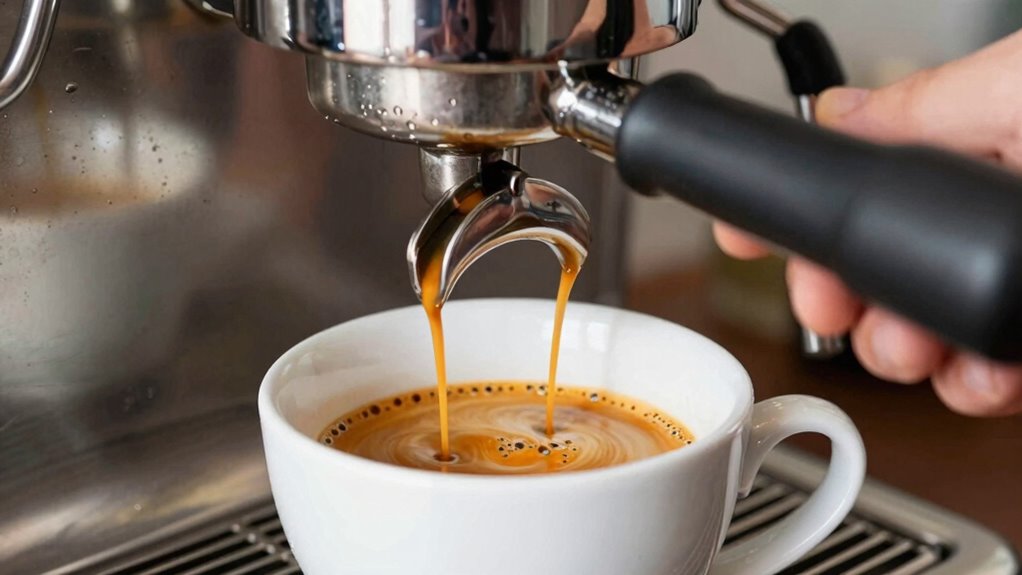
Have you ever wondered what makes espresso so distinct from regular coffee? The answer lies in the coffee bean varieties and the espresso equipment used. Espresso uses specific beans that are often roasted darker to develop rich flavors, different from the beans typically used for drip coffee. The equipment also plays a vital role; espresso machines apply high pressure to force hot water through finely ground coffee, extracting intense flavors and creating that signature thick crema. Unlike regular coffee, which brews slowly through drip or pour-over methods, espresso’s quick extraction results in a concentrated shot with a bold, robust taste. Additionally, the pressure applied during brewing is crucial for developing the characteristic crema and flavor profile. This combination of bean selection and specialized equipment gives espresso its unique character and intense flavor profile.
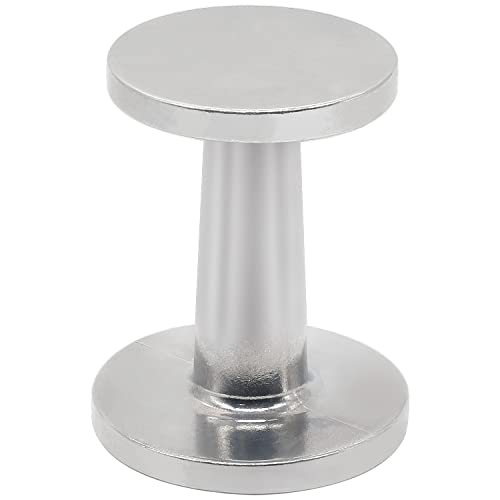
Ezebesta Dual-Sided Espresso Hand Tamper 51mm and 58mm Dual Ended Tamper Coffee Ground Press Barista Tool for Portafilter Machine
Made of heavy duty cast aluminum alloy with no chemical coating that resists damage caused by the naturally…
As an affiliate, we earn on qualifying purchases.
As an affiliate, we earn on qualifying purchases.
How Does Pressure Influence Espresso Flavor and Quality?
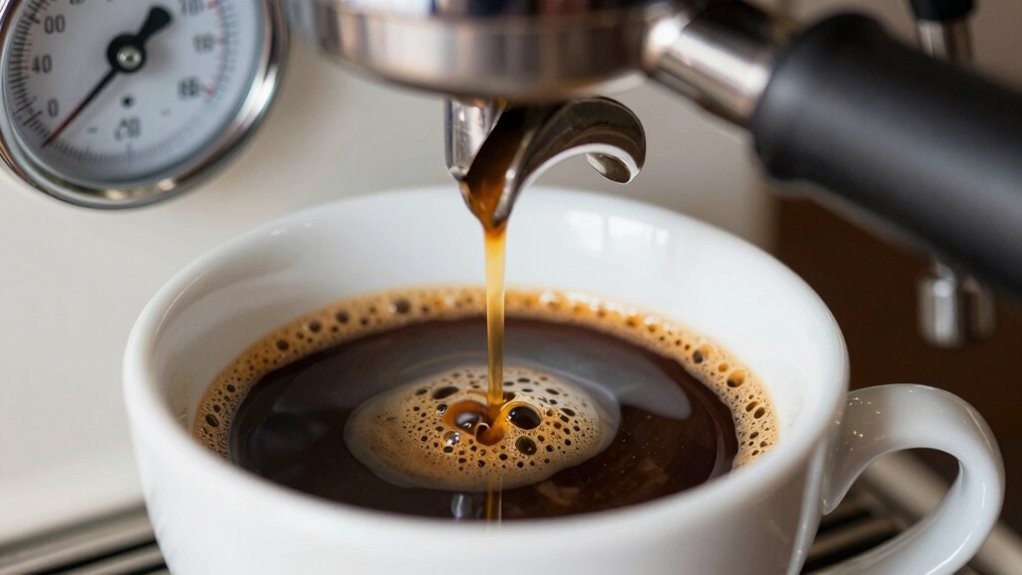
Pressure is a vital factor that directly influences the flavor and quality of your espresso. Through pressure dynamics, the hot water is forced through the compacted coffee grounds, affecting how flavors are extracted. If the pressure is too low, you’ll notice under-extraction, resulting in weak, sour, or sour-tasting espresso. On the other hand, excessive pressure can cause over-extraction, leading to bitter, harsh flavors. Achieving the right pressure—typically around 9 bars—ensures ideal flavor extraction. Proper pressure helps dissolve essential oils, sugars, and acids, balancing the espresso’s taste. Variations in pressure alter the intensity and clarity of flavors, making it essential to monitor and control during brewing. Optimal pressure settings are crucial for consistently producing high-quality espresso. When pressure is just right, you’ll enjoy a rich, balanced espresso with desirable aroma and body.

Lavazza Super Crema Whole Bean Coffee, Medium Espresso Roast, Arabica and Robusta Blend, 2.2 lb Bag, Package May Vary (Pack of 1)
SUPER CREMA: A 2.2 lb whole bean coffee bag ideal for espresso preparation
As an affiliate, we earn on qualifying purchases.
As an affiliate, we earn on qualifying purchases.
What Is Crema, and How Does It Indicate a Good Espresso Shot?

What exactly is crema, and why is it considered a sign of a well-made espresso? Crema formation results from the emulsification of oils and carbon dioxide during brewing, creating a rich, golden layer on top. It indicates freshness preservation because fresher beans produce more CO₂, leading to better crema. A good shot has a balanced, velvety layer that signals proper extraction. Additionally, the emulsification process is influenced by factors like grind size and brewing pressure, which can affect crema quality.

Milk Frothing Pitcher 350ml/600ml/900ml/1500ml (12oz/20oz/32oz/50oz) Steaming Pitchers Stainless Steel Milk/Coffee/Cappuccino/Latte Art Barista Steam Pitchers Milk Jug Cup with Art Pen,12oz
Perfect Combination Of Milk Frothing Pitcher And Latte Art Pen: The milk frother jug can be used in…
As an affiliate, we earn on qualifying purchases.
As an affiliate, we earn on qualifying purchases.
Common Myths About Pressure and Crema : Debunked
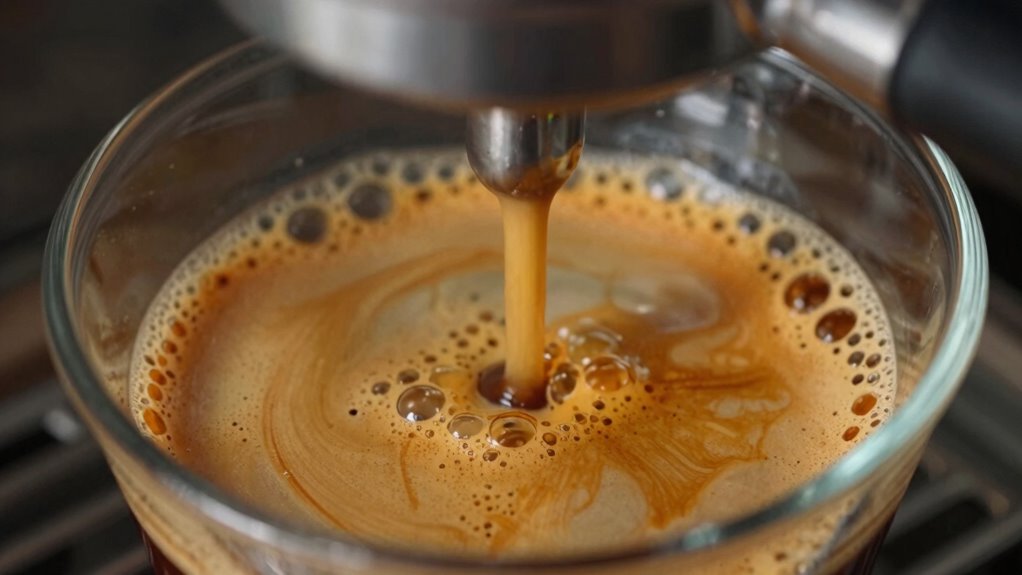
Many people believe that increasing pressure during brewing automatically guarantees a thicker, more stable crema, but this is a common myth. Myth busting reveals that pressure alone isn’t a reliable quality indicator of a great espresso. Instead, factors like bean freshness, grind size, and tamping consistency play crucial roles. Higher pressure might produce more crema initially, but it can also lead to over-extraction or burnt flavors if not balanced properly. Focusing solely on pressure can mislead you into ignoring other essential elements that contribute to espresso quality. Remember, the goal is a harmonious extraction, where pressure supports the overall process. Ultimately, understanding that pressure is just one piece of the puzzle helps you avoid misconceptions and develop better brewing habits.
How to Achieve the Perfect Pressure and Crema at Home
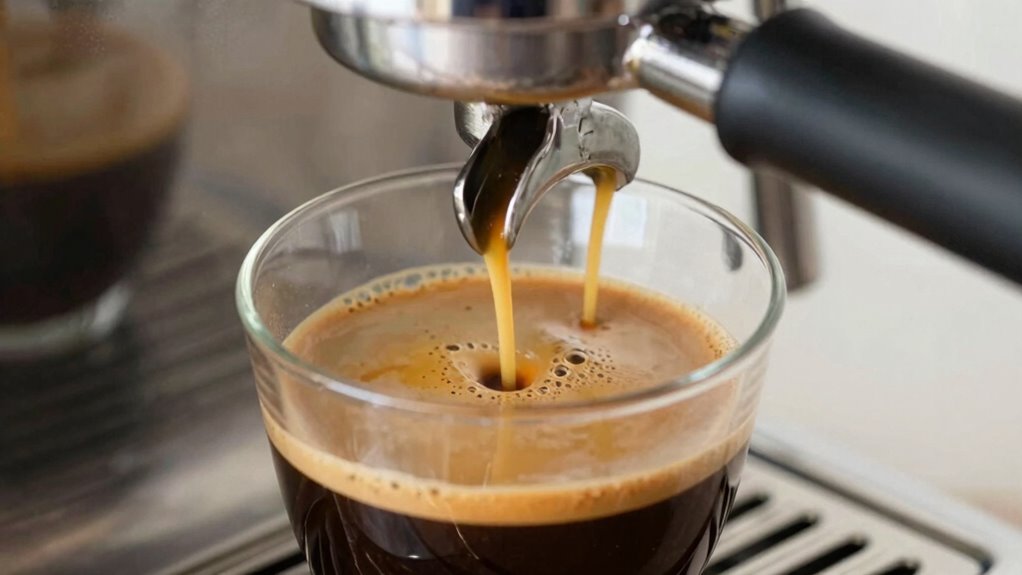
Achieving the perfect pressure and crema at home requires understanding how to control your espresso machine effectively. First, pay close attention to your grind size; it should be fine but not too powdery, allowing water to flow evenly. Second, use a consistent tamping technique—apply firm, even pressure to create a uniform puck. Third, adjust your machine’s pressure settings if possible, ensuring it reaches around 9 bars. Finally, preheat your equipment to maintain ideal temperature and prevent variations that affect crema. Proper machine calibration is essential for consistent results. By mastering these steps, you’ll optimize extraction, resulting in rich crema and balanced pressure. Focus on your grind size and tamping technique, as these are key to achieving that perfect espresso shot every time.
The Science of Espresso Extraction Explained Simply
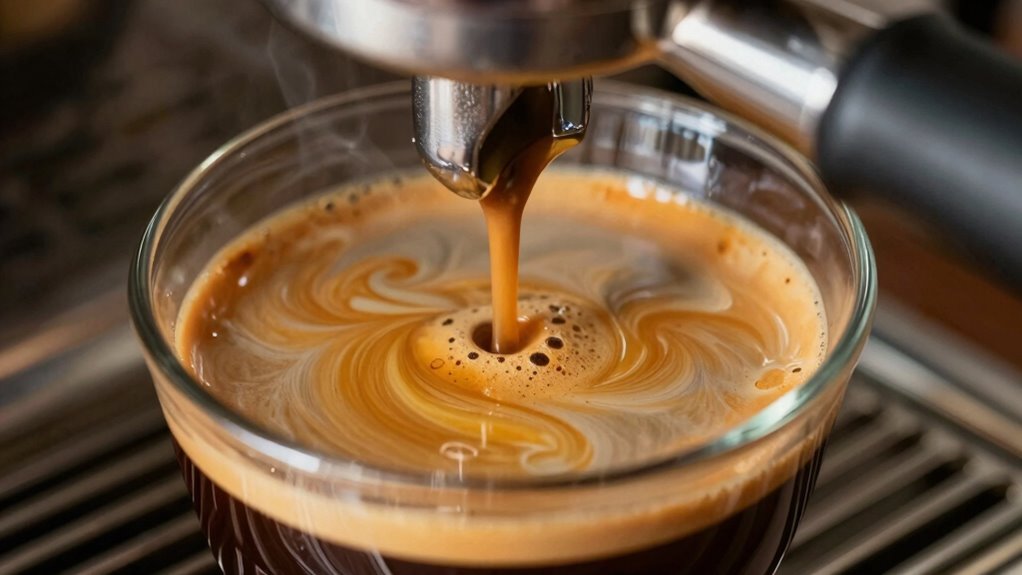
Understanding how espresso extraction works helps you make better coffee at home. At its core, pressure dynamics push hot water through finely ground coffee, dissolving flavors in a process called extraction chemistry. When you pull a shot, the machine applies around 9 bars of pressure, which helps extract oils, acids, and sugars efficiently. The water’s temperature and flow rate influence how well these compounds dissolve, impacting flavor and crema. Proper pressure ensures the water penetrates evenly, avoiding under- or over-extraction. The chemistry behind extraction involves dissolving solids from coffee grounds into the water, revealing complex flavors. Additionally, whole-home water systems can influence the water quality used in espresso brewing, affecting taste and extraction efficiency. By mastering pressure dynamics and understanding extraction chemistry, you gain control over your espresso, leading to a richer, more balanced cup every time.
Frequently Asked Questions
How Does Grind Size Affect Espresso Pressure and Crema Quality?
You’ll notice that grind size directly affects espresso pressure and crema quality by influencing grind uniformity and extraction consistency. A finer grind increases resistance, boosting pressure and often creating richer crema, but if it’s too fine, it can cause over-extraction and bitter flavors. Conversely, a coarser grind lowers pressure and results in thinner crema. Achieving the right grind size guarantees balanced extraction and peak crema, making your espresso more flavorful and consistent.
Can Different Coffee Beans Influence Optimal Espresso Pressure Settings?
Think of your espresso machine as a delicate orchestra, where coffee bean variations and roasting profiles are the soloists. Different beans have unique densities and oils, which influence the ideal espresso pressure settings. Lighter roasts might need slightly higher pressure to extract flavors fully, while darker roasts often require less. By understanding these nuances, you can fine-tune your machine to achieve the perfect shot every time.
What Role Does Tamping Pressure Play in Crema Development?
Tamping pressure directly impacts crema development by guaranteeing consistent extraction. When you apply even tamping pressure, you promote uniform coffee bed density, which helps optimize pressure calibration during brewing. Tamping consistency is key; too much pressure can cause over-extraction, while too little results in under-extraction. Focus on steady, firm tamping to improve crema quality, enhancing flavor and aroma. Proper technique ensures your espresso has rich, velvety crema every time.
How Does Machine Temperature Impact Espresso Extraction and Crema?
You need to pay close attention to machine temperature because it directly affects extraction and crema preservation. When your machine maintains temperature stability, it guarantees consistent heat, leading to ideal extraction and richer crema. If the temperature fluctuates, your espresso might become over- or under-extracted, ruining both flavor and crema quality. Keeping your machine at the right temperature guarantees a balanced shot with vibrant crema and full flavor.
Are There Health Effects Linked to High-Pressure Espresso Brewing?
High-pressure espresso brewing is like a storm brewing in your cup; it’s safe when used properly, but excess can pose health risks. You might experience heightened caffeine effects, including increased heart rate or jitters, especially if you’re sensitive. While moderate consumption is generally safe, overdoing it could lead to health issues like insomnia or elevated blood pressure. Always enjoy your espresso responsibly to avoid unwanted health effects.
Conclusion
Mastering espresso is like nurturing a delicate garden—you need the right pressure, timing, and care. When you get it just right, each shot blossoms with rich crema and vibrant flavor. Remember, even a small tweak can make all the difference, turning a good cup into a great one. So, keep experimenting and enjoy the journey—your perfect espresso is waiting to bloom with every pull of the lever.