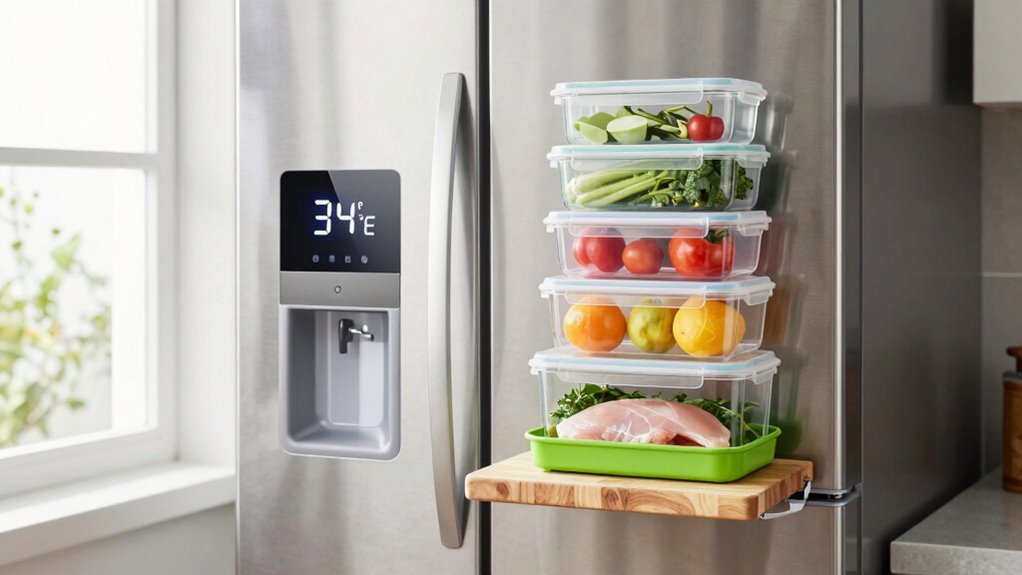
To guarantee food safety, you need to maintain your fridge temperature between 35°F and 38°F (1.6°C to 3.3°C) to slow down bacterial growth. This helps keep food fresh and safe. It’s essential to prevent cross-contamination by using separate cutting boards for raw meats and vegetables. Always wash your hands after handling food, and verify you’re storing items properly. Keep an eye out for signs that your fridge might not be working as it should. There’s more you can do to keep your kitchen safe!
Key Takeaways
- Maintain refrigerator temperatures between 35°F and 38°F to slow bacterial growth and ensure food safety.
- Regularly check and adjust thermostat accuracy to prevent temperature fluctuations and spoilage.
- Use separate cutting boards for raw meats and vegetables to minimize cross-contamination risks.
- Store raw meats at the bottom of the fridge to prevent juices from contaminating other foods.
- Regularly clean your fridge and discard expired items to manage odors and maintain a safe food environment.

TempPro Refrigerator Thermometer 2 Pack with Large Backlit LCD Display, Waterproof Freezer Fridge Thermometer with Max/Min Record, Easy Battery Replacement for Room, Cooler (Previously ThermoPro)
【Backlit Display for Clear Visibility】The oversized LCD screen with bright backlight ensures easy readability, even in dark freezers…
As an affiliate, we earn on qualifying purchases.
As an affiliate, we earn on qualifying purchases.
Understanding the Importance of Refrigerator Temperatures for Food Safety
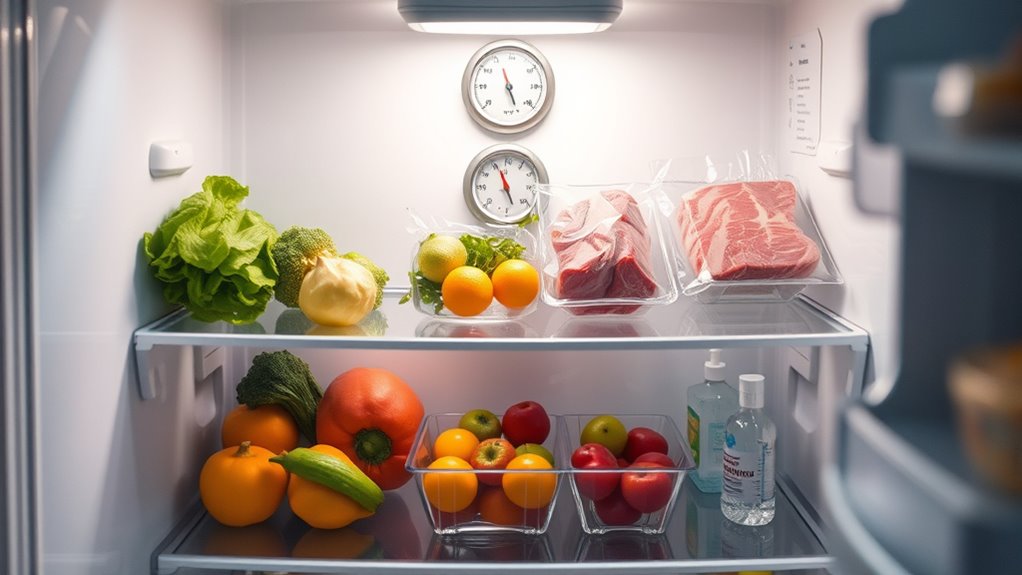
Why is it essential to monitor your refrigerator’s temperature? Keeping an eye on it is vital for effective refrigerator maintenance and safe food storage. When your fridge operates at the correct temperature, it slows down bacterial growth, guaranteeing your food stays fresh and safe to eat. If the temperature rises too high, perishable items can spoil quickly, leading to waste and potential health risks. Regularly checking the temperature helps you avoid these issues and guarantees that your food retains its flavor and nutritional value. Plus, maintaining ideal temperatures can extend the life of your refrigerator itself. So, make it a habit to monitor those temps, and you’ll keep both your food and your appliance in top shape.

GUANCI Cutting Board for Kitchen, Stainless Steel Cutting Board Double Sided for Chopping Meat/Vegetables, Stainless Steel/Wheat Straw PP, Kitchen Gifts Easy to Clean Large 16”×11”
2 IN 1 Cutting Board : GUANCI cutting board is a versatile 2 in 1 kitchen tool, with…
As an affiliate, we earn on qualifying purchases.
As an affiliate, we earn on qualifying purchases.
Ideal Temperature Settings for Your Fridge
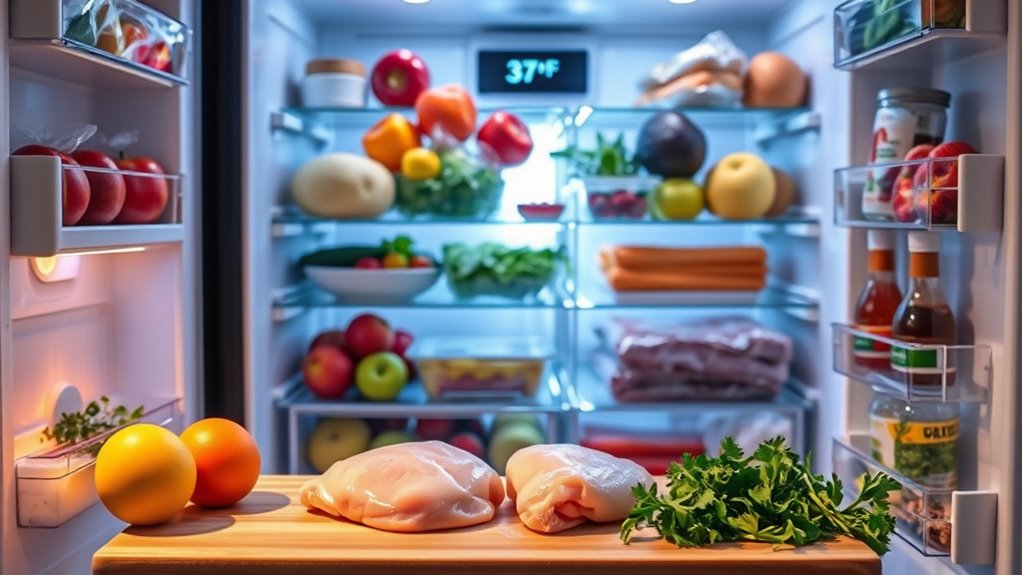
The ideal temperature for your fridge is between 35°F and 38°F (1.6°C to 3.3°C). Keeping your fridge within this range guarantees optimal cooling, which helps maintain the freshness and quality of your food. If your fridge runs too warm, you risk spoilage, while too cold can freeze items, affecting their texture and flavor. To achieve these ideal fridge settings, regularly check the temperature using an appliance thermometer, as built-in displays can be inaccurate. Adjust the thermostat as needed to stay within the recommended range. Remember to avoid overcrowding your fridge; proper airflow is essential for consistent cooling. By maintaining the right temperature, you’ll help guarantee your food remains safe and delicious.

2 Pack Refrigerator Thermometer, 30-30°C/20-80°F, Classic Fridge Thermometer Large Dial with Red Indicator Thermometer for Freezer Refrigerator Cooler
Convenient and practical: Our refrigerator thermometer is suitable for traditional refrigerators, freezers, insulated boxes, etc. It has a…
As an affiliate, we earn on qualifying purchases.
As an affiliate, we earn on qualifying purchases.
The Impact of Fridge Temperature on Food Safety

Maintaining the right fridge temperature is essential not only for preserving food quality but also for ensuring food safety. Proper fridge maintenance can help you avoid food spoilage and keep your meals safe. Here are some key impacts of fridge temperature on food safety:
- Slows bacterial growth: Lower temperatures inhibit the growth of harmful bacteria.
- Preserves nutrients: A consistent cold environment helps maintain the nutritional value of your food.
- Extends shelf life: Keeping your fridge at the right temp can greatly prolong the freshness of your groceries.
- Prevents foodborne illnesses: Proper temperature control reduces the risk of illnesses caused by spoiled food.

Stackable Refrigerator Organizer Bins, 6 Pack Clear Kitchen Organizer Container Bins with Handles and 20 PCS Plastic Bags for Pantry, Cabinets, Shelves, Drawer, Freezer – Food Safe, BPA Free 10"L
【STACKABLE DESIGN】The lifting feet at the bottom of each freezer organizer bin can be stacked, stacked, or side…
As an affiliate, we earn on qualifying purchases.
As an affiliate, we earn on qualifying purchases.
What Is Cross-Contamination and Why Is It Dangerous?

While cooking or preparing food, you might not realize how easily cross-contamination can occur. This happens when harmful bacteria or allergens from one food item transfer to another, often through hands, utensils, or surfaces. Common cross contamination sources include raw meat, poultry, seafood, and unwashed produce. If you don’t take precautions, these bacteria can lead to foodborne illnesses, which can cause serious health issues. Symptoms range from nausea to severe gastrointestinal distress, making it vital to understand the risks. To protect yourself and others, always keep raw and cooked foods separate, wash your hands frequently, and sanitize surfaces. By being aware of cross-contamination, you can help guarantee a safer kitchen environment for everyone.
Common Kitchen Practices That Lead to Cross-Contamination
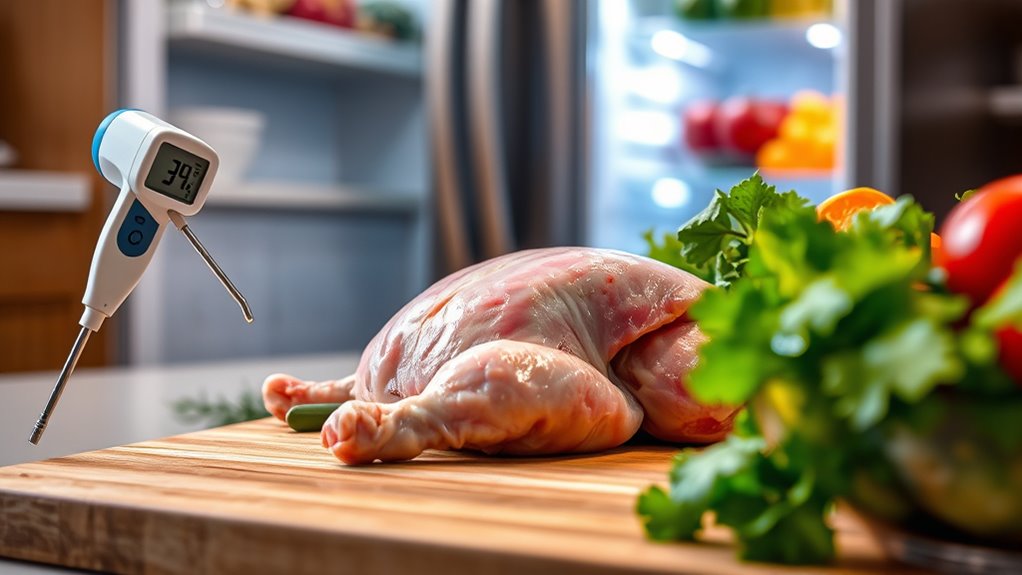
How can everyday kitchen habits contribute to cross-contamination? Poor kitchen hygiene and improper food handling can easily lead to harmful bacteria spreading. Here are four common practices that you should watch out for:
- Using the same cutting board for raw meat and vegetables without washing it in between.
- Storing food improperly, like placing cooked food above raw meat in the fridge.
- Not washing hands after handling raw ingredients, like poultry or seafood.
- Neglecting to clean utensils after each use, allowing residue to mix with other foods.
Top Tips to Prevent Cross-Contamination in Your Kitchen

To keep your kitchen safe from cross-contamination, it is essential to adopt a few proactive habits. First, always wash your hands before and after food handling. Use separate cutting boards for raw meats and vegetables to prevent bacteria transfer. Regularly clean surfaces with hot, soapy water or sanitizers to maintain good kitchen hygiene. When marinating foods, do it in the refrigerator rather than at room temperature. Store raw meats at the bottom of the fridge to avoid juices dripping onto other foods. Also, confirm that you promptly store leftovers in airtight containers. Finally, educate everyone in your household about these practices to promote safety and awareness. Following these tips can greatly reduce the risk of cross-contamination in your kitchen.
Organizing Your Fridge for Maximum Safety
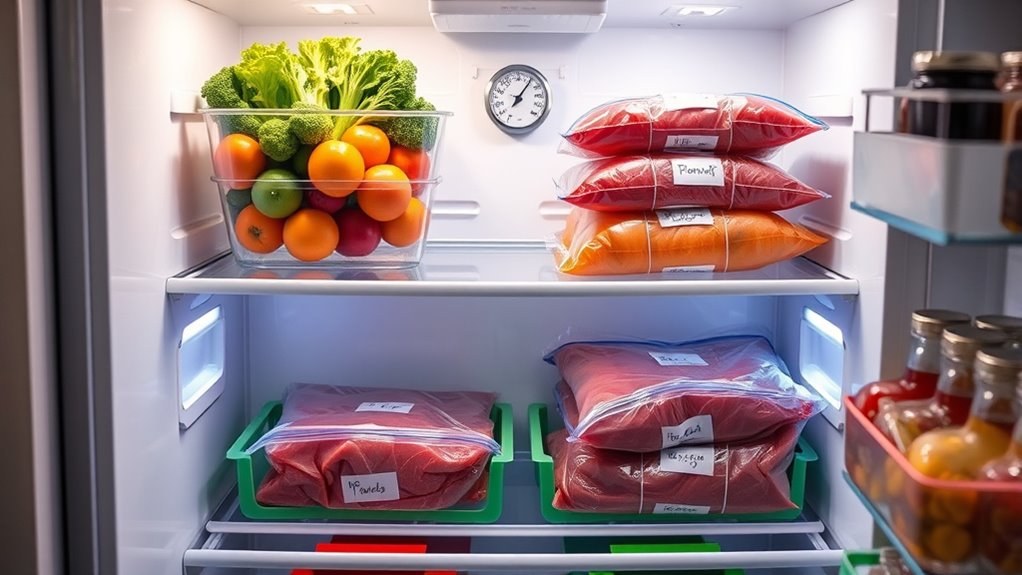
To keep your food safe, it’s essential to organize your fridge properly. Start by placing items on the right shelves, using clear containers, and labeling everything clearly. This way, you can easily access what you need while minimizing the risk of contamination.
Proper Shelf Placement
While you might not realize it, the way you organize your fridge can greatly impact food safety. Proper shelf placement guarantees that you minimize cross-contamination and keep your food fresh. Here’s how to achieve effective shelf organization:
- Top Shelf: Store ready-to-eat foods like leftovers and drinks.
- Middle Shelf: Keep dairy products such as milk and cheese here.
- Bottom Shelf: Place raw meats and fish on a separate plate to avoid drips.
- Crisper Drawers: Use these for fruits and vegetables, keeping them fresh and separate.
Use Clear Containers
Organizing your fridge goes beyond just shelf placement; using clear containers can greatly enhance food safety and accessibility. Clear containers allow you to quickly see what you have, reducing the chances of food spoilage. Choose container materials that are safe for food storage, like BPA-free plastic or glass, to guarantee your food stays fresh. These materials also help maintain the right temperature, promoting storage efficiency. By grouping similar items together in clear containers, you minimize cross-contamination risks and maximize your fridge space. This organization method helps you use ingredients before they expire, ultimately saving money while keeping your family safe. So, invest in clear containers and enjoy a more efficient, organized fridge!
Label Everything Clearly
Labeling everything clearly in your fridge is essential for maintaining food safety and ensuring that you use items before they spoil. Effective labeling techniques can make your food storage more organized and efficient. Here are four tips to help you:
- Use waterproof labels – They resist moisture and prevent smudging.
- Include dates – Write the purchase or expiration date to track freshness.
- Specify contents – Clearly label what’s inside containers to avoid confusion.
- Categorize items – Group similar foods together for easy access and to reduce cross-contamination. Regularly checking fridge temperature is also crucial to prevent bacterial growth and ensure food safety.
Signs Your Fridge May Be Compromising Food Safety

If you’ve noticed temperature fluctuations in your fridge, it could be a sign that food safety is at risk. Unpleasant odors or excessive frost buildup might also indicate that something’s not right. Let’s explore these warning signs so you can keep your food safe and fresh.
Temperature Fluctuations Noticed
When you notice temperature fluctuations in your fridge, it’s essential to act quickly, as these changes can jeopardize the safety of your food. Regular temperature monitoring is vital to prevent spoilage and foodborne illnesses. Here are some common fluctuation causes to keep in mind:
- Faulty thermostat – An inaccurate thermostat can lead to inconsistent cooling.
- Blocked vents – Obstructions can disrupt airflow, causing uneven temperatures.
- Frequent door openings – Each time you open the fridge, warm air enters, creating fluctuations.
- Overloading – Too many items can hinder proper air circulation.
Unpleasant Odors Emanating
Unpleasant odors in your fridge can be a clear sign that food safety is compromised. When you notice these unpleasant smells, it’s often a sign of food spoilage. Spoiled food can release gases that create a foul scent, indicating that it’s time to investigate further. Check for expired items or leftovers that have lingered too long. If you find any, discard them immediately to prevent cross-contamination. Additionally, make sure your fridge is set to the right temperature to slow down spoilage. Regularly cleaning your fridge not only helps eliminate odors but also promotes a safer food environment. Don’t ignore those smells; they’re your fridge’s way of warning you that something may be off.
Excessive Frost Buildup
Excessive frost buildup in your fridge can indicate that something’s not right. This can lead to compromised food safety, so it’s important to address it promptly. Here are some signs you need frost removal and improved freezer maintenance:
- Thick Ice Layers: If you see more than a quarter-inch of ice, it’s time to act.
- Food Freezing: Items in your fridge section shouldn’t be frozen; this points to poor temperature regulation.
- Water Puddles: Excess moisture can lead to frost; check for leaks or blocked vents.
- Strange Noises: If your fridge is making unusual sounds, it may struggle with airflow due to frost.
Don’t ignore these signs—keeping your fridge frost-free helps maintain food safety!
Frequently Asked Questions
How Often Should I Check My Fridge Temperature?
You should check your fridge temperature at least once a week. Using a fridge thermometer helps you guarantee that your food stays safe. Ideally, the temperature range for your fridge should be between 32°F and 40°F (0°C to 4°C). If you notice any fluctuations outside this range, adjust the settings accordingly. Keeping an eye on the temperature not only preserves your food but also prevents harmful bacteria growth.
Can I Store Hot Food Directly in the Fridge?
You shouldn’t store hot food directly in the fridge. In fact, the USDA recommends cooling food to about 70°F within two hours before refrigerating. If you place hot food in the fridge, it can raise the temperature inside, compromising fridge safety, and promoting bacterial growth. To guarantee hot food storage is safe, let it cool slightly at room temperature before transferring it to your fridge. This helps maintain a safe environment for all your food.
What Foods Should Never Be Stored Together?
You should never store raw meat with fruits or vegetables, as this can lead to cross-contamination. Similarly, keep dairy products separate from strong-smelling items like onions or garlic to prevent flavor transfer. Following proper food pairing and storage guidelines guarantees your meals stay safe and fresh. Always categorize foods by type and potential contamination risk to maintain a healthy fridge environment. This way, you’ll keep your food safe and delicious!
How Long Can Leftovers Be Safely Stored in the Fridge?
You can safely store leftovers in the fridge for about three to four days. After that, the risk of bacteria growth increases, making them unsafe for consumption. To guarantee proper leftover storage, keep them in airtight containers and label them with the date. If you’re unsure about their freshness after a few days, it’s better to err on the side of caution and throw them out to avoid foodborne illnesses.
What Should I Do if My Fridge Breaks Down?
If your fridge breaks down, act quickly to protect your food safety and minimize waste. First, check for fridge repair options, and if you can’t fix it immediately, transfer perishable items to a cooler with ice. Keep the fridge door closed to maintain the cold temperature as long as possible. Monitor your food closely, and discard anything that’s been above 40°F for more than two hours. Stay proactive to avoid foodborne illness!
Conclusion
In summary, keeping your fridge at the right temperature is essential for food safety. Did you know that nearly 48 million people in the U.S. get sick from foodborne illnesses each year? By maintaining your fridge at 40°F or below and preventing cross-contamination, you can greatly reduce the risk of foodborne pathogens. Stay vigilant by organizing your fridge and practicing safe food handling techniques. Your health—and that of your loved ones—depends on it!