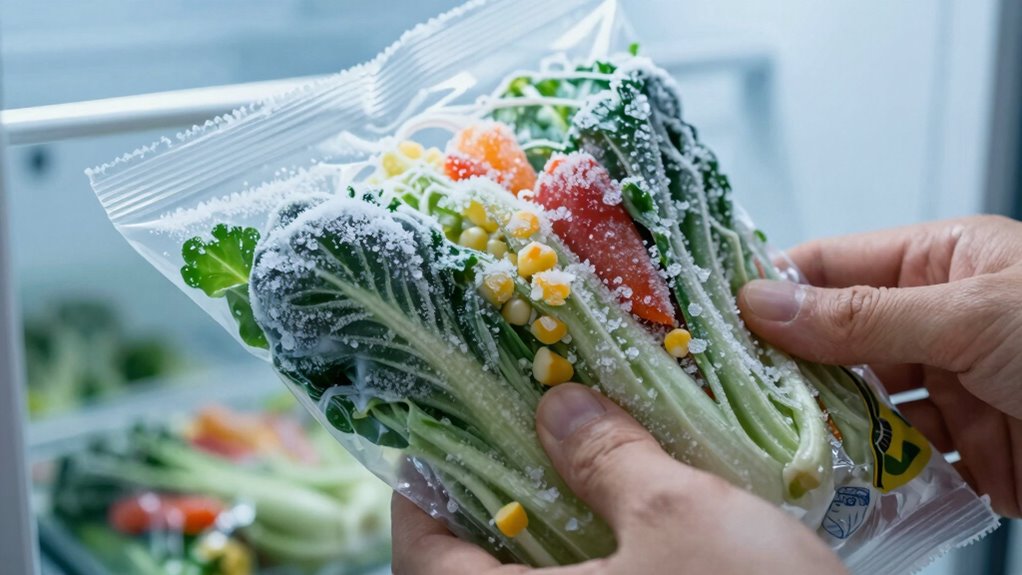

Freezer burn happens when food isn’t sealed properly and comes into contact with air, causing dehydration and oxidation. To prevent it, keep your freezer at 0°F (-18°C) or lower. Use airtight containers or vacuum-sealed bags for storage, and don’t overload the freezer to allow proper airflow. Always wrap meats tightly and blanch vegetables before freezing. If you want more tips on recognizing and reviving freezer-burned food, there’s plenty more to discover!
Key Takeaways
- Store food at 0°F (-18°C) or lower to minimize the risk of freezer burn.
- Use airtight containers or vacuum-sealed bags to limit air exposure.
- Avoid overloading the freezer to maintain proper airflow for even cooling.
- Wrap meats tightly in plastic wrap or foil to prevent moisture loss.
- Regularly check and organize freezer contents to use older items first.

Syntus Vacuum Sealer Bags, 150 Gallon 11" x 16" and Quart 8" x 12" and Pint 6" x 10" Commercial Grade PreCut Bag, BPA Free Food Vac Bags for Storage, Meal Prep or Sous Vide
Compatible with All Desktop Vacuum Sealers: These vacuum sealer bags are designed to work with all traditional desktop…
As an affiliate, we earn on qualifying purchases.
As an affiliate, we earn on qualifying purchases.
Understanding Freezer Burn: What It Is and How to Prevent It
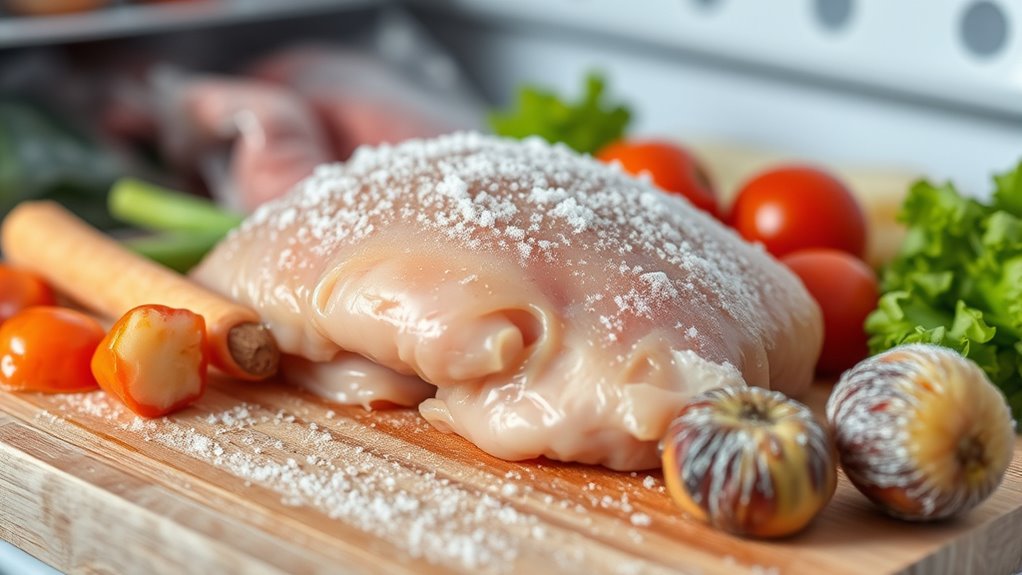
Freezer burn is a common issue that can ruin the taste and texture of your frozen foods. It occurs when air reaches your food, causing dehydration and oxidation. To prevent this, you need to maintain a consistent freezer temperature—ideally at 0°F (-18°C) or lower. This helps keep your food frozen solid and minimizes the risk of freezer burn. Proper food storage is also essential; use airtight containers or vacuum-sealed bags to limit exposure to air. When packaging, remove as much air as possible before sealing. Additionally, avoid overloading your freezer, as this can hinder airflow and create temperature fluctuations. By following these simple steps, you can protect your frozen items and enjoy their flavor and quality longer.

Airtight Food Storage Containers with Lids, Vtopmart 24 pcs Plastic Kitchen and Pantry Organization Canisters for Cereal, Dry Food, Flour and Sugar, BPA Free, Includes 24 Labels,Black
Help Organize Your Kitchen and Pantry— Imagine every time walking to your kitchen or pantry, found everything is…
As an affiliate, we earn on qualifying purchases.
As an affiliate, we earn on qualifying purchases.
Signs and Symptoms of Freezer Burn
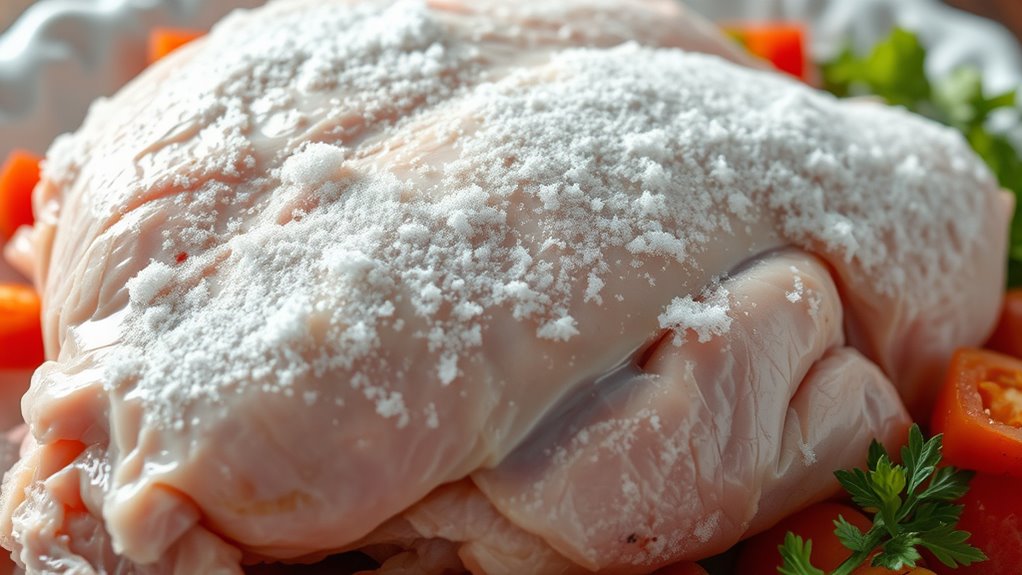
When you pull out frozen food only to find it looking pale or dry, you might be witnessing the signs of freezer burn. This condition often shows up as grayish-brown spots or patches on the surface of meats and other items. You may also notice a change in texture; the food can feel tough or leathery. The symptoms of freezer burn include a loss of moisture and flavor, making your once-delicious meal less appealing. If you bite into the food, you might taste a bland or off flavor, indicating that it’s no longer at its best. Recognizing these signs early can help you salvage your food or prevent further waste.

2 Pack Refrigerator Thermometer, 30-30°C/20-80°F, Classic Fridge Thermometer Large Dial with Red Indicator Thermometer for Freezer Refrigerator Cooler
Convenient and practical: Our refrigerator thermometer is suitable for traditional refrigerators, freezers, insulated boxes, etc. It has a…
As an affiliate, we earn on qualifying purchases.
As an affiliate, we earn on qualifying purchases.
Why Does Freezer Burn Happen? Understanding Dehydration and Oxidation
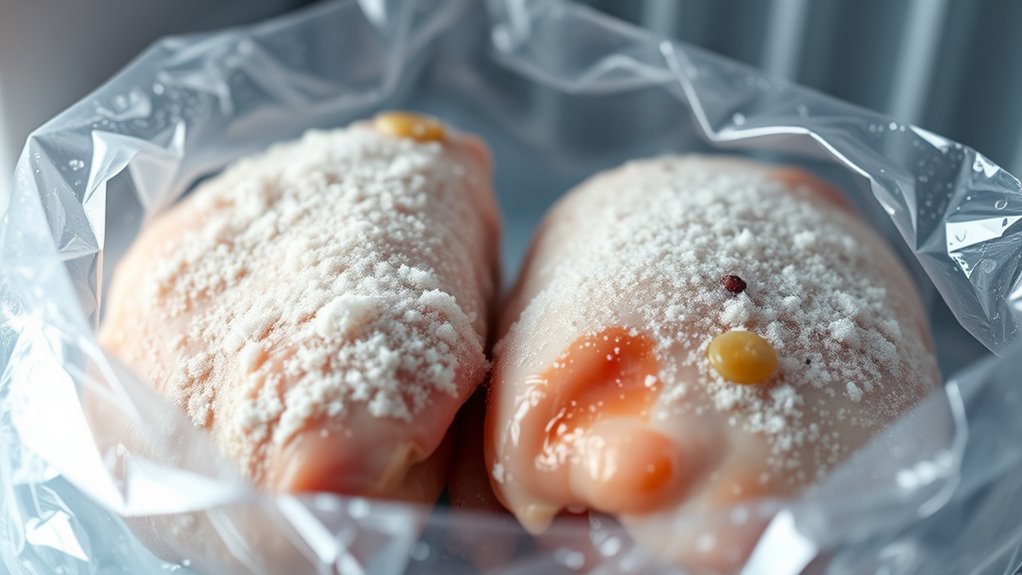
Although you might think freezing food preserves its quality indefinitely, freezer burn occurs due to two main processes: dehydration and oxidation. Dehydration causes moisture loss from your food, resulting in dry, leathery surfaces and a change in texture. This happens when air comes into contact with your food, leading to ice crystals forming and evaporating. On the other hand, oxidation effects occur when food is exposed to air, causing changes in color, flavor, and nutrients. This process is particularly damaging to fats, leading to rancidity. To minimize these issues, it’s essential to use airtight packaging and eliminate as much air as possible before freezing. By understanding these processes, you can better protect your frozen foods from freezer burn.

Glad Press'N Seal Food Plastic Wrap, 70 Square Foot Roll (Package May Vary)
PRESS'N SEAL PLASTIC FOOD WRAP: With a quick press and glide, this food wrap keeps food fresh with…
As an affiliate, we earn on qualifying purchases.
As an affiliate, we earn on qualifying purchases.
Foods Most Affected by Freezer Burn
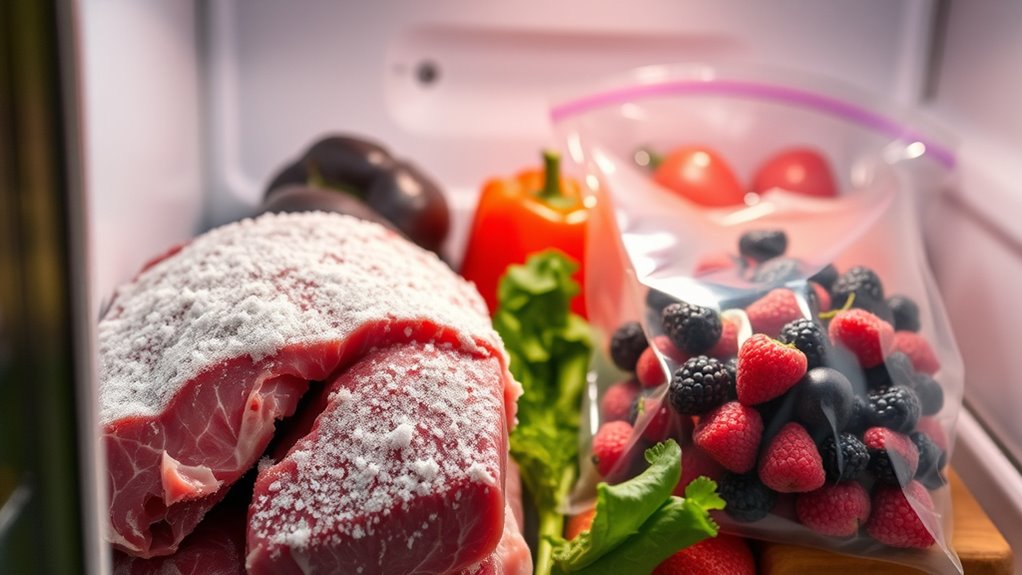
When it comes to freezer burn, certain foods are more susceptible than others. Meats and poultry can lose their texture and flavor, while fruits and vegetables may become dry and unappetizing. Understanding which items are most affected helps you take better care of your frozen goods.
Meats and Poultry
While you may think all frozen foods are safe from spoilage, meats and poultry are particularly susceptible to freezer burn. When you freeze meats, air can cause dehydration, leading to that unappetizing grayish-brown color and dry texture. To minimize this risk, you should wrap your meats tightly in plastic wrap or aluminum foil before placing them in airtight containers or freezer bags. Marinating meats before freezing can help protect them, as marinades add moisture and flavor, creating a barrier against air exposure. For poultry storage, consider portioning it into meal-sized packages to reduce the amount of air each piece is exposed to. Additionally, understanding filtration and suction basics can help ensure your freezer environment remains optimal and free of excess moisture that can contribute to freezer burn. Proper air circulation inside the freezer helps prevent cold spots and moisture buildup, further protecting your food. By taking these steps, you can enjoy your frozen meats and poultry without the disappointment of freezer burn.
Fruits and Vegetables
Fruits and vegetables, often considered the jewels of your freezer, can also fall victim to freezer burn. When you freeze fruits and veggies, moisture escapes, leading to a change in texture and flavor. Frozen fruits may lose their vibrant taste and become mushy, while vegetables can develop an undesirable, leathery feel. To prevent this, make certain to blanch vegetables before freezing to preserve their color and vegetable texture. For fruits, pack them into airtight containers or vacuum seal them to minimize air exposure. Always label your items with dates to guarantee you use them within a reasonable timeframe. By taking these steps, you can enjoy the best of your frozen fruits and vegetables without the unpleasant effects of freezer burn.
Best Practices for Freezing Different Types of Foods
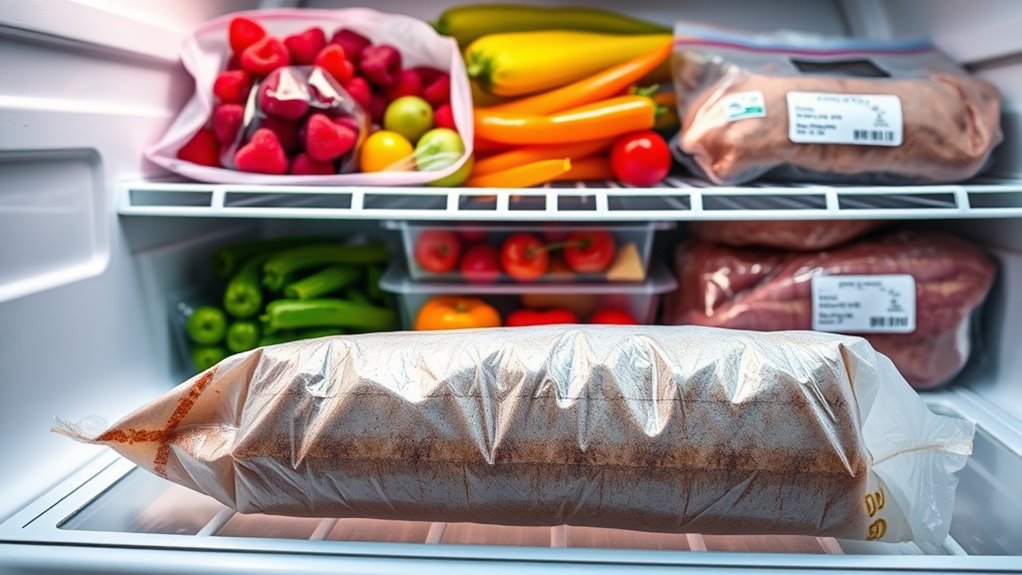
To guarantee your food stays fresh and flavorful, it’s crucial to follow best practices for freezing different types of foods. Here are some effective freezing techniques to guarantee proper food storage:
- Blanching: Quickly boiling vegetables before freezing helps preserve color, flavor, and nutrients.
- Portioning: Separate foods into meal-sized portions to make defrosting easier and reduce waste.
- Cooling: Let cooked foods cool to room temperature before freezing, preventing ice crystals from forming.
Effective Vacuum Sealing and Wrapping Techniques to Prevent Freezer Burn
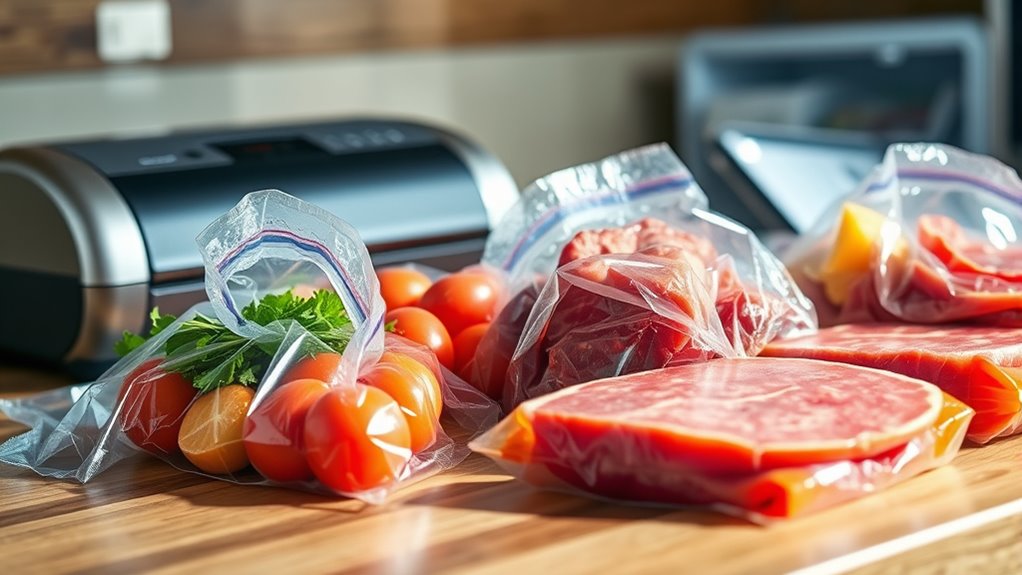
If you want to keep your frozen foods safe from freezer burn, mastering effective vacuum sealing and wrapping techniques is crucial. Using vacuum sealers can greatly reduce air exposure, which prevents freezer burn. Proper anti-fatigue mats can also help reduce overall stress on your body during food preparation, making the process more comfortable and efficient. Here’s a quick comparison of popular options:
| Wrapping Material | Pros | Cons |
|---|---|---|
| Vacuum Sealer Bags | Airtight, reusable | Can be more expensive |
| Plastic Wrap | Affordable, easy to use | Less airtight |
| Aluminum Foil | Excellent barrier to air | Can tear easily |
Choosing the right wrapping material and employing vacuum sealing techniques will help keep your food fresh and delicious, so make sure you invest time in this crucial process! Additionally, understanding the importance of proper sealing methods can significantly improve the longevity of your frozen foods and prevent freezer burn. Proper sealing methods are also essential for maintaining the integrity of the filtration system in vacuum sealers, which can enhance their effectiveness in preventing freezer burn. Incorporating battery maintenance tips can ensure your vacuum sealer functions optimally over time.
Reviving Freezer-Burned Food: Tips and Techniques
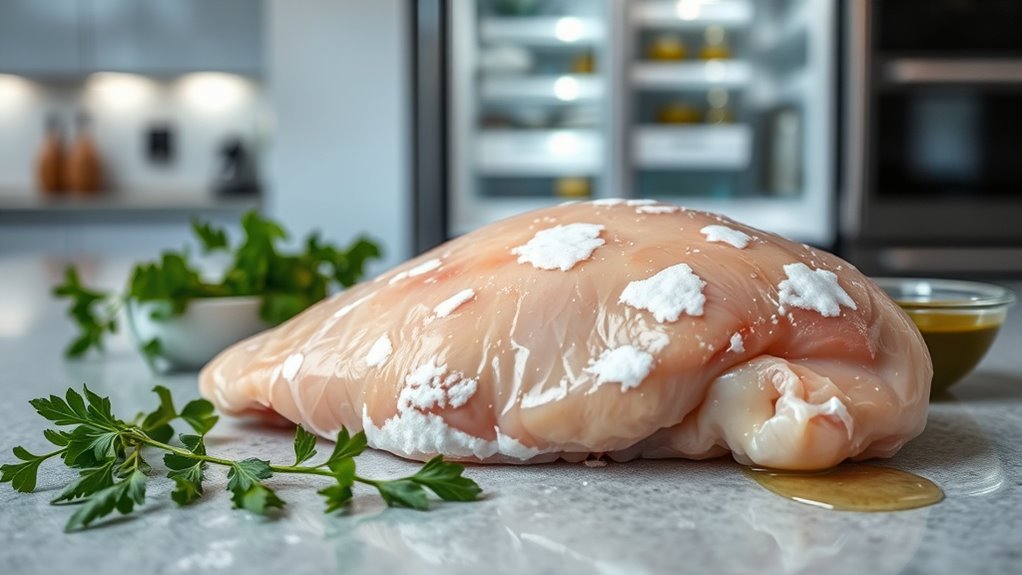
If you’ve got freezer-burned food, don’t toss it just yet! Soaking it in broth or cooking it with moisture can breathe new life into your meals. Let’s explore these techniques to help you salvage your ingredients.
Soaking in Broth
While freezer-burned food might not look appealing, soaking it in broth can breathe new life into your meal. Broth benefits include enhancing flavor and moisture, making it a great solution for reviving your frozen treasures. Here are some effective soaking techniques to try:
- Choose the Right Broth: Use chicken, beef, or vegetable broth depending on your dish.
- Soak for a Short Time: Submerge the food for about 30 minutes, but don’t overdo it.
- Pat Dry Before Cooking: Remove excess broth to avoid a soggy texture.
Cooking With Moisture
Cooking with moisture is essential when it comes to reviving freezer-burned food, as it helps restore texture and flavor. To enhance moisture retention, consider using cooking techniques like braising or steaming. These methods infuse your food with steam or liquid, making it more palatable. If you’re working with meats, try slow-cooking them in a flavorful sauce or broth; this can really help rehydrate the dried-out areas. For vegetables, steaming or sautéing with a splash of water can bring back their vibrancy. Don’t forget to cover your dishes while cooking; this traps steam and maximizes moisture retention. Proper storage techniques can also prevent freezer burn from occurring in the first place. Additionally, maintaining consistent freezer temperatures minimizes the risk of moisture loss and ice crystal formation that cause freezer burn. Water-cooled mattress pads and dehumidifiers can help control humidity levels in your storage areas, reducing freezer burn risks. By applying these techniques, you’ll transform your freezer-burned items into a delicious meal you can enjoy.
When to Discard Freezer-Burned Food for Safety
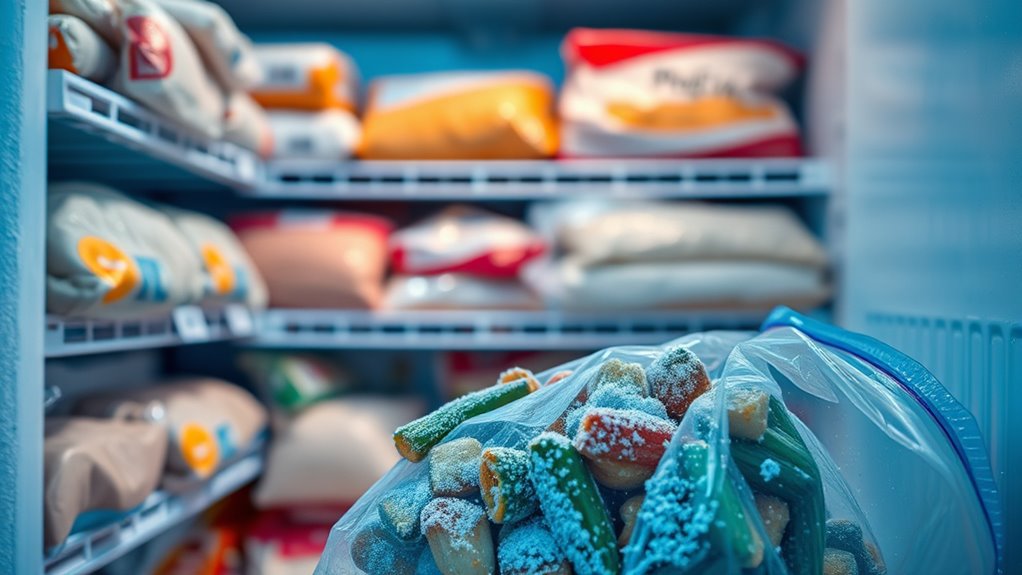
Have you ever wondered when it’s time to toss out freezer-burned food? While some freezer burn can be trimmed away, there are vital safety guidelines to follow. If you notice any of the following, you should discard the food:
- Severe ice crystals forming on the surface
- Discoloration that indicates spoilage
- Off-smells when you open the packaging
Trust your senses; if it looks, smells, or feels off, it’s better to err on the side of caution. While minor freezer burn might not make you sick, eating compromised food can lead to foodborne illnesses. Always prioritize safety when deciding when to discard food, ensuring your health isn’t at risk.
Frequently Asked Questions About Freezer Burn?
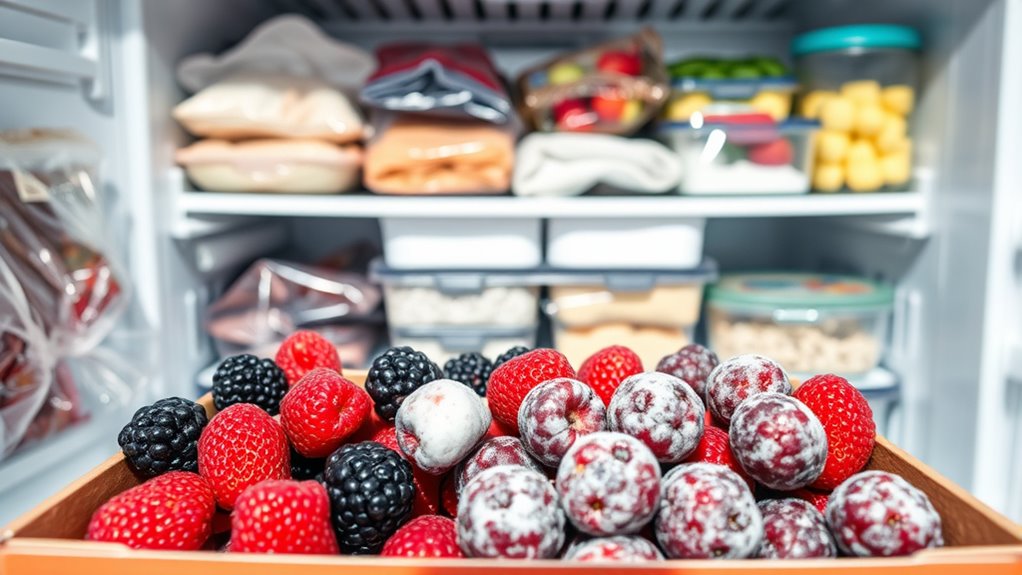
Understanding freezer burn can raise a lot of questions, especially after considering when to discard affected food. Here are some common queries to help clarify your concerns:
| Question | Answer |
|---|---|
| What is freezer burn? | It’s moisture loss causing dry patches. |
| Can I eat freezer-burned food? | Yes, but it may not taste good. |
| How can I prevent it? | Use airtight packaging for freezer storage. |
| Are there freezer burn myths? | Yes, like thinking all freezer burn is harmful. |
Frequently Asked Questions
Can Freezer Burn Affect the Nutritional Value of Food?
Freezer burn doesn’t greatly affect the nutritional quality of your food, but it can impact taste and texture. When food is improperly preserved, moisture loss occurs, leading to that dry, unappetizing texture. While vitamins and minerals generally remain intact, the overall experience of eating that food changes. To maintain the best flavor and quality, make sure you’re using proper food preservation techniques when storing items in your freezer.
Is Freezer Burn Harmful to Eat?
Freezer burn’s like a ghost haunting your food, leaving it dry and unappetizing, but it’s not dangerous to eat. You won’t face any serious health risks or food safety issues, so you can munch on it without fear. However, the texture and taste might be off, diminishing your meal’s joy. If you’re okay with that, go ahead and enjoy, but consider tossing it if you want to savor every bite!
How Long Does Food Last Before Freezer Burn Occurs?
Food can start to show signs of freezer burn within a few months, depending on the type of food and freezer duration. For best results, aim to use items within three to six months. Proper food storage is essential; use airtight containers or vacuum-sealed bags to minimize exposure to air. By taking these steps, you’ll help preserve the quality of your food and reduce the risk of freezer burn.
Does Freezer Burn Happen in Self-Defrosting Freezers?
When it comes to self-defrosting freezers, you might think they’re all smooth sailing, but freezer burn can still happen. The self-defrosting mechanics can lead to moisture loss, which exposes your food to air and ultimately contributes to freezer burn. To keep your food in tip-top shape, make sure you wrap it well and minimize air exposure. With a little care, you can avoid that dreaded freezer burn down the line.
Can I Refreeze Food After It Has Been Freezer Burned?
You can refreeze food after it’s been freezer burned, but it’s essential to assess its safety first. Freezer burn causes dehydration and affects texture, but if the food’s been kept at a safe temperature, it’s generally safe to eat. Just keep in mind that the quality may suffer. Before refreezing, trim off any severely affected parts to improve the overall taste and texture when you’re ready to use it again.
Conclusion
Now that you understand freezer burn and how to prevent it, imagine opening your freezer to find perfectly preserved food, untouched by that dreaded frost. By following the best practices and techniques we’ve discussed, you can keep your meals delicious and safe. But what if you’ve already encountered freezer burn? Stay tuned for tips on reviving those neglected items before you toss them out. You might be surprised by what’s still salvageable!