To fix common French press mistakes, focus on using the right grind size—coarse and even—to prevent over- or under-extraction. Make certain your water temperature is between 195°F and 205°F, and steep your coffee for about four minutes. Measure ingredients precisely with a scale and stir gently before plunging slowly. Keep your equipment preheated for better heat retention. Follow these simple steps, and you’ll open richer, clearer coffee—more tips await if you keep exploring.
Key Takeaways
- Use freshly ground coffee with a consistent coarse grind for even extraction.
- Preheat the French press and use water at 195°F–205°F for optimal brewing temperature.
- Measure coffee and water precisely with a digital scale to ensure proper ratios.
- Stir gently after adding water and plunge slowly to avoid disturbing sediments and over-extraction.
- Follow a steady brewing process, including timing around four minutes, for balanced flavor and clarity.

Veken French Press Coffee Maker 34oz, No Plastic Touching Cafe,Thickened Glass Stainless Steel Brewer, Cold Brew Cafetera Tea pot for Kitchen Travel Camping, Gifts, Decor, Bar Accessories, Dark Pewter
No Plastic Touching Food: Made with 304 stainless steel and food-grade silicone, our French press keeps all brewing…
As an affiliate, we earn on qualifying purchases.
As an affiliate, we earn on qualifying purchases.
Common French Press Mistakes That Ruin Your Coffee

Are you accidentally ruining your French press coffee without realizing it? Poor results often stem from common mistakes in French press brewing techniques and coffee storage methods. If you don’t use the right technique, you might over-extract or under-extract your coffee, leading to bitter or weak flavors. Always make certain you’re using fresh, properly stored coffee beans—exposure to air, heat, and moisture can diminish flavor. Storing coffee in airtight containers away from sunlight helps preserve its quality. Additionally, neglecting to preheat your French press or adding water that’s too hot or too cold can impact extraction. These small errors can considerably alter your coffee’s taste. Proper coffee storage methods and mastering French press techniques can make a noticeable difference in your cup.

Maestri House Mini Coffee Scale with Timer, USB-C Rechargeable Espresso Scale, 2kg/0.1g Accurate Scale for Espresso and Pour-Over Coffee, Portable Digital Kitchen Scale with Auto Timer (Black&Silver)
【Ultra Small, Yet Professional】The Espresso Scale is small enough to fit in your palm. It measures 4.13*4.13*0.78 inches…
As an affiliate, we earn on qualifying purchases.
As an affiliate, we earn on qualifying purchases.
How Grind Size Affects French Press Flavor and How to Get It Right
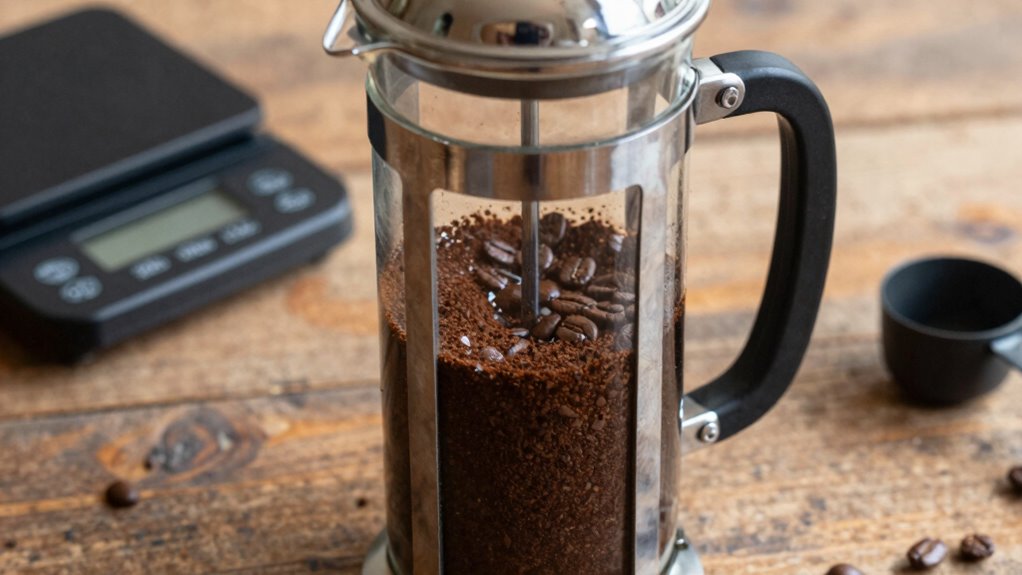
The grind size you choose has a big impact on your French press coffee’s flavor. Too fine and you’ll get over-extraction and bitterness; too coarse and your brew will be weak and underwhelming. Getting the grind just right guarantees a balanced, rich cup every time.
Impact of Grind Size
Grind size plays a crucial role in shaping the flavor of your French press coffee, as it directly influences extraction and clarity. Using consistent grind size ensures uniform extraction, preventing over- or under-extracted flavors. If your grind fineness is too coarse, the water won’t extract enough solubles, resulting in weak, underdeveloped coffee. Conversely, too fine a grind can cause over-extraction, leading to bitterness and a muddy texture. Achieving the right grind consistency allows hot water to interact evenly with coffee particles, delivering a balanced, full-bodied cup. Remember, small adjustments in grind fineness can make a significant difference. Pay attention to your grinder’s consistency and aim for a uniform grind to optimize flavor, clarity, and overall enjoyment of your French press brew. Consistent grind size ensures you get the best possible extraction for a richer, more satisfying coffee experience.
Perfecting Your French Press
Getting your grind size just right is essential for revealing the full potential of your French press coffee. When you choose the right grind, your brew will have balanced flavor and ideal extraction, mimicking the quality of a coffee shop ambiance. French press branding often emphasizes craftsmanship, but your technique matters just as much. Too coarse, and your coffee may taste weak and underwhelming; too fine, and it could be overly bitter or muddy. Experiment with slightly adjusting your grind until you find a sweet spot that produces rich, full-bodied flavor. Remember, consistency is key. Investing in a quality burr grinder helps you get the perfect grind size each time, ensuring your French press experience consistently impresses, just like your favorite coffee shop. Proper grind size plays a crucial role in achieving optimal extraction and flavor clarity.

Gevalia Special Reserve Guatemala Single Origin Medium Roast Coarse Ground Coffee (10 oz Bag)
One 10 oz bag of Gevalia Guatemalan Single Origin Special Reserve Coarse Ground Coffee
As an affiliate, we earn on qualifying purchases.
As an affiliate, we earn on qualifying purchases.
What’s the Best Water Temperature and Brew Time for French Press?
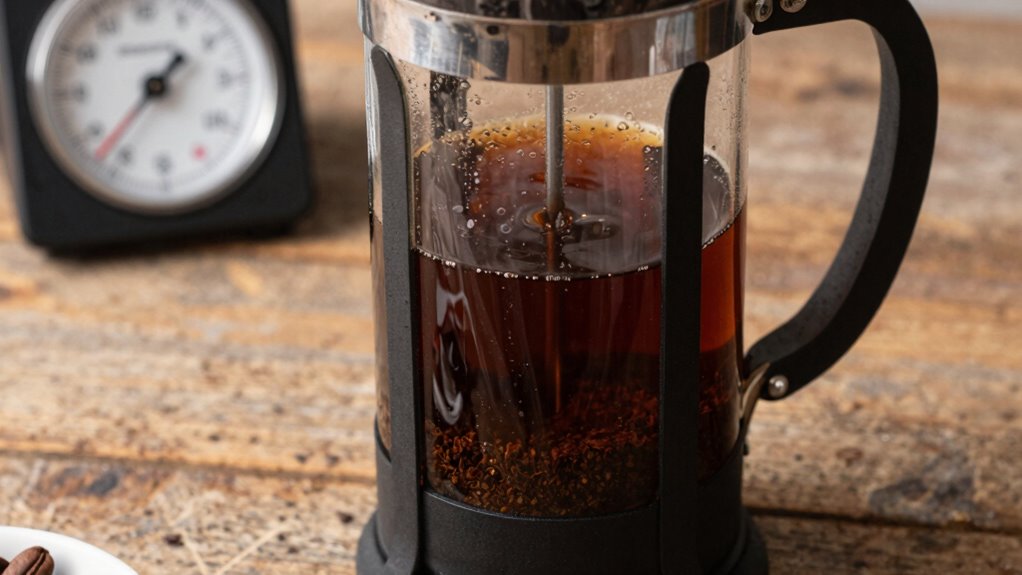
Getting the water temperature right is key to a great French press brew; aim for about 200°F to extract the best flavors. The brew time should be around four minutes, giving your coffee enough time to develop without turning bitter. Keep these tips in mind to optimize your brewing process for a richer, smoother cup.
Ideal Water Temperature
To brew the perfect French press coffee, maintaining the right water temperature is essential. Use water that’s between 195°F and 205°F (90°C to 96°C) for ideal extraction. Cooler water won’t fully extract flavors, while hotter water can scorch the coffee, dulling its brightness. The quality of your water directly impacts coffee freshness—use clean, filtered water to avoid off-flavors. Consider this table for clarity:
| Water Temperature | Result |
|---|---|
| Below 195°F | Under-extraction, weak taste |
| 195°F–205°F | Perfect flavor, balanced brew |
| Above 205°F | Over-extraction, bitterness |
Ensuring your water temperature is correct helps achieve optimal extraction and a more satisfying cup. Sticking to the right temperature ensures your coffee remains flavorful, bright, and satisfying.
Optimal Brew Duration
Finding the ideal brew duration for your French press depends on maintaining the right water temperature and timing it precisely. Typically, a brew time of 4 minutes strikes a good balance between flavor extraction and avoiding over-extraction that leads to bitterness. Too short, and your coffee may be weak; too long, and it can become over-brewed. Adjusting the brew time influences the brew strength, giving you control over how bold or smooth your coffee tastes. To optimize your experience:
- Use a consistent 4-minute brew time as a starting point
- Stir gently after adding water to ensure even extraction
- Pay attention to the grind size for better flavor and clarity
- Monitoring water chemistry can help improve overall extraction and flavor clarity.
These steps help you achieve the perfect flavor extraction and a well-balanced cup every time.
Temperature & Time Tips
Maintaining the right water temperature and brew time is essential for a perfect French press cup. Use water just off the boil, around 200°F (93°C), to optimize extraction while preserving coffee freshness. Water quality matters—filtered water reduces impurities that can dull flavors. Steeping your coffee for about 4 minutes strikes the right balance; too short, and you won’t extract enough flavor, too long, and it may become bitter. Keep in mind that different beans may require slight adjustments, but sticking to these guidelines ensures a well-balanced brew. Consistent temperature and timing help you avoid over- or under-extraction, resulting in a rich, aromatic cup that highlights your coffee’s true character. Temperature control plays a crucial role in achieving the perfect extraction.

Coffee Gator Gooseneck Kettle with Thermometer – 34oz Premium Stainless Steel Pour Over Coffee Maker Kettle, Stove Top, w/Precision Drip Spout, for Drip Coffee, French Press, Tea Kettle, 4 Cup, 1L
Engineered in premium-grade stainless steel with a gooseneck spout for steady water flow (essential for hand drip perfection)….
As an affiliate, we earn on qualifying purchases.
As an affiliate, we earn on qualifying purchases.
Are Your Coffee-to-Water Ratios Correct? How to Measure for Perfect Results

Getting the coffee-to-water ratio right is essential for a perfectly brewed French press, but it’s easy to misjudge if you don’t measure carefully. Proper coffee measurement guarantees your brew isn’t too strong or weak, and water ratios directly impact flavor and strength. To get it right:
- Use a digital scale to measure coffee beans accurately, typically 1 to 2 tablespoons per 4 ounces of water.
- Adjust water ratios based on your preferred strength—more coffee for a bolder taste, less for a milder brew.
- Remember that consistency in measuring helps you replicate successful batches every time.
- Using precise measurements ensures your brew consistently achieves the desired color accuracy and flavor profile.
How to Stir and Plunge Properly for Better French Press Coffee
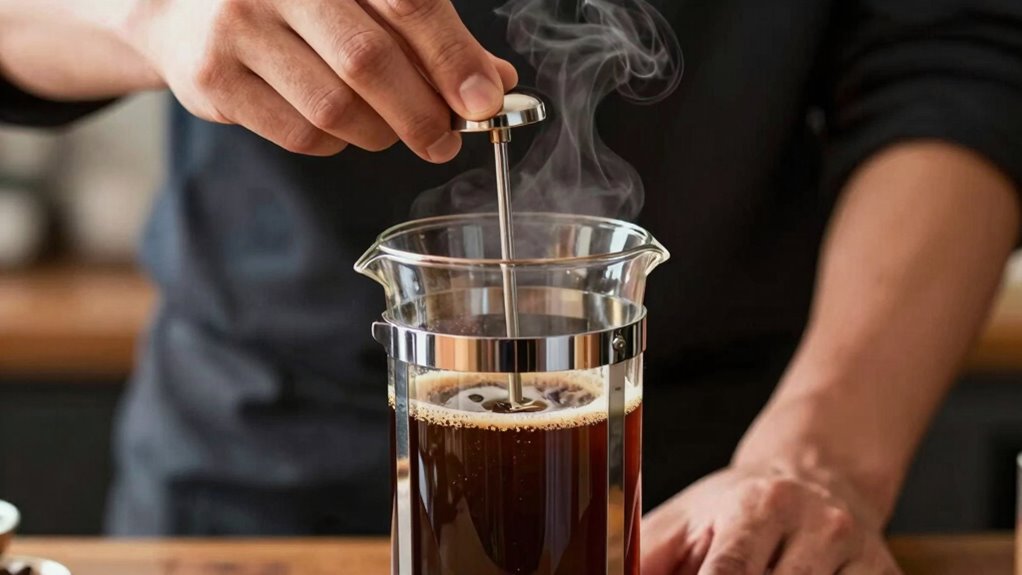
To brew a better French press coffee, you need to stir and plunge correctly to guarantee ideal extraction and clarity. Start with a gentle stir technique, moving the spoon or paddle in circular motions to evenly distribute the coffee grounds and water. This helps ensure consistent extraction without over-agitating the brew. When plunging, use a steady, controlled motion—avoid rushing or applying excessive force. The plunging method should be smooth to prevent grounds from escaping into your cup, which can cause cloudiness. Keep the plunger upright and push down slowly until you feel resistance. Proper stirring and plunging maximize flavor extraction, enhance clarity, and prevent sediment. Mastering these steps helps you enjoy a cleaner, more balanced French press coffee every time. For the best results, consider using specialized gear designed for French press brewing to improve your technique.
Easy Tips for Brewing Perfect French Press Coffee Every Time
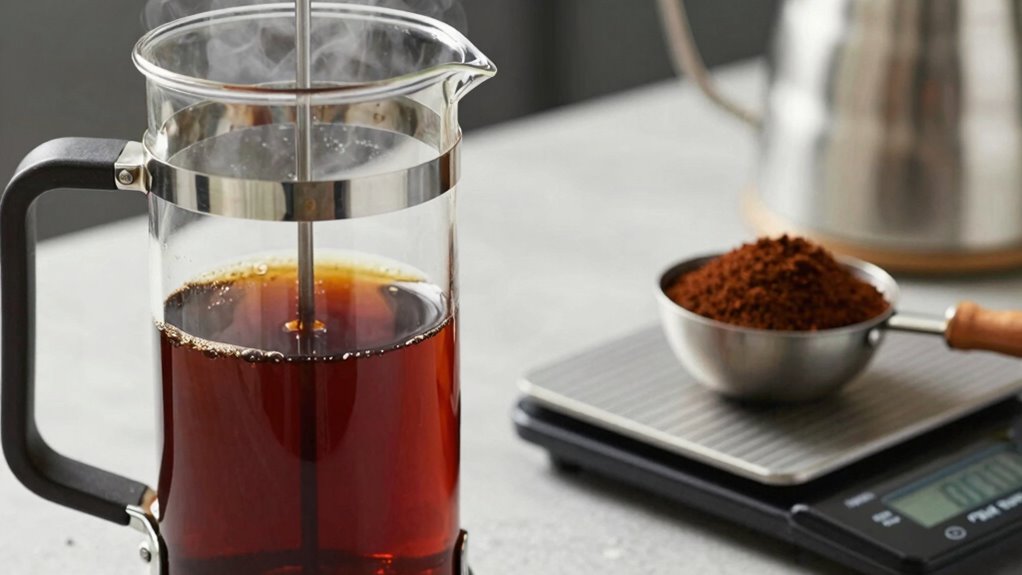
Brewing perfect French press coffee is simpler than you might think when you follow a few easy tips. Start with fresh, coarsely ground coffee to enhance the coffee flavor profiles. Use quality French press accessories like a burr grinder and a reliable timer to guarantee consistency. Maintain water temperature around 200°F for ideal extraction. Steep your coffee for about four minutes, then press slowly and steadily. To improve your brew, consider pre-warming your French press to keep the coffee hot longer. Also, experiment with grind size and steep time to match your taste preferences. Paying attention to craftsmanship and design in your equipment can significantly impact the final result. These small adjustments can make a big difference in flavor and strength, giving you that perfect cup every time. Enjoy your coffee with confidence and perfect consistency.
Frequently Asked Questions
How Can I Prevent Coffee Grounds From Ending up in My Cup?
To prevent coffee grounds from ending up in your cup, start with the right grind size—coarse is best for a French press. Keep an eye on brewing time; don’t over steep, usually around four minutes. After brewing, press down slowly and steadily to keep grounds separate. Using a metal mesh filter can also help catch any stray grounds, ensuring you enjoy a clean, smooth cup every time.
What Type of Coffee Beans Work Best for French Press?
Imagine a rich, velvety river flowing through your French press—that’s what the right beans bring. For the best results, choose coarsely ground, whole beans with a medium to dark roast level. These beans release oils and flavors that deepen your brew’s complexity. Bean selection matters; opt for fresh, high-quality beans to maximize aroma and taste, turning your coffee into a sensory journey with every pour.
Can I Reuse Coffee Grounds for a Second Brew?
You can reuse coffee grounds for a second brew, but keep in mind the second brew potential is usually lower in flavor and strength. Coffee grounds reuse works best if you slightly adjust your expectations, as the second extraction extracts fewer oils and flavors. To get the most out of reuse, use slightly coarser grounds and brew a shorter time. Don’t expect the same richness, but it can still produce a decent cup.
How Do I Clean My French Press Effectively?
To clean your French press effectively, start by disassembling all parts. Use cleaning tools like a soft brush or sponge to scrub the plunger, lid, and carafe, removing coffee oils and residue. Rinse thoroughly with warm water. Incorporate regular maintenance routines, like deep cleaning with a mixture of vinegar and water once a month, to prevent buildup and keep your coffee tasting fresh.
Is It Okay to Leave Coffee in the French Press Overnight?
Leaving coffee in your French press overnight isn’t ideal. While it might seem convenient, it can lead to stale flavor and potential mold. Think of it as coffee storage; fresh is best for flavor preservation. If you must leave it, transfer it to a sealed container and refrigerate, but enjoy it within a few hours. Your taste buds will thank you for sticking to fresh brew!
Conclusion
Now that you know the common pitfalls and simple fixes, brewing a flawless French press becomes second nature—no need to summon the spirits of coffee masters past. With the right grind, water temp, and technique, you’ll craft a brew worthy of legend. Remember, even in this modern age, patience and attention to detail are your trusted allies. So go forth, pioneer your perfect cup, and let each sip remind you that mastery is an art, timeless as the stars.