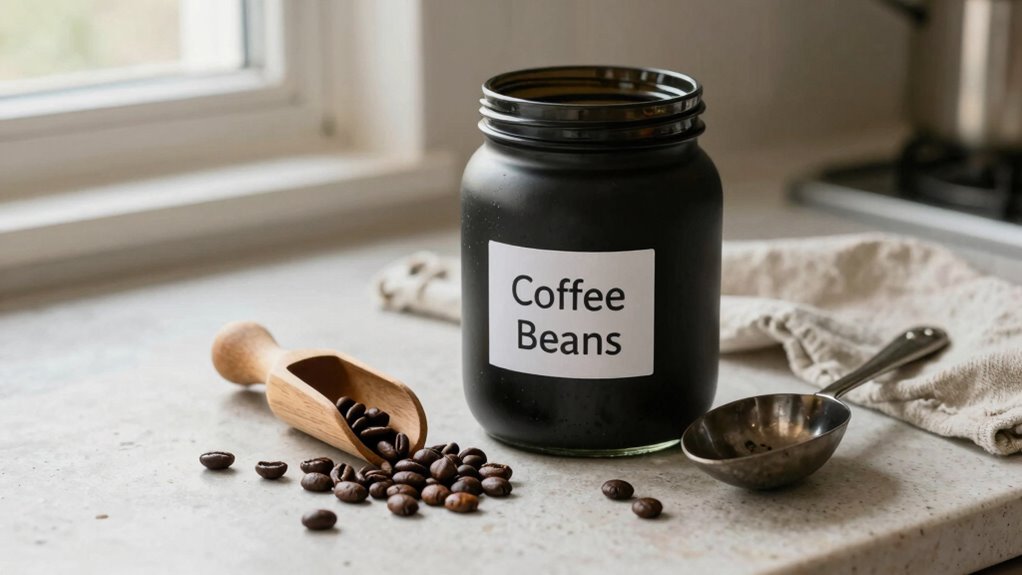

To keep your coffee beans fresh and flavorful longer, store them in an opaque, airtight container made of metal, ceramic, or dark glass. Keep the container in a cool, dark, and stable environment away from heat, light, and humidity. Avoid frequent openings and don’t refrigerate or freeze unless you’re using small portions stored properly. Proper storage can substantially extend your beans’ peak flavor, and if you want to learn more, there’s plenty of tips to explore.
Key Takeaways
- Store coffee beans in an opaque, airtight container to protect from light, oxygen, and moisture.
- Keep beans in a cool, stable environment between 60°F–70°F, avoiding heat sources and temperature fluctuations.
- Grind beans only as needed to preserve freshness and prevent oxidation.
- Avoid storing in the refrigerator or freezer long-term; use airtight containers if freezing.
- Limit container openings and keep beans away from strong odors to maintain aroma and flavor.
Why Proper Coffee Storage Preserves Flavor and Aroma

Proper coffee storage is essential because it keeps your beans fresh, preserving their rich flavor and enticing aroma. When coffee beans are exposed to air, coffee bean oxidation occurs, which quickly degrades their quality. Oxidation causes stale flavors and diminishes aroma retention, making your coffee taste flat and dull. To prevent this, you need to store beans in an airtight container that minimizes exposure to oxygen. Light and heat also accelerate deterioration, so keeping your coffee in a cool, dark place helps maintain its freshness. Additionally, reducing exposure to microplastics in dust in your storage area can help prevent contamination and preserve the purity of your beans. By controlling these factors, you ensure your coffee retains its vibrant flavors and aromatic qualities longer. Proper storage doesn’t just extend shelf life; it preserves the sensory experience you crave with every brew.
Choosing the Best Container to Keep Your Coffee Fresh
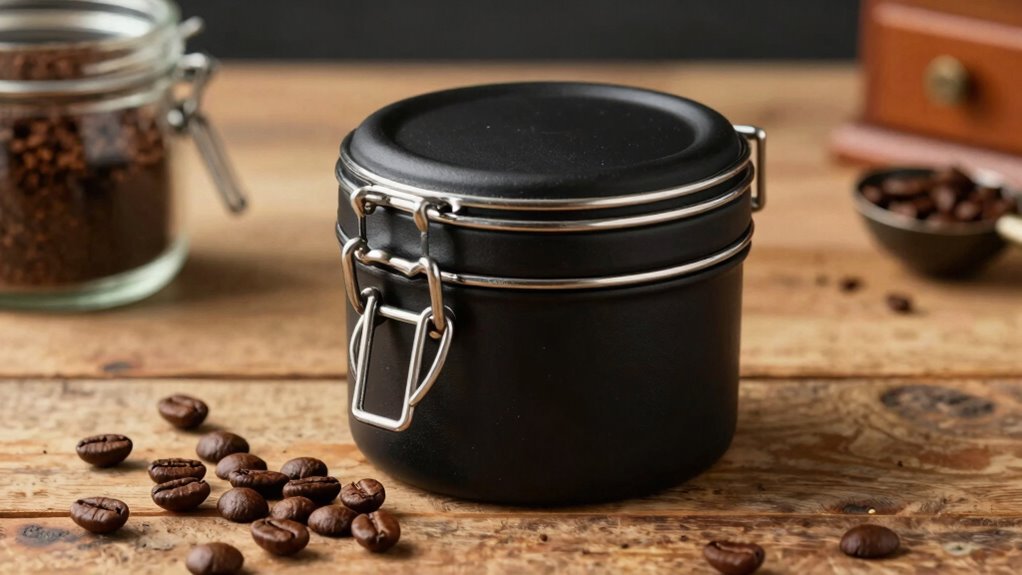
Choosing the right container is key to keeping your coffee fresh. Focus on materials that block light and air, like opaque, airtight options. Ensuring the container maintains ideal storage conditions helps preserve your beans’ flavor and aroma. Using sustainable materials can also reduce environmental impact while maintaining freshness.
Material Matters Most
The material of your coffee container plays a essential role in preserving freshness because it directly affects how well it blocks light, air, and moisture. Choosing the right material matters most in coffee storage, as it keeps flavors intact longer. Using materials like metal or dark glass also helps prevent issues related to hive health, such as drone bee exposure to harmful elements, which can impact overall hive stability and pollination efficiency.
Ideal Storage Conditions
To keep your coffee fresh, you need to select a container that offers ideal storage conditions by controlling exposure to light, air, and moisture. The best containers are opaque, airtight, and moisture-proof, preventing oxidation that can degrade flavor. Consider the coffee bean roasting process; darker roasts are more sensitive to light and should be stored in a dark, opaque container, while lighter roasts may tolerate slightly more exposure. Also, pay attention to the coffee bean origin, as beans from different regions can have unique flavor profiles that fade quickly if not stored properly. Using a container that blocks light and air helps preserve these subtleties, ensuring your coffee retains its freshness and aroma longer. Proper storage protects your beans from staling and maintains their quality, especially when considering factors like storage conditions that influence coffee freshness over time.
The Ideal Storage Conditions: Temperature, Light, and Humidity
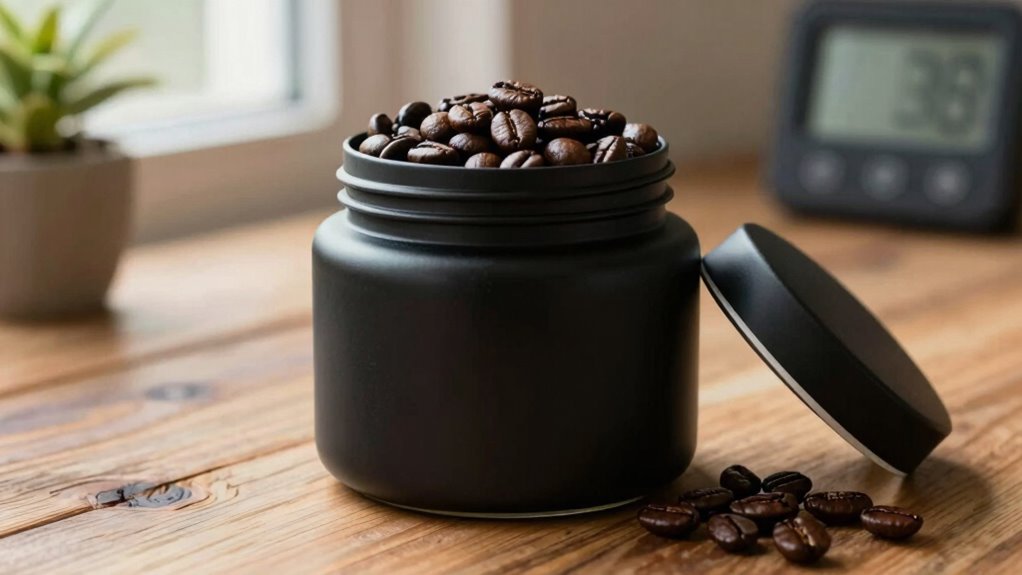
To keep your coffee beans fresh, you need to pay attention to the right temperature, light, and humidity. Keeping them in a cool, stable environment helps preserve flavor, while protecting from light prevents oxidation. Controlling humidity levels prevents mold and staleness, ensuring your beans stay at their best. Incorporating humidity control devices can further help maintain optimal storage conditions.
Optimal Temperature Range
Maintaining the right temperature is essential for preserving your coffee beans’ freshness and flavor. The ideal temperature range for storage is between 60°F and 70°F (15°C to 21°C). Too high or fluctuating temperatures can accelerate staling, destroying delicate oils and aromas. To guarantee temperature stability, keep your beans in a consistent environment, avoiding places like near ovens, windows, or vents. A stable storage environment minimizes temperature swings that can compromise freshness. Additionally, avoid storing coffee in the fridge or freezer, as moisture and temperature fluctuations can harm quality. Proper temperature control helps extend shelf life and retain maximum flavor, ensuring your coffee stays fresh longer. Exploring challenges in molecular-scale circuits and nanotech fabrication can provide insights into achieving precise environmental control for optimal storage conditions.
Protect From Light
Light exposure can quickly degrade the quality of your coffee beans, causing them to lose their vibrant flavors and aromas. UV damage from sunlight or artificial light accelerates the breakdown of essential oils and compounds in the beans. To protect your coffee, store it in a dark, opaque container or a cool, dark place. Avoid transparent bags or jars that let in light, especially if stored near windows or bright areas. Even brief light exposure can harm the beans over time, diminishing their freshness. By shielding your coffee from light, you preserve its rich flavors and extend its shelf life. Remember, minimizing light exposure is a simple but vital step in maintaining your coffee’s fundamental quality.
Control Humidity Levels
Controlling humidity levels is essential for keeping your coffee beans fresh and flavorful. Excess moisture can cause beans to mold or become stale, while too little humidity can dry them out, diminishing aroma and taste. To guarantee proper humidity control, store your beans in a cool, dry place away from humidity sources like sinks or windows. Use airtight containers with moisture-absorbing packets to aid moisture management. Avoid storing in humid environments, such as basements or kitchens, where fluctuations are common. Proper humidity control maintains the beans’ integrity, preserving their flavor profile. Remember, consistent moisture levels prevent spoilage and extend freshness. Effective moisture management is key to brewing rich, flavorful coffee every time. Additionally, understanding filter sizing and flow can help ensure that your storage environment remains stable and free from excess humidity.
Common Mistakes to Avoid When Storing Coffee Beans
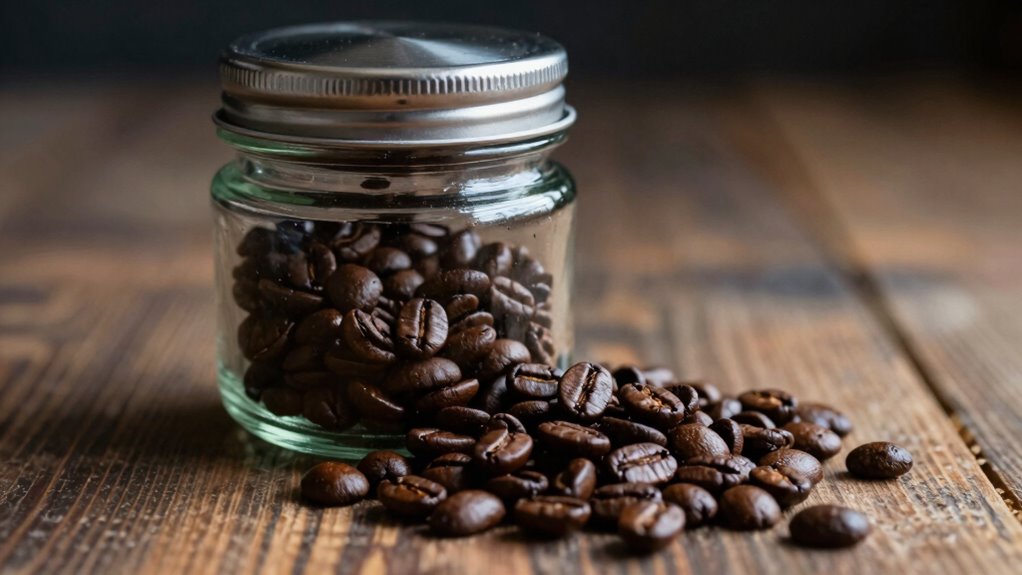
One of the biggest mistakes you can make when storing coffee beans is exposing them to air for extended periods. Air causes oxidation, which quickly degrades flavor and aroma. Avoid using a transparent or poorly sealed storage container that lets air in. Also, don’t store coffee beans in the refrigerator or freezer long-term, as moisture can seep in and ruin the beans. Another common mistake is grinding your coffee too early; once ground, the beans lose freshness faster, so only grind what you need. Keep your coffee in a cool, dark place, and use an airtight container designed for coffee storage. Proper storage conditions are crucial for maintaining freshness and preventing staleness, ensuring your coffee stays flavorful longer.
Storing Whole Beans vs. Ground Coffee: What’s the Difference?
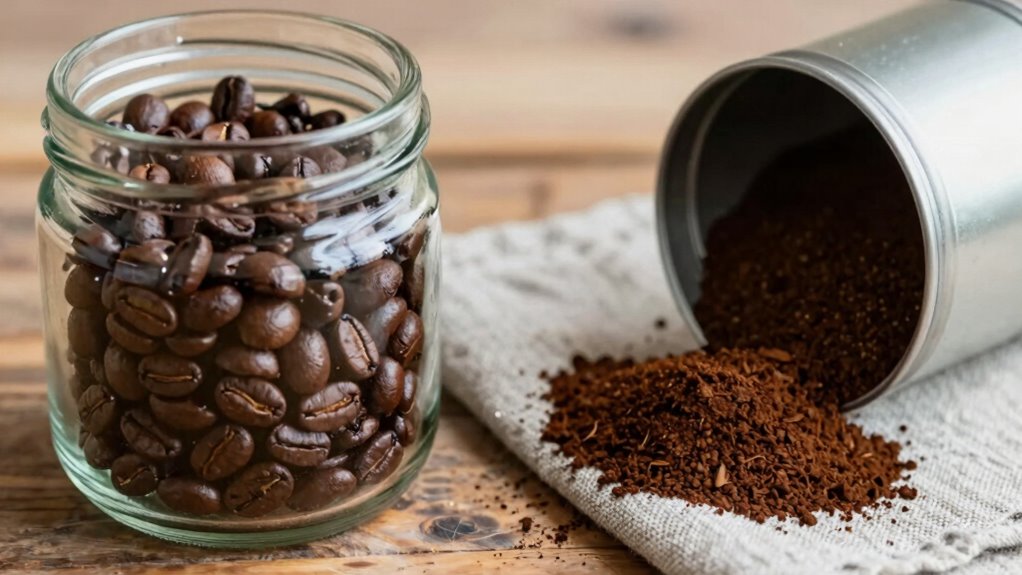
You’ll notice that storing whole beans helps maintain freshness longer than ground coffee. This difference considerably affects flavor and aroma over time. Choosing the right container and storage method plays a key role in preserving quality for both forms. Additionally, keeping your coffee away from exposure to bacteria and heat sources can prevent deterioration and contamination.
Freshness Preservation Techniques
To keep your coffee beans fresh, it’s important to understand how storage methods impact their flavor and aroma. Proper preservation slows down flavor degradation and maintains the unique qualities from coffee bean roasting. Whole beans stay fresher longer because they’re less exposed to oxygen, which accelerates flavor loss. Ground coffee, however, exposes more surface area, speeding up flavor degradation. To maximize freshness, store beans in airtight containers away from light, heat, and moisture.
- Use opaque, airtight containers to protect against oxygen and light
- Store in a cool, dark place to slow down flavor degradation
- Avoid frequent opening to limit exposure to air
- Keep beans away from heat sources like ovens or stovetops
Impact on Flavor Profile
Have you ever noticed how the flavor of coffee changes depending on how it’s stored? Storing whole beans helps conserve flavor and aroma retention better than ground coffee. When you grind beans, surface area increases, making them more vulnerable to oxidation and moisture, which deteriorate flavor quickly. Whole beans maintain their complex flavor profile longer, offering better flavor preservation. Here’s a quick comparison:
| Aspect | Whole Beans | Ground Coffee |
|---|---|---|
| Flavor Preservation | Longer-lasting | Shorter-lived |
| Aroma Retention | Better retention | Losses occur faster |
Choosing whole beans over ground coffee ensures you enjoy fresh, vibrant flavors longer, making each brew richer and more aromatic.
Storage Container Options
Choosing the right storage container is essential for maintaining the freshness of your coffee, whether you’re storing whole beans or ground coffee. A good container should have air tight seals to prevent exposure to oxygen, which accelerates flavor loss. You might also consider decorative designs that complement your kitchen decor, making storage both functional and attractive.
Options include:
- Opaque containers to block light and preserve flavor.
- Containers with silicone seals for a secure, airtight fit.
- Ceramic or stainless steel options that resist odors and stains.
- Decorative jars with unique designs to add personality to your coffee setup.
Selecting the appropriate container guarantees your coffee stays fresh longer and looks good doing it.
How Long Do Coffee Beans Stay Fresh? Tips to Extend Their Shelf Life
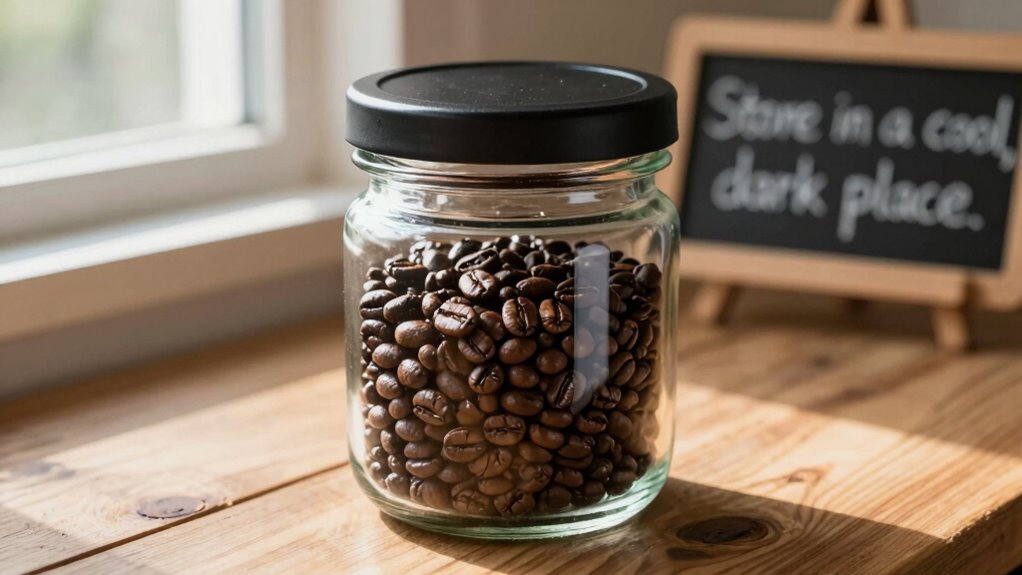
Coffee beans typically stay fresh for about two to four weeks after roasting if stored properly. During this period, coffee bean aging affects flavor, so consuming them sooner guarantees maximum freshness. To maximize your beans’ storage lifespan, keep them in an airtight container away from light, heat, and moisture. Avoid frequent exposure to air, which accelerates flavor loss. While beans can last longer if stored well, their peak freshness diminishes after the initial weeks. Proper storage slows down this process, helping you enjoy rich aroma and flavor longer. Remember, the key to extending your coffee’s shelf life is minimizing exposure to factors that speed up aging, ensuring each brew remains flavorful and satisfying over time.
Is It Safe to Store Coffee in the Freezer or Refrigerator?
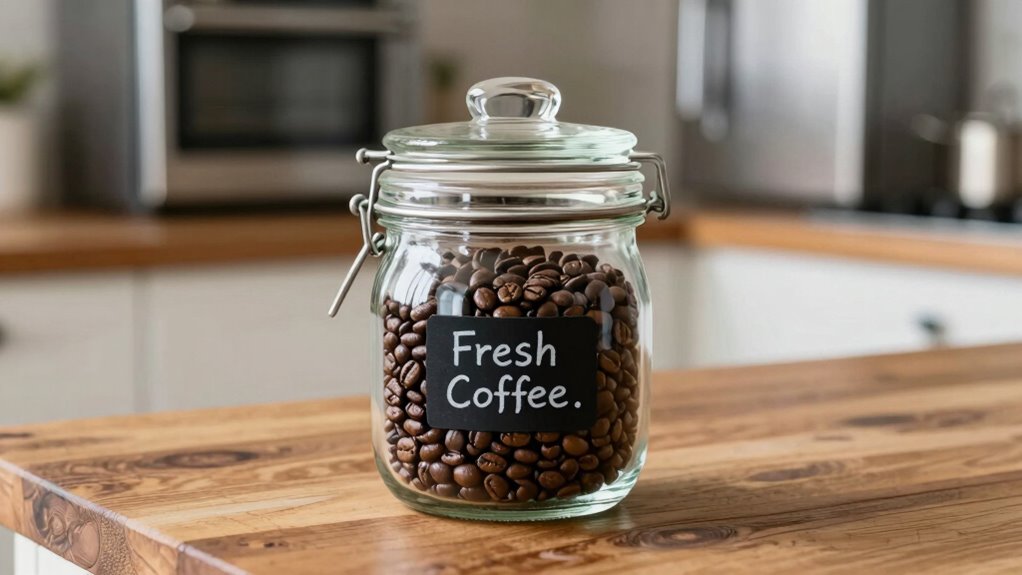
Storing coffee in the freezer or refrigerator can be a convenient way to extend its freshness, but it’s important to understand how these methods affect the beans. Freezer safety is generally fine if you use airtight containers, but avoid frequent thawing and refreezing, which can cause moisture buildup. Refrigerators, on the other hand, can introduce unwanted moisture, leading to stale or moldy beans. Proper storage is key to maintaining flavor and quality. Keep in mind that:
- Airtight containers prevent freezer burn and odors
- Consistent temperature helps avoid condensation
- Avoid storing coffee near strong-smelling foods
- Use small portions to minimize exposure to refrigerator moisture
Best Practices for Buying and Using Fresh Coffee Beans
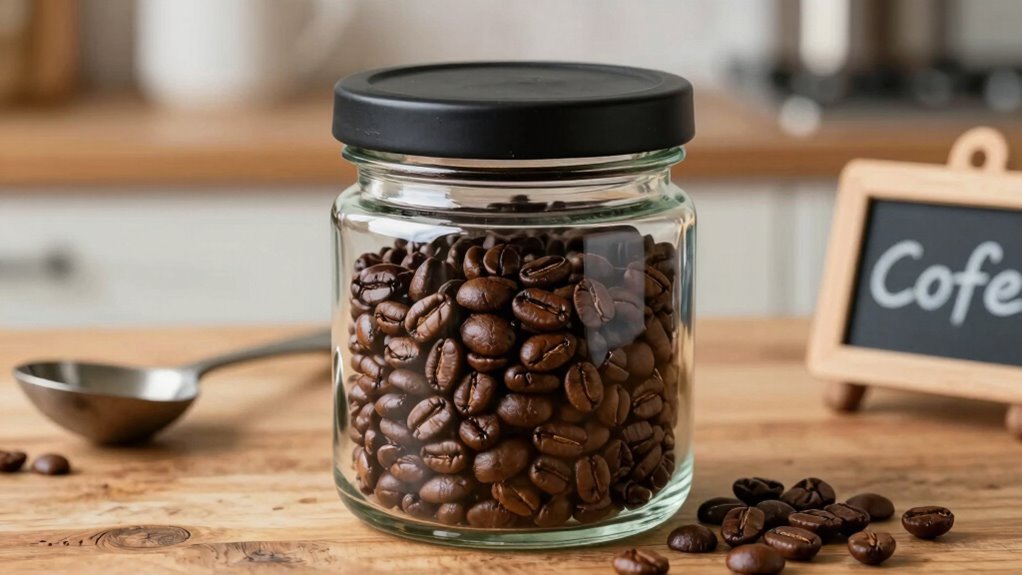
To enjoy the freshest coffee experience, acquiring high-quality beans from reputable sources and paying attention to their freshness date is essential. Opt for beans with a recent roast date to guarantee optimal flavor and aroma. When buying, consider the coffee bean roasting process, as lighter roasts retain more caffeine content and highlight unique flavors. Always check packaging for freshness indicators and buy in small quantities to avoid staleness. Use the table below to guide your choices:
| Buying Tips | Usage Tips |
|---|---|
| Purchase from reputable sources | Store beans in airtight containers |
| Check roast date | Grind just before brewing for freshness |
| Prefer light roasts for more caffeine | Use within a month of purchase |
Using Transparent Containers: Do’s and Don’ts
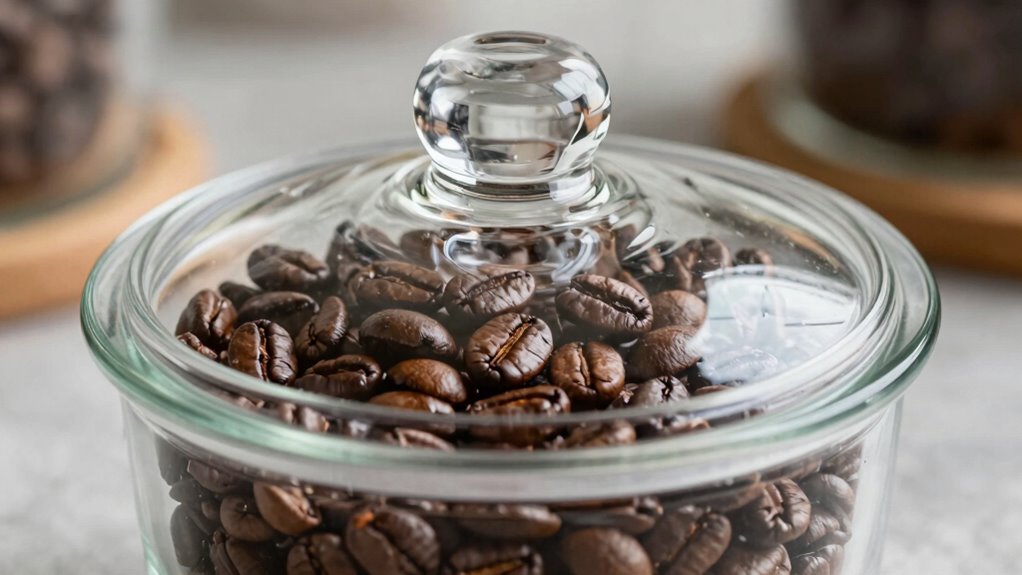
Using transparent containers can be a great way to keep your coffee beans visible and easily accessible. However, avoid storing beans in clear containers exposed to direct sunlight, as light can degrade flavor. Instead, use opaque containers if you want to protect beans from light, but if transparency is important, keep the container in a dark, cool spot. Always follow good labeling practices to track freshness and roast date, preventing confusion or waste.
- Keep the container in a cool, dark place, away from sunlight and heat sources
- Avoid frequent opening that exposes beans to air and humidity
- Use airtight lids to prevent stale air from entering
- Regularly update labels with roast date and purchase info for freshness control
Troubleshooting Coffee Flavor Loss and Refreshing Stored Beans
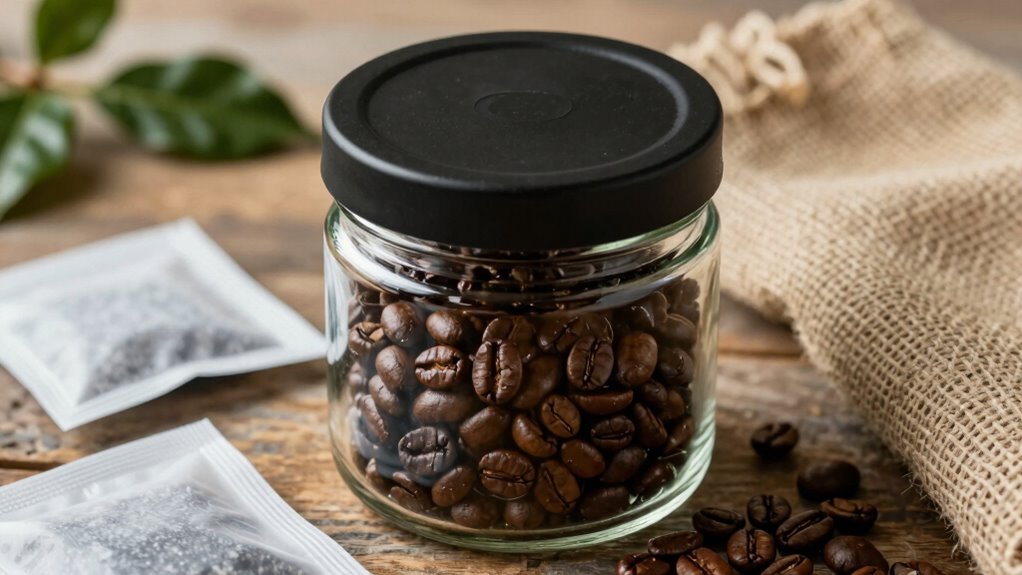
Over time, coffee beans can lose their freshness and flavor, especially if they’ve been stored improperly or for too long. This flavor loss often results from exposure to oxygen, light, or heat, which accelerates coffee roasting deterioration and reduces caffeine stability. If your beans taste flat or dull, try revitalizing them by gently warming them in a low oven for a few minutes—this can sometimes refresh their aroma. However, be careful not to overheat, as it can harm the beans’ quality. To prevent further flavor loss, always store beans in an airtight container away from light and heat sources. Remember, proper storage helps preserve both the coffee roasting profile and caffeine stability, ensuring each brew remains flavorful and energizing.
Frequently Asked Questions
How Does Oxygen Exposure Affect Coffee Freshness Over Time?
Oxygen exposure accelerates the oxidation impact on your coffee beans, causing their freshness to deteriorate faster. When you leave beans exposed to air, they lose flavor and aroma more quickly. To keep your coffee fresher longer, store beans in airtight containers, minimizing oxygen contact. Avoid frequent opening, which introduces more air, and always seal your beans tightly after use to slow down the oxidation process and preserve their quality.
Can Storing Coffee With Other Strong-Smelling Foods Cause Flavor Contamination?
Imagine your coffee beans as enthusiastic travelers, sensitive to their surroundings. When stored near strong-smelling foods, they can experience flavor transfer and odor absorption, much like a sponge soaking up nearby scents. This can result in your coffee losing its unique aroma and developing an unwanted, lingering taste. To keep your coffee’s pure essence, store it separately in airtight containers, away from any potent foods that might taint its delicate flavor.
What Are the Signs That Coffee Beans Have Gone Stale?
You’ll notice your coffee beans have gone stale when their aroma decline becomes obvious, and they lose their vibrant smell. Fresh beans typically have a strong, inviting aroma, but stale ones smell flat or musty. Other freshness indicators include a dull appearance and a lack of the usual oily sheen. If brewed coffee tastes flat or sour, it’s a clear sign that your beans have lost their freshness, so it’s time to replace them.
Is Vacuum-Sealing a Good Method for Preserving Coffee Beans?
Imagine sealing your coffee beans tightly, locking out air and light—vacuum-sealing benefits include preserving freshness and flavor longer. It’s a highly effective method because a sealed container prevents oxidation, which causes staleness. With vacuum sealing, you create an airtight barrier, ensuring your beans stay fresh and aromatic. This technique surpasses traditional storage, making your coffee taste just as vibrant as the day you bought it, every time you brew.
How Often Should I Check My Stored Coffee Beans for Quality?
You should check your stored coffee beans for quality every couple of weeks to maintain ideal coffee freshness. Regularly inspecting them helps you spot any signs of spoilage or flavor loss, especially if you’re storing them for extended durations. Keep an eye out for changes in aroma, color, or texture, as these indicate that the storage duration has impacted their quality. Staying vigilant ensures you enjoy the freshest coffee possible.
Conclusion
By storing your coffee beans properly, you’re opening their full potential and preserving their vibrant flavor and aroma like a precious treasure. Avoid common mistakes, choose the right container, and keep conditions ideal to guarantee every sip is as fresh as the first. Remember, improper storage can drain your coffee’s soul faster than you can say “burnt beans.” Treat your coffee with care, and it’ll reward you with unbeatable taste and aroma every single time.