Kitchen knife steel types vary mainly between carbon steel, stainless steel, and high-carbon stainless steel, each balancing sharpness, durability, and rust resistance differently. Carbon steels sharpen easily but rust quickly, while stainless steels resist corrosion but may need more frequent sharpening. High-carbon stainless steels offer a good mix of both. Choosing the right steel depends on your tasks and maintenance habits, and understanding these options helps you make smarter choices for your knives. Keep exploring to learn more.
Key Takeaways
- Stainless steel knives are low-maintenance, corrosion-resistant, and durable, suitable for everyday use.
- Carbon steel knives are sharp and easy to sharpen but prone to rust; require regular maintenance.
- High-carbon stainless steels offer a balance of sharpness, edge retention, and corrosion resistance.
- Softer steels are easier to sharpen but may dull faster; harder steels maintain edges longer but are more challenging to sharpen.
- Identifying steel types via manufacturer labels, markings, or spark tests helps determine proper care and suitability for tasks.
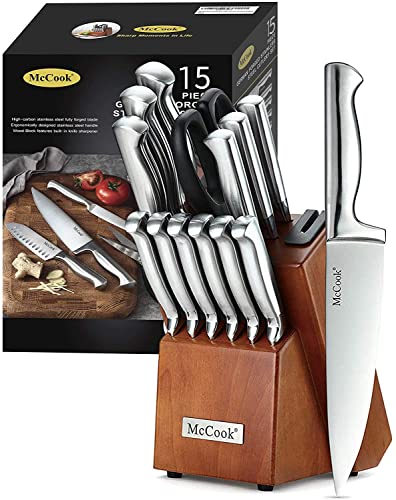
McCook® Knife Sets, German Stainless Steel Kitchen Knife Block Sets with Built-in Sharpener
【Exclusive Built-in Sharpener】Kitchen knife set with sharpener is amazing. The self-sharpening block keeps the knives razor sharp effectively….
As an affiliate, we earn on qualifying purchases.
As an affiliate, we earn on qualifying purchases.
What Are the Most Common Steel Types Used in Kitchen Knives?

The most common steel types used in kitchen knives include carbon steel, stainless steel, and high-carbon stainless steel. Each steel type has distinct metal alloy characteristics, influencing sharpness, durability, and corrosion resistance. Carbon steel, for example, contains higher carbon content, making it easier to sharpen and maintain a keen edge, but it’s more prone to rust. Stainless steel combines iron with chromium, which forms a protective oxide layer, enhancing corrosion resistance. High-carbon stainless steels blend the best of both worlds, offering sharpness and corrosion resistance. These steel types result from various steel manufacturing processes, such as forging, rolling, and heat treatment, which shape the alloy’s properties. Understanding these processes helps you choose knives suited to your needs, based on their steel’s metal alloy characteristics. Additionally, manufacturing techniques significantly influence the final performance and longevity of kitchen knives.

Brewin Professional Kitchen Knives, 3PC Chef Knife Set Sharp Knives for Kitchen High Carbon Stainless Steel, Japanese Cooking Knife with Gift Box
MUTI-PURPOSE CHEF KNIFE SET – The Brewin 3pc Professional Kitchen Knife Set comes with 1× chef’s knife, 1×…
As an affiliate, we earn on qualifying purchases.
As an affiliate, we earn on qualifying purchases.
How Do Carbon Steels and High-Carbon Stainless Steels Differ in Performance?
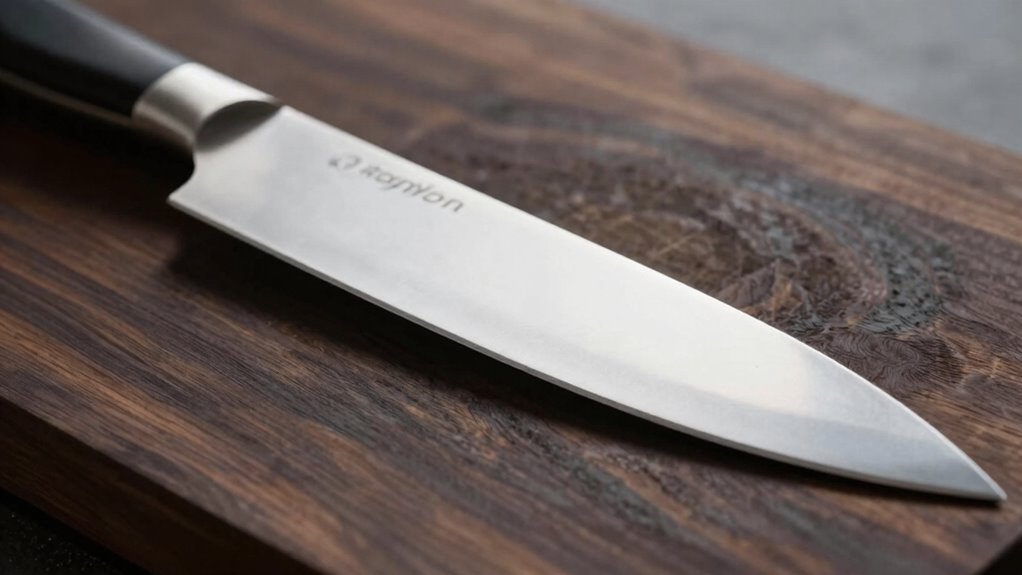
Carbon steels and high-carbon stainless steels differ markedly in their performance, primarily due to their alloy compositions. Carbon steels have a higher carbon content and lack chromium, which makes them easier to sharpen and allows for a finer edge. However, they are more prone to rust and require regular maintenance. High-carbon stainless steels contain both carbon and chromium, providing a balance between sharpness and corrosion resistance. Their steel composition offers excellent edge retention while resisting rust, though they may be slightly harder to sharpen than traditional carbon steels. The performance differences come down to these factors: carbon steels excel in edge longevity but need more upkeep, whereas high-carbon stainless steels offer a good mix of durability, ease of maintenance, and sharpness. Understanding alloy composition is key to choosing the right steel type for specific kitchen tasks.

HOSHANHO 3.75 inch Paring Knife, Japanese High Carbon Stainless Steel Small Kitchen Knives, Ultra Sharp Fruit Knife with Ergonomic Pakkawood Handle
【High Quality Stainless Steel】LOONG series paring knife is professionally forged from imported Japanese 10Cr15CoMoV stainless steel. Precision quenching,…
As an affiliate, we earn on qualifying purchases.
As an affiliate, we earn on qualifying purchases.
What Are the Pros and Cons of Stainless Steel Knives?
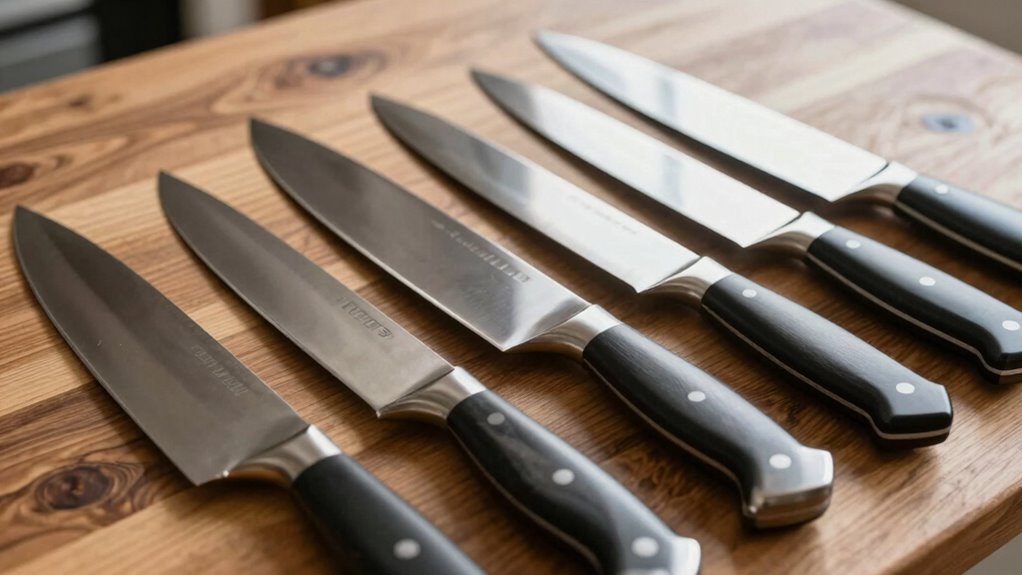
Stainless steel knives are known for their durability and ease of maintenance, making them popular in busy kitchens. However, they require proper care to prevent corrosion and staining over time. Understanding their strengths and weaknesses helps you choose the right knife for your needs. Additionally, selecting the appropriate steel type can significantly influence the knife’s performance and longevity.
Durability and Maintenance
Although stainless steel knives are known for their resistance to rust and corrosion, they require regular maintenance to keep their edge sharp and performance ideal. You’ll find that their durability depends on the specific steel type; some blades offer excellent blade flexibility, reducing the risk of chipping or breaking during use. However, stainless steel knives can sometimes be less forgiving when it comes to handle compatibility, as they may feel heavy or unbalanced if paired with incompatible handles. To maintain their longevity, you should regularly hone or sharpen the blade and clean them properly after use. Proper storage also helps prevent damage. With consistent care, stainless steel knives can stay sharp and functional, making them dependable tools in your kitchen. Additionally, understanding the Gold IRA Markets can help you make informed decisions about precious metal investments to diversify your portfolio.
Corrosion Resistance and Care
Stainless steel knives are popular because they resist rust and corrosion, making them low-maintenance tools for busy kitchens. Their corrosion resistance depends on the blade’s alloy composition and finish, which helps prevent rust even with frequent use. Proper care involves avoiding prolonged exposure to moisture, cleaning, and drying the knife thoroughly. Blade geometry influences how easily debris and moisture can settle, affecting longevity. Handle materials also play a role; synthetic handles resist corrosion better than wood or other porous materials. While stainless steel knives are easy to care for, they still require regular maintenance to keep their corrosion resistance intact. Using appropriate cleaning methods and understanding your knife’s blade geometry and handle material will prolong its life and ensure it remains rust-free. Additionally, proper storage helps prevent accidental damage and corrosion over time.
![Stainless Steel Test Kit for Differentiating 316/304 [Packaging Upgraded]](https://m.media-amazon.com/images/I/41OL-A57NGL._SL500_.jpg)
Stainless Steel Test Kit for Differentiating 316/304 [Packaging Upgraded]
【Packaging upgraded】Convenient: Differentiate stainless steel 316 vs. 304 or 201 series through color change. Can test more than…
As an affiliate, we earn on qualifying purchases.
As an affiliate, we earn on qualifying purchases.
Are Powdered Steel Knives Worth the Investment?
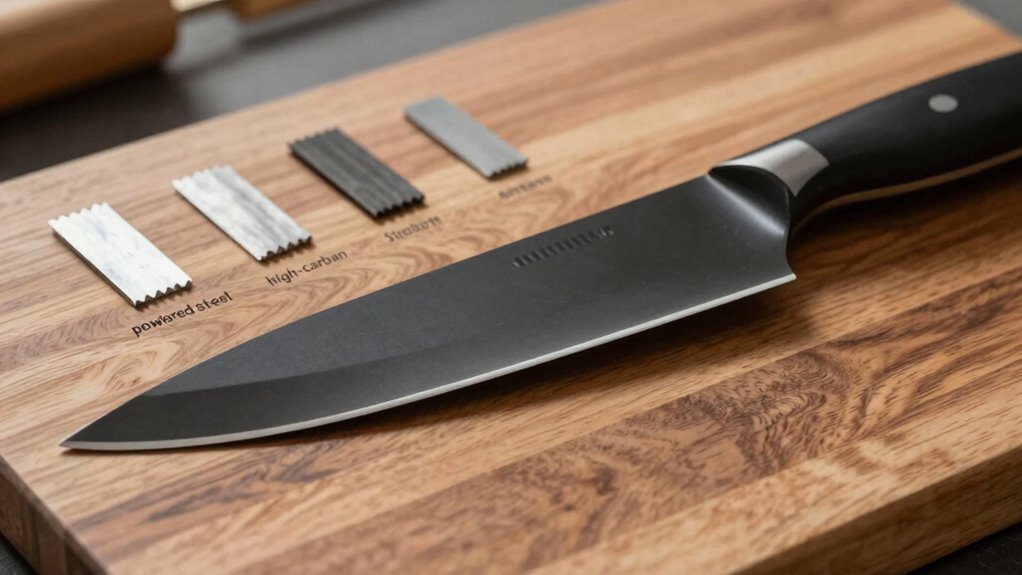
Are powdered steel knives worth the investment? If you’re considering durability and edge retention, they often are. These knives are crafted using advanced powder metallurgy, resulting in a stronger, harder blade that holds an edge longer. While they tend to be more expensive upfront, their longevity can justify the cost over time. Understanding the manufacturing process can help you appreciate the quality behind these blades. If you’re on a tight budget, ceramic alternatives can be tempting, as they’re lightweight and affordable. However, ceramics lack the flexibility and ease of sharpening that powdered steel offers. For those who want a balance of performance and value, some budget-friendly options with high-quality steel can provide excellent results without breaking the bank. Ultimately, if you value precision and durability, investing in powdered steel knives can be a worthwhile choice.
How Do You Properly Maintain and Care for Different Types of Kitchen Knife Steel?
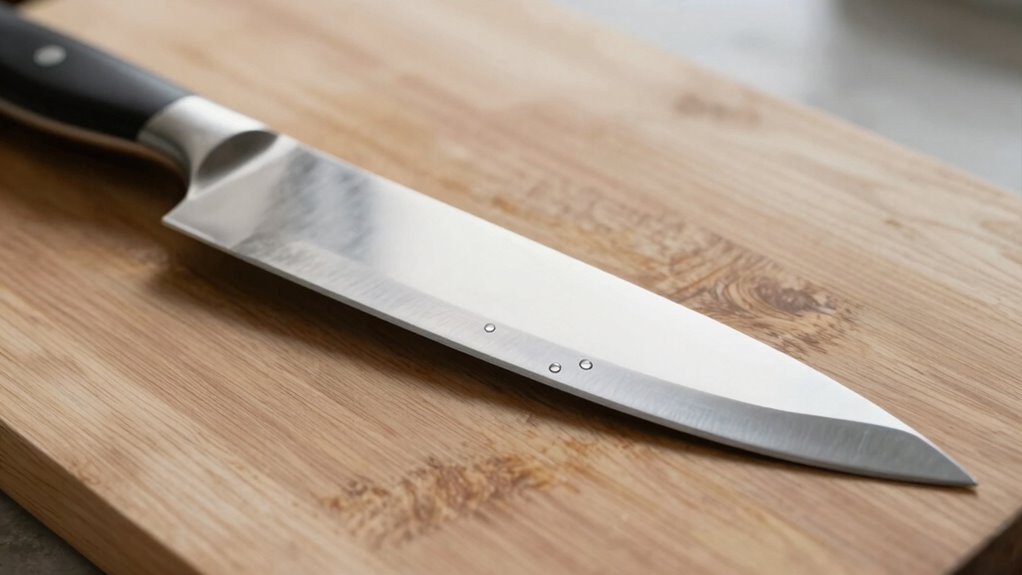
To keep your knives in top shape, you need to use proper cleaning techniques that prevent rust and corrosion. Storing your knives correctly, like in a knife block or on a magnetic strip, helps protect the blades and maintain their sharpness. Regular sharpening routines are essential to make sure your knives perform well and last longer. Additionally, understanding the different steel compositions can guide you in choosing the right maintenance methods for your specific knives.
Proper Cleaning Techniques
Wondering how to keep your kitchen knives in top shape? Proper cleaning is essential. First, avoid dishwasher safety for high-carbon or specialty steels, as the harsh environment can cause corrosion or damage. Instead, hand wash your knives with warm water and mild dish soap, using a soft sponge or cloth. For eco-friendly cleaning, opt for natural or biodegradable soaps that clean effectively without harming the environment. Dry your knives immediately after washing to prevent rust and water spots. Avoid leaving them soaking or using abrasive scrubbers that can scratch the steel. Regular, gentle cleaning preserves the integrity of different steel types, keeping your knives sharp and safe for years. Proper maintenance guarantees your knives stay in excellent condition without unnecessary wear. Additionally, utilizing pet training and tracking gear can help ensure your kitchen environment remains safe and organized, reducing the risk of accidents.
Correct Storage Methods
Proper storage is essential for maintaining the edge and longevity of your kitchen knives, especially when dealing with different steel types. Using the right knife storage options helps prevent damage, corrosion, and dulling. Consider knife sheath options like protective sheaths or blade guards that shield the edge from knocks and moisture. A knife block with individual slots keeps blades separated, reducing the risk of scratching or bending, which is crucial for softer steels. Magnetic strips are also effective, offering easy access while keeping blades safe. Avoid storing knives loosely in drawers, as this can lead to dulling and accidental cuts. Proper knife storage helps preserve your knives’ sharpness and integrity, ensuring they stay in prime condition for longer. Additionally, understanding how to status your knives can guide you in choosing the best storage method based on the steel type and usage frequency.
Regular Sharpening Routines
Regularly sharpening your kitchen knives is vital for maintaining their cutting performance and extending their lifespan, especially since different steel types respond differently to maintenance. Understanding sharpening techniques is essential—whether you choose honing or sharpening. Honing realigns the edge and should be done frequently with a honing steel, while sharpening removes material to restore a dull blade, typically requiring a whetstone or sharpening system. For softer steels, regular honing may suffice, but harder steels benefit from periodic sharpening to keep their edge sharp. Always use the appropriate grit and technique for your steel type, avoiding excessive sharpening that can wear down the blade. Proper maintenance ensures your knives stay safe, effective, and long-lasting, regardless of steel composition.
Which Steel Types Are Best for Different Cooking Tasks?
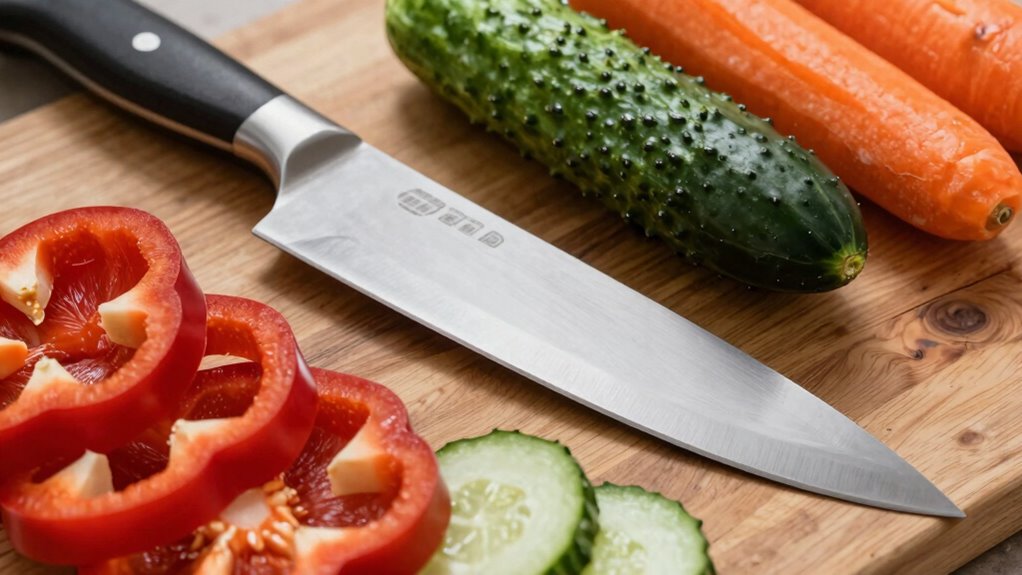
Choosing the right steel type for your kitchen knives depends on the specific tasks you’ll perform. Different steels excel at various cooking techniques, and your knife handling plays a role in maintaining performance. For versatile use, high-carbon stainless steels like VG-10 or 154CM are excellent—they balance sharpness, edge retention, and corrosion resistance. If you focus on precision slicing, consider softer steels like 440A, which are easier to sharpen. For heavy-duty tasks like chopping bones, high-carbon steels such as 01 or D2 provide durability. Finally, if you prioritize ease of maintenance, softer stainless steels like AUS-8 or 420J2 are forgiving. Matching steel types to your cooking techniques and knife handling habits ensures ideal performance and longevity for your kitchen knives. Understanding the properties of different steel types can help you select the best material for your specific needs.
How Can You Identify the Steel Composition of Your Kitchen Knife?
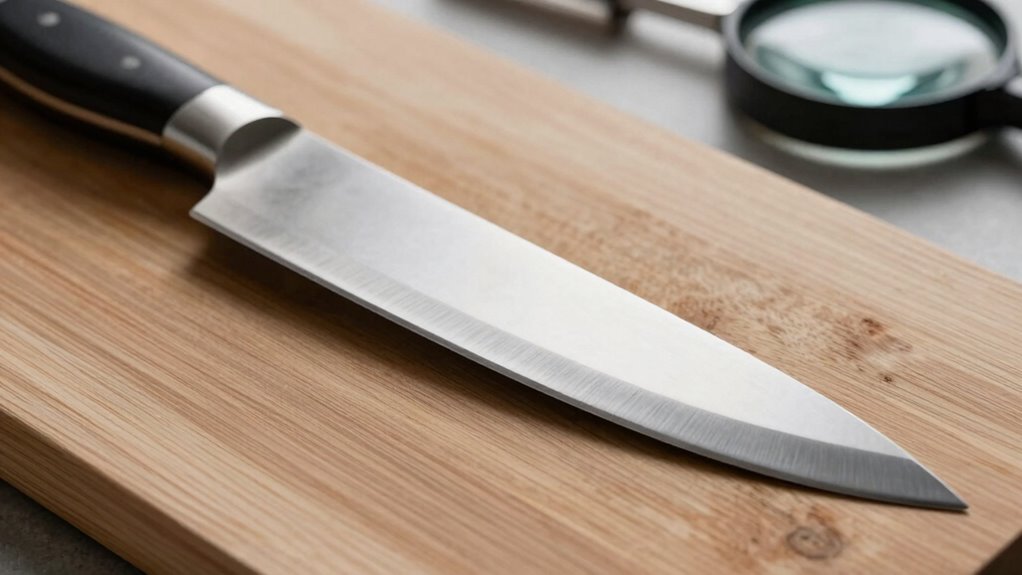
Identifying the steel composition of your kitchen knife is essential for understanding how to care for and maintain it. To do this, you can use several identification methods. The simplest is checking the manufacturer’s label or documentation, which often states the steel type. If that’s unavailable, look for markings on the blade, like numbers or symbols indicating the steel grade. Some knives may require a professional test, such as a spark test, which analyzes the steel’s characteristics by observing sparks during grinding. Alternatively, chemical testing kits are available for home use, providing a rough idea of the steel composition. Knowing the steel type helps you select proper maintenance routines and understand your knife’s performance, longevity, and care needs.
Frequently Asked Questions
How Does Steel Hardness Impact Knife Performance and Durability?
Steel hardness directly influences your knife’s performance and durability. When the steel is harder, it enhances blade strength, making it more resistant to chipping and bending. This also improves edge longevity, meaning your knife stays sharp longer. However, overly hard steel can become brittle, so finding the right balance guarantees your knife remains both strong and resilient, delivering consistent cutting power over time.
Are There Health Concerns Associated With Certain Steel Types?
You might worry that some steel types are poisonous alloys, but most kitchen knives are safe for everyday use. Still, certain steels can cause allergenic reactions if you have sensitive skin or allergies to metals like nickel or chromium. Always check the steel composition, especially if you have known metal allergies. With proper care, you can avoid health concerns and enjoy your knives without fear of harmful effects.
What Are the Environmental Impacts of Producing Different Steel Grades?
You should know that producing different steel grades impacts the environment through energy consumption and emissions. Using steel recycling reduces the environmental footprint by saving resources and lowering waste. High-grade steels often require more energy and specialized processes, increasing their environmental impact. By choosing recycled steel or eco-friendly production practices, you can help minimize pollution and conserve natural resources, making your kitchen tools more sustainable.
Can Steel Types Influence the Knife’s Resistance to Staining and Corrosion?
Imagine you’re in a medieval kitchen, battling rust and stains—steel types can definitely influence your knife’s fate. High-quality stainless steels reduce stain resistance issues and lower corrosion susceptibility, keeping your blade pristine longer. Conversely, lower-grade steels may stain easily and corrode faster. So, choosing the right steel type helps you maintain a sharp, durable knife that resists the wear and tear of everyday use.
How Does Steel Composition Affect Sharpening and Edge Retention?
You’ll find that steel composition, especially the grain structure and alloying elements, directly impacts sharpening and edge retention. A fine grain structure allows you to sharpen easily and achieve a sharper edge, while alloying elements like carbon and vanadium enhance hardness and wear resistance. When the steel has a balanced composition, you’ll notice your knife keeps its edge longer and is easier to maintain, making your tasks more efficient.
Conclusion
Understanding kitchen knife steels is like revealing a secret garden—you’ll see their true value when you choose the right one for each task. With knowledge of their strengths and weaknesses, you can sharpen your skills and keep your blades in top shape. So, explore, experiment, and let your knives become an extension of your culinary artistry—cutting through the clutter with confidence and precision.