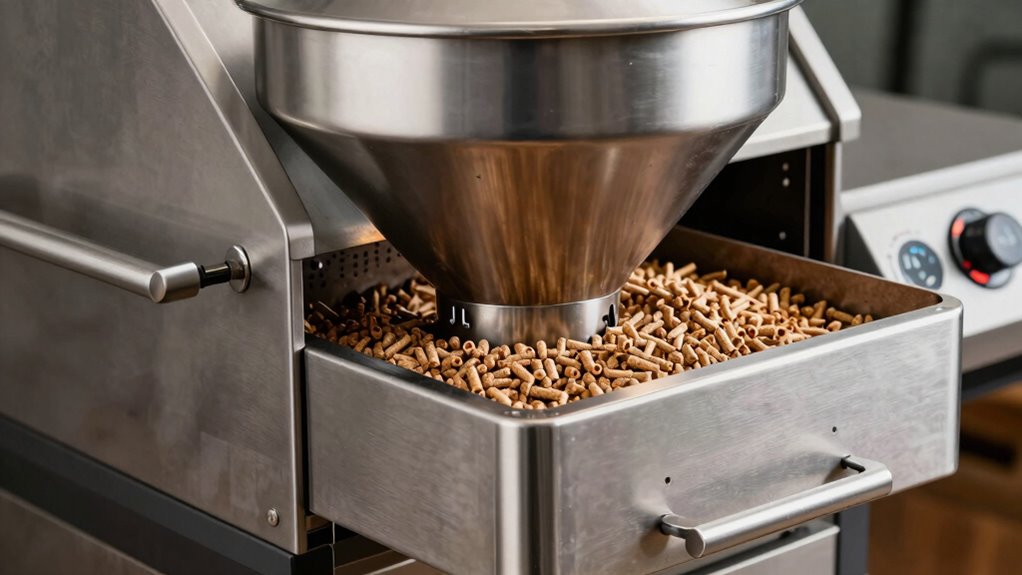

A larger pellet grill hopper helps you cook longer without needing to refill, ensuring a steady supply of fuel and more stable temperatures during extended smoke sessions. By reducing the chances of pellet jams and feed interruptions, it keeps your grill consistently hot, which is essential for low-and-slow cooking. This means fewer temperature fluctuations and more reliable results. Curious to find out how hopper size impacts other cooking aspects? Keep exploring to discover more.

Get the little things that make your day delivered free with Prime
- Fast, free delivery on millions of items
- Prime Video, Amazon Music and more included
- Member-only deals all year
Key Takeaways
- Larger hoppers provide more fuel for extended cooking, maintaining consistent temperature over long smoking sessions.
- Increased pellet capacity reduces the frequency of refills, preventing temperature fluctuations caused by pellet depletion.
- A bigger hopper supports higher pellet burn rates, ensuring stable heat and steady temperature control.
- Proper hopper design enhances pellet flow, minimizing jams and ensuring reliable temperature stability.
- Smaller hoppers may require more frequent refills, leading to potential temperature inconsistencies during prolonged cooks.
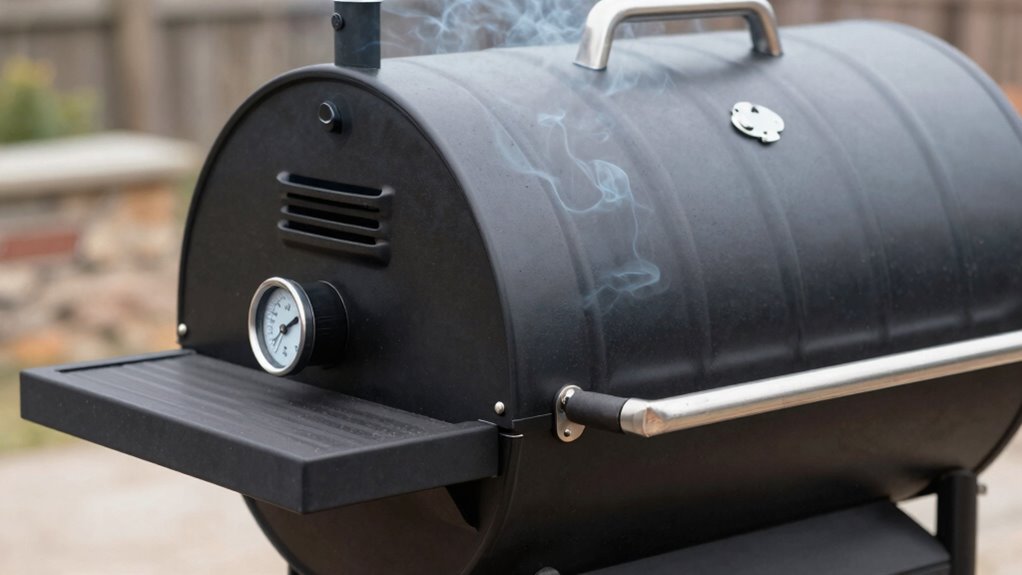
Understanding how hopper size affects your pellet grill’s performance is essential for achieving consistent temperatures during long cooks. The hopper capacity directly influences how often you’ll need to refill it and how smoothly your grill maintains steady heat. When you select a grill with a larger hopper, you’re giving yourself the advantage of extended cooking times without interruption. This is particularly useful for low-and-slow smoking or lengthy barbecues, where maintaining a stable temperature is vital.
Pellet consumption plays a significant role in this equation. With a bigger hopper, you have the flexibility to use more pellets at a time, which helps keep the fire burning steadily for hours. Conversely, a smaller hopper might require more frequent refills, increasing the chance of temperature fluctuations as the fire dies down and then rekindles. Since pellet consumption is tied to the burn rate and your grill’s temperature, understanding your typical cooking needs helps you choose the right hopper capacity. If you’re planning long cooks, a larger hopper minimizes disruptions and keeps your heat consistent, giving you peace of mind and better control over your cook.
The size of the hopper also influences how the grill manages pellet feed and airflow. With a larger capacity, the pellet feed system can operate more smoothly because there’s less risk of pellet jams or inconsistent feeding. This, in turn, helps your grill maintain a stable temperature throughout the cook. On the other hand, smaller hoppers might cause the pellet feed to become less reliable over time, especially if you’re cooking for extended periods. This can lead to temperature dips or spikes, making your cooking less predictable. Additionally, a larger hopper often supports a more reliable pellet feed system, which further enhances temperature stability. A larger hopper also contributes to overall grill durability, as it is typically built to accommodate higher pellet capacities and prolonged use. Proper hopper design can further improve pellet flow and reduce maintenance needs.
The convenience of a larger hopper extends beyond just maintaining temperature. It reduces the need for constant monitoring and refilling, so you can focus more on your food than on your equipment. Moreover, a bigger hopper can sometimes help with fuel efficiency, as it allows for more consistent pellet consumption. Still, bigger isn’t always better for everyone. If you usually cook small batches or short sessions, a smaller hopper could suffice, saving space and possibly reducing the overall weight of your grill. However, for serious grilling enthusiasts looking for consistency and minimal interruptions, investing in a grill with a larger hopper capacity is worth considering.
Products Worth Considering

Philips Hue Large Smart Light Tube, Black – White and Color Ambiance LED Color-Changing Light – 1 Pack

Levoit Core 400S-P Smart Air Purifier for Large Rooms

Coway Airmega 250 Air Purifier for Large Rooms
As an affiliate, we earn on qualifying purchases.
Frequently Asked Questions
How Often Should I Clean My Pellet Grill Hopper?
You should clean your pellet grill hopper every 1 to 2 months, especially if you notice pellet storage issues or uneven feeding. Regular hopper maintenance prevents pellet jams and guarantees consistent temperature control. Remove any old or spilled pellets, clear out dust, and check for mold or debris. Proper cleaning keeps your grill running smoothly, prolongs its lifespan, and maintains ideal temperature stability, so enjoy delicious, evenly cooked meals every time.
Can Hopper Size Affect Cooking Time?
Think of your grill’s capacity as its heartbeat—larger hoppers with thoughtful design can influence your cooking journey. A bigger hopper might extend your cook time slightly, as it supplies more fuel, while a well-designed hopper guarantees consistent feeding. So, yes, hopper size can subtly affect cooking times, but it’s the harmony of capacity and design that truly keeps your grill running smoothly and your flavors perfectly aligned.
What’s the Best Pellet Type for Temperature Stability?
For temperature stability, apple or cherry pellets are your best choice because their consistent burn and mild pellet flavor enhance grill efficiency. These hardwoods burn evenly, helping maintain steady temperatures, which is essential for perfect smoking. You’ll notice less fluctuation, making cooking more predictable. Using high-quality pellets tailored for stability guarantees your grill performs at its best, giving you delicious, evenly cooked results every time.
How Does Ambient Temperature Impact Hopper Performance?
In a pinch, ambient temperature can throw a wrench in your hopper performance. When it’s cold, your pellet grill’s hopper might struggle to feed pellets consistently, risking temperature fluctuations. Conversely, hot weather can cause pellets to swell or jam, impacting airflow. You’ll find that keeping an eye on ambient temperature helps you maintain steady hopper performance, ensuring your grill stays at the desired temperature and your cook turns out perfect.
Are Larger Hoppers Worth the Extra Cost?
Yes, larger hoppers are worth the extra cost if you frequently smoke long sessions or cook for many people. They offer increased hopper capacity, which means less frequent refilling, and reduce pellet consumption by maintaining consistent temperature stability. Although they might be pricier upfront, the convenience of extended cooking times and fewer interruptions makes them a smart investment for dedicated pitmasters or large gatherings.
Conclusion
Choosing the right pellet grill hopper size and understanding its impact on temperature stability is like tuning a fine instrument—you’ll find the perfect harmony for your cooking. Bigger hoppers keep you grilling longer without interruptions, ensuring your flavors stay steady and your meals turn out just right. So, pick a size that suits your needs, and let your grill be the steady hand guiding your culinary masterpiece. After all, a well-tuned grill is the secret to smoky perfection.