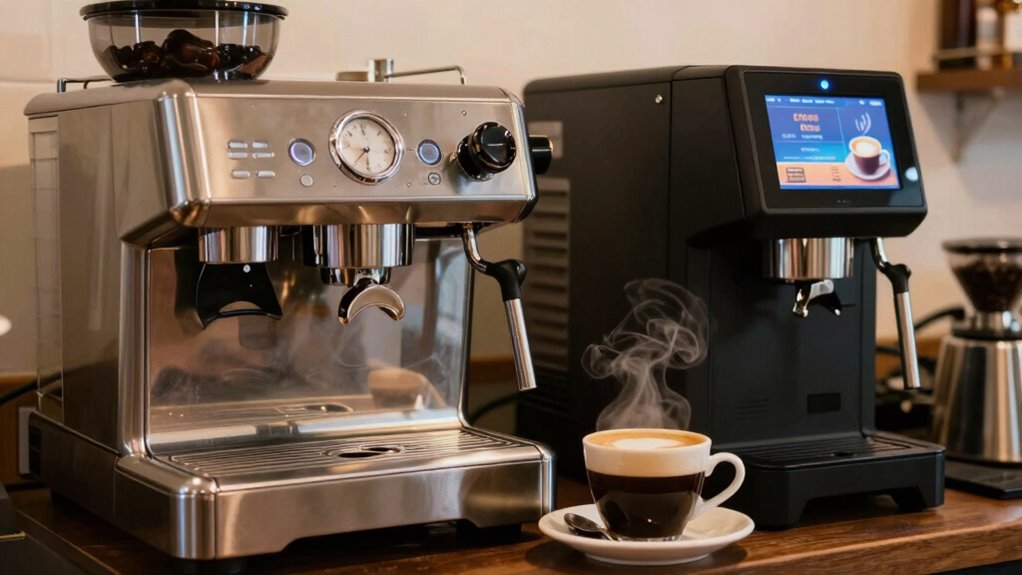

When choosing between semi-automatic and super-automatic coffee machines, it really comes down to your brewing preferences. Semi-automatics give you more control, allowing you to adjust grind size and brewing time for enhanced flavor. On the other hand, super-automatics prioritize convenience, offering quick, consistent coffee with minimal effort. Think about your coffee routines and how much customization you want. There’s plenty more to explore about features and long-term value to help you make the best decision.
Key Takeaways
- Semi-automatic machines offer greater control over brewing parameters, allowing for personalized flavor adjustments compared to the convenience of super-automatics.
- Super-automatic machines simplify the coffee-making process with built-in features, but may sacrifice flavor customization if settings are not adjusted properly.
- Durability and long-term value often favor semi-automatic models due to their superior build quality and maintenance requirements.
- Maintenance for super-automatics is easier with built-in cleaning cycles, while semi-automatics require regular manual upkeep for optimal performance.
- Initial investment costs vary significantly, with semi-automatics starting around $300 and super-automatics from $700, impacting long-term savings potential.

Breville Barista Express Espresso Machine BES870XL, Brushed Stainless Steel
The Breville Barista Express delivers third wave specialty coffee at home using the 4 keys formula and is…
As an affiliate, we earn on qualifying purchases.
As an affiliate, we earn on qualifying purchases.
What’s the Difference Between Semi-Automatic and Super-Automatic Coffee Machines?
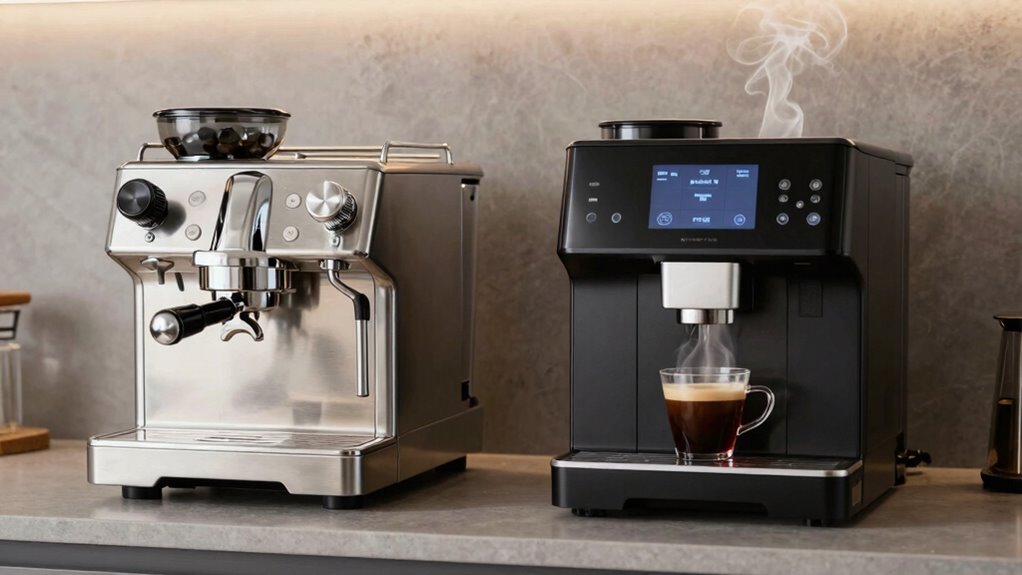
When you’re choosing between a semi-automatic and a super-automatic coffee machine, what really sets them apart? The primary difference lies in control and convenience. A semi-automatic machine gives you more hands-on involvement, allowing you to fine-tune the extraction process, which can enhance the coffee flavor. You’ll appreciate the ability to adjust grind size and brewing time, leading to a more personalized cup.
On the other hand, a super-automatic machine automates the entire process, making it perfect for those who value speed. However, this convenience might impact the coffee flavor and overall experience if you’re not careful with settings. Additionally, consider machine durability; semi-automatics tend to be more robust, while super-automatics may require more maintenance over time.

Philips 5500 Series Fully Automatic Espresso Machine, LatteGo Milk System, Integrated Grinder, 20 Hot & Iced Coffee Pre-Sets, Quick Start, SilentBrew, 15-Bar Pressure, Black Chrome (EP5544/94)
20 PRESETS, ENDLESS COMBINATIONS: Hot drinks like espresso, coffee, lattes, and cappuccinos, to iced coffee, or simply hot…
As an affiliate, we earn on qualifying purchases.
As an affiliate, we earn on qualifying purchases.
Brewing Processes: How Do Semi-Automatic Machines Work?
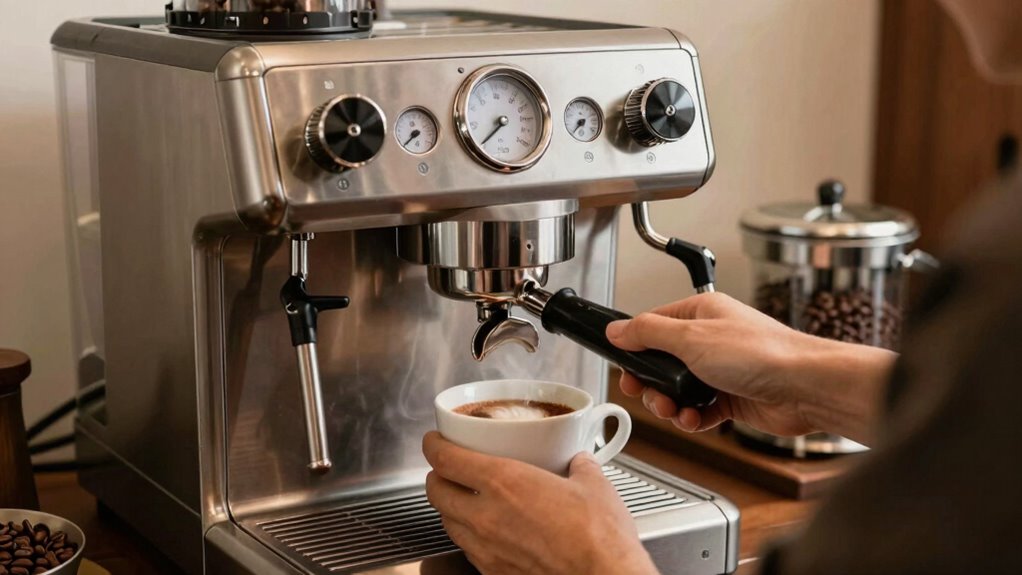
When you use a semi-automatic machine, you take charge of the grinding and brewing process. You’ll need to manually control the grind size and temperature to achieve the perfect extraction. This hands-on approach gives you the freedom to experiment and fine-tune your coffee just the way you like it.
Manual Grind Control
While you might enjoy the convenience of super automatic machines, semi-automatic espresso makers give you the power to control the grind, allowing for a more personalized brewing experience. With manual grind control, you can adjust the grind size to suit your taste, influencing the overall flavor extraction of your espresso. A finer grind typically enhances extraction, resulting in a bolder flavor, while a coarser grind offers a milder taste. By experimenting with different grind sizes, you can discover the perfect balance for your palate. This hands-on approach not only enhances your coffee-making skills but also transforms each cup into a unique creation, tailored specifically to your preferences. Enjoy the journey of mastering your espresso!
Temperature Regulation Techniques
Once you’ve mastered manual grind control, the next step in crafting the perfect espresso is understanding temperature regulation techniques. Achieving temperature stability is essential for brewing precision. Here are three key techniques to help you maintain ideal temperatures during extraction:
- Pre-Infusion: Gradually introducing water allows for even saturation, helping stabilize temperature before full extraction.
- PID Controllers: These devices monitor and adjust water temperature in real-time, ensuring consistency throughout the brewing process.
- Thermal Stability: Using machines with heat exchangers or dual boilers helps maintain steady temperatures, reducing fluctuations during brewing.

Mini Manual Coffee Grinder with 40 Adjustable Settings, Portable Hand Coffee Bean Mill with 30g Capacity, Conical Burr Coffee Grinder with Crank for Travel, Camping, Office, Espresso, Pour Over, etc
40 EXTERNAL ADJUSTABLE GRIND SETTINGS – Unlike traditional grinders with internal adjustments, our manual coffee grinder offers 40…
As an affiliate, we earn on qualifying purchases.
As an affiliate, we earn on qualifying purchases.
Why Super-Automatic Machines Offer Convenience and Consistency
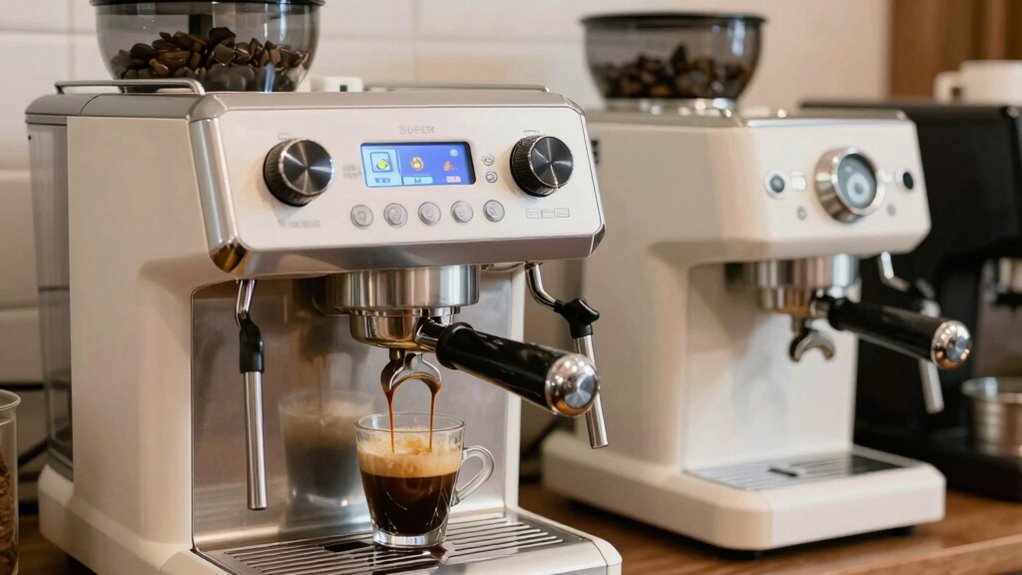
Super-automatic machines bring unparalleled convenience and consistency to your coffee-making experience, allowing you to enjoy barista-quality beverages at the push of a button. With their built-in grinders and milk frothers, these machines simplify your morning routine, eliminating the need for multiple devices and complex processes. You’ll appreciate the convenience factors like programmable settings, enabling you to customize brew strength and size effortlessly. Additionally, super-automatic machines deliver consistency benefits, ensuring each cup tastes just as good as the last. You won’t have to worry about variations in grind size or water temperature; the machine handles it all. Many models also incorporate maintenance and cleaning features that help keep your machine in optimal condition with minimal effort. Embracing a super-automatic machine means you can savor perfect coffee every time, making your daily ritual both enjoyable and hassle-free. Ease of use is a key advantage, making it accessible even for those new to coffee brewing.

YQXYH Replacement Espresso Cleaning Tablet for Breville Machines BEC250 8 Tablets
Espresso Cleaning Tablet for Breville Machines BEC250
As an affiliate, we earn on qualifying purchases.
As an affiliate, we earn on qualifying purchases.
Comparing Brewing Processes: Which Machine Suits Your Style?

Choosing the right coffee machine often comes down to your personal brewing style and preferences. Understanding how each type impacts your user experience can help you make an informed decision. Here’s a quick comparison:
- Semi-Automatic Machines: These give you more control over the brewing process, allowing for customization according to your brewing preferences. You’ll enjoy the hands-on experience as you adjust variables like grind size and water temperature.
- Super-Automatic Machines: These prioritize convenience and consistency. With the push of a button, you can achieve a quality brew, perfect for those who prefer simplicity in their routine.
- Hybrid Machines: Offering a blend of both worlds, they allow you to choose between automatic and manual modes, catering to varied brewing preferences.
Evaluate which approach aligns with your coffee journey! Understanding coffee gear
Maintenance of Semi-Automatic vs. Super-Automatic Machines
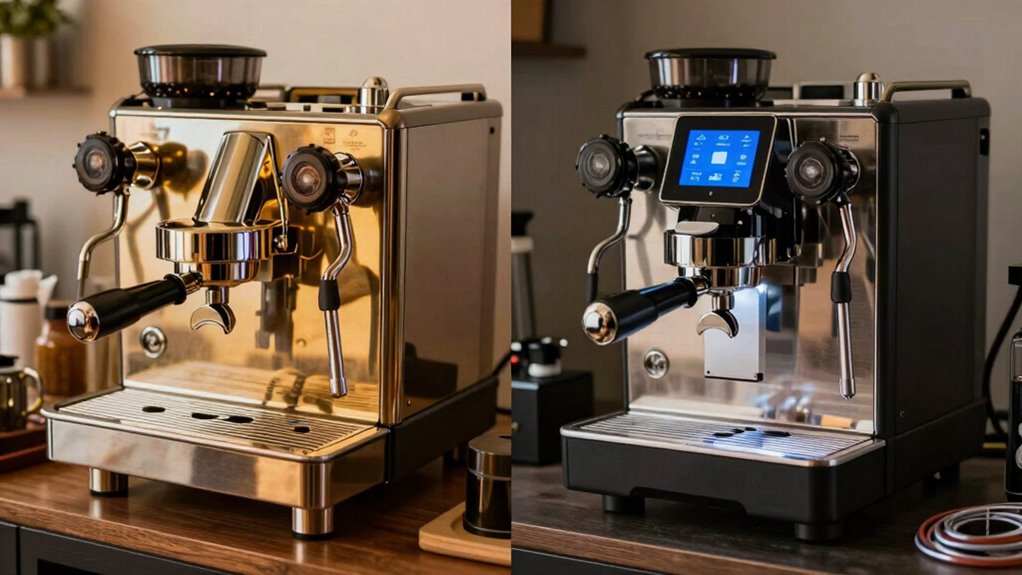
While both semi-automatic and super-automatic machines offer unique brewing experiences, their maintenance requirements can differ considerably. Semi-automatic machines typically require more hands-on upkeep. You’ll need to clean the portafilter and brew group regularly, usually every few uses, and backflush the machine weekly. Super-automatic machines, on the other hand, often have built-in cleaning cycles, which simplifies maintenance. However, you should still clean the milk system daily and descale the machine every few months. To keep your machine running smoothly, follow these maintenance tips: establish a consistent cleaning frequency, check water filters, and keep the exterior clean. Regularly machine maintenance can help prevent common issues and extend the lifespan of your equipment. By staying on top of these tasks, you’ll guarantee both types of machines deliver great coffee for years to come.
How Much Should You Spend on Coffee Machines?

When you’re thinking about how much to spend on a coffee machine, it is crucial to weigh your budget against the long-term value. Investing a bit more upfront can lead to better quality and durability, saving you money in the long run. Consider what features matter most to you and how often you’ll use the machine.
Budget Considerations
Determining how much to spend on a coffee machine can feel overwhelming, especially with the wide range of options available. To find the right fit for your budget, consider these factors:
- Budget Options: Look for machines within your price range. You can find decent semi-automatic models starting around $300, while super-automatics typically begin at $700.
- Cost Efficiency: Factor in how often you’ll use the machine. If you’re a daily coffee drinker, investing in a higher-quality model could save you money in the long run.
- Features vs. Price: Assess which features are essential for your brewing experience. Sometimes, simpler machines offer better value without unnecessary extras.
- Maintenance & Durability: Consider the maintenance requirements and build quality of the machine to ensure it lasts and remains cost-effective over time. Paying attention to build quality can help you select a model that withstands regular use and reduces replacement costs, aligning with your budget considerations.
Long-Term Value
Investing in a coffee machine isn’t just about the initial price; it’s also about the long-term value it brings to your daily routine. When you consider the cost, think of it as a long term investment. A quality machine can enhance your coffee experience, saving you money on café visits over time. Plus, if you ever decide to upgrade, a well-maintained machine often retains a good resale value, allowing you to recoup some of your initial expense. You’ll want to balance features with durability and performance to guarantee you’re making a wise choice. Durability and performance are crucial factors to ensure your investment pays off in the long run. Additionally, understanding the interest rate involved in financing options can help you better evaluate the true cost of your purchase over time. Considering long-term savings can also help justify spending more upfront for a machine that offers better efficiency and features.
Frequently Asked Questions
Which Machine Is Better for Beginners: Semi or Super-Automatic?
For beginners, a super-automatic machine is often better due to its user-friendly features. You’ll enjoy the convenience of one-touch buttons that simplify brewing, so you can focus on taste rather than technique. If you prefer exploring your coffee-making skills, a semi-automatic machine offers more control over the brewing process. Ultimately, it depends on your beginner preferences—if you want ease, choose super-automatic; for a hands-on approach, go semi-automatic.
Can Semi-Automatic Machines Produce High-Quality Espresso?
Absolutely, semi-automatic machines can produce high-quality espresso that tantalizes your taste buds. Think of it as crafting a masterpiece; your control over espresso extraction lets you fine-tune the flavor profile to your liking. By adjusting grind size, tamp pressure, and extraction time, you create a brew that reflects your preferences. So, if you’re ready to embrace the art of espresso-making, a semi-automatic machine’s your canvas to express that passion!
How Long Do Semi and Super-Automatic Machines Typically Last?
Semi and super-automatic machines typically last anywhere from 5 to 15 years, depending on their quality and maintenance requirements. If you take care of your machine, performing regular cleaning and descaling, you can extend its lifespan considerably. Semi-automatic machines often require more hands-on maintenance, while super-automatics might need less frequent upkeep, making them easier to manage. Ultimately, how you treat your espresso machine plays an essential role in its longevity.
Do Super-Automatic Machines Require Special Coffee Beans?
Super-automatic machines don’t require special coffee bean types; they embrace a wide range of beans like a painter choosing colors for a masterpiece. You can use your favorite blends, whether they’re robust or mild, to match your brewing preferences. The true magic lies in how these machines extract flavors, transforming simple beans into a symphony of aromas and tastes. So, go ahead, select your beans, and let the machine work its wonders!
Are There Any Eco-Friendly Options for These Machines?
Yes, there are eco-friendly options for both semi-automatic and super-automatic machines. Look for models that boast eco-friendly features, like energy-saving modes or materials made from recycled components. These machines often have energy efficiency ratings that help you reduce your carbon footprint. By choosing one with these features, you’re not just enjoying great coffee, but also making a positive impact on the environment. It’s a win-win for you and the planet!
Conclusion
When it comes to choosing between semi-automatic and super-automatic coffee machines, it really boils down to your preference and lifestyle. Did you know that around 70% of coffee drinkers prefer the convenience of super-automatic machines? If you’re someone who values speed and consistency, a super-automatic might be your best bet. However, if you enjoy the art of brewing and want more control, a semi-automatic could be your perfect match. Choose wisely, and enjoy every cup!