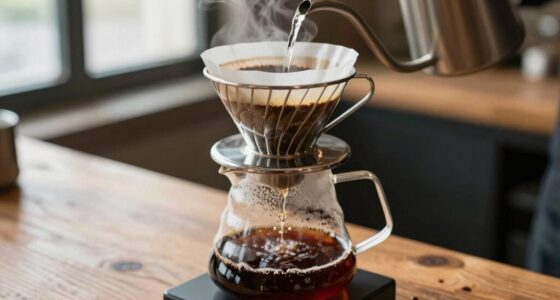
Water quality is essential for crafting the perfect espresso. The right mineral balance enhances flavor extraction while preventing scale buildup in your machine. Aim for water with a hardness between 50 to 150 mg/L and a pH of 6.5 to 7.5 for best taste. Using a good filtration system keeps impurities at bay, ensuring a consistently rich brew. Discovering your ideal water mix can elevate your espresso experience substantially. There’s much more to uncover about improving your water quality.
Key Takeaways
- Proper water hardness (50-150 mg/L TDS) is crucial for optimal espresso flavor; too hard or soft water can negatively impact taste.
- Ideal pH for brewing espresso is between 6.5 and 7.5, affecting extraction efficiency and flavor profile.
- Essential minerals like calcium and magnesium enhance flavor extraction, while their imbalance can lead to undesirable coffee taste.
- Filtration systems improve water quality by removing impurities, ensuring consistent flavor and protecting espresso machines from scale buildup.
- Regular monitoring and maintenance of water quality are necessary to achieve rich, aromatic espresso and prevent brewing issues.

3M PS124 Espresso Filtration Replacement Cartridge 5633802
3M – PS124 – High Flow Series Steam/Hot Beverage Dispenser Replacement Water Filter Cartridge
As an affiliate, we earn on qualifying purchases.
As an affiliate, we earn on qualifying purchases.
Why Water Quality Is Crucial for Perfect Espresso

When it comes to brewing the perfect espresso, the quality of your water plays a pivotal role. You might not realize it, but the water hardness directly impacts your espresso taste. If your water’s too hard, it can lead to over-extraction, resulting in bitter flavors that mask the delicate notes of your coffee. On the other hand, soft water can under-extract, leaving your espresso tasting flat and lifeless. Ideally, you want water that strikes a balance, enhancing the richness of your brew without overpowering it. By paying attention to your water quality, you can elevate your espresso experience, making every cup a delicious masterpiece. So, invest in good water, and you’ll notice a significant difference in your espresso taste.

Varify Water Hardness Test Kit – Water Testing Kit for Home, Drinking, Well, Spa, Swimming Pool, Softener, Dishwasher & More – Hard Water Test Strips for Calcium, Magnesium etc (0-425 pmm, 150 Strips)
PROTECT YOUR HOME AND WELLNESS: Understand the impact of hard water on your home and health. Hard water…
As an affiliate, we earn on qualifying purchases.
As an affiliate, we earn on qualifying purchases.
How to Choose Water Based on Mineral Content
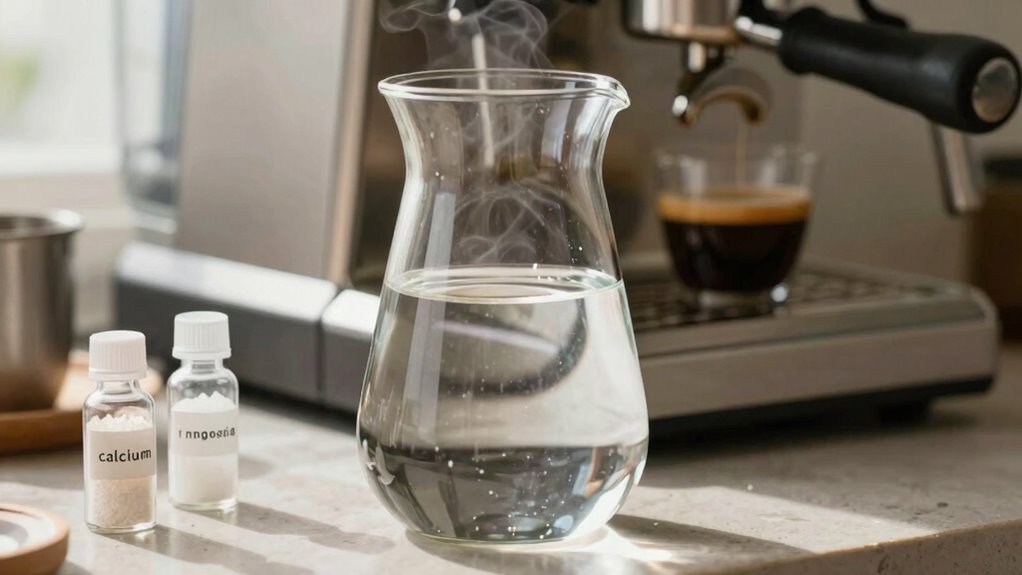
Choosing the right water for your espresso involves understanding the essential role of mineral content. You want to achieve a proper mineral balance to enhance flavor extraction and guarantee your machine runs smoothly. Look for water that has a moderate level of hardness, ideally between 50 to 150 mg/L of total dissolved solids (TDS). Too soft water can lead to flat-tasting espresso, while overly hard water can cause scale buildup in your equipment. Minerals like calcium and magnesium are vital, as they positively influence the brewing process. Experiment with different water sources, whether it’s filtered tap water or bottled options, to find the perfect balance that complements your beans and yields a delicious shot.

Divolight Digital PH Meter – High Accuracy Digital Water Quality Tester with 0-14 PH Measurement Range for Household Drinking, Pool and Aquarium with ATC
【Aplication】As a tool to improve the quality of life. Can be used to test drinking water, swimming pools,…
As an affiliate, we earn on qualifying purchases.
As an affiliate, we earn on qualifying purchases.
How Does pH Affect Your Espresso?
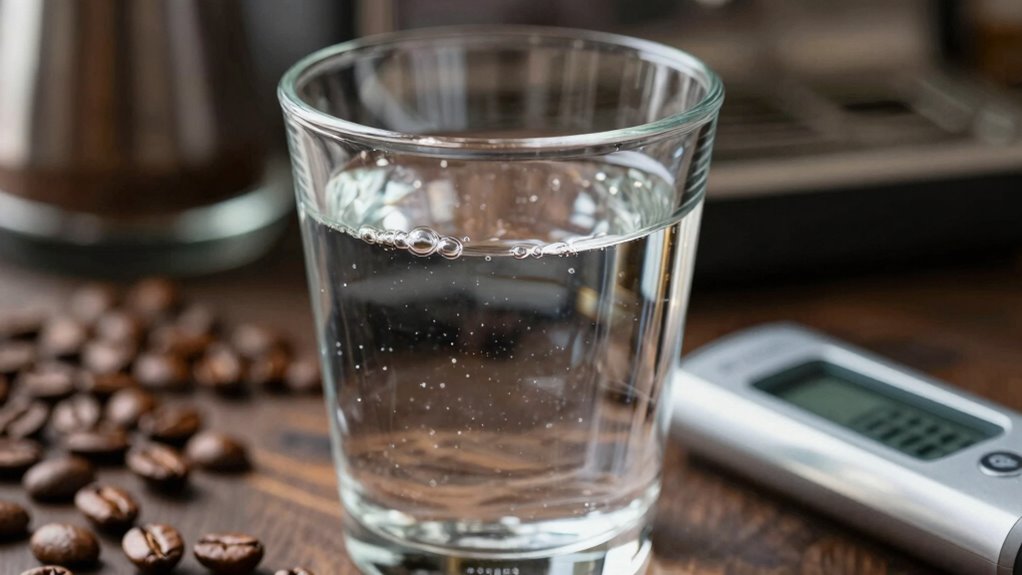
When it comes to brewing the perfect espresso, pH plays an essential role in determining flavor and extraction efficiency. Ideally, you’ll want your water’s pH to fall within the ideal range to enhance the coffee’s natural taste. If the pH is off, it can lead to undesirable flavors and affect how well the coffee grounds release their oils and compounds.
Optimal pH Range
Although you might not think about it often, the pH of your water plays an essential role in the flavor and quality of your espresso. The ideal pH range for brewing espresso is typically between 6.5 and 7.5. Outside this range, you may encounter undesirable flavors.
| pH Level | Flavor Impact |
|---|---|
| < 6.5 | Sour, under-extracted |
| 6.5 – 7.5 | Balanced, rich |
| > 7.5 | Bitter, over-extracted |
| Adjusted | Enhanced taste |
Utilizing pH measurement techniques can help you monitor this vital aspect. If adjustments are needed, pH adjustment methods like adding minerals can refine your water, ensuring a consistently delightful espresso experience.
Flavor Profile Impact
The pH of your water greatly influences the flavor profile of your espresso. A balanced pH helps extract the right flavor nuances, while extremes can lead to undesirable tastes. Here’s how pH impacts your espresso:
- Acidity Levels: A lower pH can enhance fruity and bright flavors, while higher pH levels may mute these characteristics.
- Bitterness: Water with a higher pH can cause over-extraction, resulting in a bitter taste that overshadows the coffee’s natural sweetness.
- Water Hardness: The hardness of your water also plays a role; it can either support or hinder the extraction of flavor nuances, depending on the mineral content.
Pay attention to your water’s pH and hardness to achieve that perfect espresso shot!
Extraction Efficiency Factors
Understanding how pH affects extraction efficiency is essential for brewing the perfect espresso. The pH level of your water influences the solubility of coffee compounds, which can directly impact flavor and aroma. A balanced pH (around 7) optimizes extraction temperature and brew time, ensuring you capture the best characteristics of the beans.
| pH Level | Extraction Temperature | Brew Time |
|---|---|---|
| 6.5 | 90°C | 25 sec |
| 7.0 | 92°C | 30 sec |
| 7.5 | 94°C | 35 sec |
Adjusting your water’s pH can help you find the sweet spot for your espresso, leading to a more satisfying cup. It’s all about that perfect balance!

Descaler (2 Pack, 2 Uses Per Bottle) – Made in the USA – Universal Descaling Solution for Keurig, Nespresso, Delonghi and All Single Use Coffee and Espresso Machines
2-Pack Coffee Descaler and Cleaner – Clean and rinse away residue and oil buildup in your coffee maker…
As an affiliate, we earn on qualifying purchases.
As an affiliate, we earn on qualifying purchases.
How Filtration Systems Impact Espresso Water Quality
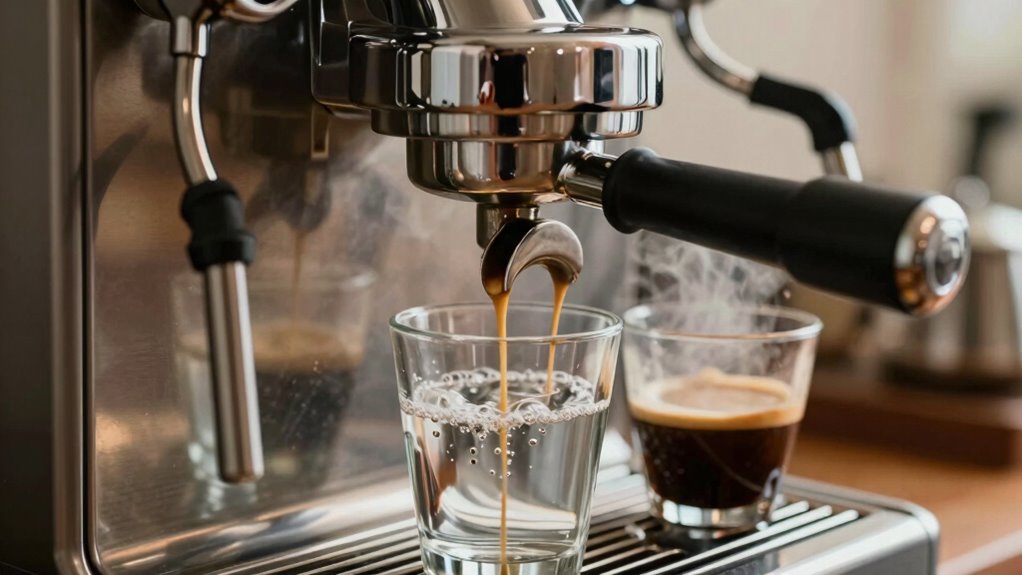
When it comes to brewing the perfect espresso, water quality is essential. The right filtration system can remove impurities, enhance flavor, and create a consistent brewing experience. Let’s explore the types of filtration systems available and how they affect your espresso’s taste.
Importance Of Water Quality
While you might focus on the coffee beans and brewing technique, water quality plays an essential role in crafting the perfect espresso. It’s important to understand how water hardness and mineral balance can affect your brew. Here are three key reasons why water quality matters:
- Flavor Extraction: Proper mineral balance enhances flavor extraction, making your espresso rich and aromatic. Filtration systems can help achieve the ideal mineral content.
- Machine Health: Water hardness can lead to scale buildup, damaging your espresso machine over time. Regular maintenance and water treatment can prevent costly repairs.
- Consistency: Quality water guarantees that every cup has a consistent taste, which is critical for repeatability. Maintaining equipment longevity is essential for preserving the performance of your machine. Additionally, being aware of common indoor air quality issues, such as dust and microplastics, can help you create a healthier environment for your brewing space.
Investing in a good filtration system helps maintain ideal water quality, giving you the best chance to showcase the unique flavors of your beans.
Types Of Filtration Systems
Choosing the right filtration system can markedly impact the quality of water used for your espresso. Two popular options are reverse osmosis systems and carbon filter options. Each has unique benefits, so understanding their differences is essential for achieving superior water quality.
| Filtration Type | Pros | Cons |
|---|---|---|
| Reverse Osmosis Systems | Removes most impurities and minerals | Can strip beneficial minerals |
| Carbon Filter Options | Improves taste by removing chlorine | May not filter all hardness |
| Cost-effective and easy to maintain | Requires regular replacement | |
| Available in various sizes | Limited effectiveness against certain contaminants |
Effects On Espresso Flavor
The type of filtration system you select directly influences the flavor profile of your espresso. If you want to brew the perfect cup, consider these key factors:
- Water Hardness: Too much hardness can lead to bitterness, while too little can make your espresso taste flat.
- Mineral Balance: The right minerals enhance extraction, bringing out the rich flavors, while an imbalance can mute your espresso’s notes.
- Consistency: A good filtration system maintains stable water quality, ensuring each shot tastes just as good as the last.
- Proper Ventilation: Ensuring good kitchen ventilation helps manage humidity and odors, preserving the integrity of your brewing environment.
Identifying and Resolving Common Water Quality Issues for Espresso
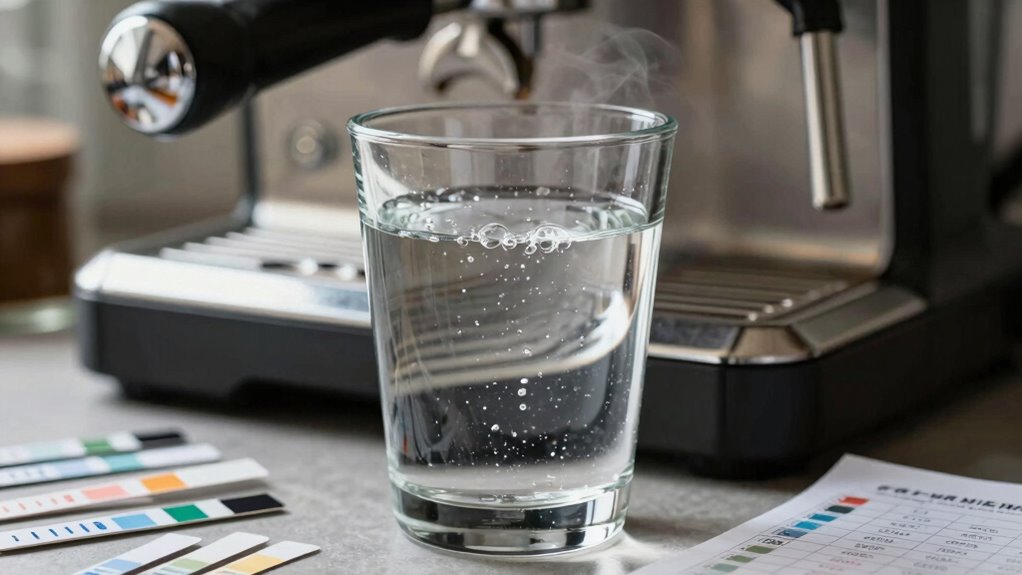
Understanding the water quality you use for espresso is essential, as it directly impacts the flavor and overall experience of your brew. Common issues often stem from water hardness and mineral balance. If your water’s too hard, it can lead to scale buildup in your machine and bitter flavors in your espresso. Conversely, overly soft water may lack the necessary minerals to extract the full flavor profile, resulting in a flat taste.
To resolve these issues, you should test your water regularly to determine its hardness and mineral content. Adjustments can be made by using water filters or blending distilled water with tap water to achieve that perfect mineral balance. This way, you’ll enhance your espresso experience considerably.
Tips for Testing and Improving Your Espresso Water Quality
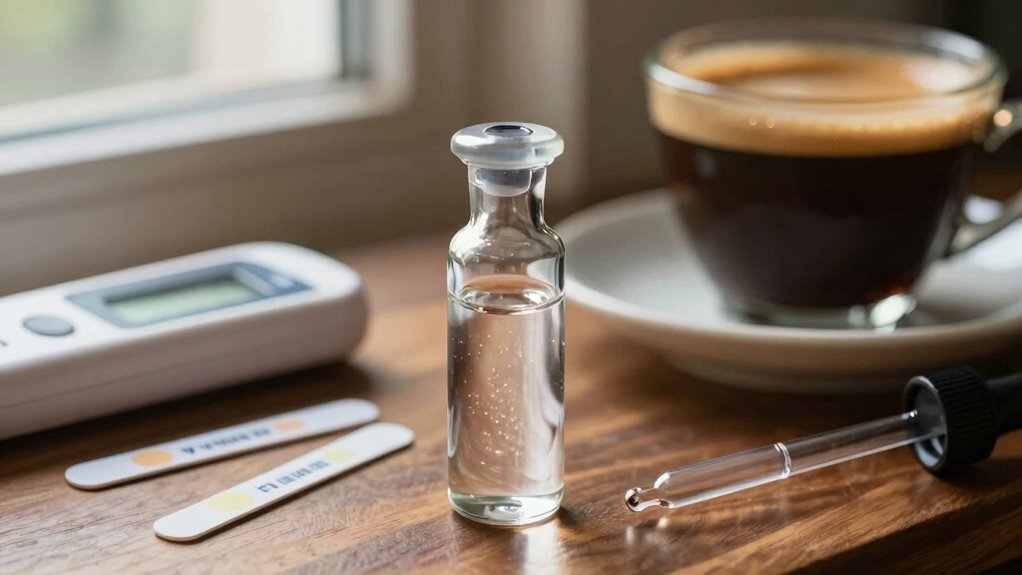
While guaranteeing your espresso water quality might seem challenging, simple testing and adjustments can make a significant difference in flavor. Here are three effective tips for water testing and quality improvement:
- Test for Hardness: Use a water hardness test strip to determine mineral content. Ideally, you want a balance that enhances extraction without causing scale buildup. Water mineral content can significantly influence your brewing results.
- Check pH Levels: Aim for a pH level between 6.5 and 7.5. Use pH test strips to verify your water isn’t too acidic or alkaline, as this affects taste.
- Use a Filter: Invest in a good water filter. This not only improves taste but also removes unwanted contaminants, guaranteeing a cleaner brew. Incorporating water treatment systems can further optimize your water quality for espresso brewing.
Enhancing Your Espresso: Best Practices for Water Quality
To enhance your espresso, focusing on water quality is essential. Start by using filtered water to eliminate impurities that can affect taste. Aim for a mineral content that complements your espresso recipes; too much or too little can lead to undesirable flavors. Experiment with different brewing techniques, adjusting water temperature and brew time based on your water’s characteristics. Keep your equipment clean to prevent mineral buildup, which can alter your espresso’s flavor profile. Regularly test your water for hardness and pH to maintain ideal conditions. By prioritizing these best practices, you’ll elevate your espresso experience, ensuring each cup delivers the rich, balanced flavors you crave. Remember, great espresso begins with great water!
Frequently Asked Questions
Can Bottled Water Be Used for Espresso Brewing?
Yes, you can use bottled water for espresso brewing, but not all bottled water is equal. Look for brands with balanced minerals and a low sodium content, as these bottled water characteristics enhance flavor extraction. Some of the best bottled brands include Evian and Volvic, which offer the right mineral balance. Experiment with different brands to find the one that brings out the best in your espresso, ensuring a delicious cup every time.
Does Temperature Affect Water Quality for Espresso?
Imagine a musician tuning their instrument before a performance. Just like the right pitch guarantees harmony, the temperature of your water plays an important role in espresso brewing. It impacts extraction, affecting flavor and brewing consistency. If the water’s too hot, you risk bitterness; too cold, and you miss the richness. Striking the right temperature balance is essential for crafting that perfect shot, making sure every note in your espresso symphony resonates beautifully.
How Often Should I Change My Water Filter?
You should change your water filter every 2 to 3 months, depending on your water quality and usage. Keeping track of the filter lifespan is essential for peak performance. If you notice a change in taste or flow rate, it’s time to replace it sooner. Regular maintenance tips include checking the filter’s indicator light and flushing the system after a change. This way, you guarantee your water stays fresh and clean for your espresso.
Is Tap Water Safe for Espresso Machines?
Sure, tap water’s just perfect for your espresso machine—if you enjoy a side of contaminants! Using tap water can lead to buildup in your machine, affecting both flavor and maintenance. While it’s convenient, those impurities can create headaches down the line. For the best results, stick to filtered water that’s free from unwanted minerals. Your espresso deserves the royal treatment, and so does your machine! Keep them happy and healthy!
What Minerals Enhance Espresso Flavor the Most?
To enhance your espresso’s flavor profile, focus on a balanced mix of minerals. Calcium and magnesium are key players, as they bring sweetness and body to your brew. Sodium can also add a pleasant roundness, while bicarbonates help manage acidity. Striking the right mineral balance not only elevates the taste but also improves extraction. So, when dialing in your water, remember that the right minerals can make all the difference in your cup!
Conclusion
In your quest for the perfect espresso, don’t underestimate the power of water quality. The right balance of minerals, pH, and filtration can transform your brew from ordinary to extraordinary. But what if the water you’re using is sabotaging your efforts? Imagine taking a sip and finally tasting the rich, complex flavors you’ve been craving. Don’t let poor water hold you back—discover the secrets to elevating your espresso experience, and savor every drop like never before.