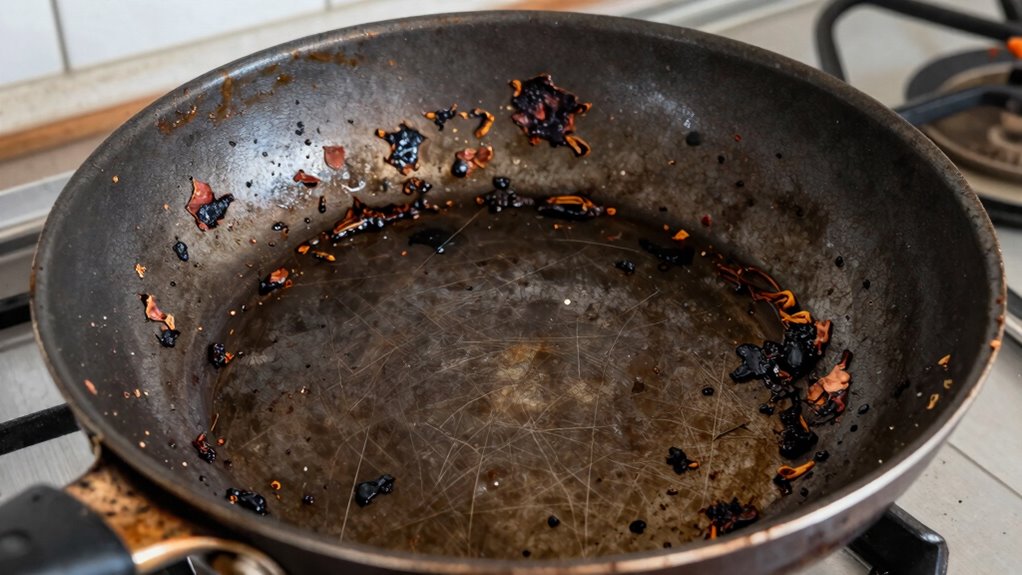

Your nonstick pan likely wore out early because you used metal utensils that scratched the coating, or cooked on high heat, which causes peeling and damage. Harsh cleaning methods like abrasive scrubbers also weaken the surface, and storing pans improperly can cause scratches. To extend your pan’s life, use gentle tools, keep heat at medium or low, clean carefully, and store properly. If you want to avoid these common mistakes, keep going to find out more.

Get the little things that make your day delivered free with Prime
- Fast, free delivery on millions of items
- Prime Video, Amazon Music and more included
- Member-only deals all year
Key Takeaways
- Using metal utensils can scratch and gouge the nonstick coating, leading to early deterioration.
- Cooking at high temperatures causes coating breakdown and releases harmful fumes.
- Abrasive cleaning tools like steel wool damage the surface, reducing its lifespan.
- Improper storage, such as stacking without protection, accelerates scratches and wear.
- Neglecting regular inspection and timely replacement results in compromised safety and performance.
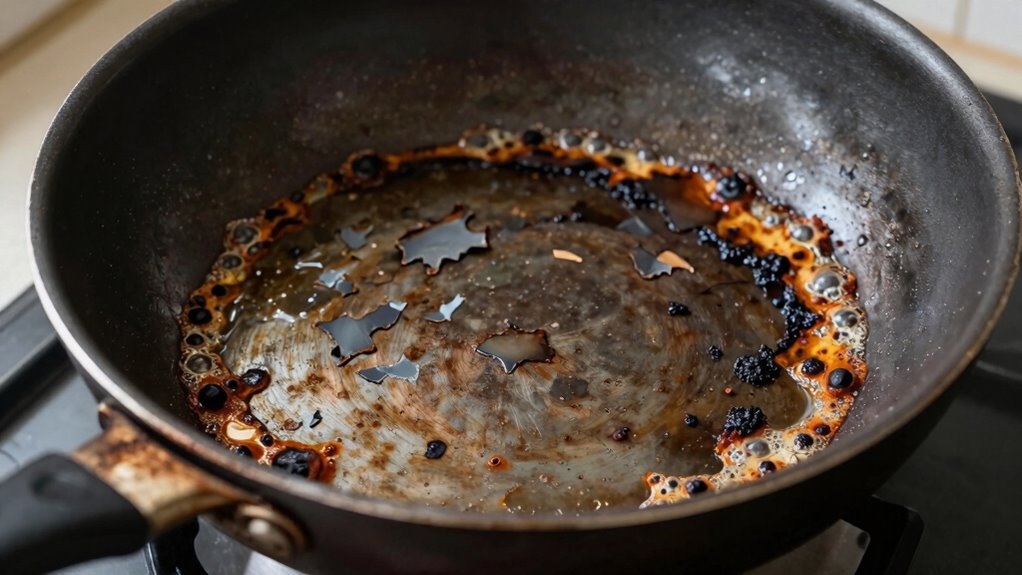
If your nonstick pan stopped working sooner than expected, it’s often because of how you’ve been using and caring for it. Many people unknowingly damage their pans by using metal utensils or cooking on high heat, which can considerably shorten their lifespan. Metal utensils are particularly harmful because they scratch and gouge the nonstick coating with each scrape. Over time, these scratches create tiny holes and reduce the pan’s effectiveness, causing the nonstick surface to peel or flake off. Instead, opt for silicone, wood, or plastic utensils to preserve the coating’s integrity.
Using metal utensils and high heat can quickly damage your nonstick pan’s coating.
Cooking on high heat is another common mistake that accelerates the wear and tear of your nonstick pan. Nonstick coatings are designed to work best at medium or low temperatures; exposing them to high heat can cause the coating to break down chemically, peel, or develop discoloration. When you crank up the heat, you’re not only risking damage to the coating but also potentially releasing harmful fumes if the coating begins to degrade. To extend the life of your pan, stick to moderate heat settings and avoid preheating on high for extended periods. Additionally, proper heat management can significantly prolong your pan’s lifespan. Using appropriate cooking temperature guidelines can help prevent unnecessary damage. Being aware of the temperature limits of your nonstick cookware can make a big difference in its durability.
Beyond utensils and heat, improper cleaning practices can also contribute to early failure. Using abrasive scrubbers or harsh detergents can scratch and strip away the nonstick surface. Always wash your pan gently with a soft sponge or cloth, and avoid steel wool or abrasive scrubbers. After washing, dry it thoroughly to prevent moisture from causing corrosion or weakening the coating. It’s also beneficial to avoid soaking your nonstick pan for long periods, as prolonged exposure to water can affect its integrity. Also, refrain from stacking heavy objects on top of your nonstick pans, as this can cause physical damage.
Storage habits matter too. Storing your nonstick pan with other utensils or cookware can lead to scratches. Consider hanging it or stacking with protective layers like paper towels or soft cloths in between to prevent abrasion. Additionally, be mindful of how long you use the pan; even the best coatings have a limited lifespan, especially if subjected to rough handling. Proper care and maintenance are essential to maximize its durability and safety. Regularly inspecting your pan for signs of wear and replacing it when necessary can also help ensure safe cooking.
Ultimately, your nonstick pan’s longevity depends on mindful usage and proper maintenance. Avoid metal utensils, don’t cook on high heat, clean it gently, and store it carefully. These simple steps can help you get the most out of your cookware and prevent premature failure. Remember, treating your nonstick pan with care isn’t just about prolonging its life; it’s about ensuring safe, effective cooking every time you use it.
As an affiliate, we earn on qualifying purchases.
Frequently Asked Questions
Can I Repair a Scratched Nonstick Pan?
You can’t truly repair a scratched nonstick pan, but you can try to extend its life. Nonstick coatings are delicate, and cookware scratches compromise their effectiveness and safety. If the scratches are minor, avoid using metal utensils and hand wash gently. For severe damage, it’s best to replace the pan, as scratched nonstick coatings can flake off and pose health risks. Prioritize safety over trying to fix damaged cookware.
Is It Safe to Use Metal Utensils on Nonstick Pans?
Using metal utensils on nonstick pans isn’t safe because they can cause nonstick damage, leading to scratches that ruin the coating. These scratches can make the pan less effective and may release particles into your food. To protect your nonstick surface and extend its life, opt for wooden, silicone, or plastic utensils. Avoiding metal tools helps prevent damage and keeps your cookware in good condition longer.
How Often Should I Replace My Nonstick Cookware?
You should replace your nonstick cookware every 3 to 5 years to guarantee maximum nonstick durability and maintain cookware longevity. Over time, the nonstick coating wears down, even with careful use, reducing its effectiveness and safety. Keep an eye out for scratches, peeling, or loss of nonstick performance, and when these signs appear, it’s time for a replacement to prevent food from sticking and to ensure safe cooking.
Do Certain Foods Wear Out Nonstick Coatings Faster?
Certain foods, especially those with food acids like tomatoes or citrus, can wear out nonstick coatings faster. I once cooked a lemon chicken, and the acidity caused tiny scratched surfaces that reduced the pan’s nonstick ability over time. Acidic foods break down coatings more quickly, and scratched surfaces become more prone to sticking. To prolong your pan’s life, avoid using metal utensils and clean it gently after each use.
Can Seasoning or Coating Treatments Extend Pan Lifespan?
Yes, seasoning techniques and proper coating treatments can extend your pan’s lifespan. When you regularly season your nonstick pan, it builds a protective layer that enhances coating durability. Avoid abrasive tools, and use gentle cleaning methods to prevent coating damage. Properly seasoned and treated pans resist wear longer, so you can cook without worrying about the coating wearing out quickly. Proper maintenance keeps your nonstick pan performing at its best for years.
As an affiliate, we earn on qualifying purchases.
Conclusion
Think of your nonstick pan as a delicate garden. If you neglect it—scraping harsh tools, exposing it to storms of high heat, or ignoring its needs—it withers early. But if you treat it with care, water it gently, and provide the right environment, it’ll flourish longer. Your pan’s lifespan depends on your stewardship. Nurture it well, and it’ll serve you a rich harvest of delicious meals, not a quick fade into the trash heap.
As an affiliate, we earn on qualifying purchases.
nonstick cookware storage protector
As an affiliate, we earn on qualifying purchases.
As an affiliate, we earn on qualifying purchases.
Halloween Picks
halloween
As an affiliate, we earn on qualifying purchases.