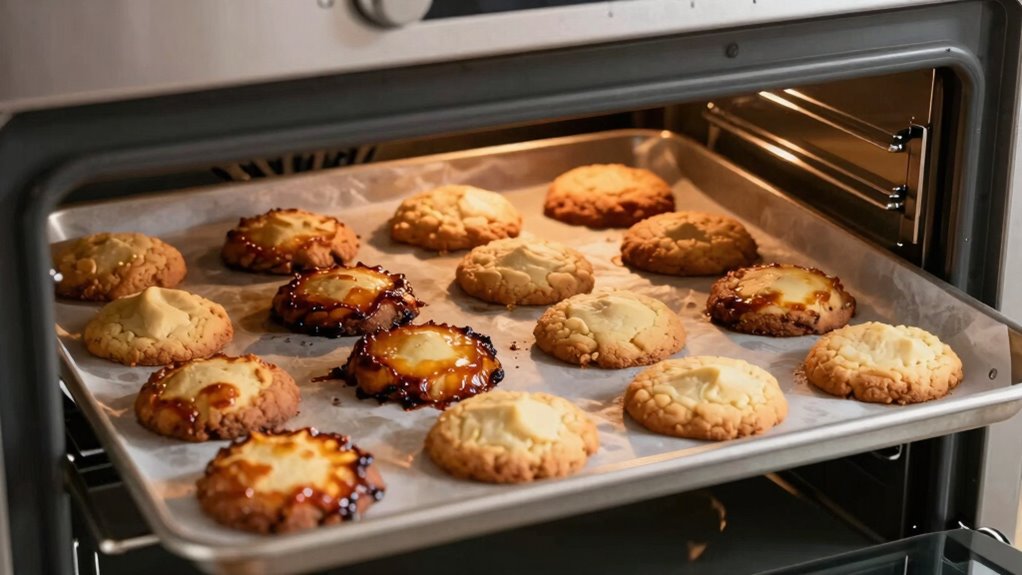
Your oven may brown unevenly due to temperature inconsistencies, hot spots, or improper rack placement. If the temperature isn’t accurate or you have hot spots, some areas will brown too quickly while others remain underdone. Rack positioning also affects how evenly heat reaches your baked goods. Using an oven thermometer and adjusting rack placement can help. Keep exploring to discover more tips on achieving perfect, consistent browning every time.

Get the little things that make your day delivered free with Prime
- Fast, free delivery on millions of items
- Prime Video, Amazon Music and more included
- Member-only deals all year
Key Takeaways
- Inconsistent oven temperature or hot spots cause uneven browning across baked goods.
- Incorrect oven rack placement, such as too high or low, affects heat exposure and browning.
- Using uncalibrated or inaccurate ovens leads to uneven heat distribution.
- Dark or non-stick bakeware absorbs more heat, resulting in faster, uneven browning.
- Frequent door opening during baking disrupts temperature stability, causing uneven coloration.

Have you ever noticed uneven or excessive browning on your baked goods? It can be frustrating, especially when you’re aiming for perfectly baked treats. Often, the culprit lies in how your oven is operating or how you’re using it. One common issue is the baking temperature. If it’s set too high, the outside of your baked items can brown too quickly, leaving the inside underdone. Conversely, if the temperature is too low, your baked goods might not develop that appealing golden crust. Finding the right balance is essential; a consistent, accurate baking temperature guarantees even browning. Many ovens have hot spots or temperature inaccuracies, so using an oven thermometer can help you monitor and adjust accordingly.
Another significant factor influencing browning is oven rack positioning. The placement of your rack determines how heat circulates around your food. If you bake on the top rack, your items are closer to the heating element or broiler, which can cause excessive browning or even burning on top. On the other hand, placing your tray on the bottom rack might result in uneven or insufficient browning, especially if the heat distribution isn’t even throughout the oven. The middle rack is usually the best choice for most baking tasks because it allows for more uniform heat exposure. However, when baking items that need extra browning on top, moving the rack closer to the top may be beneficial—just keep a close eye to prevent burning. Additionally, understanding how oven heat distribution works can help you troubleshoot and improve your baking results. Proper oven calibration is also important to ensure your oven heats accurately and evenly. Regularly checking your oven’s temperature consistency can prevent hot spots and promote more even browning. It’s also helpful to consider the type of bakeware** you use, as different materials can impact heat absorption and browning speed. Dark or non-stick pans tend to absorb more heat and can cause faster browning, so switching to lighter-colored or glass bakeware might help achieve more consistent results. Always remember to preheat your oven thoroughly** and avoid opening the door frequently during baking, as this disrupts the heat and can lead to uneven browning patterns.
oven thermometer for accurate baking
As an affiliate, we earn on qualifying purchases.
As an affiliate, we earn on qualifying purchases.
Frequently Asked Questions
Can the Type of Baking Dish Affect Browning?
Yes, the type of baking dish can affect browning. Baking dish material, like metal or glass, influences heat transfer; metal heats up faster and encourages browning, while glass heats more evenly but slower. Dish shape effects also matter—shallow pans create more surface area for browning, while deeper dishes can trap moisture, reducing browning. Choosing the right material and shape helps guarantee even, desirable browning in your baked goods.
Does Oven Door Insulation Impact Browning Consistency?
Like a guardian shielding a treasure, your oven door’s insulation efficiency directly influences browning consistency. If the insulation weakens or wears out, heat escapes, causing uneven warmth and inconsistent browning. A well-insulated oven door traps heat, ensuring even temperatures throughout your baking journey. Regularly check and maintain the insulation to keep your oven’s heat steady, so every dish browns beautifully, just like a master chef’s perfect creation.
How Does Humidity Influence Uneven Oven Browning?
Humidity effects can considerably influence uneven oven browning. When there’s high moisture influence in your kitchen or oven, it can cause your baked goods to steam rather than crisp, leading to uneven browning. Conversely, low humidity helps dry out surfaces quickly, promoting better caramelization. To achieve consistent browning, control humidity levels by opening windows or using exhaust fans, and avoid excess moisture in your ingredients or environment.
Can Altitude Affect How My Oven Browns Food?
Ever notice how your baked goods seem to defy gravity at high altitudes? Altitude effects, like lower air pressure, cause your oven to brown food differently. The baking dish influence becomes essential—thinner or darker pans absorb heat faster, helping compensate. You might need to adjust baking times or temperatures. Embrace these altitude effects, and your baked creations will turn out just as beautifully as you imagine, no matter how high you go.
Do Different Oven Brands Have Varying Browning Patterns?
Yes, different oven brands can have varying browning patterns due to differences in oven calibration and heating elements. Some brands may heat more evenly, while others might have hot spots that cause uneven browning. Regularly calibrate your oven to guarantee consistent temperature, and check the heating element for any irregularities. Being aware of your oven’s specific behaviors helps you adjust cooking times and achieve better, more uniform browning.
As an affiliate, we earn on qualifying purchases.
Conclusion
Think of your oven as a painter, trying to create a perfect masterpiece. When the heat isn’t evenly distributed, it’s like uneven brushstrokes that leave patches of color missing. To get that smooth, consistent finish, you need a well-calibrated oven, just like a painter needs the right tools. When you address hot spots and guarantee even heat, your baked goods will turn out beautifully, as if painted with a steady hand—flawless and uniform every time.
As an affiliate, we earn on qualifying purchases.
As an affiliate, we earn on qualifying purchases.
Halloween Picks
halloween
As an affiliate, we earn on qualifying purchases.