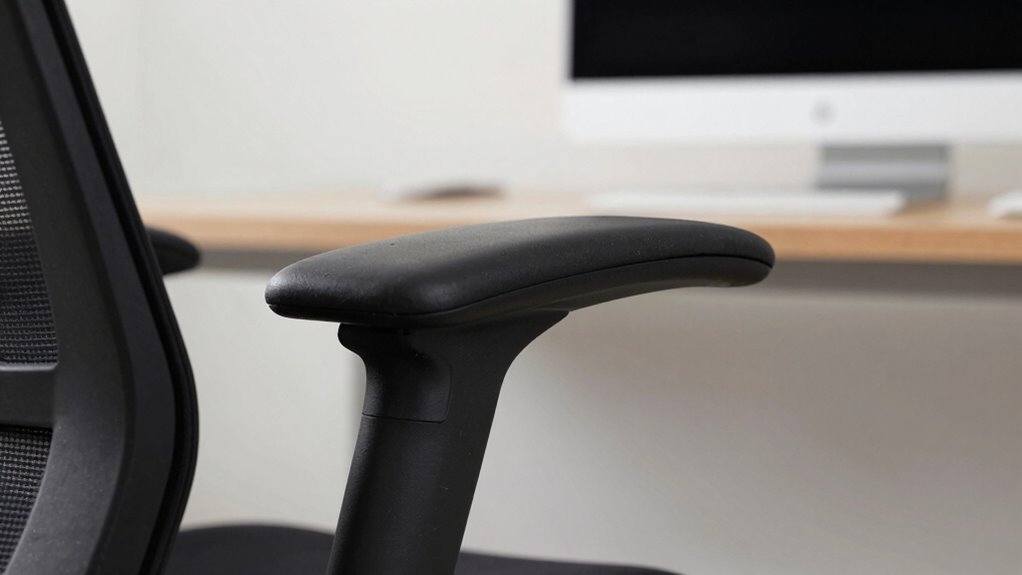

What nobody tells you about chair armrest position is that it’s key to comfortable, healthy sitting but often overlooked. Adjusting your armrests too high can cause shoulder hunching, while too low leaves your arms unsupported, leading to fatigue. The trick is finding a height where your elbows are at a 90-degree angle and close to your body. Proper support helps prevent tension and discomfort — and if you keep an eye on these details, you’ll learn more to keep your posture in check.

Get the little things that make your day delivered free with Prime
- Fast, free delivery on millions of items
- Prime Video, Amazon Music and more included
- Member-only deals all year
Key Takeaways
- Proper armrest height prevents shoulder hunching and reduces neck tension during prolonged sitting.
- Incorrect armrest width can cause shoulder strain and poor posture.
- Regularly readjust armrests to match changes in work setup or seating position.
- Armrests should support elbows at a 90-degree angle for optimal ergonomic benefit.
- Overly high or low armrests lead to muscle fatigue and discomfort over time.

The position of your chair armrests plays a essential role in maintaining good posture and preventing discomfort during long periods of sitting. Many people overlook how pivotal armrest placement is, but it considerably impacts your comfort and overall ergonomic benefits. Properly adjusted armrests support your shoulders and arms, reducing strain on your neck and upper back. When armrests are too high, they push your shoulders upward, leading to tension, while too low or absent armrests leave your arms unsupported, causing fatigue and awkward postures over time.
Proper armrest positioning supports your shoulders and reduces strain during long sitting periods.
One common mistake is setting the armrests too high, thinking it will provide better support. Instead, this often causes your shoulders to hunch and your upper body to tense up, which can lead to pain and stiffness. Conversely, armrests that are too low don’t offer the necessary support, forcing you to brace your arms against your desk or chair, which can cause discomfort in your wrists and shoulders. The goal is to find a position where your elbows can rest comfortably at a roughly 90-degree angle, close to your body. This placement helps you maintain a relaxed posture and reduces unnecessary muscle strain.
Adjusting your armrests is more than just raising or lowering them; it’s about aligning them to support your natural body position. When correctly positioned, your forearms should rest lightly on the armrests without causing your shoulders to lift or your neck to crane forward. This alignment encourages a neutral spine position, which is imperative for avoiding long-term musculoskeletal issues. A common mistake people make is neglecting to readjust armrests when they change their work setup or switch between sitting and standing desks. Regularly reassessing armrest height ensures you maintain ergonomic benefits and avoid developing bad habits or postural imbalances. Incorporating proper armrest adjustment can significantly improve your sitting comfort and help prevent strain, especially if you frequently switch between different workstations or postures. Additionally, considering the ergonomic design of your chair can further enhance your overall comfort and support.
Another key point many overlook is that armrest width should match your body width. If they’re too close or too far apart, you might compromise your posture or experience unnecessary pressure on your shoulders. The proper armrest position should allow your arms to rest comfortably without forcing you to twist or lean. Remember, the correct armrest height and width are essential for supporting your arms and shoulders naturally, reducing fatigue and preventing common mistakes that lead to discomfort. When you pay attention to these details, you’ll find sitting becomes less tiresome, and you’ll enjoy better long-term health benefits from your ergonomic setup.
ergonomic adjustable chair armrests
As an affiliate, we earn on qualifying purchases.
As an affiliate, we earn on qualifying purchases.
Frequently Asked Questions
How Do Armrest Positions Affect Shoulder Strain During Long Work Hours?
When you adjust your chair armrests properly, you reduce shoulder strain during long work hours. Keep the armrests at a height that supports your elbows, maintaining an ergonomic wrist position and avoiding shoulder hunching. Properly positioned armrests enhance chair stability, preventing unnecessary movement. This setup helps distribute weight evenly, minimizes muscle fatigue, and keeps your shoulders relaxed, making extended sitting more comfortable and reducing long-term discomfort.
Can Incorrect Armrest Height Cause Ergonomic Issues?
Incorrect armrest height can definitely cause ergonomic issues, especially if it disrupts wrist alignment. When your armrests are too high or too low, you tend to strain your shoulders and neck, leading to discomfort over time. Proper armrest padding and height help support your arms naturally, reducing muscle tension. Ensuring your armrests align with your desk height and allow your wrists to stay in a neutral position can prevent long-term strain.
What Is the Ideal Armrest Angle for Different Body Types?
You should aim for an armrest angle that allows your elbows to stay close to your body with a slight, comfortable bend. Adjust the armrest padding for cushioning and support, and make sure the armrest width matches your shoulder width for comfort. For different body types, fine-tune the angle so your arms rest naturally without strain, promoting good posture and reducing fatigue during long periods of sitting.
How Often Should I Adjust My Chair Armrests for Optimal Comfort?
You should adjust your chair armrests whenever you notice discomfort or change your working position. Regular tweaks help maintain proper posture, especially considering armrest padding and design. Aim to adjust at least once every hour or when switching tasks to prevent strain. Ensuring the armrests support your arms comfortably, with suitable padding and design, keeps your shoulders relaxed and reduces fatigue, promoting better long-term comfort and health.
Do Armrest Materials Impact Comfort and Posture?
Yes, armrest materials profoundly impact comfort and posture. Soft armrest padding provides better cushioning, reducing pressure on your elbows and shoulders, while hard or rough materials may cause discomfort over time. The armrest design also matters; ergonomically shaped arms support your arms naturally, promoting better posture. Choosing the right combination of armrest padding and design helps prevent strain and keeps you comfortable during long periods of sitting.
ergonomic office chair with adjustable armrests
As an affiliate, we earn on qualifying purchases.
As an affiliate, we earn on qualifying purchases.
Conclusion
Getting your chair armrests just right is like tuning an instrument—you might not notice how much harmony they bring until they’re off-key. When your armrests are properly positioned, they support your posture and ease tension, turning your workspace into a sanctuary of comfort. Take the time to find that perfect spot, and you’ll feel the difference as smoothly as a well-played melody. After all, small adjustments can create a symphony of comfort in your daily routine.
ergonomic armrest pads for chairs
As an affiliate, we earn on qualifying purchases.
As an affiliate, we earn on qualifying purchases.
ergonomic desk chair with proper armrest support
As an affiliate, we earn on qualifying purchases.
As an affiliate, we earn on qualifying purchases.
Halloween Picks
halloween
As an affiliate, we earn on qualifying purchases.